
From the exhilarating roar of a stadium crowd to the explosive crackle of fireworks and the thunderous bass of a live concert, many common spectacles routinely expose us to dangerously high decibel levels. These intense auditory experiences are not merely uncomfortable; they can inflict irreversible damage, leading to permanent hearing loss. This inherent risk naturally prompts a compelling question: what, precisely, holds the record as the loudest sound ever documented on Earth?
A definitive answer hinges on two critical factors: the precise definition of “sound” and the accepted evidentiary standards. This means establishing whether historical reports are considered valid sources or if only measurements from modern scientific instruments are trusted.
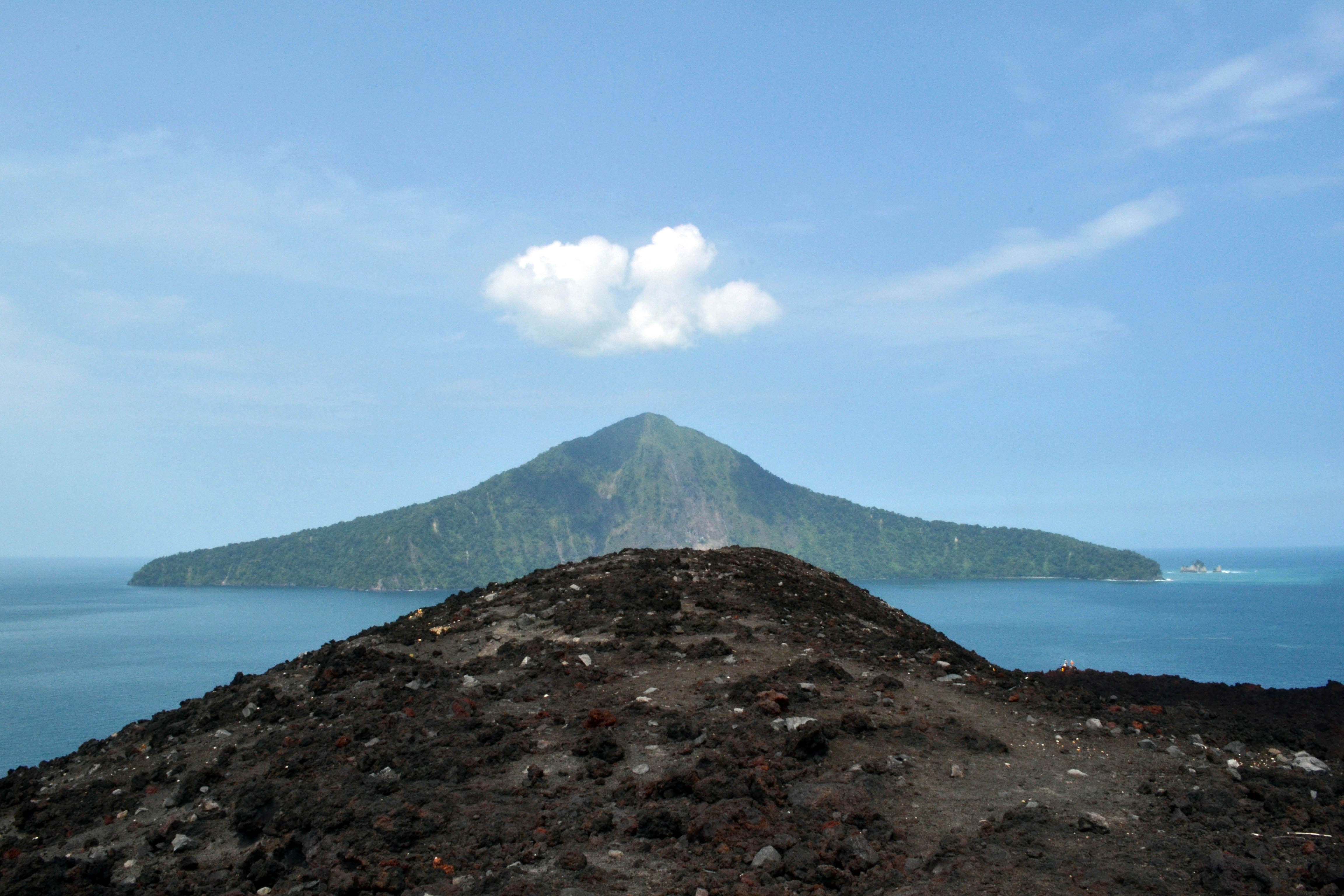
The cataclysmic 1883 eruption of Krakatau, an Indonesian volcanic island often also spelled Krakatoa, remains etched in history as arguably the loudest sound ever recorded. Its monumental blast reverberated across vast distances, with reports of it being audible over 1,900 miles (3,000 kilometers) away. The sheer force of the explosion was so immense that its pressure wave circled the globe, detected by barometers worldwide.
Closer to the source, the auditory impact was devastating. At a distance of 100 miles (160 km), the eruption’s sound intensity was estimated at a staggering 170 decibels—a level sufficient to inflict permanent hearing damage. Eyewitness accounts from sailors within 40 miles (64 km) of the volcano described a boom powerful enough to rupture eardrums, underscoring the eruption’s unprecedented acoustic might.
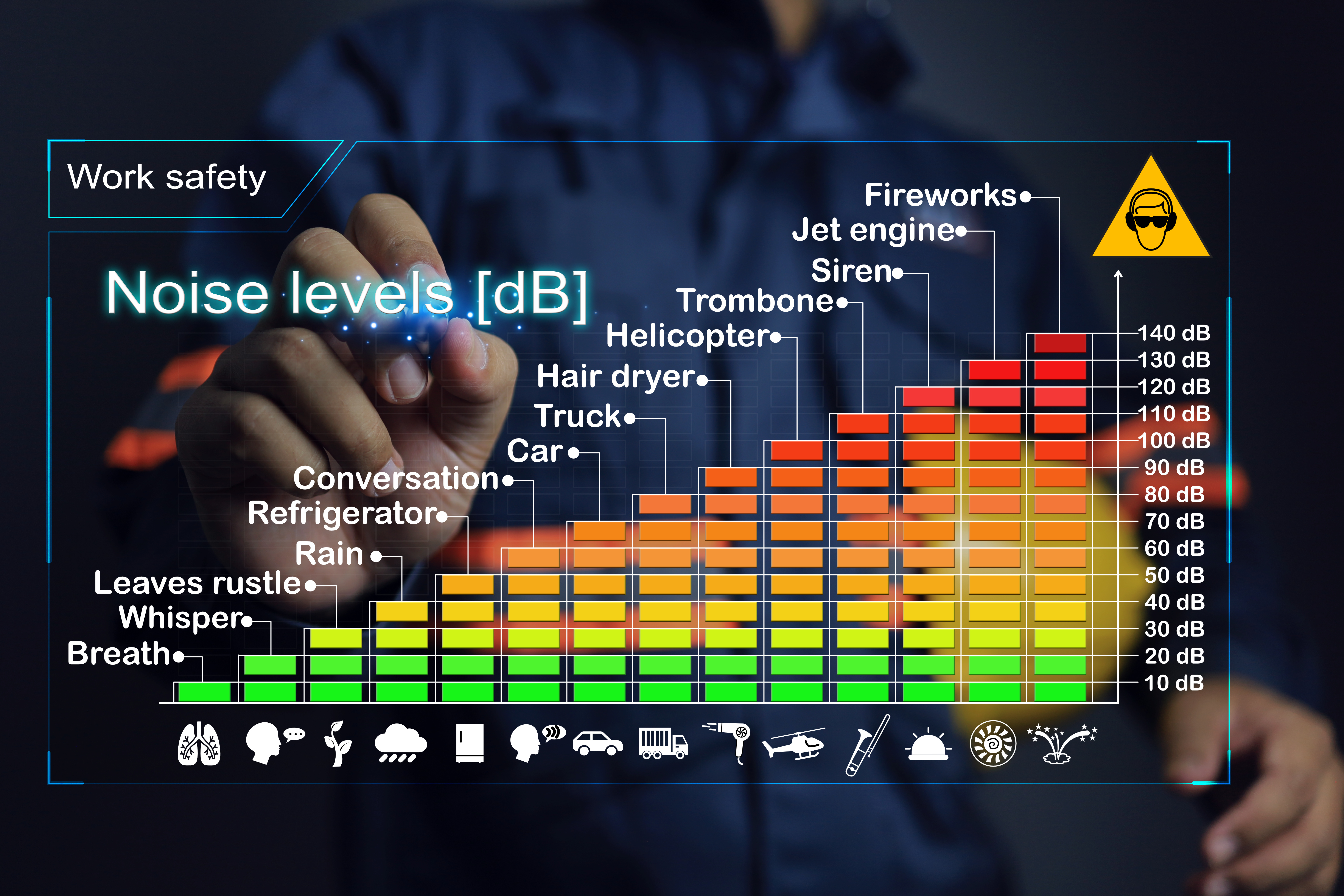
The human ear can generally endure sounds up to approximately 140 decibels before they become physically painful and unbearable. However, the threshold for permanent hearing damage is significantly lower and highly dependent on exposure duration.
According to the National Institutes of Health, prolonged noise can rapidly cause irreversible harm: just a few hours at 85 decibels, 14 minutes at 100 decibels, or merely two minutes at 110 decibels are sufficient to inflict damage.
To put these figures into perspective, a common vacuum cleaner operates at around 75 decibels. In contrast, a chainsaw typically registers about 110 decibels, dangerously close to the two-minute damage limit, while a roaring jet engine reaches approximately 140 decibels, hitting the immediate pain threshold.
Modern estimates reveal that the Krakatau volcanic eruption unleashed an auditory event of unprecedented scale, with its blast reaching an astonishing 310 decibels. At such extreme volumes, sound waves transcend their conventional behavior, which typically involves particles vibrating and creating areas of compression and rarefaction.
Instead, once the intensity surpasses approximately 194 decibels, these waves transform into formidable shock waves—powerful pressure fronts generated when something moves faster than the speed of sound. The sheer force of Krakatau’s resultant shock wave was extraordinary, possessing such overwhelming power that it reportedly circumnavigated the globe a staggering seven times.
Professor Michael Vorländer, a leading authority in acoustics and president of the Acoustical Society of America, asserts that the true intensity of the Krakatau eruption at its source remains unquantified. Vorländer, who also heads the Institute for Hearing Technology and Acoustics at RWTH Aachen University in Germany, explains that the exact loudness cannot be definitively determined because no one was in close enough proximity to take accurate measurements at the time of the event.
“While it’s possible to formulate assumptions about how sound travels, such conjectures are profoundly unreliable, he informed Live Science in an email.”
The 1908 Tunguska meteor explosion over Siberia stands as another monumental contender for the loudest sound ever recorded on Earth. This cataclysmic event not only leveled an immense tract of forest, spanning hundreds of square miles, but also unleashed atmospheric shockwaves that circumnavigated the globe.
Its sonic intensity is estimated to have rivaled that of the Krakatoa eruption, reaching an unfathomable 300 to 315 decibels. However, much like its volcanic counterpart, the Tunguska blast was registered exclusively by remote instrumentation, preventing direct, proximate measurement of its true auditory force.
However, when considering only the modern scientific era—a period defined by scientists’ access to a global network of barometers and infrasound sensors—a much more recent event claims the top distinction.
The January 2022 eruption of the Hunga Tonga-Hunga Ha’apai volcano is believed to have generated the loudest sound ever recorded, according to David Fee, a research professor at the Geophysical Institute at the University of Alaska Fairbanks. This immense volcanic blast unleashed a powerful sound wave that not only circumnavigated the globe multiple times but was also distinctly audible to humans thousands of miles from the epicenter. Remarkably, its distant rumble was reported by individuals in locations as far-flung as Alaska and Central Europe.
Milton Garces, founder and director of the Infrasound Laboratory at the University of Hawaii, has definitively stated that the loudest sound recorded in the modern digital era originated from the 2022 Tonga eruption. According to Garces, there is “without a doubt” that the seismic event holds this unprecedented distinction.
The immense power of the recent underwater eruption near Tonga was starkly evident in scientific readings. At Nukua’lofa, approximately 42 miles (68 km) from the blast epicenter, monitoring stations registered a staggering pressure jump of around 1,800 pascals.
To put this in perspective, geophysicist Garces explained that a 200-megaton chemical explosive blast would generate approximately 567 pascals of overpressure, but at a far greater distance of about 560 miles (737 km).
While hypothetically converting the Tonga event to a standard decibel level at three feet (one meter) from the source might yield an astounding 256 decibels, Garces cautioned against such a simplistic conversion, calling it “bad science.” He clarified that the blast’s intensity was so extreme that it didn’t behave as a normal sound wave close to its origin. Instead, it functioned more like a massive, fast-moving volume of air physically propelled outwards by the explosion. Ultimately, the Tonga eruption was simply too powerful and fundamental in its force to be adequately described by the conventional decibel scale.
Remarkably, the most potent pressure wave of recent times was largely inaudible to humans, a phenomenon Fee attributed to its frequencies lying outside the bounds of human hearing.
Scientists, in their ongoing pursuit to generate extreme pressure waves within controlled laboratory environments, recently achieved a remarkable breakthrough. During a specific experiment, researchers harnessed a powerful X-ray laser to blast a microscopic water jet, resulting in a pressure wave estimated to reach an astounding 270 decibels. To put this into perspective, this acoustic intensity dramatically exceeds the 203-decibel launch of the Saturn V rocket, the iconic booster that propelled Apollo astronauts on their historic journeys to the moon.
Despite generating an astonishing 270-decibel pressure wave, a recent laser experiment remained utterly silent. This paradox is attributed to its setting within a vacuum chamber. For sound waves to propagate and be perceived, they require a medium – such as air, water, or a solid material – which was entirely absent in the experimental environment.
Garces argued that evaluating pressures in a vacuum chamber provides a somewhat misleading benchmark, likening it to the unique pressure dynamics of space itself. He clarified that while a supernova, for instance, can generate enormous radiation pressure, such energy would never manifest or be perceived as what we understand to be sound. This distinction, Garces emphasized, is crucial for understanding the fundamental differences between various forms of pressure and true acoustic phenomena.
The 2022 Tonga volcanic eruption has established an unprecedented benchmark, generating the most powerful sound-like wave ever recorded in the modern era. According to expert Garces, this event stands as the unparalleled leader in its category.