
On Monday, April 6, the astronauts of the Artemis 2 mission are poised to witness a rare and captivating celestial event.
During their evening gravity-assist slingshot around the moon’s far side, the quartet is poised to achieve a significant dual milestone: they will observe a total solar eclipse while simultaneously establishing a new all-time record for human deep-space travel.
The Artemis 2 crew is poised to witness a truly unprecedented eclipse – a celestial event unlike anything ever observed from Earth. This rare phenomenon will be entirely inaccessible to terrestrial observers; its singular spectacle is reserved exclusively for the astronauts aboard the Artemis 2 mission.
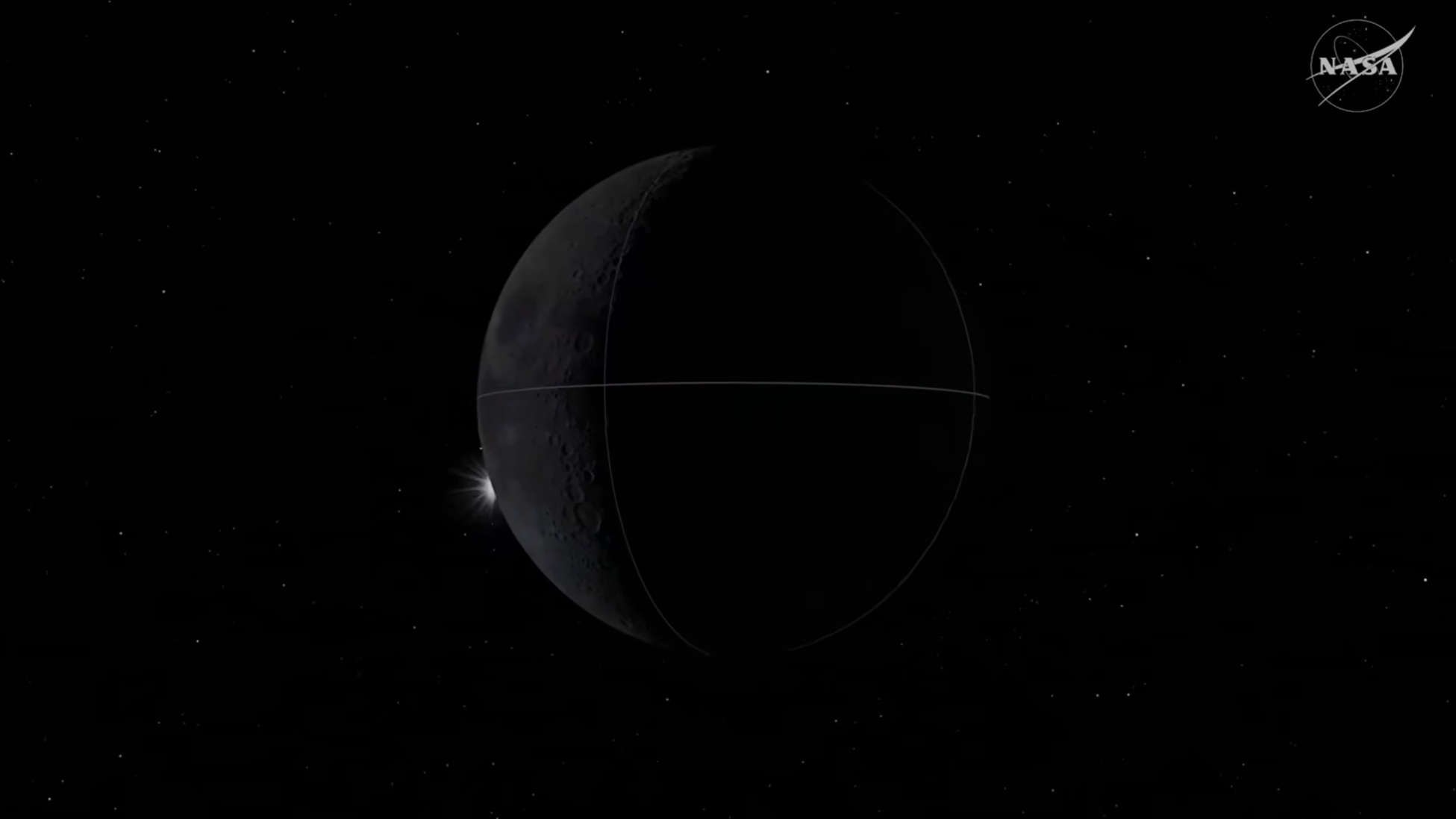
From our terrestrial vantage point, the moon and the sun present a strikingly similar apparent size in the sky, a detail highlighted by NASA’s Kelsey Young. Young, who serves as the Artemis science flight operations lead, made the observation during a press conference held on Saturday, April 4.
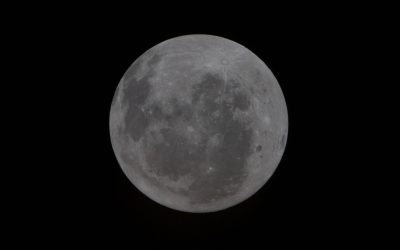
From the unique vantage point of the Artemis 2 Orion capsule, the Moon’s appearance will be profoundly different from our terrestrial view. Astronauts aboard will experience a significantly altered perspective, with the lunar body appearing substantially—indeed, vastly—larger than it does from Earth.
This Monday, the Artemis 2 mission is poised to witness an unprecedented celestial spectacle. For a remarkable 53 minutes, the sun will vanish completely from the spacecraft’s view. This extraordinary period of darkness is approximately seven times longer than the maximum totality experienced during any solar eclipse observed from Earth.
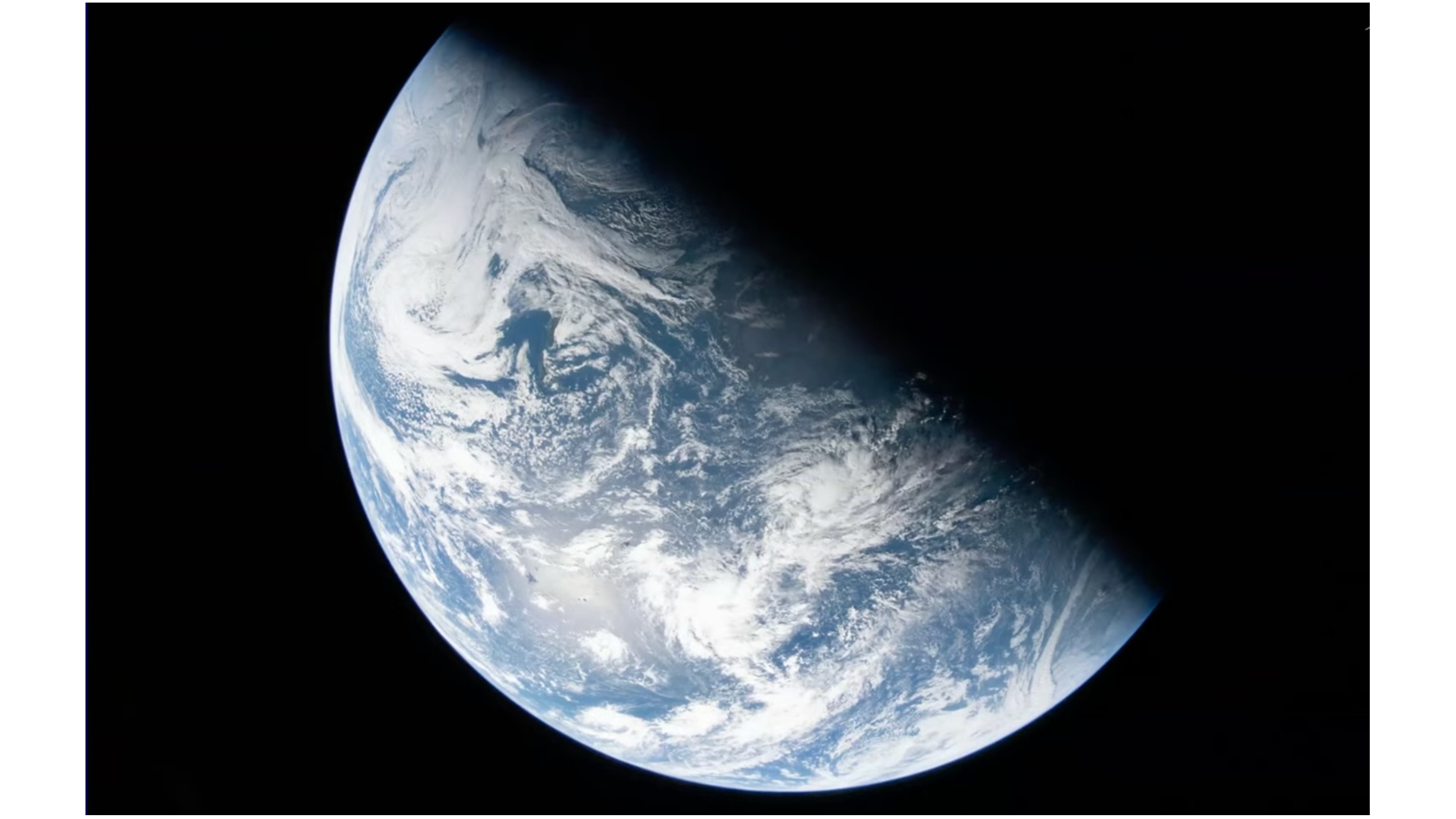
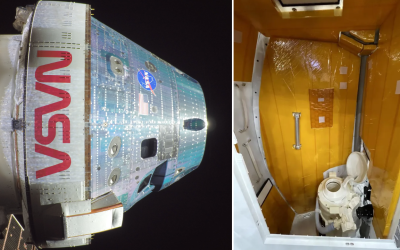
The Artemis 2 mission is set for a historic moment, as its Orion spacecraft prepares to achieve a significant milestone: reaching its farthest point from Earth. On Monday, Orion will extend its journey to an impressive 252,757 miles (406,773 kilometers) from our planet.
This record-setting distance will surpass NASA’s Apollo 13 mission by approximately 4,000 miles (6,400 km), which reached its apogee in April 1970. Adding to the mission’s eventful timeline, a total solar eclipse is projected to commence about 90 minutes after Orion establishes this unprecedented distance, with the celestial event slated for approximately 8:35 p.m. EDT (0035 GMT on April 7).
Solar eclipses present an invaluable opportunity for solar scientists to investigate the sun’s tenuous outer atmosphere, the corona. This elusive region is typically obscured by the overwhelming luminosity of the solar disk. To capitalize on this rare astronomical event, NASA is enlisting the Artemis 2 crew for critical solar observations on Monday evening.
Astronauts will be tasked with describing features of the sun’s corona using provided prompts, a crucial step Young says will enhance solar scientists’ understanding of these celestial processes. This effort is particularly significant, he added, due to the crew’s unique vantage point, which offers a superior perspective compared to observations from Earth-orbiting spacecraft and ground-based researchers.

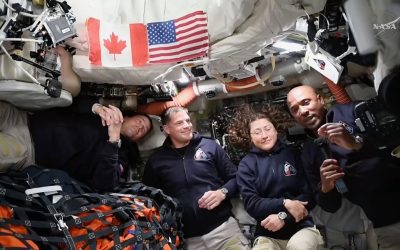
This initiative forms a crucial component of a comprehensive flyby observation campaign. The four astronauts assigned to the Artemis 2 mission – NASA’s Reid Wiseman, Victor Glover, and Christina Koch, alongside Jeremy Hansen of the Canadian Space Agency – are currently undergoing rigorous training, sharply focused on detailed lunar observation.
According to Young, the human eye possesses a unique capability to discern subtle variations in shade and color, a sensitivity often beyond the grasp of robotic cameras aboard lunar orbiters. She highlighted the historic discovery made by Apollo 17 astronauts, who observed an unusual orange regolith on the lunar surface. This seemingly minor detail ultimately unlocked a crucial understanding: volcanic activity on the Moon occurred far more recently than scientists had previously estimated.
Here are several options for paraphrasing the text, maintaining a journalistic tone and core meaning:
**Option 1 (Concise and direct):**
“Monday’s direct observations by the astronauts are anticipated to provide invaluable insights.”
**Option 2 (Emphasizing data and findings):**
“The firsthand data gathered by the astronauts on Monday is expected to yield crucial findings.”
**Option 3 (Focusing on scientific contribution):**
“The detailed scrutiny performed by the astronauts on Monday is poised to significantly advance scientific understanding.”
**Option 4 (Slightly more formal):**
“Consequently, the close-range examination conducted by the astronauts on Monday is projected to offer substantial scientific value.”
**Option 5 (Highlighting importance):**
“The astronauts’ on-site assessments on Monday are highly anticipated to contribute vital information.”
Here are a few paraphrased options, each with a slightly different journalistic emphasis:
**Option 1 (Focus on the Scientific Mission):**
> Astronauts on the upcoming flyby mission are being tasked with a critical observation role: to carefully observe and document the subtle color variations on the lunar far side, particularly in unexplored regions. As explained by [Young’s title/name if available, otherwise omit], this detailed visual analysis will be informed by the extensive data and knowledge gained from previous Apollo missions and orbital reconnaissance. This allows for more precise and insightful scientific inquiry.
**Option 2 (Focus on the Human Element and Discovery):**
> The mission’s crew will be instructed to pause during their flyby, allowing their eyes to adapt to the visual spectacle unfolding before them. Their primary objective will be to identify and report on any delicate color shifts, especially on areas of the Moon’s far side that remain uncharted territory for human perception. [Young’s title/name if available, otherwise omit] highlighted that the wealth of information from past Apollo endeavors and orbiting probes equips them to pose more informed questions and deepen our understanding of these novel discoveries.
**Option 3 (More Concise and Action-Oriented):**
> “We need the crew to take a moment during their flyby to truly absorb what they’re seeing,” stated [Young’s title/name if available, otherwise omit]. “Their mission includes detailing subtle color differences, particularly on previously unobserved sections of the lunar far side.” He added that the foundational knowledge from Apollo and orbital missions enables the crew to ask more sophisticated questions, driving a more intelligent and targeted exploration.
**Key changes made in these paraphrases:**
* **Active Voice and Stronger Verbs:** Replaced phrases like “We’re looking for” with more direct verbs like “are being tasked,” “will be instructed,” or “need.”
* **Varied Sentence Structure:** Mixed sentence lengths and beginnings to improve flow and engagement.
* **Synonym Substitution:** Used words like “document,” “observe,” “delicate,” “shifts,” “uncharted territory,” “perception,” “foundational knowledge,” and “sophisticated” to replace or complement original terms.
* **Journalistic Tone:** Adopted a more formal and objective reporting style.
* **Attribution:** Clearly attributed the quotes to “Young” and suggested adding a title or role if known for greater context.
* **Emphasis on “Never Been Seen Before”:** Rephrased to emphasize the novelty and unexplored nature of the observations.
* **Focus on “Intelligent Questions”:** Highlighted how prior knowledge enables deeper scientific inquiry.
Here are a few paraphrased options, maintaining a journalistic tone and the original meaning:
**Option 1 (Focus on continuity):**
> This celestial spectacle is not entirely new to human experience. As Commander Young noted, Apollo astronauts, who circled the moon rather than merely flying past it like the upcoming Artemis 2 mission, also had the opportunity to witness solar eclipses from the lunar environment.
**Option 2 (More direct comparison):**
> The upcoming skywatching event holds a familiar echo for space exploration. According to Young, the Apollo missions, which achieved lunar orbit as opposed to the flyby planned for Artemis 2, previously provided astronauts with views of solar eclipses from the moon’s vantage point.
**Option 3 (Emphasizing the astronauts’ perspective):**
> For those observing the heavens, Monday’s event offers a perspective previously held by Apollo astronauts. Young confirmed that these earlier lunar explorers, who completed full orbits of the moon in contrast to Artemis 2’s planned flyby, also experienced solar eclipses while in lunar orbit.
**Option 4 (Concise and impactful):**
> It’s worth noting that the chance to witness a solar eclipse from the moon is not unprecedented. Young pointed out that Apollo astronauts, who orbited the moon – a different trajectory than the Artemis 2 flyby – also observed such events from lunar territory.
Here are a few options for paraphrasing the provided text, each with a slightly different emphasis:
**Option 1 (Focus on the “unexpected treat”):**
> Originally slated for an early February liftoff, the Artemis 2 mission has experienced a slight delay due to minor technicalities with its Space Launch System rocket. This unforeseen adjustment, however, has gifted the astronauts a remarkable opportunity: they will now witness a spectacular celestial event during their journey, an unexpected bonus to their mission.
**Option 2 (More direct and journalistic):**
> The upcoming eclipse has become a fortuitous addition to the Artemis 2 mission’s itinerary. While a minor hitch with the Space Launch System rocket postponed their launch from an early February target, the revised schedule now places their mission squarely within a timeframe to observe a significant astronomical phenomenon.
**Option 3 (Emphasizing the serendipity):**
> A slight delay in the Artemis 2 mission, attributed to minor issues with the Space Launch System rocket that pushed the launch back from an early February window, has unexpectedly coincided with a captivating celestial spectacle. This provides the astronauts with an unplanned and exciting cosmic viewing opportunity.
**Option 4 (Concise and impactful):**
> The Artemis 2 astronauts are in for an unexpected astronomical show. Originally set to launch in early February, minor Space Launch System rocket issues have shifted their mission window, now allowing them to witness a remarkable eclipse.
Here are a few paraphrased options, keeping a journalistic tone and unique wording:
**Option 1 (Focus on surprise and timing):**
> “We hadn’t anticipated this outcome,” stated Hansen on Saturday during a Canadian media interview. “However, the April 1st launch, which coincidentally marks the Royal Canadian Air Force’s birthday, has unexpectedly opened this possibility, and that’s a remarkable development.”
**Option 2 (More concise and direct):**
> Hansen expressed surprise during a Saturday interview with Canadian media, noting, “This was not something we thought we’d be able to achieve.” He added, “Thanks to our April 1 launch – the Royal Canadian Air Force’s anniversary, I might add – we’ll now have the opportunity to witness this, which is quite exciting.”
**Option 3 (Emphasizing the positive outcome):**
> Speaking to Canadian media on Saturday, Hansen revealed a previously unforeseen opportunity: “This was a capability we hadn’t planned on having.” He elaborated, “Given that we launched on April 1st, the same day as the Royal Canadian Air Force’s birthday, we’re now in a position to make this a reality, which is a rather special circumstance.”
**Key changes made:**
* **”That’s something that we hadn’t been thinking we were going to be able to do”** was rephrased with variations like “We hadn’t anticipated this outcome,” “This was not something we thought we’d be able to achieve,” and “This was a capability we hadn’t planned on having.”
* **”But because we launched on April 1″** was replaced with phrases like “However, the April 1st launch,” “Thanks to our April 1 launch,” and “Given that we launched on April 1st.”
* **”the birthday of the Royal Canadian Air Force, I’ll just add in there”** was integrated more smoothly as “which coincidentally marks the Royal Canadian Air Force’s birthday,” “– the Royal Canadian Air Force’s anniversary, I might add –,” and “– the same day as the Royal Canadian Air Force’s birthday.”
* **”we’re going to get to see that now, which is pretty neat”** was rephrased to “has unexpectedly opened this possibility, and that’s a remarkable development,” “we’ll now have the opportunity to witness this, which is quite exciting,” and “we’re now in a position to make this a reality, which is a rather special circumstance.”
* **”said on Saturday, during an interview with Canadian media”** was varied to “stated Hansen on Saturday during a Canadian media interview,” “Hansen expressed surprise during a Saturday interview with Canadian media,” and “Speaking to Canadian media on Saturday, Hansen revealed.”
Here are a few options for paraphrasing the text, with a journalistic tone:
**Option 1 (Concise and Direct):**
> Following a lunar flyby on Monday, the Artemis 2 crew is slated to return to Earth, concluding their 10-day mission. The astronauts are expected to splash down off the coast of San Diego on Friday, April 10th.
**Option 2 (Slightly More Descriptive):**
> The Artemis 2 astronauts will begin their journey home on Monday with a lunar flyby, marking the final leg of their 10-day expedition. Their mission will officially wrap up with a splashdown off the coast of San Diego on Friday, April 10th.
**Option 3 (Emphasizing the Journey’s End):**
> After a crucial lunar flyby on Monday, the Artemis 2 mission is heading back toward Earth. The astronauts’ 10-day journey to the Moon will come to a close on Friday, April 10th, with a splashdown scheduled off the coast of San Diego.
**Key changes made in these paraphrases:**
* **”Monday’s lunar flyby will send Artemis 2 back toward Earth”** is rephrased to be more active and descriptive, such as “Following a lunar flyby on Monday, the Artemis 2 crew is slated to return to Earth” or “The Artemis 2 astronauts will begin their journey home on Monday with a lunar flyby.”
* **”The astronauts will splash down on Friday (April 10) off the coast of San Diego, bringing their 10-day moon mission to an end”** is restructured for better flow and to avoid repetition. Phrases like “concluding their 10-day mission,” “marking the final leg of their 10-day expedition,” or “will come to a close on Friday, April 10th, with a splashdown scheduled” are used.
* The journalistic tone is maintained through clear, objective language and a focus on factual reporting.