The Hayabusa2 mission has encountered an unforeseen obstacle as recent observations indicate its target asteroid, slated for a 2031 rendezvous and touchdown, is substantially smaller and rotating considerably faster than initially believed.
New observations of an asteroid have revealed its true nature to be dramatically different from earlier descriptions, according to astronomer Toni Santana-Ros. Santana-Ros, an astronomer at the University of Alicante and also affiliated with the University of Barcelona, led these pivotal observations using the European Southern Observatory’s Very Large Telescope (VLT) in Chile. He stated that “the reality of the object is completely different from what it was previously described as.”
Previous astronomical analyses, based on brightness measurements, had estimated Asteroid KY26 to be approximately 98 feet (30 meters) in diameter, with a rotational period of 10 minutes on its axis.

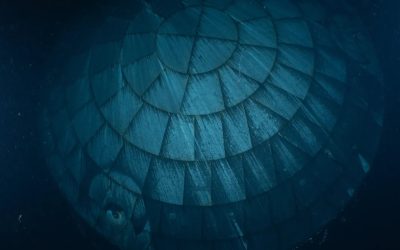
A recent analysis, combining observations from a global network of telescopes—including the Very Large Telescope (VLT)—with radar data, has significantly revised the understanding of asteroid KY26. Previously estimated at 98 feet wide, the celestial body is now determined to be a mere 36 feet (11 meters) across. This revised dimension makes it small enough to fit within the dome housing one of the VLT’s eight-meter telescopes. Furthermore, KY26 exhibits an exceptionally rapid rotation, completing a full spin every five minutes.
The Hayabusa2 mission is set to become simultaneously more captivating and more demanding, according to Olivier Hainaut, an astronomer at the European Southern Observatory. His statement follows new measurements indicating the target object’s smaller size and faster rotational speed.
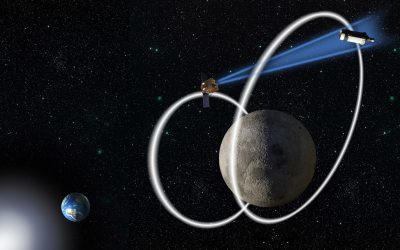
After its historic 2020 encounter with the 900-meter-wide (2,953-foot) asteroid Ryugu and the successful delivery of a sample to Earth, the Japan Aerospace Exploration Agency’s (JAXA) Hayabusa2 mission is now pursuing an extended assignment. The probe is en route to asteroid KY26, with an expected arrival in 2031. There, it plans to conduct orbital studies and a potential touchdown, seeking to unravel more about the intricate structure and chemical composition of small asteroids.
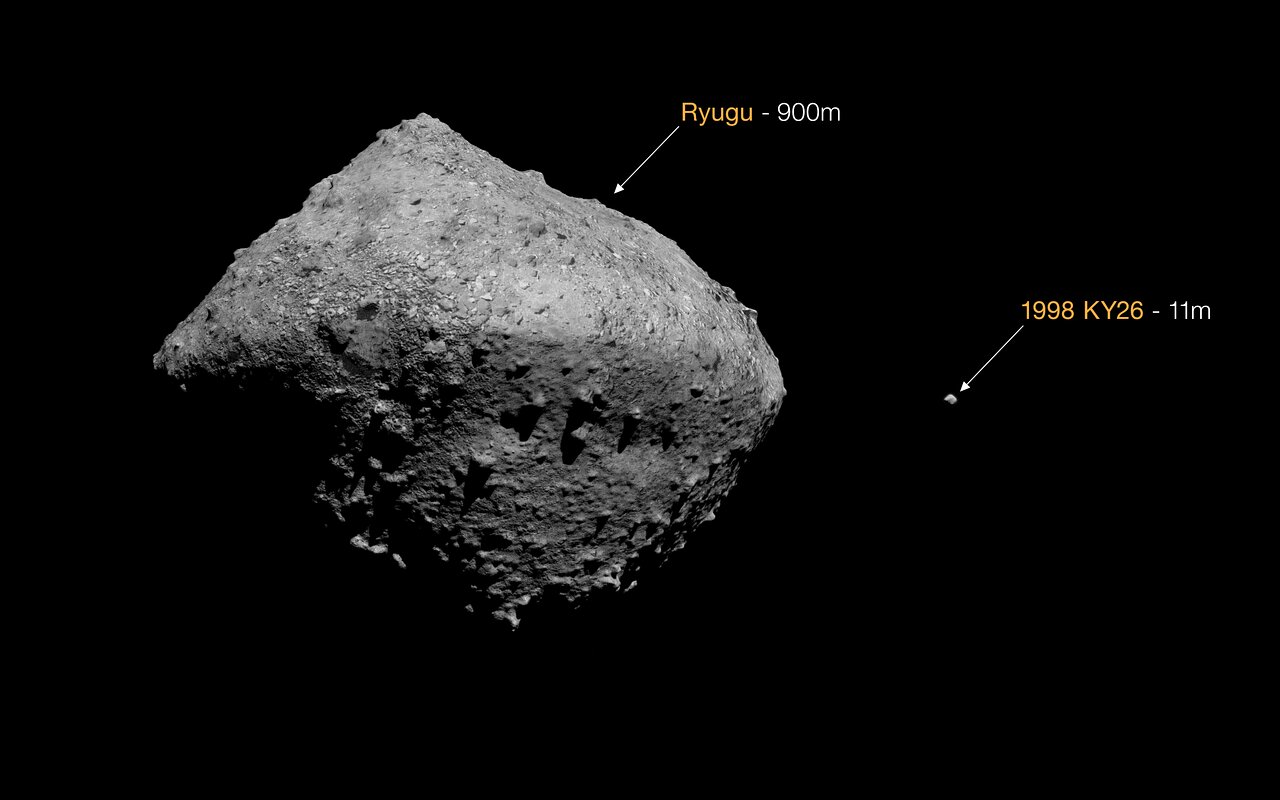
Scientists currently lack direct, in-situ observations of 10-meter (33-foot) asteroids, meaning their exact appearance and characteristics remain unknown, according to Santana-Ros.
Recent observations strongly indicate the asteroid is primarily composed of solid rock fragments, rather than being a loose accumulation of dust and debris. While scientist Santana-Ros cautions that a rubble pile structure cannot be definitively dismissed at this time, the Hayabusa2 mission is expected to precisely determine KY26’s internal structure and material composition following its arrival.
While the Hayabusa2 mission is dedicated to advancing our understanding of small asteroids—the celestial bodies most frequently impacting Earth—observations from the Very Large Telescope (VLT) demonstrate that substantial knowledge about these objects can also be acquired through Earth-based studies.
Experts are now capable of characterizing even the smallest hazardous asteroids that could impact Earth, Hainaut revealed. He cited the 2013 Chelyabinsk event in Russia, where an asteroid barely larger than KY26 struck, as a prime example of this enhanced capability.
Santana-Ros envisions the developed methods having far-reaching applications beyond just planetary defense. He suggests these techniques could significantly influence future strategies for near-Earth asteroid exploration and potentially the nascent field of asteroid mining.
On September 18, the journal *Nature Communications* published its findings regarding observations of KY26.