
The MIT Health and Life Sciences Collaborative (MIT HEALS) has established the Biswas Postdoctoral Fellowship Program, an initiative set to advance the contributions of exceptional early-career researchers in health and life sciences. Funded by a gift from the Biswas Family Foundation, the program’s core objective is to translate cutting-edge research into tangible improvements in health care and to positively impact the lives of millions.
A new program, launching with an initial $12 million investment, will support exceptional postdoctoral researchers focused on innovation in human healthcare. Beginning in early 2026, the initiative plans to award five four-year fellowships annually for the next four years. These fellowships will back projects across a range of pathways, including the application of artificial intelligence in health research, the development of low-cost diagnostic tools, and the convergence of life sciences with fields such as economics, business, policy, or the humanities.
MIT President Sally Kornbluth announced that the Biswas Family Foundation’s contribution will significantly bolster MIT HEALS’s pursuit of scalable healthcare solutions, aligning with the foundation’s dedication to broad innovation and widespread impact. Kornbluth emphasized MIT’s role in cultivating talent, noting that the gift will enable the institute to attract exceptional scholars to its campus. These Biswas Fellows will concentrate on pressing human health issues and cultivate vital connections between academia and industry. MIT is preparing to welcome the inaugural cohort of these fellows.
MIT has officially launched a new “world-class” postdoctoral fellows program, an initiative announced by Anantha P. Chandrakasan, the institute’s Chief Innovation and Strategy Officer and head of MIT HEALS. The program is designed to attract top-tier candidates from around the globe, who will be tasked with leading innovative, cross-cutting projects in critical areas such as artificial intelligence and health, cancer therapies, and diagnostics. Fellows will be chosen through a rigorous selection process overseen by a distinguished committee, providing them with the opportunity to collaborate directly with MIT faculty on promising and impactful research endeavors.
Angela Koehler, who serves as the faculty lead for MIT HEALS, a professor in MIT’s Department of Biological Engineering, and associate director of the Koch Institute for Integrative Cancer Research, underscored the significant alignment between MIT HEALS’ objectives and a core mission of the Biswas Family Foundation. That mission, she explained, centers on leveraging scientific and technological advancements to fundamentally transform healthcare and achieve a lasting impact on global public health.
Healthcare, characterized by Koehler as a “team sport,” is the driving force behind MIT HEALS. This initiative is designed to cultivate connections among investigators possessing diverse expertise across the Institute. Its primary objective is to tackle the most transformative challenges impacting human health. According to Koehler, members of the MIT community are uniquely positioned to participate in these collaborative teams and deliver significant impact.
According to Koehler, MIT HEALS is committed to maximizing its impact by significantly expanding collaborations with medical schools and hospitals. These partnerships are envisioned to cover the entire research process, from identifying key problems suitable for investigation to the implementation of clinical studies.
The Biswas Family Foundation has previously executed a comparable strategic approach.
According to Koehler, the Biswas family possesses a consistent history of enabling connections and partnerships among institutions. Each of these entities contributes a vital component to a larger puzzle, whether that involves a dataset, an algorithm, an agent, a technology platform, or even patients.
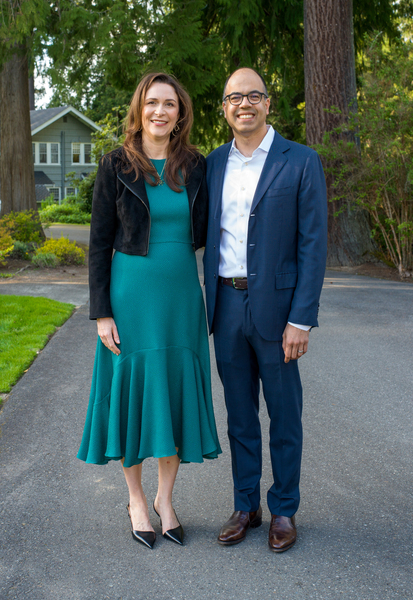
Hope Biswas, who co-founded the Biswas Family Foundation with her husband, MIT alumnus Sanjit Biswas (SM ’05), also underscored the significant collaborative advantages shared by the foundation and the university.
The Biswas Family Foundation has announced its support for the MIT HEALS initiative, an endeavor focused on transforming scientific discoveries into practical health solutions. According to the foundation, MIT HEALS’ dedication to promoting interdisciplinary collaboration to resolve healthcare challenges aligns directly with its own mission to advance science and technology for widespread improvements in health outcomes.
Biswas emphasized the organization’s pride in supporting outstanding postdoctoral scholars focused on high-impact, cross-disciplinary work. This research spans critical fields including computational biology, nanoscale therapeutics, women’s health, and fundamental, curiosity-driven life sciences. The initiative aims to foster a synergy between cutting-edge scientific advancement and a deep commitment to translating new knowledge into tangible action.
Artificial intelligence and machine learning systems are opening unprecedented avenues for understanding diseases, exploring biological mechanisms, developing new therapeutics, and optimizing healthcare delivery. This transformative potential is harnessed through the analysis of extensive datasets.
According to Koehler, the integration of AI and computational systems biology holds significant promise for advancing healthcare. These technologies are poised to enhance the precision of diagnostic methods, facilitate the creation of personalized medicines, optimize individual treatment plans, and streamline operational efficiencies across healthcare systems. Crucially, the backing from Sanjit and Hope for wide-ranging initiatives in AI and computational systems biology will empower MIT researchers to pursue various avenues, ultimately aiming for a broad positive impact on human health.
The forefront of health-related research is increasingly located at the convergence of diverse scientific fields. As an illustration, Koehler points to the significant potential for advancements in high-throughput experimentation, which generates extensive datasets, to effectively integrate with emerging computational or artificial intelligence tools. She further notes that the four-year funding duration of the postdoctoral fellowship is strategically designed. This extended period, she explains, is sufficient for fellows to envision and undertake ambitious, interdisciplinary projects, thereby enabling them to become “bilingual” researchers proficient across multiple specializations by the program’s end.
Chandrakasan envisions the Biswas Fellows program as a key driver for groundbreaking advancements in health research.
Chandrakasan lauded the Biswas Family Foundation for its generous support, which has been instrumental in facilitating groundbreaking research at MIT.





