
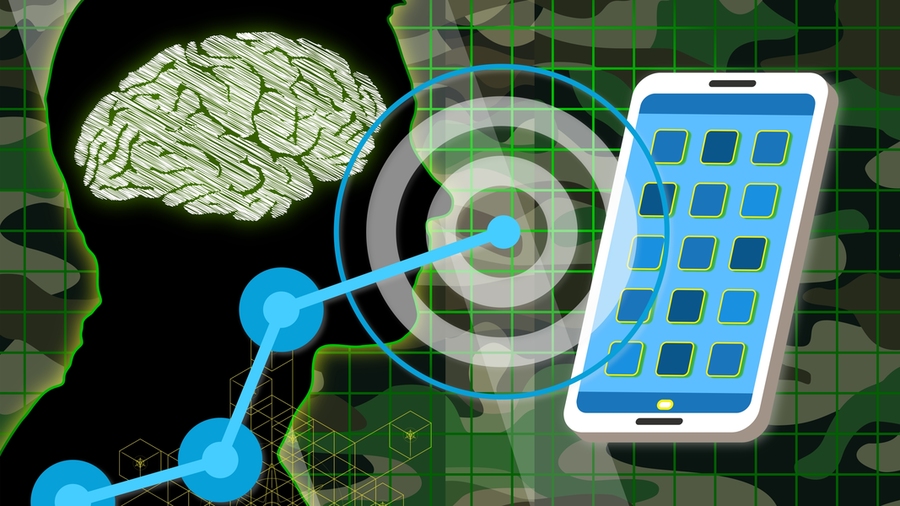
Cognitive readiness, an individual’s capacity to adapt and respond effectively to changing circumstances, is a critical human function. This encompasses immediate reactions, such as regaining balance after a fall, and complex decision-making, where knowledge and past experiences inform choices in challenging situations. For military service members, cognitive readiness is indispensable for their health, safety, and the successful completion of missions.
Brain injury represents a significant cause of cognitive impairment. Between 2000 and 2024, over 500,000 military personnel were diagnosed with traumatic brain injury (TBI), which can result from incidents ranging from training falls to blast exposure in combat. While impairments like those caused by sleep deprivation can often be remedied with rest, injuries to the brain frequently demand more extensive and prolonged medical care.
Christopher Smalt, a researcher within the laboratory’s Human Health and Performance Systems Group, reveals that current cognitive readiness assessments administered to service members lack the necessary sensitivity to detect subtle shifts in cognitive performance resulting from exposure to operational hazards. He further notes that the cumulative effects of these exposures are often inadequately documented both during military service and after personnel transition to Veterans Affairs, thereby significantly complicating the provision of effective support.
A laboratory team is actively developing a suite of portable diagnostic tests designed to offer near-real-time screening for brain injury and cognitive health. Among these innovations is READY, a smartphone or tablet application capable of detecting potential shifts in cognitive performance within 90 seconds.
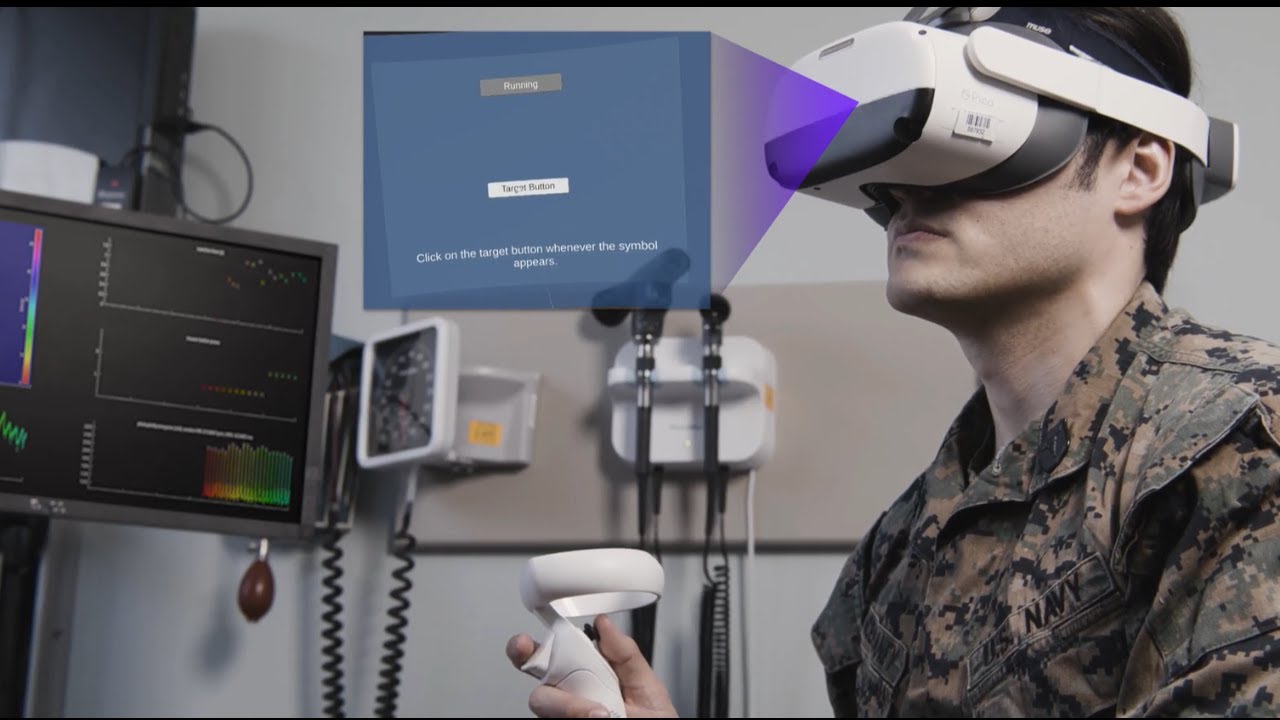
Another advanced tool, MINDSCAPE, is being developed in collaboration with Richard Fletcher, a visiting scientist with the Rapid Prototyping Group and leader of the Mobile Technology Lab at the MIT Auto-ID Laboratory, along with his students. This system leverages virtual reality (VR) technology for more comprehensive analysis, aiming to precisely identify specific conditions such as traumatic brain injury (TBI), post-traumatic stress disorder (PTSD), or sleep deprivation. The objective of these diagnostic tools is to empower battlefield medical personnel to make rapid, effective treatment triage decisions.
READY and MINDSCAPE were established in direct response to a combination of Congressional mandates, military program requirements, and essential mission-driven health needs. Their primary objective is to enhance brain health screening capabilities for service members.
These are the measurable biological and neurological indicators that signal an individual’s optimal mental state for demanding tasks. Essentially, cognitive readiness biomarkers offer objective data on a person’s preparedness to think clearly, adapt effectively, and perform under pressure in complex or high-stakes environments.
The READY and MINDSCAPE platforms integrate over a decade of rigorous laboratory research focused on identifying precise indicators of cognitive readiness suitable for rapid testing applications. Thomas Quatieri, who directed this extensive research, pinpointed balance, eye movement, and speech as three highly reliable biomarkers. Quatieri is presently spearheading the development of the READY platform at Lincoln Laboratory.
The system, known as READY — standing for Rapid Evaluation of Attention for DutY — operates on the core principle that focused attention is indispensable for mission preparedness. Fundamentally, attention is defined as the mental state that enables an individual to concentrate effectively on a given task.
Attentiveness is predicated on the brain’s ceaseless ability to anticipate and interpret incoming sensory data, subsequently directing the body’s appropriate response. Consider the common scenario where a friend shouts “catch” and tosses a ball. To successfully intercept it, the brain must rapidly synthesize auditory and visual cues, project the ball’s future path, and then precisely coordinate the body’s actions to achieve a synchronized catch. This intricate mental choreography allows for the instantaneous realization of the ball’s intent and the timely extension of a hand to secure it.
According to Quatieri, an impaired or fatigued brain—stemming from issues like traumatic brain injury or sleep deprivation—can experience dysfunction within its neurosensory prediction and error-correction systems. This disruption consequently impedes an individual’s ability to maintain focus.
The READY system employs three distinct assessments: one measuring an individual’s ability to visually track a moving dot, another evaluating their balance, and a third testing their capacity to hold a vowel sound at a consistent pitch. From the data collected, the application calculates a “variability” or “wobble” indicator. This metric highlights deviations from the test taker’s personal baseline or contrasts their performance with expected results from demographically similar individuals or the general population. These results are then presented to the user as an indication of the patient’s level of attention.
Should an initial screening display a potential impairment on the ‘READY’ screen, administrators can direct individuals to MINDSCAPE. This Mobile Interface for Neurological Diagnostic Situational Cognitive Assessment and Psychological Evaluation utilizes virtual reality (VR) technology to administer advanced, in-depth tests. These assessments gauge critical cognitive functions, including reaction time and working memory. To ensure a highly precise diagnosis, these standard neurocognitive evaluations are meticulously recorded using multimodal physiological sensors such as electroencephalography (EEG), photoplethysmography, and pupillometry.
Characterized by an integrated, all-encompassing perspective, the approach showcases a remarkable agility in adapting to evolving circumstances.
READY and MINDSCAPE gain a critical advantage by integrating with readily available technology. These assessment tools leverage the embedded sensors and capabilities found in standard smartphones, tablets, and virtual reality devices. This strategy allows for their quick and straightforward deployment in operational settings, significantly cutting down on implementation costs.
Smalt stated that their advanced algorithms can be immediately applied to existing device data, negating the need for costly and time-intensive hardware development. By leveraging commercially available technologies, the team is able to swiftly deliver critical insights and enhance conventional assessment methods.
The laboratory is actively integrating advanced AI and brain-health sensing capabilities into operational environments, a central theme across multiple projects. Illustrating this effort is EYEBOOM (Electrooculography and Balance Blast Overpressure Monitoring System), a specialized wearable technology developed for U.S. Special Forces.
EYEBOOM’s primary function is to continuously monitor a wearer’s exposure to blast energy. It tracks eye and body movements, providing real-time warnings of potential harm. A critical component of the system is an algorithm, engineered by the laboratory, which can identify physiological changes from blast exposure during active operations, negating the need to wait for post-mission assessments.
The three emerging technologies are being developed with versatility as a core objective, allowing for their adaptation to a variety of relevant applications. A prime example of this adaptability is a proposed workflow that pairs EYEBOOM’s monitoring capabilities with the READY and MINDSCAPE assessment tools. In such a system, EYEBOOM would continuously screen for exposure risk, subsequently prompting the wearer to undergo further evaluation.
Smalt observes that while much research often concentrates on a single modality, his laboratory’s approach is to seek out holistic solutions that can be applied across a wide range of different purposes.
The MINDSCAPE system is currently undergoing critical testing this year at the Walter Reed National Military Medical Center. Looking ahead to 2026, the READY technology is slated for evaluation with the U.S. Army Research Institute of Environmental Medicine (USARIEM), specifically focusing on its performance in sleep deprivation scenarios. Developers Smalt and Quatieri foresee these advanced technologies extending beyond military applications, with potential deployment in civilian settings such as sporting event sidelines, doctors’ offices, and any environment requiring a rapid assessment of brain readiness.
The MINDSCAPE initiative is undergoing clinical validation, backed by the expertise of Stefanie Kuchinsky at the Walter Reed National Military Medical Center. Separately, Quatieri and his team are developing the READY tests through a collaborative effort. Key partners in this development include Jun Maruta and Jam Ghajar from the Brain Trauma Foundation (BTF), along with Kristin Heaton from USARIEM. These READY tests are further supported by contemporary evidence-based guidelines, jointly spearheaded by the BTF and the Military TBI Initiative at Uniformed Services University.





