
Machine learning models significantly expedite the discovery of new materials by offering predictive capabilities and guiding experimental design. However, a key limitation of most current models is their reliance on a narrow range of specific data types or variables. This stands in sharp contrast to human scientists, who operate in collaborative environments and integrate a far broader spectrum of information. Their comprehensive approach includes experimental outcomes, the vast scientific literature, detailed imaging and structural analyses, personal experience and intuition, and critical input from colleagues and peer reviewers.
MIT researchers have developed an innovative method designed to optimize material recipes and plan experiments, integrating diverse information sources such as scientific literature, chemical compositions, and microstructural images. This approach is a core component of a new platform named Copilot for Real-world Experimental Scientists (CRESt). CRESt also leverages robotic equipment for rapid, high-throughput materials testing, with the results continuously fed back into large multimodal models to further refine and enhance material formulations.
The system allows human researchers to interact directly through natural language, eliminating the need for coding. Notably, it also independently formulates its own observations and hypotheses. Furthermore, integrating cameras and advanced visual language models enables the system to monitor ongoing experiments, detect issues in real-time, and propose corrective actions.
Designing innovative experiments is paramount to progress in the field of artificial intelligence for science, according to Ju Li, the Carl Richard Soderberg Professor of Power Engineering at the School of Engineering. His team utilizes a comprehensive multimodal feedback system that incorporates insights from prior literature, such as historical data on palladium’s behavior in fuel cells under specific thermal conditions, along with human expertise. This rich feedback enhances experimental data, guiding the development of new research. Additionally, robotic systems play a crucial role in their methodology, carrying out the synthesis and structural characterization of materials, as well as conducting performance evaluations.
A groundbreaking system, detailed in a paper published in Nature, has been revealed. Researchers utilized the CRESt platform to meticulously explore more than 900 chemical compositions and conduct 3,500 electrochemical tests. This extensive research led to the discovery of a catalyst material that achieved a record-setting power density in a fuel cell, which generates electricity using formate salt.
The comprehensive research paper features a distinguished roster of contributors. Alongside Li, co-leading the authorship were PhD students Zhen Zhang and Chia-Wei Hsu, Zhichu Ren (PhD ’24), and postdoc Weibin Chen.
The extensive list of coauthors included several MIT faculty members: Assistant Professor Iwnetim Abate, Associate Professor Pulkit Agrawal, and JR East Professor of Engineering Yang Shao-Horn. Further contributions came from MIT.nano researcher Aubrey Penn, PhD candidates Zhang-Wei Hong (’25), Hongbin Xu (’25), and Daniel Zheng (’25), and graduate students Shuhan Miao and Hugh Smith. The team also included MIT postdocs Yimeng Huang, Weiyin Chen, Yungsheng Tian, Yifan Gao, and Yaoshen Niu, as well as former MIT postdoc Sipei Li. Rounding out the contributors were external collaborators Chi-Feng Lee, Yu-Cheng Shao, Hsiao-Tsu Wang, and Ying-Rui Lu.
An advanced, highly intelligent operational framework.
Materials science experiments are inherently resource-intensive, demanding substantial investments of both time and capital. The research process typically involves scientists meticulously developing experimental protocols, synthesizing novel materials, and conducting a comprehensive series of tests and analyses to ascertain their properties. The findings derived from these evaluations are then critically assessed to inform subsequent refinements and optimize material performance.
Researchers are increasingly employing active learning, a machine-learning strategy, to streamline scientific discovery. This technique efficiently processes prior experimental data, enabling both the exploration of new avenues and the optimization of existing ones. When combined with Bayesian optimization, a powerful statistical method, active learning has successfully accelerated the identification of novel materials, such as those vital for advanced batteries and cutting-edge semiconductors.
Bayesian optimization functions much like a personalized recommendation system, such as Netflix suggesting the next film, Li elucidates, but its application is in guiding the next experimental step. However, Li criticizes basic Bayesian optimization for its oversimplified nature. The method employs a “boxed-in” design space, meaning if a scientist inputs specific components—like platinum, palladium, and iron—the system will only manipulate their ratios within that narrow, predefined scope. This limited perspective often fails to account for the complex interdependencies found in real materials, frequently causing the optimization process to lose its way.
Many active learning methodologies often contend with a critical limitation: their dependence on single data streams frequently falls short of capturing the complete spectrum of information produced during an experiment. To overcome this, and to infuse computational systems with more human-like knowledge while retaining the efficiency and control of automated processes, Li and his collaborators developed CRESt.
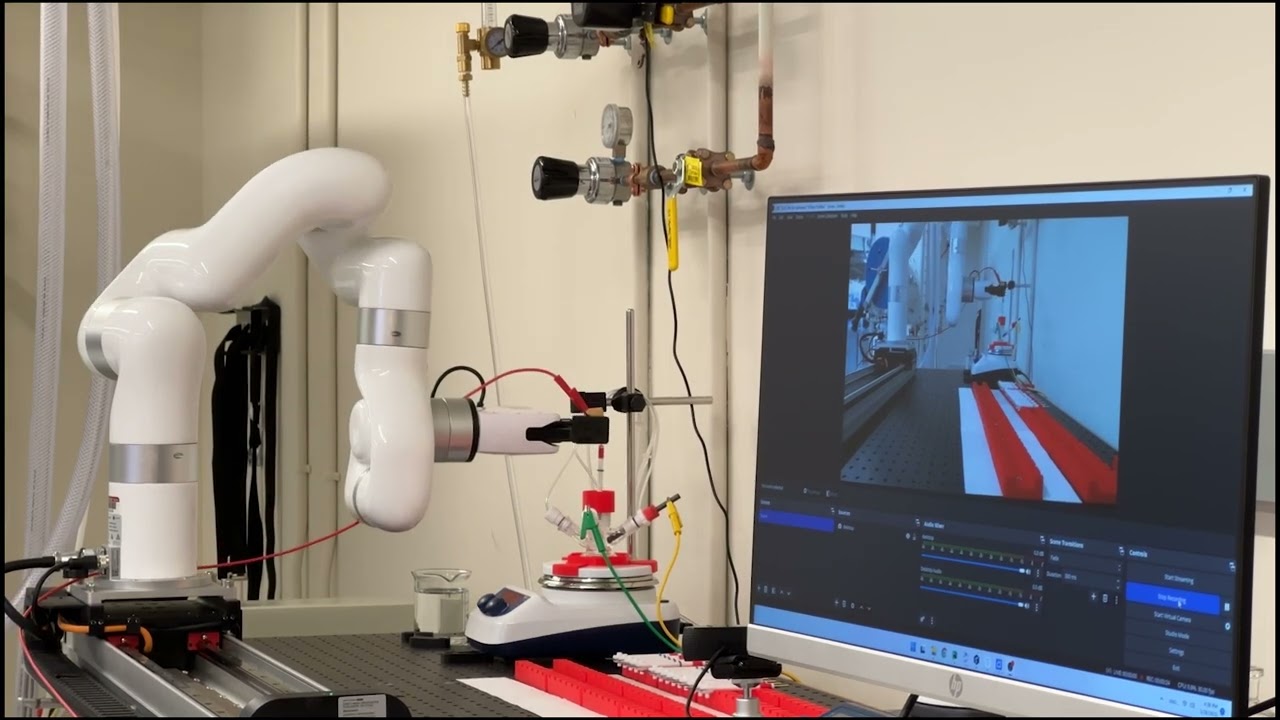
CRESt’s cutting-edge robotic infrastructure features a versatile liquid-handling robot, a high-speed carbothermal shock system for accelerated material synthesis, and an automated electrochemical workstation facilitating thorough testing. Advanced characterization is achieved through integrated automated electron and optical microscopy. Moreover, auxiliary components such as pumps and gas valves are not only part of the setup but are also fully capable of remote operation, underscoring the system’s adaptability. The entire platform allows for extensive tunability across numerous processing parameters.
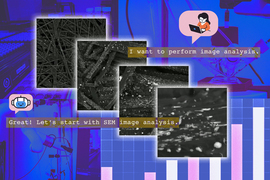
Researchers utilize CRESt via a user interface, enabling them to direct its active learning capabilities toward identifying optimal material recipes for various projects. These formulations can integrate up to 20 distinct precursor molecules and substrates. To inform its material designs, CRESt’s integrated models meticulously scan scientific literature, pinpointing elements or precursor molecules deemed potentially useful. Upon researcher approval for new recipes, CRESt orchestrates an automated workflow encompassing sample preparation, material characterization, and subsequent testing. Additionally, the system is equipped to perform advanced image analysis, processing data from sources like scanning electron microscopy and X-ray diffraction.
Insights gathered from these operations are channeled into active learning models. These models critically synthesize existing scientific literature with current experimental data to propose subsequent experiments, thereby significantly accelerating the discovery of new materials.
The research process initiates by developing comprehensive representations for each recipe, utilizing existing scientific literature and databases to establish a robust prior knowledge base. Principal Component Analysis (PCA) is then applied to this embedded knowledge, effectively distilling it into a reduced search space that captures the most significant performance variations.
Within this refined space, new experiments are meticulously designed using Bayesian optimization. Post-experimentation, newly gathered multimodal data and human feedback are integrated into a large language model. This integration serves to augment the existing knowledge base and dynamically redefine the reduced search space, significantly enhancing the efficiency of active learning.
Materials science experiments often grapple with challenges in achieving consistent, reproducible results. To address this persistent issue, the CRESt organization has deployed a system that utilizes cameras to meticulously monitor its ongoing experiments. This visual surveillance is designed to identify potential problems and then communicate suggested solutions to human researchers via both text and voice prompts.
Leveraging CRESt technology, researchers have successfully developed an innovative electrode material designed for advanced, high-density direct formate fuel cells. Over a rapid three-month period, CRESt explored more than 900 chemical compositions, leading to the discovery of an eight-element catalyst. This new material showcased a significant 9.3-fold improvement in power density per dollar when compared to expensive pure palladium. Subsequent tests confirmed the CRESt material’s effectiveness, enabling a working direct formate fuel cell to achieve a record power density while remarkably containing just one-fourth of the precious metal content typically found in previous devices.
CRESt’s research has unveiled its potential to resolve entrenched, real-world energy problems that have vexed the materials science and engineering community for decades.
The reliance on precious metals like palladium and platinum has long presented a substantial challenge for fuel-cell catalyst development, according to Zhang. Researchers have now innovated a multi-element catalyst, strategically integrating numerous inexpensive components. This novel design aims to forge an optimal coordination environment, significantly boosting catalytic activity and enhancing resistance to common poisoning agents, including carbon monoxide and adsorbed hydrogen atoms. Zhang notes that while the pursuit of low-cost catalyst alternatives has been a long-standing endeavor, this new system has remarkably accelerated the search for these essential materials.
A highly effective support mechanism.
Poor reproducibility quickly surfaced as a major impediment, significantly constraining researchers’ capacity to apply their cutting-edge active learning method to empirical data. The inherent properties of materials, for example, are highly sensitive to precursor mixing and processing techniques. Compounding this, a myriad of subtle factors can inadvertently alter experimental parameters, demanding meticulous vigilance and correction to uphold scientific rigor.
Researchers have developed a partially automated system by integrating computer vision and vision language models with scientific domain knowledge. This innovative approach enables the system to hypothesize potential sources of experimental irreproducibility and propose specific solutions. For instance, the models can detect subtle physical deviations, such as a one-millimeter alteration in a sample’s shape or an improperly placed pipette. The implementation of the models’ suggestions has already led to improved experimental consistency, indicating their effectiveness as valuable experimental assistants.
The research indicated that human participants continued to shoulder the bulk of debugging responsibilities throughout the experiments.
Li emphasizes that CREST operates as an assistant to human researchers, not a replacement, asserting the continued indispensable role of human expertise. The system is designed to use natural language, enabling it to explain its processes and present its observations and hypotheses. This initiative, Li notes, represents a significant step toward creating more flexible, self-driving laboratory environments.