
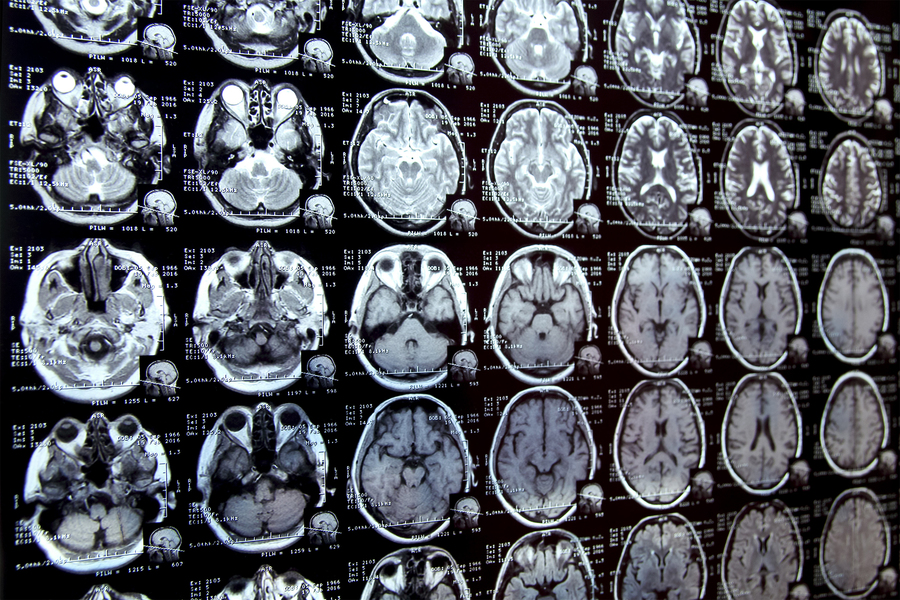
Segmentation, the meticulous practice of outlining specific regions of interest within medical images, frequently represents a foundational and early stage for clinical researchers initiating new studies that utilize biomedical imagery.
Scientists seeking to understand how the brain’s hippocampus changes size with age must painstakingly outline the structure across numerous brain scans. This often-manual and highly precise process is a common requirement for various brain structures and imaging types, yet it proves exceptionally time-consuming, particularly when the regions under investigation are challenging to accurately delineate.
MIT researchers have unveiled an innovative artificial intelligence system designed to significantly streamline the segmentation of biomedical imaging datasets. This new AI model empowers researchers to rapidly delineate structures within images by simply clicking, scribbling, or drawing boxes directly onto the data. The system then intelligently leverages these interactive inputs to predict and generate the precise segmentation.
As users continually label more images, the demand for human interaction progressively diminishes. This iterative training enables the model to eventually achieve full autonomy, precisely segmenting all new images without requiring any further user input.
The model’s unique capability arises from its specialized architecture, which is meticulously engineered to leverage information from previously segmented images, thereby informing and generating subsequent predictions.
This medical image segmentation system offers a significant leap in efficiency. Unlike conventional models that demand repetitive, image-by-image processing, this innovative platform allows users to segment entire datasets simultaneously, dramatically streamlining the workflow for medical professionals.
The interactive tool distinguishes itself by operating without the need for pre-segmented image datasets during its training phase. This design eliminates the requirement for users to possess machine-learning expertise or access extensive computational resources. Furthermore, the system offers immediate utility, allowing deployment for entirely new segmentation tasks without the necessity of model retraining.
This tool holds significant long-term potential for medical advancement, poised to accelerate the study of new treatment methods and substantially reduce the costs associated with clinical trials and broader medical research. Beyond its research applications, the technology could empower clinicians to enhance the efficiency of various medical procedures, particularly in critical areas like radiation treatment planning.
Manual image segmentation currently presents a considerable time constraint for scientists, often restricting them to processing only a few images each day for their research. A new system aims to address this inefficiency, potentially revolutionizing clinical studies. Hallee Wong, an electrical engineering and computer science graduate student and lead author of a paper on the new tool, expressed optimism that it will “enable new science.” She anticipates the system will empower clinical researchers to conduct studies previously unfeasible due to the lack of an efficient analytical instrument.
She co-authored the paper alongside Jose Javier Gonzalez Ortiz, a PhD candidate slated to graduate in 2024; John Guttag, the Dugald C. Jackson Professor of Computer Science and Electrical Engineering; and senior author Adrian Dalca. Dalca maintains affiliations as an assistant professor at Harvard Medical School and MGH, in addition to his role as a research scientist at the MIT Computer Science and Artificial Intelligence Laboratory (CSAIL). The team’s collective findings will be presented at the International Conference on Computer Vision.
Simplifying and enhancing the process of categorization.
Researchers employ various techniques for segmenting novel medical images. One prominent method is interactive segmentation, which involves inputting an image into an artificial intelligence system. Users then utilize a dedicated interface to mark specific areas of interest, and the AI model subsequently predicts the segmentation based on those direct interactions.
ScribblePrompt, an earlier tool developed by MIT researchers, allows users to perform a specific action. However, its core limitation is the requirement to repeat the entire process for every new image.
A distinct methodology for automated image segmentation centers on developing a bespoke AI model. This approach, however, necessitates a substantial preliminary investment: users must manually segment hundreds of images to construct a comprehensive dataset. This dataset then serves as the foundation for training a machine-learning model, which can subsequently predict segmentation for new visuals. Despite its potential, the method presents significant limitations. Crucially, the complex, machine-learning-based development process must be initiated entirely from scratch for each new task. Furthermore, a notable drawback is the absence of any inherent mechanism to correct the model if it produces inaccuracies.
MultiverSeg emerges as an innovative system, effectively integrating distinct methodologies for image segmentation. It dynamically generates segmentations for new images based on user interactions, such as scribbles, while simultaneously building and referencing a dedicated context set composed of all previously segmented images.
Upon a user’s upload of a new image, where specific regions are highlighted for attention, the predictive model references its comprehensive set of contextual examples. This strategic approach enables the model to deliver significantly more accurate predictions while substantially reducing the required user input.
MultiverSeg’s architecture was specifically engineered to process context sets of any dimension, eliminating the requirement for users to provide a predefined quantity of images. This inherent adaptability significantly expands the model’s utility, enabling its deployment across a broad spectrum of applications.
Wong suggests that future AI models, given adequate contextual examples, will autonomously and accurately predict segmentation for numerous tasks, eliminating the need for human intervention.
Scientists meticulously developed and trained the model using a broad spectrum of biomedical imaging data. This process specifically equipped the AI with the capacity to progressively enhance its predictive accuracy through iterative user interaction.
MultiverSeg offers immediate utility for novel medical imaging tasks, eliminating any requirement for users to retrain or customize the model. To deploy the system for a new application, one simply uploads a medical image and can directly begin the marking process.
MultiverSeg decisively outperformed leading state-of-the-art tools in comparative evaluations focusing on in-context and interactive image segmentation, emerging as the superior performer across all baselines.
Prioritizing efficiency, particularly through the reduction of superfluous actions, consistently delivers superior performance and more impactful outcomes.
MultiverSeg significantly reduces the need for manual intervention in image processing, setting it apart from other tools. Remarkably, after only nine images, the system demonstrated its efficiency by achieving a segmentation more accurate than a specialized model, requiring just two user clicks.
For particular types of imagery, such as medical X-rays, artificial intelligence models can swiftly reach a high degree of predictive accuracy. Users may only need to manually segment a minimal number of initial images—often just one or two—before the system becomes proficient enough to make its own predictions autonomously.
The tool’s interactive capabilities empower users to directly correct the model’s initial predictions, allowing for iterative refinement until the desired accuracy is achieved. This marks a significant efficiency gain: the MultiverSeg system notably attained 90 percent accuracy while requiring approximately two-thirds fewer scribbles and three-quarters fewer clicks compared to the researchers’ previous iteration.
MultiverSeg enables users to consistently refine AI-generated predictions by providing additional interactions, a process Wong asserts dramatically accelerates workflows. He emphasizes that correcting an existing output is typically more efficient than commencing a task from scratch.
The research team is poised to launch real-world trials for the tool, engaging clinical collaborators to gather essential user feedback for further refinement. A pivotal future development involves empowering MultiverSeg with the capacity to accurately segment complex 3D biomedical images.
Partial funding for this work was provided by Quanta Computer, Inc. and the National Institutes of Health. Hardware resources were also supplied by the Massachusetts Life Sciences Center.





