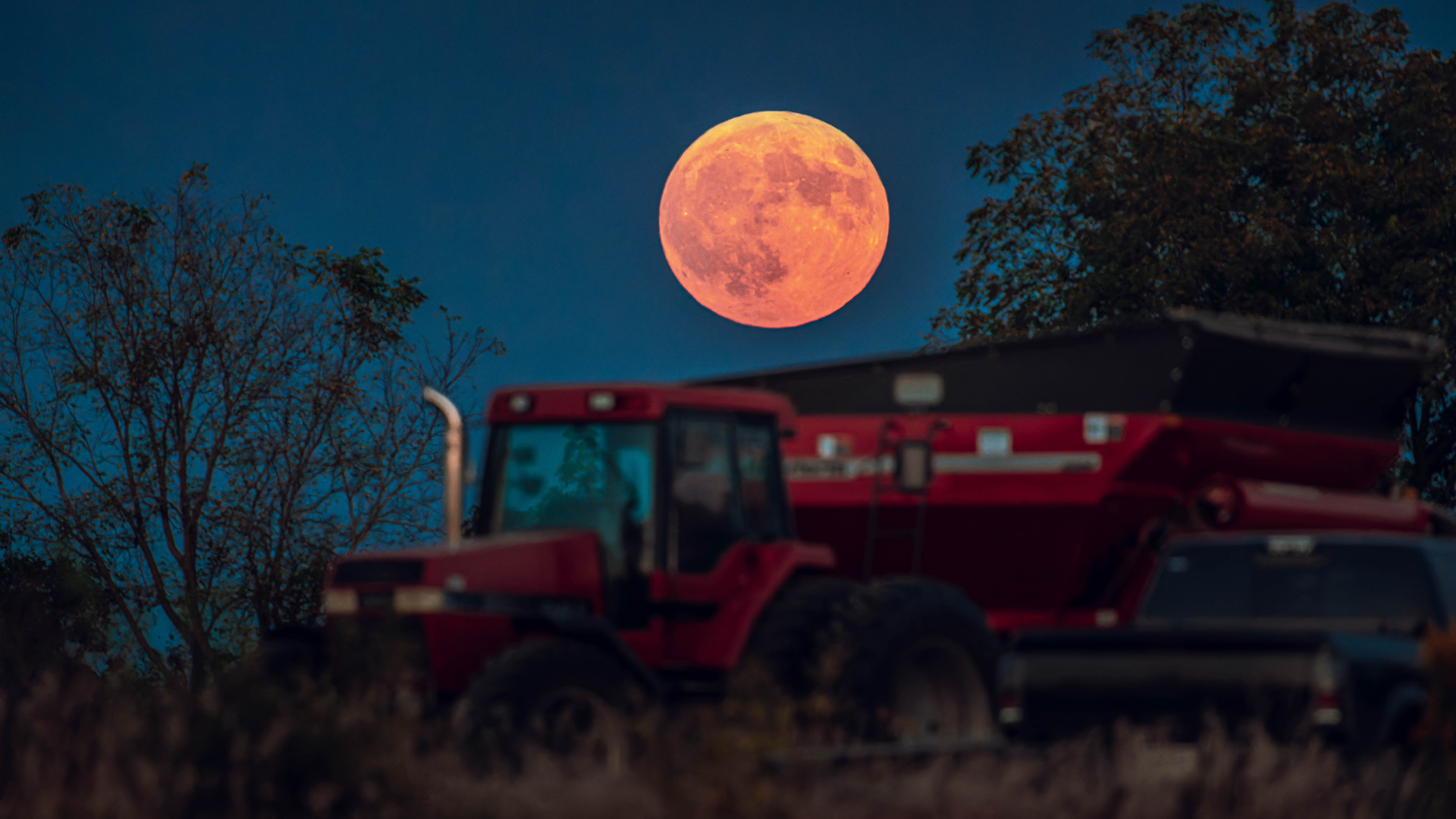
The upcoming full moon, set to occur on October 6, will be a particularly significant event for those in the Northern Hemisphere, carrying the special designation of “Harvest Moon.” The moon reaches its full phase precisely when it positions itself 180 degrees opposite the sun in the sky. This exact astronomical moment will happen on Tuesday, October 7, at 03:48 GMT, which translates to 11:48 p.m. EDT on October 6, or 8:48 p.m. PDT.
This full moon holds the distinction of being the one that occurs closest on the calendar to the September equinox. In 2025, this alignment will unusually take place in October, departing from its more traditional September occurrence. The September 7 full moon preceded the autumnal equinox by 15.006 days. However, the full moon on October 6 will follow the equinox by 14.395 days, making it precisely 14 hours and 39 minutes closer to the equinox than the September full moon.
While the 2025 Harvest Moon is set to appear in October, its timing for U.S. time zones has historically shown a broader range. Past observations indicate occurrences as early as September 8th, as seen in 2014, and as late as October 7th, which was the case in 1987.
October’s Harvest Moon is a notable, though not frequent, astronomical event, with just 18 instances predicted between 1970 and 2050. The last such occurrence was in 2020, and the next is scheduled for 2028. While these full moons typically emerge every three years, the interval can vary significantly, sometimes extending up to eight years, as will be seen between 2028 and 2036.
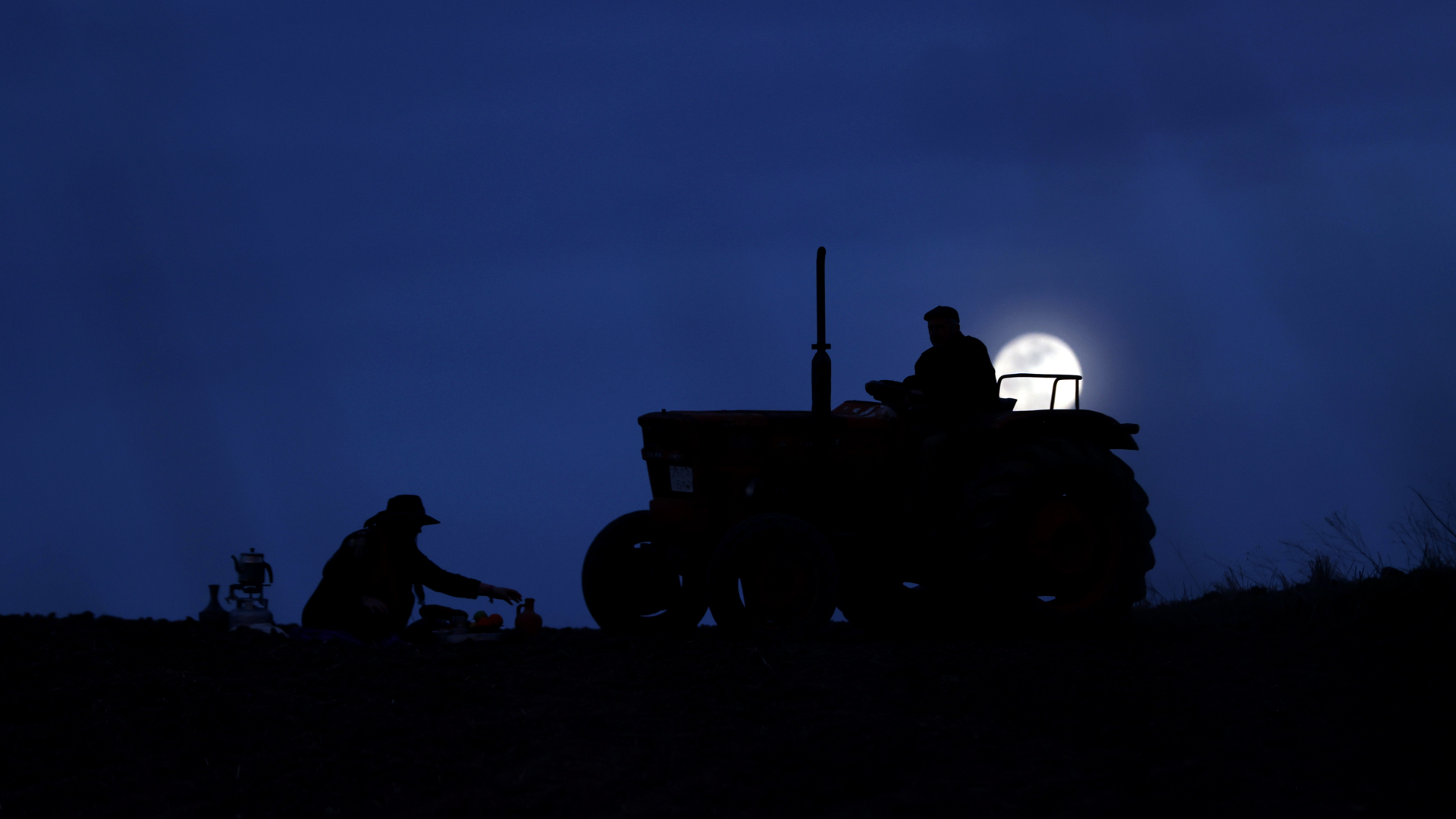
The tradition of assigning distinct names to full moons originated with Native American tribes in what is now the northern and eastern United States. Centuries ago, these indigenous communities developed a system to track the seasons by bestowing unique appellations upon each full lunar cycle, with these names often encompassing the entire month in which they occurred. For instance, the renowned Harvest Moon provided crucial illumination, allowing farmers to labor late into the night during the peak of the autumn gathering season. This period marked the readiness of vital staple crops like corn, pumpkins, squash, beans, and wild rice for collection.
Contrary to a common misconception, the Harvest Moon does not remain in the night sky longer than other full moons. The distinction for longest duration belongs to the full moon occurring closest to the winter solstice, which can stay above the horizon for over 15 hours at mid-northern latitudes.
What truly sets the Harvest Moon apart is its distinctive rising pattern. While it typically appears around sunset, its more significant characteristic is that for several consecutive evenings, it rises at nearly the same time. This deviates significantly from the usual average 50-minute delay observed with other full moons each night. This unusual celestial phenomenon—a full or nearly full moon consistently emerging near sunset for multiple nights, thereby shortening the period of darkness—was historically regarded as a special natural provision, enabling farmers to continue their labors into the night without interruption.

In Boston, Massachusetts, the moonrise schedule around the Harvest Moon demonstrates a notable deviation from its usual pattern. On October 5, the moon rose at 5:32 p.m., followed by 5:55 p.m. on October 6, and 6:20 p.m. on October 7. This progression indicates an average daily delay of approximately 24 minutes during this specific period, significantly less than the typical nightly delay of about 50 minutes.
The nightly variation in moonrise time is most pronounced for observers in more southerly Northern Hemisphere locations. For instance, Miami, Florida, situated at approximately 25.8 degrees North latitude, experiences an average moonrise delay of 37 minutes each night. In stark contrast, locations further north, such as Edmonton, Alberta, Canada, at 56.7 degrees North latitude, observe a considerably smaller average difference of just 11 minutes.
This astronomical phenomenon is attributed to the moon’s apparent movement along the ecliptic. At this specific time of year, as the moon rises in the Northern Hemisphere, the ecliptic forms its shallowest angle with the horizon.
Conversely, for those in the Southern Hemisphere, the ecliptic appears nearly perpendicular to the eastern horizon during this period. As a result, the night-to-night difference in moonrise can significantly exceed the typical 50-minute average. For example, in Christchurch, New Zealand, situated at 43.5 degrees South latitude, this delay extends to 81 minutes.
Near 70 degrees north latitude, observers note the moon rises at a consistent time each night around the Harvest Moon period. Venturing further north, however, reveals a counterintuitive effect: the moon appears to rise progressively earlier. For instance, in Barrow, Alaska, situated at 71.3 degrees N, moonrise times on October 5, 6, and 7 are recorded at 7:16 p.m., 6:39 p.m., and 5:51 p.m., respectively, illustrating this unusual celestial behavior.
In Barrow, the moon’s apparent rise time will advance by approximately 43 minutes each subsequent night.
Joe Rao instructs and delivers guest lectures at New York’s Hayden Planetarium. He is also a regular contributor on astronomy topics for publications such as Natural History magazine and Sky and Telescope, among others.