The likelihood of a space plane ever again visiting the International Space Station (ISS) appears increasingly remote.
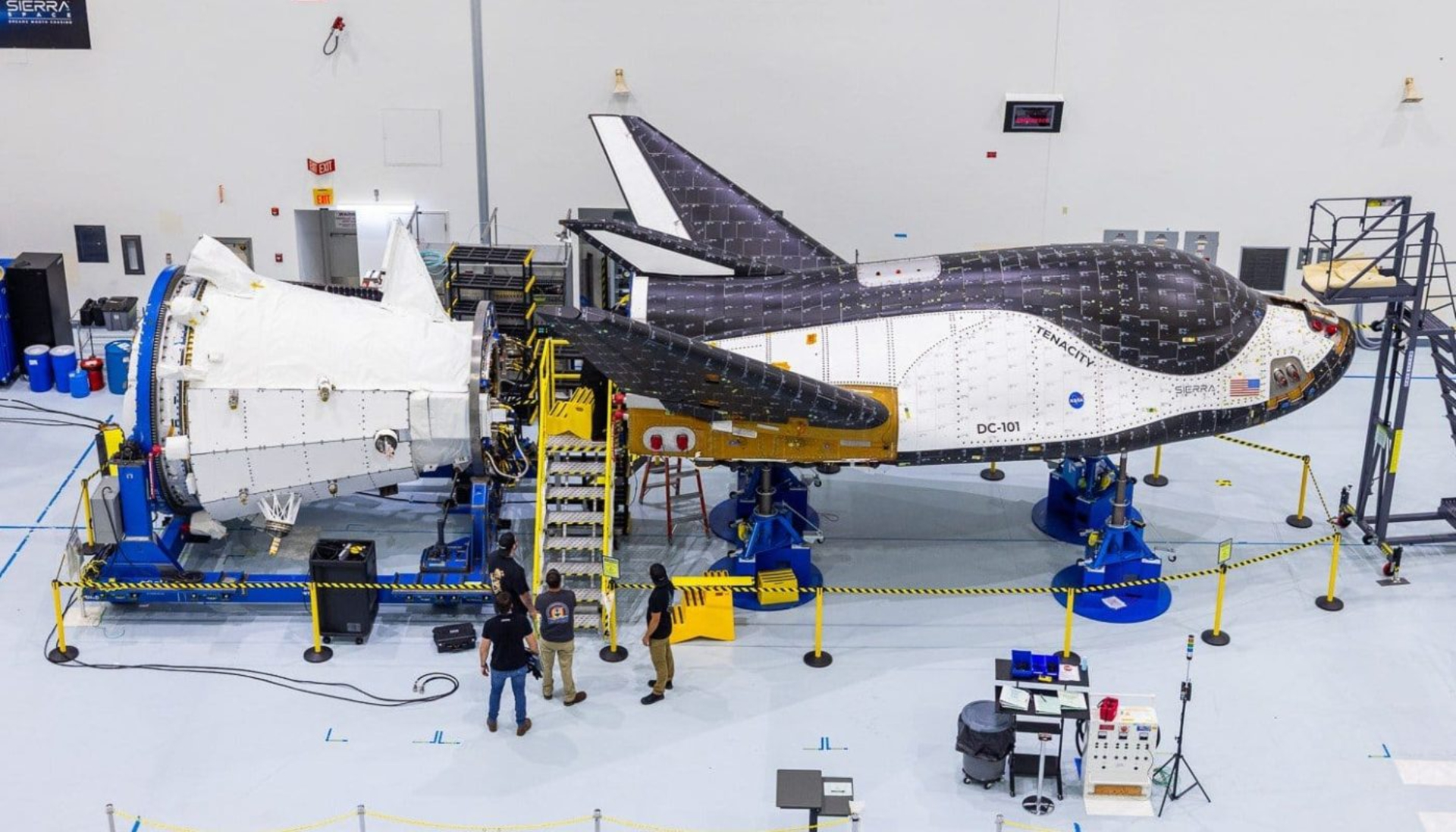
NASA’s Space Shuttle fleet played a critical role in the construction and initial decade of operations for the International Space Station (ISS). These reusable spacecraft were responsible for transporting astronauts to and from the orbital outpost until their full retirement in 2011. Five years subsequent to the shuttles’ retirement, the agency initiated a new chapter for space plane collaborations, formalizing a cargo contract with Colorado-based Sierra Space, developers of the robotic Dream Chaser vehicle.
Sierra Space was awarded a 2016 contract guaranteeing at least seven resupply missions to the International Space Station (ISS) for its Dream Chaser spacecraft and its companion Shooting Star cargo module. However, nearly a decade later, the Dream Chaser has still not achieved spaceflight, and the terms of its original cargo agreement have recently been altered.

NASA and Sierra Space have mutually adjusted their contract, with the company opting to prioritize a free flight demonstration for its Dream Chaser spacecraft, now projected for late 2026. Agency officials confirmed the agreement in an emailed statement on Thursday, September 25, indicating the modification followed a thorough evaluation to best serve the vehicle’s development.
Sierra Space will continue to brief NASA on the Dream Chaser’s developmental progress, including its upcoming flight demonstration. NASA, in turn, will provide only minimal support for the remainder of the development phase and the flight demonstration itself. A significant change to the agreement frees NASA from its previous obligation to a specific number of resupply missions. However, the agency retains the option to order Dream Chaser resupply flights to the International Space Station from Sierra Space, provided the vehicle completes a successful free flight, as stipulated by their current contract.
The window for potential Dream Chaser missions to the International Space Station (ISS) is narrowing, as the orbiting laboratory is slated for deorbit in 2030. Despite this tight timeline, NASA is actively promoting the development of commercial space stations in low Earth orbit (LEO) to succeed the ISS. This initiative could pave the way for Dream Chaser to service one or more of these new private facilities in the coming years.
In a statement issued Thursday, Sierra Space, which became an independent entity from aerospace firm Sierra Nevada Corp. in 2021, underscored the Dream Chaser’s diverse potential applications. Company officials emphasized the versatile space plane’s capability to undertake a wide array of future missions, even if it does not ultimately serve the International Space Station.
Fatih Ozmen, executive chair at Sierra Space, asserted that the Dream Chaser system embodies the future of versatile space transportation and operational flexibility.
Ozmen stated that this transition delivers unique capabilities to address a range of mission profiles, including emerging and existential threats, as well as national security priorities, aligning with the organization’s expansion into defense technology. He added that, in collaboration with NASA, they are committed to preserving Dream Chaser’s exceptional potential as a national asset, ensuring its readiness for the future of space innovation.
NASA currently depends on two private American companies for robotic resupply missions to the International Space Station (ISS): SpaceX, which deploys its Dragon capsules, and Northrop Grumman, utilizing its Cygnus spacecraft. In a further critical role, the agency has also tasked SpaceX with the controlled deorbiting of the ISS in 2030, a complex operation slated to use a modified version of the Dragon spacecraft.