
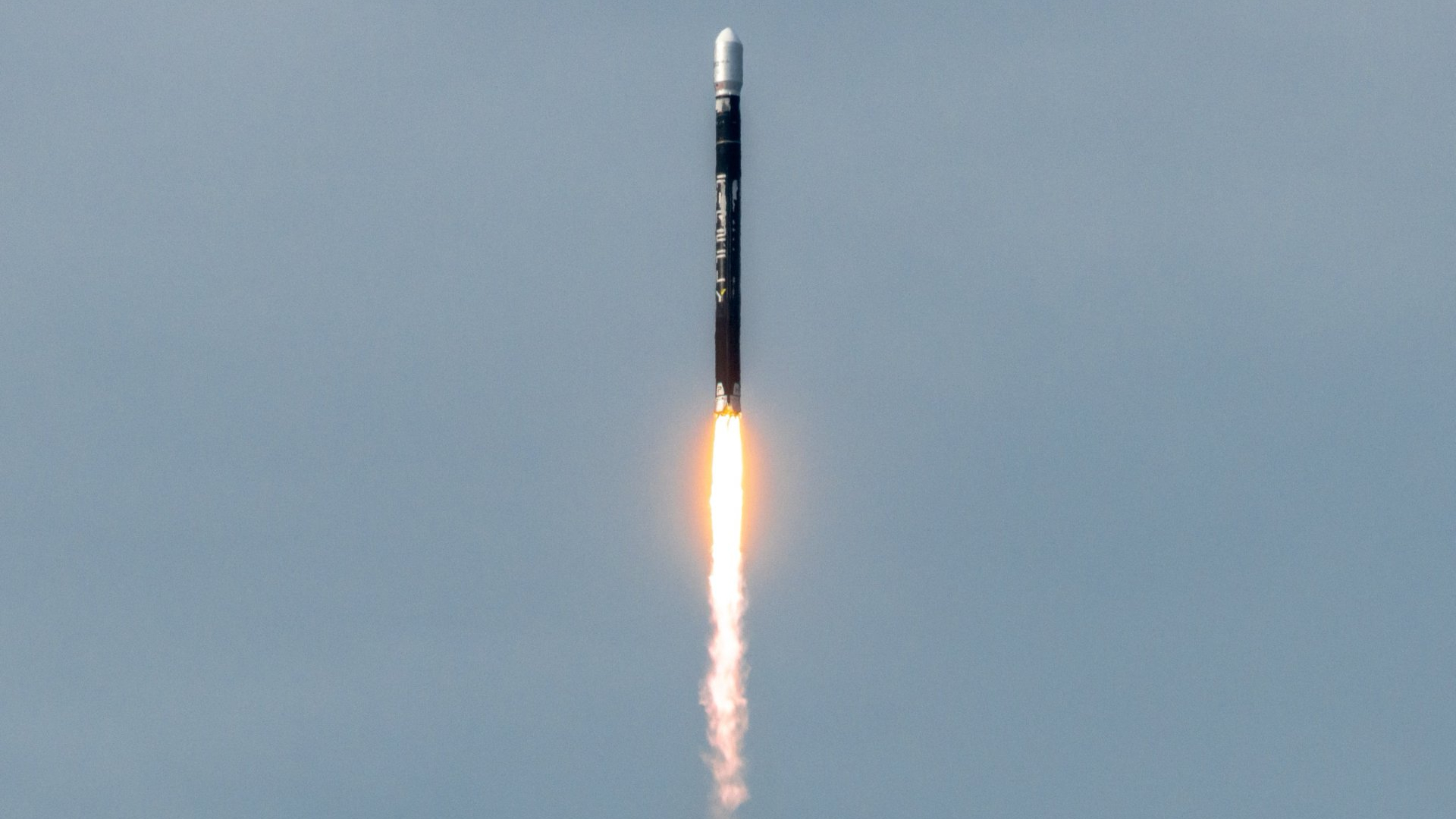
An extended waiting period is now projected for the next flight of Firefly Aerospace’s Alpha rocket.
On Monday, September 29, the first stage of Firefly Aerospace’s Alpha rocket exploded during a preflight trial. The incident occurred as the vehicle was being prepared for its seventh launch.
The first stage of Firefly’s Alpha Flight 7 rocket was lost following an “event” during testing at the company’s Briggs, Texas, facility, Firefly announced Monday afternoon. The aerospace firm confirmed that all proper safety protocols were observed, ensuring the safety of all personnel. The company is currently assessing the impact to its stage test stand, noting that no other facilities were affected.

Firefly is grappling with another operational setback, following a similar failure during its Alpha launch this past April.
The “Message in a Booster” mission experienced a critical failure when Alpha’s first-stage booster disintegrated shortly after separating from the upper stage. This anomaly inflicted significant damage on the upper stage’s engine nozzle, severely compromising its thrust capabilities. Consequently, the mission resulted in the loss of its payload, Lockheed Martin’s LM 400 satellite technology demonstrator.
Firefly identified the root cause of the issue as an accumulation of excessive heat in the first stage, stemming from a phenomenon termed “plume-induced flow separation.” Earlier this month, the U.S. Federal Aviation Administration officially accepted the findings of the company’s anomaly investigation and its comprehensive mitigation plan, thereby clearing the Alpha rocket for its next launch.
Since its inaugural flight in September 2021, the two-stage Alpha rocket, which stands 96.7 feet (29.6 meters) tall, has completed six orbital launches. However, only two of these missions have achieved full success.
Firefly’s official launch schedule indicates that the seventh flight of its Alpha rocket will serve as a mission for Lockheed Martin. Although Firefly had previously targeted a launch within the current year, any potential shifts to this timeline are not yet clear.
Firefly Aerospace upholds a stringent testing philosophy, meticulously evaluating every critical component, engine, and vehicle stage. This comprehensive process ensures each element operates within specified flight requirements before being transported to the launch pad. The company emphasizes that insights gleaned from these evaluations are instrumental in refining designs and enhancing overall system reliability. Firefly indicated that additional information regarding its future trajectory would be released at a later date.
Firefly’s portfolio extends beyond rocket development, with the company arguably most recognized for its robotic Blue Ghost moon lander. The spacecraft achieved a significant milestone in March, successfully completing its inaugural lunar mission for NASA.





