A remarkable celestial event illuminated the night sky over a vast expanse of the Western United States Sunday evening. Observers from Los Angeles to Phoenix witnessed a prominent streak of light dramatically cross the heavens, presenting a captivating cosmic spectacle.
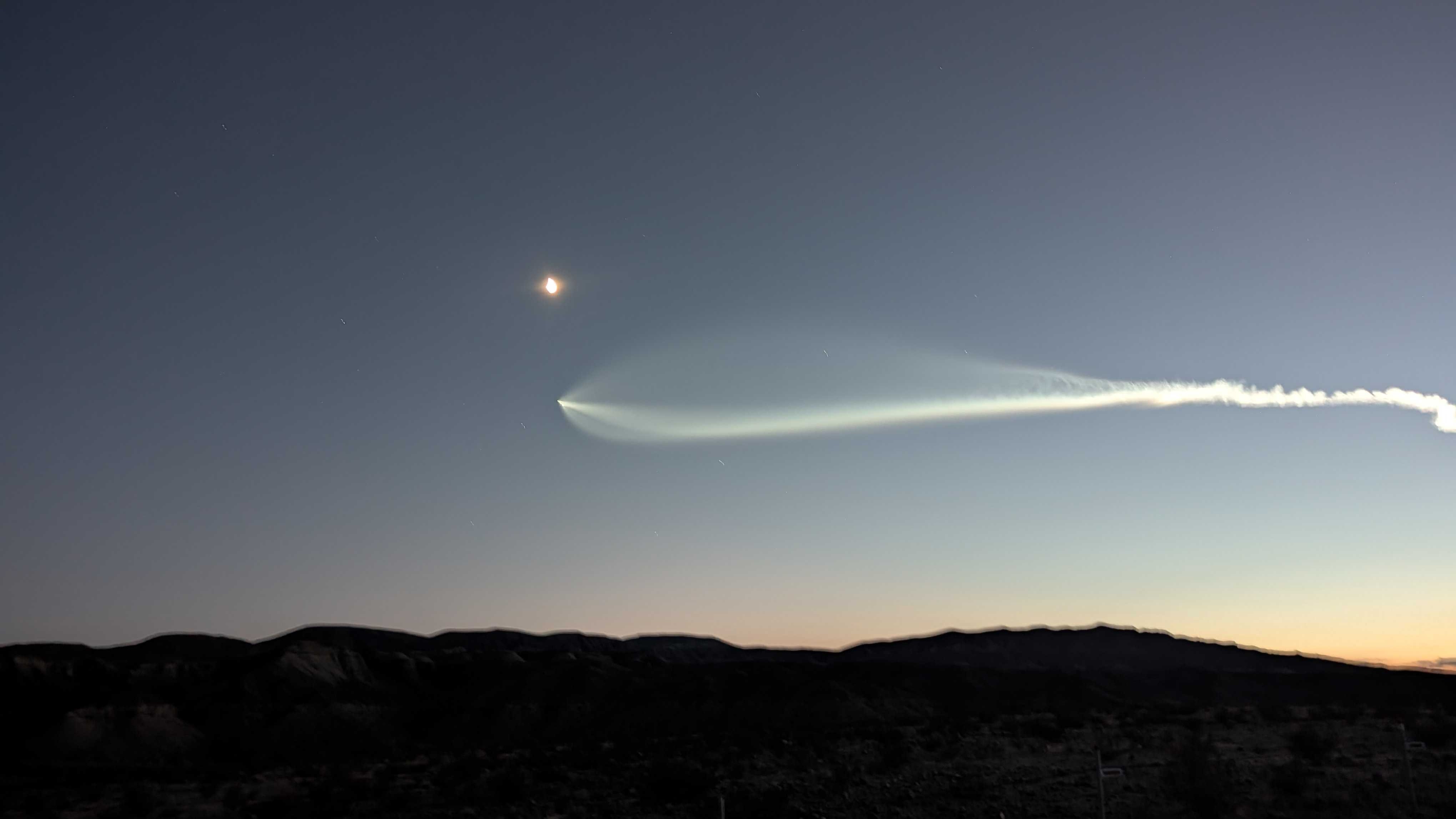
A striking “jellyfish” effect appeared in the upper atmosphere just minutes after SpaceX’s Starlink mission launched on September 28. The Falcon 9 rocket, departing from Vandenberg Space Force Station in California, created the unusual phenomenon following its ascent.
The Falcon 9 rocket successfully launched on September 29 at 11:04 p.m. EDT (7:04 p.m. PDT; 0204 GMT). The mission deployed 28 new Starlink satellites, expanding SpaceX’s vast wireless internet megaconstellation, which now comprises over 8,000 networked spacecraft. The twilight liftoff offered a spectacular visual, as the setting sun dramatically illuminated the Falcon 9’s ascending engine exhaust against the darkening sky, captivating observers across hundreds of miles.
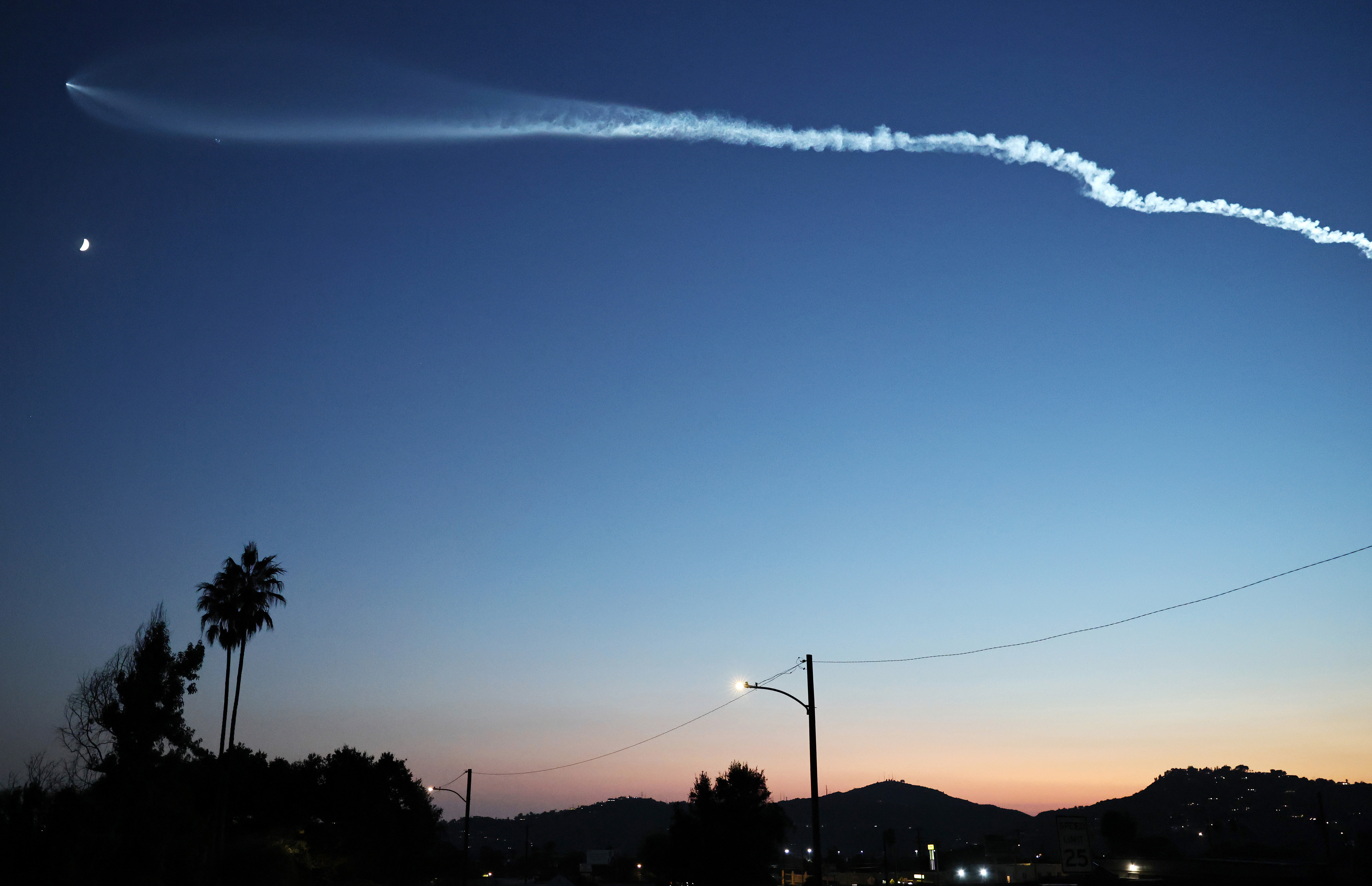
As a rocket ascends into the less dense upper atmosphere, its exhaust plume characteristically expands, creating a distinctive visual often referred to as the “space jellyfish.” While Vandenberg Space Force Base is frequently shrouded in overcast and extremely foggy conditions, Sunday’s notably clear skies presented ideal circumstances for the Falcon 9’s striking display to be fully visible.
Space.com’s Managing Editor Brett Tingley, among numerous onlookers observing the impressive aerial display, captured an image of the rocket as it traversed Afton Canyon in the Mojave Desert.
While camping in Afton Canyon, nestled within the vast Mojave National Preserve, an unexpected celestial display captivated observer Tingley. He described witnessing a vibrant streak of light, a phenomenon he quickly identified as a Falcon 9 ‘jellyfish’ — a sight he had only previously encountered online. The spectacle was further enhanced by the setting sun, which bathed the exhaust plume in a ‘gorgeous’ glow from below, providing a surprising and memorable start to a night dedicated to dark-sky stargazing.
The aerial phenomenon garnered significant attention on X, where users shared numerous observations of its transit across the sky. Among the most striking visual records were photos and videos posted by West Coast spaceflight photographer @spacecoastwest.
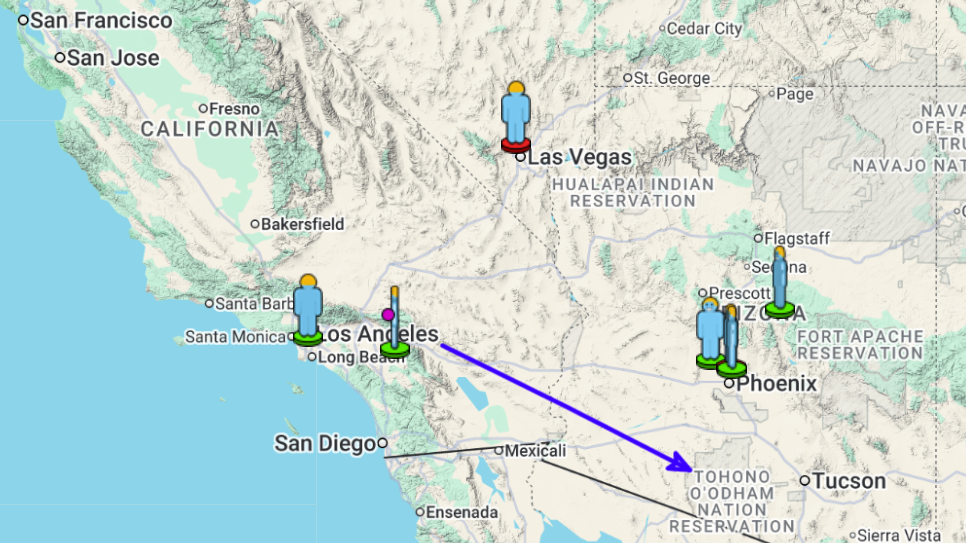
Reports of the sightings were also submitted to the American Meteor Society (AMS). This organization specializes in tracking and pinpointing unusual aerial phenomena, predominantly meteorites, by analyzing data provided by eyewitnesses.
A recent launch sparked seven distinct fireball reports submitted to the website. Among these was a video from Phoenix, Arizona, where onlookers observed a prolonged streak across the night sky and pondered if it could be a comet.
Sunday’s launch saw a veteran Falcon 9 first stage complete its 28th mission. Approximately 8.5 minutes after liftoff, the booster executed a successful downrange landing on SpaceX’s autonomous droneship, “Of Course I Still Love You,” positioned in the Pacific Ocean. Concurrently, the rocket’s second stage continued its trajectory into orbit, where it successfully deployed the mission’s satellites into low Earth orbit (LEO).
Visual spectacles similar to the one recently observed, though not exceedingly rare, often prove challenging to predict. The distinctive “jellyfish phenomenon,” in particular, most frequently occurs during rocket launches conducted around dawn or dusk. Therefore, individuals residing within a few hundred miles of a launchpad are encouraged to watch the skies for these unique displays.