Aurora borealis enthusiasts are encouraged to keep their cameras ready, as the northern lights are expected to deliver a final, potentially spectacular display tonight, October 2nd. This anticipated showing comes ahead of a predicted lull in viewing conditions over the upcoming weekend.
Recent nights have witnessed geomagnetic activity far surpassing predictions, notably culminating in a potent G3 (strong) geomagnetic storm on Wednesday, October 1. This surprising event rendered aurora visible remarkably far south, reaching areas like New York. However, forecasters at NOAA’s Space Weather Prediction Center (SWPC) indicate the atmospheric light show may not be entirely concluded. A G2 (moderate) geomagnetic storm watch is currently in effect for tonight, as Earth’s magnetic field continues to be impacted by high-speed solar wind.
A powerful G3-level geomagnetic storm was recorded on October 2 at 0559 UTC, the National Oceanic and Atmospheric Administration’s (NOAA) Space Weather Prediction Center (SWPC) has reported. These strong storm conditions are anticipated to continue until 1200 UTC on the same day, with a subsequent reduction to minor-to-moderate G1-G2 storm levels likely thereafter.
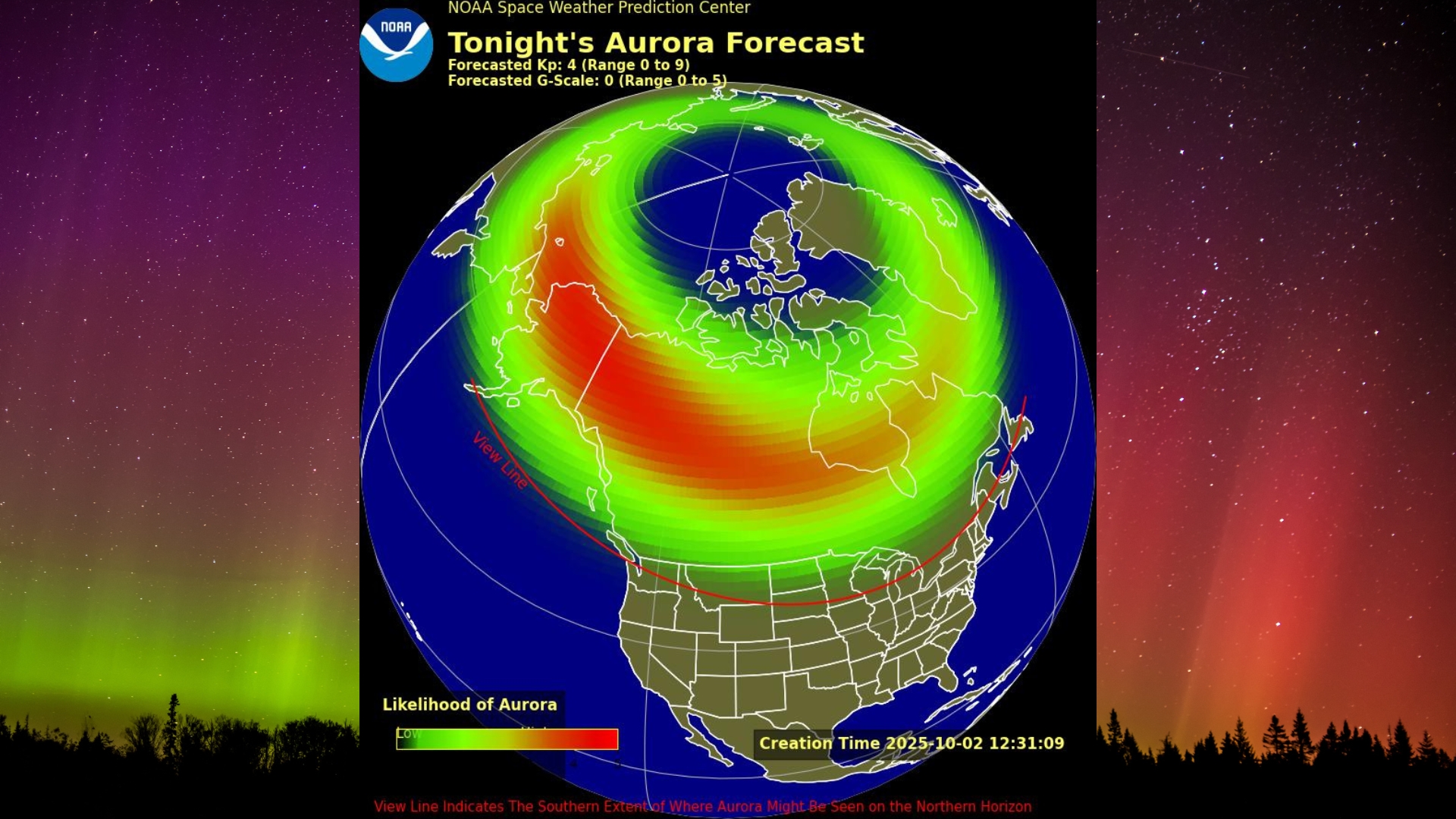
The National Oceanic and Atmospheric Administration’s (NOAA) latest 3-day Kp index forecast indicates that minor (G1) geomagnetic storm conditions are probable for much of October 2. Forecasters also anticipate a potential moderate (G2) peak in activity between 9 a.m. and 12 p.m. GMT (5 a.m. to 8 a.m. EDT).
Although this stronger burst is projected during daylight hours for many aurora observers, elevated geomagnetic activity is expected to continue throughout the day and into the evening. This sustained activity presents a solid chance for northern lights displays after nightfall, particularly if the storm’s strength is maintained or intensifies, mirroring patterns from recent nights.
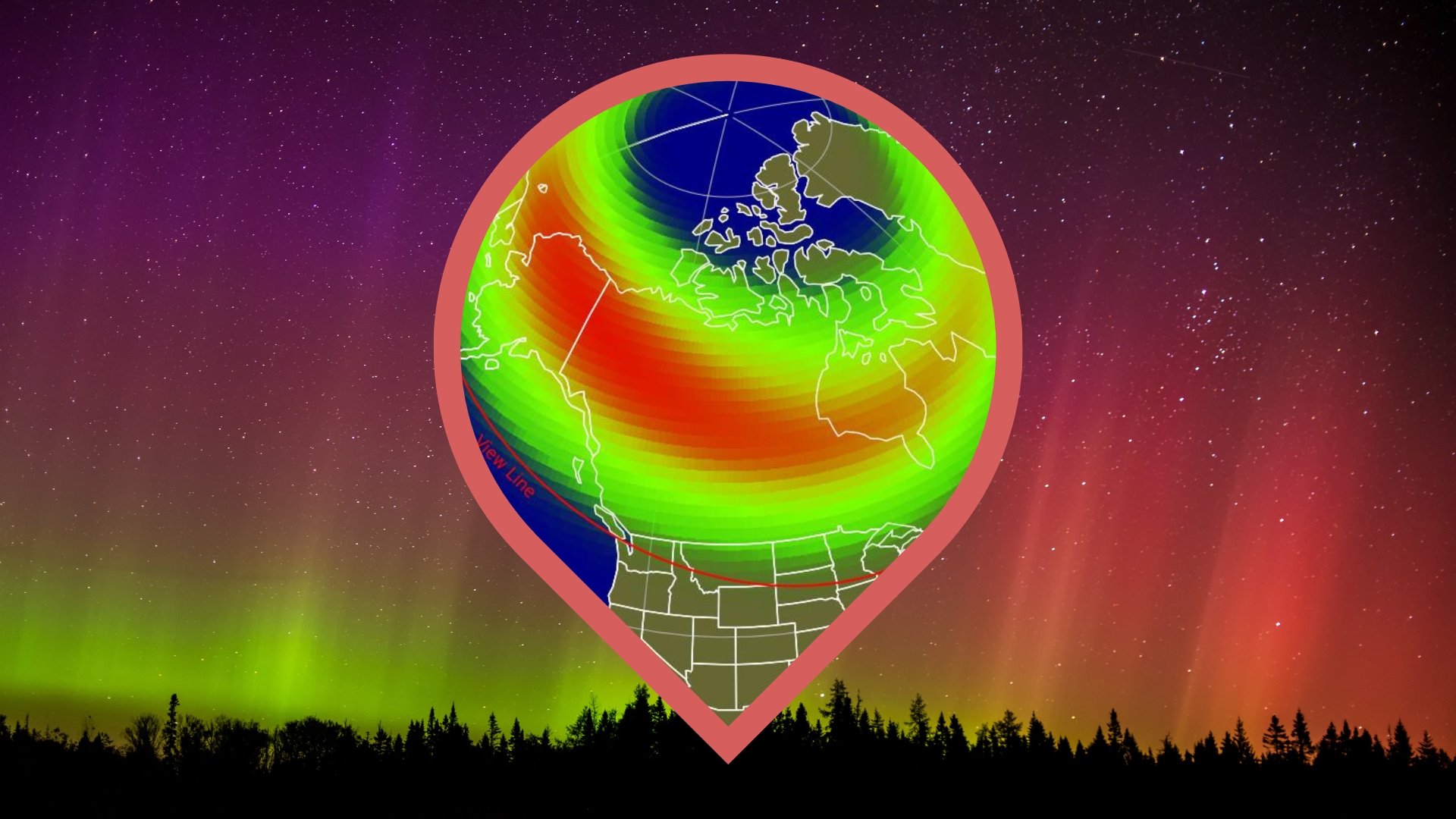
The northern United States could experience a potential sighting of the aurora borealis tonight, provided G2-level geomagnetic storm conditions emerge and weather permits clear skies. The National Oceanic and Atmospheric Administration’s (NOAA) most recent aurora oval forecast indicates that numerous states are positioned either partially within or exceptionally close to tonight’s projected aurora viewing line.
Auroral displays remain highly unpredictable. However, should geomagnetic storm levels reach G2 or G3 intensity, as observed on recent nights, the auroral oval could expand considerably farther south. This expansion might bring the celestial phenomenon into view over additional states, potentially including Vermont, parts of northern Pennsylvania, Iowa, and the southern half of Oregon, given optimal viewing conditions.

Tonight is anticipated to be the final opportunity for significant aurora activity stemming from the current space weather event. Both the National Oceanic and Atmospheric Administration (NOAA) and the U.K. Met Office foresee geomagnetic conditions gradually stabilizing after October 2. This expected decrease in activity is attributed to declining solar wind speeds and Earth moving out of the most active region of the solar wind stream.
While sporadic active periods may persist until October 3, the likelihood of G1 or more powerful storms is projected to diminish significantly.
For individuals residing in the 12 aforementioned U.S. states, guidance is provided to enhance the visibility of the display.
To optimize aurora viewing, individuals are advised to utilize a space weather application capable of providing location-specific forecasts. While numerous comparable tools are available, ‘My Aurora Forecast & Alerts,’ accessible on both iOS and Android platforms, is frequently recommended for direct aurora predictions. For a more comprehensive analysis of current space weather conditions and their potential impact on aurora visibility, the ‘Space Weather Live’ app, also compatible with iOS and Android devices, offers detailed insights.
Earth is currently experiencing a period of geomagnetic unrest, fueled by a powerful stream of fast solar wind. This high-velocity outflow originates from a positive polarity coronal hole on the sun – a region characterized by open magnetic field lines that permit solar particles to escape directly into space. Surging towards our planet at speeds exceeding 800 kilometers per second (1.8 million miles per hour), this energetic solar material is significantly perturbing Earth’s magnetic field, thereby generating ideal conditions for vivid aurora displays.
Earth is currently experiencing an exceptionally strong connection to this coronal hole, a phenomenon largely attributed to the equinox. This heightened sensitivity, known as the Russell-McPherson Effect, occurs when the planet’s magnetic field becomes more susceptible to solar disturbances due to seasonal alignment during both the spring and fall equinoxes.
The National Oceanic and Atmospheric Administration (NOAA) reports that solar wind conditions remain “elevated and disturbed.” A key component of this activity is the magnetic field’s orientation, known as Bz, which frequently dips southward. This specific alignment is crucial for energizing geomagnetic storms and producing visible auroral displays.