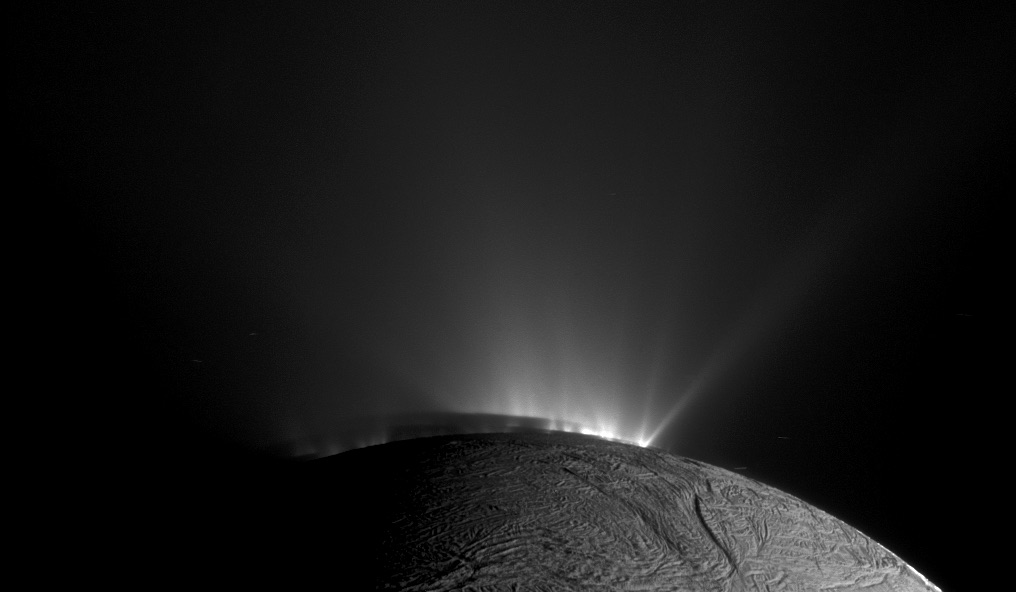
A significant discovery by scientists confirms that the fundamental molecular building blocks crucial for life are in abundant supply on Enceladus, Saturn’s icy moon.
Despite its modest size, just 314 miles (505 kilometers) wide – making it small enough to fit within Colorado – the moon Enceladus is a prime candidate in the search for extraterrestrial life. Its potential is attributed to a critical trifecta: the presence of liquid water, a robust hydrothermal energy source, and an essential chemical toolkit.
Two decades ago, NASA’s Cassini spacecraft made a significant discovery: a vast, salty ocean concealed beneath Enceladus’ icy surface. This subsurface sea was observed expelling minute “ice grains” through fissures near the moon’s south pole. Subsequent scientific investigations of these expelled particles have since identified five of the six elemental building blocks considered essential for life – carbon, hydrogen, nitrogen, oxygen, and phosphorus. Sulfur is the only remaining primary element yet to be detected within these samples.
Previous research primarily scrutinized aged ice particles found within Saturn’s diffuse E ring, located beyond the planet’s prominent main rings. These grains had been ejected from their source decades or centuries prior, introducing a critical ambiguity. Scientists faced uncertainty as to whether the compounds detected truly originated from Enceladus or were instead products of space weathering occurring within the E ring itself.
Astronomers have recently detected organic molecules, potentially incorporating nitrogen and oxygen, within fresh ice grains ejected from one of Saturn’s icy moons. These significant findings were published on Wednesday, October 1, in the journal Nature Astronomy.
In 2008, the Cassini spacecraft made a significant discovery while soaring through a geyser of ice grains erupting from Enceladus. The mission captured crucial data as these freshly expelled particles, impacting at an astonishing 11 miles per second (18 kilometers per second), splattered across the spacecraft’s Cosmic Dust Analyzer. This extreme velocity was key, as it prevented the water molecules within the grains from clustering upon impact. As a result, the research team was able to discern “previously hidden signals,” noted Nozair Khawaja, a planetary scientist at the Free University of Berlin and a co-author of the study, in a released statement.
Utilizing mass spectrometry, researchers meticulously examined the distinct chemical composition of fresh ice grains. Their analysis uncovered chemical compounds akin to those found on Earth, which are instrumental in facilitating reactions that lead to the formation of complex molecules essential for life. Notably, these findings included molecular structures potentially containing nitrogen and oxygen.
The presence of complex organic molecules in material recently ejected from Enceladus definitively proves their origin within the moon’s subsurface ocean, rather than being merely a result of long-term exposure to space. This finding, highlighted by study co-author Frank Postberg, a professor of planetary science at the Free University of Berlin, validates that the complex organic molecules previously identified by the Cassini mission in Saturn’s E ring are readily available from Enceladus itself.
Nozair suggested that the diverse mechanisms by which these molecules could attain biological significance considerably heighten the probability of Enceladus being habitable. He also contended that, paradoxically, the failure to detect any life on the Saturnian moon would itself be a monumental discovery, prompting profound questions about why life would be absent in an environment possessing all the requisite conditions.
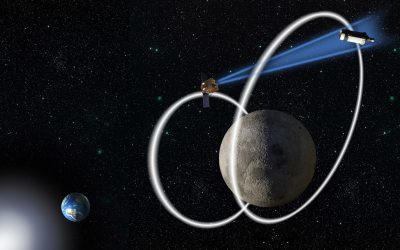
The European Space Agency (ESA) has outlined plans for an ambitious future mission: to land a spacecraft on the southern pole of Enceladus. The primary objective of this endeavor is to collect further samples, with the agency targeting the early 2040s as the earliest possible launch window.