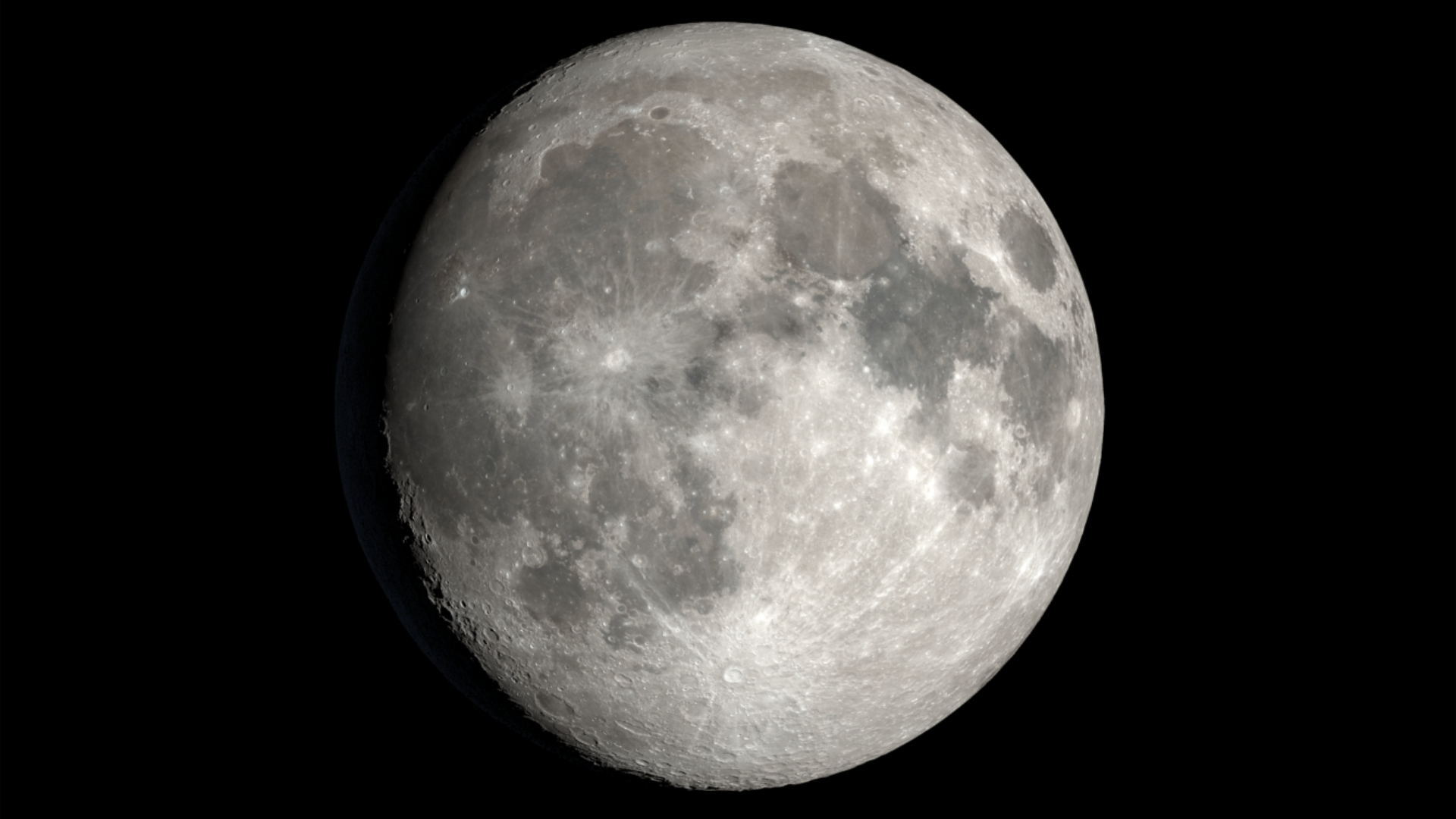
International Observe the Moon Night 2025 is scheduled for October 4. Observers are encouraged to direct their attention to the eastern horizon as the lunar disk rises, presenting an opportunity to identify specific celestial details.
Annually, NASA collaborates with its international partners to orchestrate a series of public events. These initiatives are designed to engage individuals in observing the Moon and to educate them about humanity’s ongoing efforts to explore Earth’s natural satellite. A wide array of virtual and in-person events are typically held to mark this yearly focus on lunar understanding.
A new compilation features exceptional lunar observation targets, designed to reveal the varied topography of the Moon’s surface. These points of interest are accessible via telescope, binoculars, or the unaided eye.
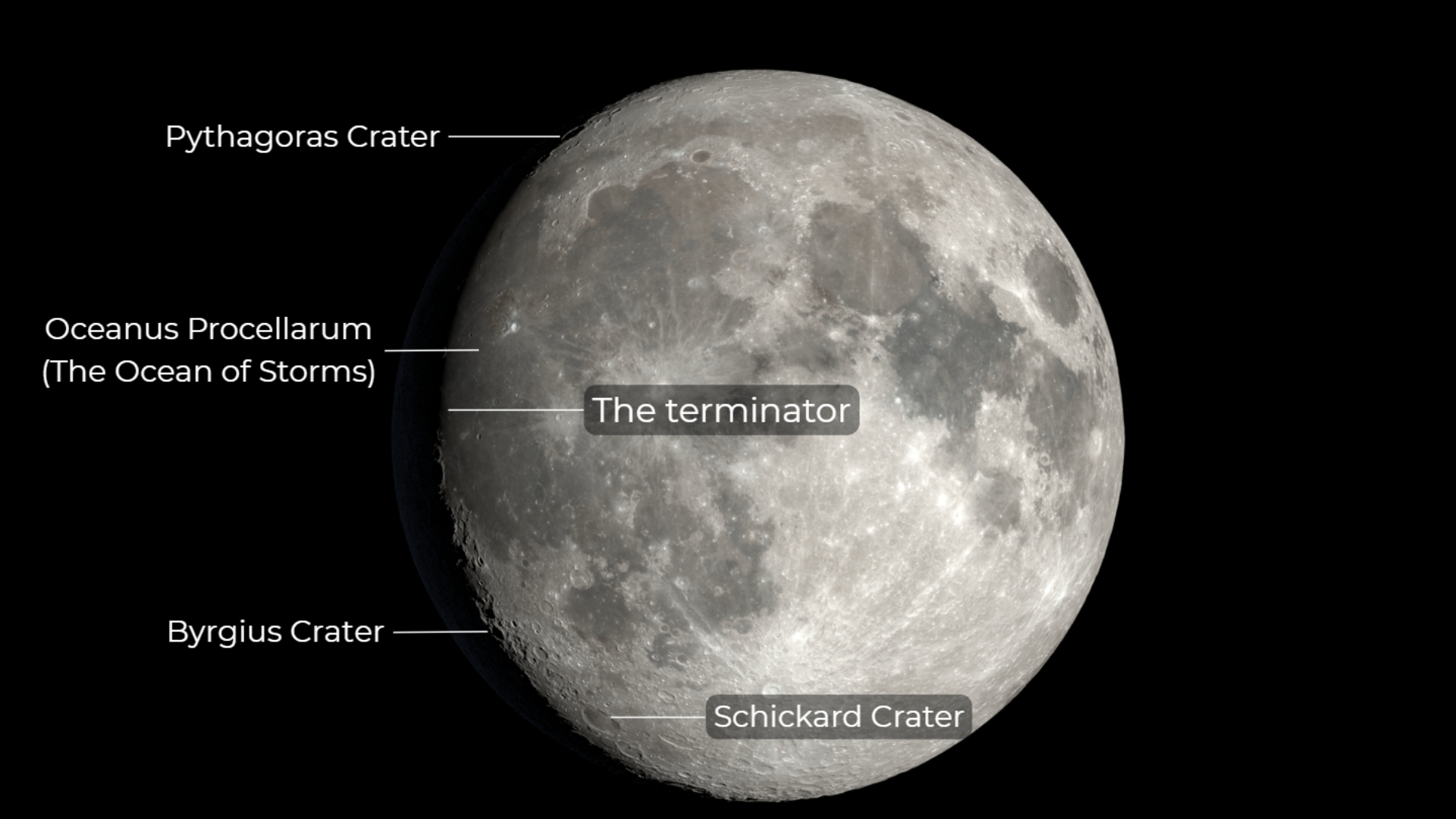
The lunar terminator, the line that separates day from night on the Moon’s surface, will be positioned on the extreme left side of the 95%-lit moon on October 4. This observation precedes the full moon phase by two days, with the full “Harvest Supermoon” occurring on October 6.
At the Moon’s terminator, the colossal, 75-mile (120-kilometer) Pythagoras Crater casts a striking, shadow-drenched silhouette. Further south, the expansive Schickard Crater’s western rim is starkly illuminated, situated beneath the distinctive oval outline of the impact crater Byrgius.
On October 4, observers focusing south of the lunar equator will find the vast, dark expanse known as Mare Nubium, or “the Sea of Clouds.” This expansive basalt plain, which covers a significant portion of the moon’s surface, is distinctly characterized by the prominent craters Lubiniezky, Bullialdus, and Wolf.
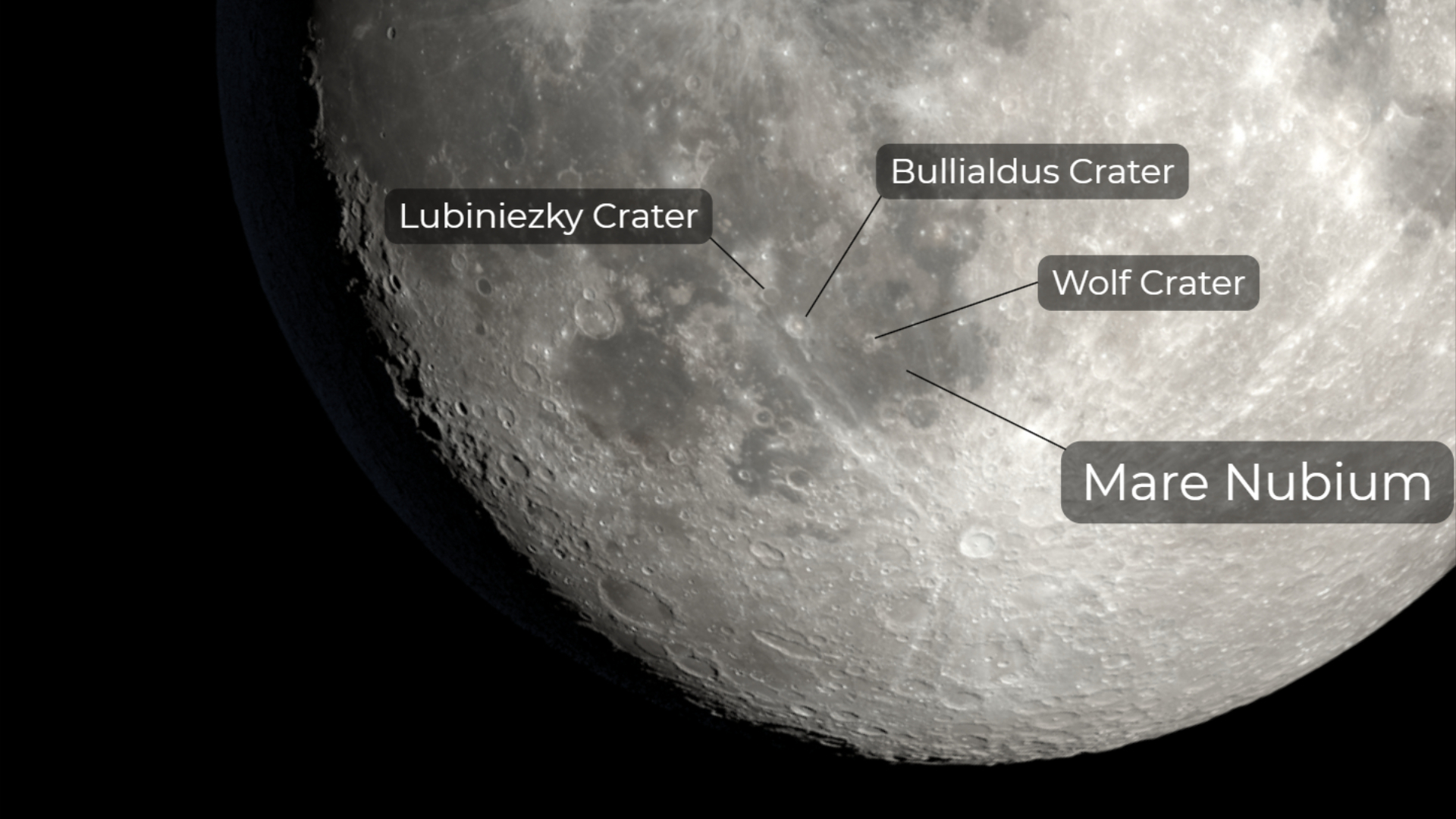
The Moon’s expansive “seas,” or maria, trace their origins back billions of years. These vast, dark plains formed as immense lakes of molten lava surged into impact basins, which had been violently excavated by relentless asteroid strikes. Over time, this molten material cooled and solidified, effectively repaving the lunar surface. The outcome was the creation of broad, relatively smooth regions that stand in stark contrast to the more ancient parts of the Moon, which remain heavily scarred by intense early bombardments.
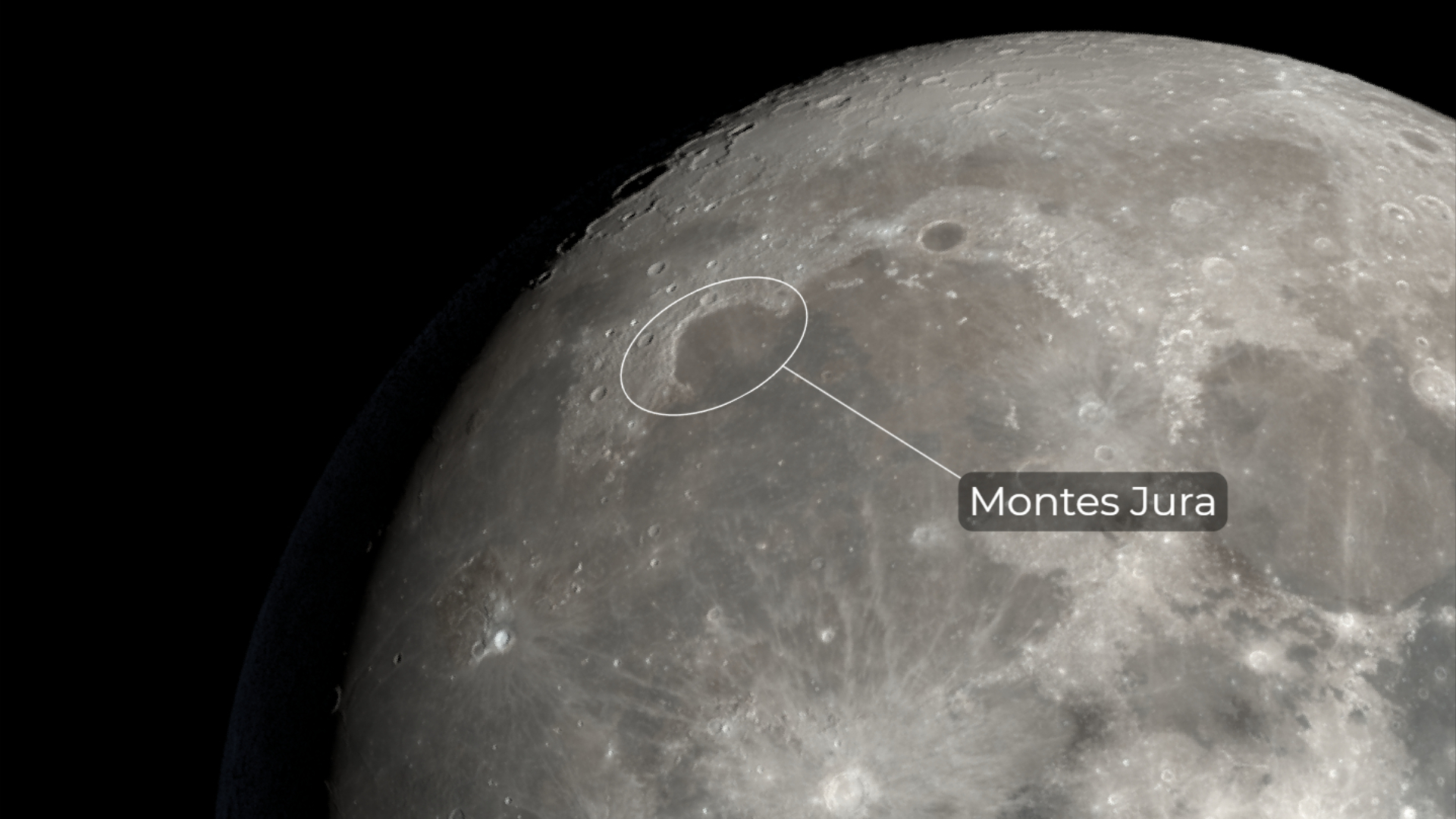
The expansive Montes Jura mountain range marks the northern boundary of the Sinus Iridum, an impact basin also known as the “Bay of Rainbows.” Roughly 11 days following the new moon phase each month, the sun’s rays perfectly illuminate the range’s upper peaks. This specific lighting creates a distinct optical illusion, casting what appears to be a magnificent “Golden Handle” across the lunar landscape.
The nights surrounding a full moon present an ideal opportunity to observe ejecta rays, luminous streaks that brighten the lunar surface. These distinctive features, radiating outwards from impact craters, are formed when asteroid collisions forcefully eject reflective material from the moon’s interior, often extending for hundreds of kilometers. Tonight, stargazers can spot these bright trails emanating from significant impact sites, including Kepler, Copernicus, and the prominent Tycho Crater, an 85-kilometer (53-mile) wide formation dominating the moon’s southern hemisphere.
Every impact crater initially forms with a distinct system of ejecta rays. However, these formations gradually dull and dissipate due to prolonged exposure to the harsh space environment. Consequently, the prominent ray systems still visible today, exemplified by the comparatively young Tycho crater—estimated at just 108 million years old—are indicators of more recent geological events.
Space.com invites readers to submit their captivating photographs of the lunar surface. To share your images with our audience, please send your photo(s), any accompanying observations, and your name and location to spacephotos@space.com.