On the night of October 5-6, 1923, Edwin Hubble made a pivotal discovery: a new star whose identification not only expanded the celestial catalog but fundamentally unveiled the profound and immense scale of the universe.
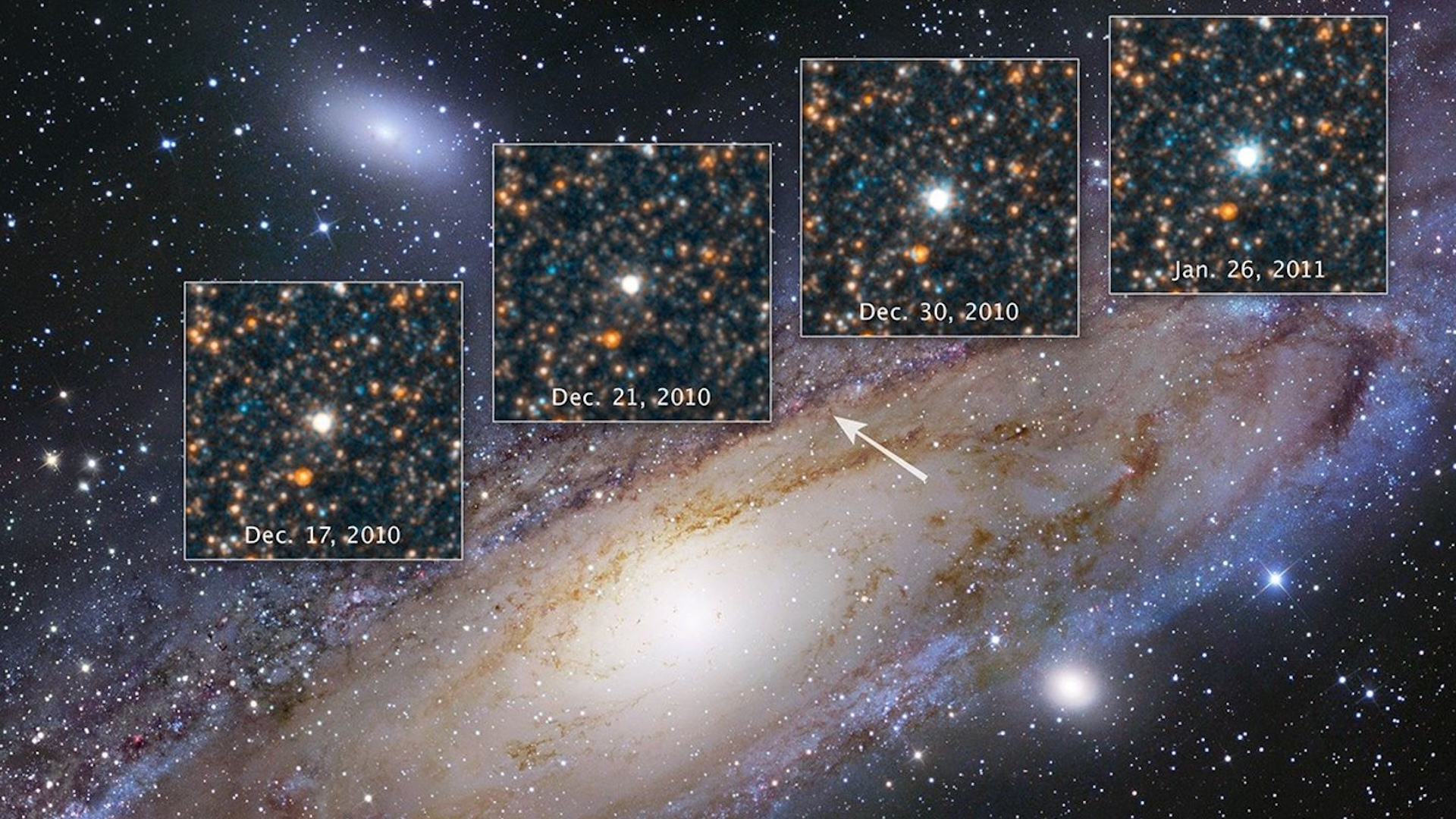
At the Mount Wilson Observatory near Pasadena, California, astronomer Edwin Hubble, peering through the 100-inch Hooker telescope, detected a faint, hazy patch of light. He documented this object by capturing a series of photographic plates. These images, initially indistinct and unassuming, would nevertheless fundamentally reshape humanity’s understanding of the cosmos.
Initially, astronomer Edwin Hubble classified a celestial object as a nova, a type of exploding star. However, closer scrutiny revealed the star’s luminosity varied distinctly and predictably over the course of a single night, undergoing a consistent pattern of brightening, dimming, and then brightening again. This crucial observation led Hubble to revise his initial assessment, famously striking through the “N” for nova on a photographic plate and substituting it with “VAR!” to denote its true nature as a variable star.
Designated M31-V1, the star was a cepheid variable, a type known for its remarkably regular fluctuations in intensity. While these cosmic “standard candles” are often linked to Edwin Hubble’s later work, their fundamental properties were established earlier. In 1912, Harvard observatory astronomer Henrietta Swan Leavitt meticulously cataloged the luminosity and the cyclical pattern of brightening and dimming—or period—of 25 cepheids located in the Small Magellanic Cloud, a neighboring dwarf galaxy. Her groundbreaking research revealed a critical correlation: the more luminous a cepheid, the slower its observed flicker.
Hubble’s pivotal observations decisively impacted a major astronomical debate unfolding at the time. Astronomer Harlow Shapley argued that the Milky Way constituted the entirety of the universe. Conversely, his rival Heber Curtis had roughly calculated the distance to the neighboring Andromeda galaxy, also known as Messier 31, which supported an “island universe” theory—a cosmos teeming with numerous and vastly distant galaxies.
Humanity’s closest galactic neighbor has long been a discernible fixture in the dark night sky, visible without the aid of a telescope. Yet, for centuries, its true nature fueled intense debate among skywatchers, who speculated whether the distant light was merely a constellation, a luminous nebula, or an independent galaxy.
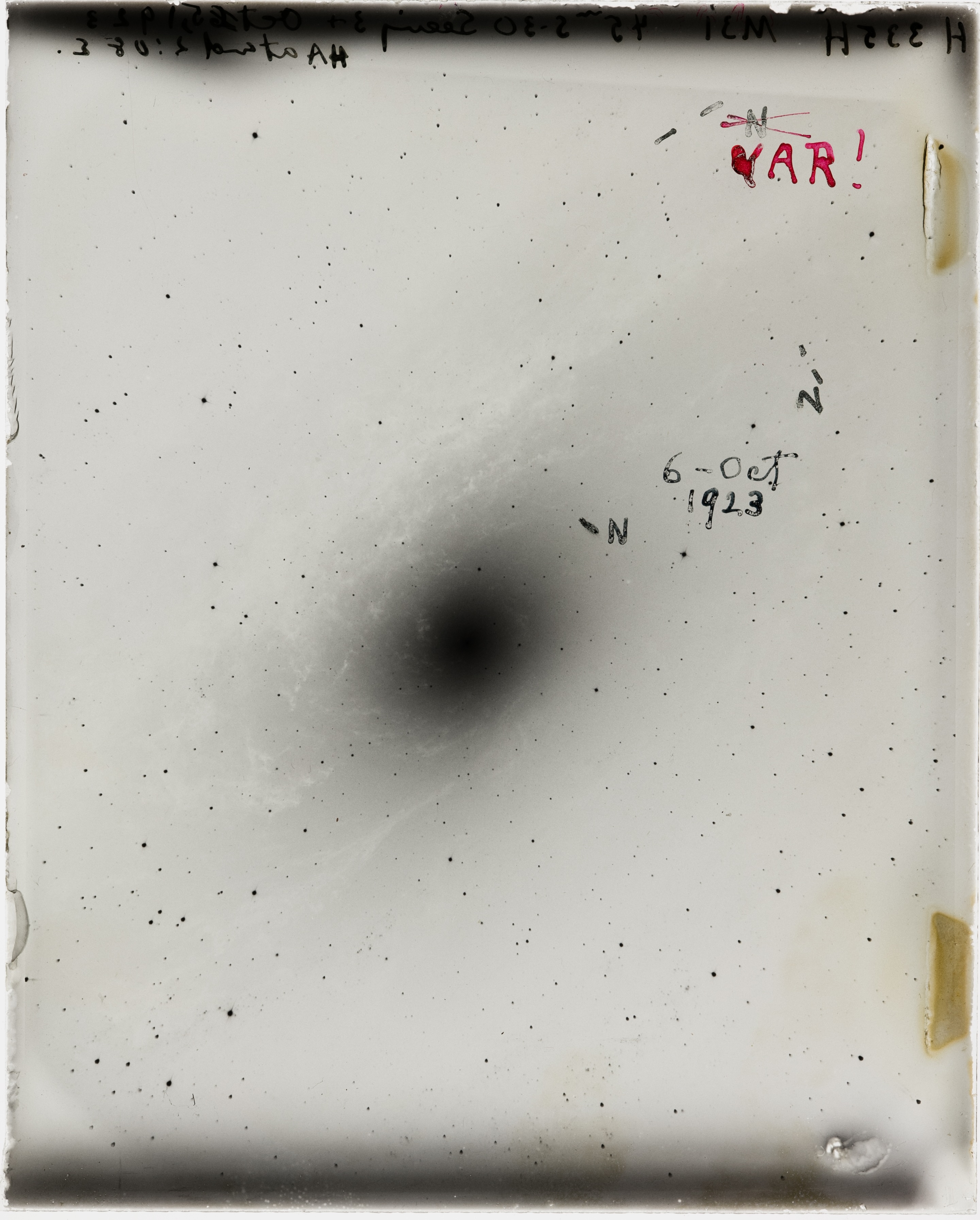
Edwin Hubble’s pivotal discovery of a Cepheid variable star provided powerful evidence supporting Heber Curtis’s argument that the Andromeda Nebula was, in fact, a separate galaxy from our own. Hubble meticulously observed this specific Cepheid within M31 over numerous nights throughout the year. By precisely measuring the flickering star’s consistent variations in light intensity, he was able to definitively calculate Andromeda’s immense distance, placing it approximately 900,000 light-years away.
Henrietta Leavitt’s pioneering work with Cepheid variable stars proved indispensable to Edwin Hubble’s seminal discovery of the expanding universe. While theoretical models, notably those by Georges Lemaître, had earlier proposed an expanding cosmos based on Albert Einstein’s general theory of relativity, Hubble’s meticulous calculations provided the definitive observational confirmation.

He integrated Leavitt’s foundational data on cepheid distances with observations from Milton Humason and his contemporaries. This combination illuminated the “red shift” of galaxies—a phenomenon where the Doppler effect stretches wavelengths of light, shifting them toward the redder end of the spectrum as cosmic bodies move away from us. A crucial finding was that more distant objects exhibited a more pronounced red shift, indicating they were receding at a significantly faster rate than those in closer proximity.
The universe’s expansion rate, initially calculated by Edwin Hubble, is famously known as the Hubble constant. Since the discovery of Cepheid M31-V1, extensive evidence has solidified the understanding that we inhabit an ever-expanding cosmos. This view was further refined in the 1990s with the groundbreaking revelation of dark energy, which indicated that this expansion is not merely ongoing but is, in fact, accelerating. However, a critical scientific puzzle has emerged: modern measurements of the universe’s expansion rate are producing inconsistent results. Unlocking the source of this discrepancy could lead to revolutionary discoveries in physics and potentially redefine accepted cosmological models.