
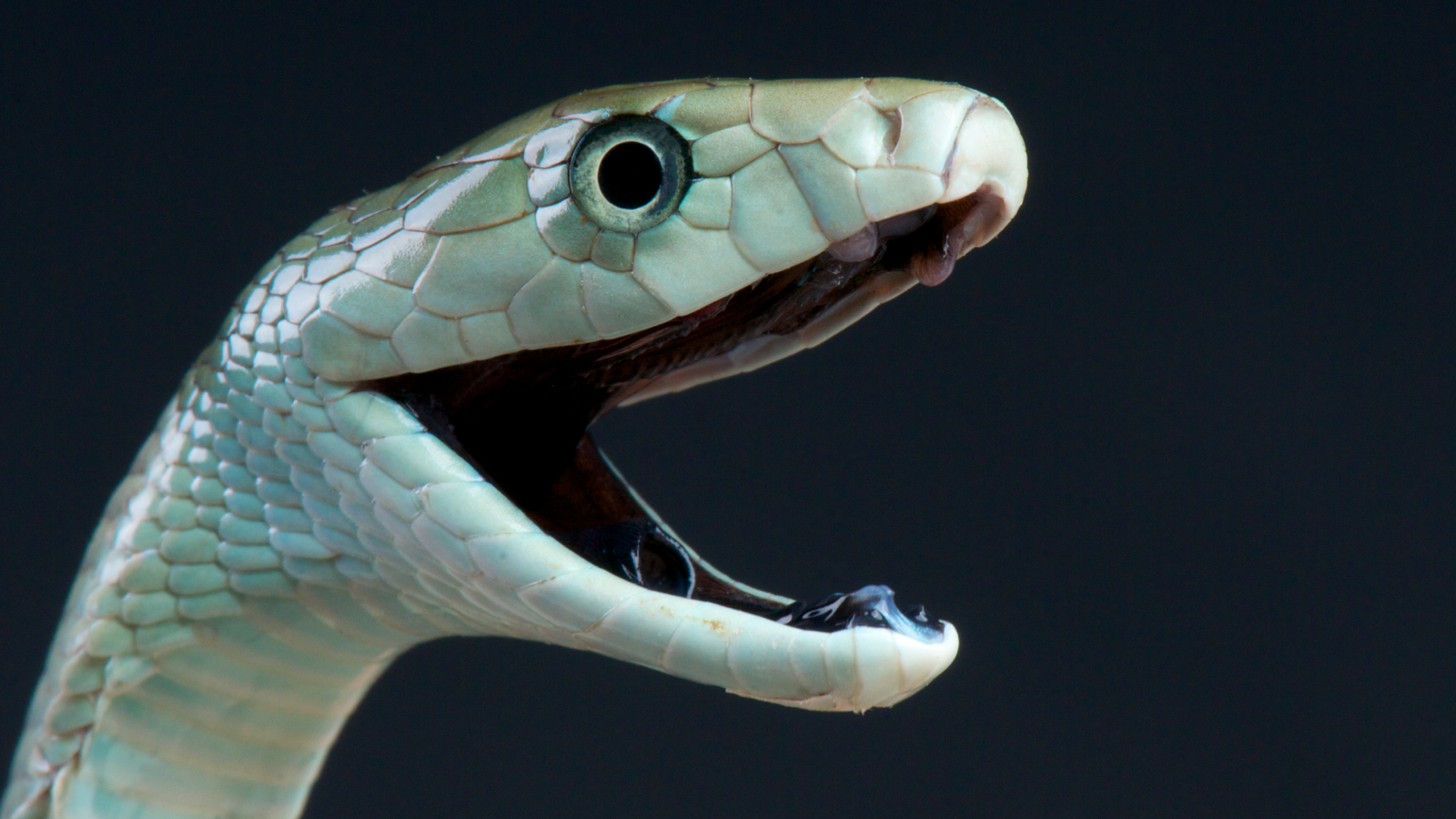
Scientists now believe they may have uncovered the reason why mamba snakebite symptoms sometimes paradoxically intensify in patients following the administration of antivenom.
The intricate interaction between venom toxins and antivenom can unmask neurological symptoms previously concealed within the body. These specific symptoms, often hidden by the effects of other equally dangerous toxins in the venom, become apparent only once those primary compounds have been neutralized.
Research published on September 26 in the journal *Toxins* reveals findings that could significantly advance the development of more effective treatments for deadly snakebites.
Four species of mamba snakes are classified under the genus Dendroaspis. Their bites represent critical medical emergencies throughout sub-Saharan Africa. Of particular concern is the black mamba, widely regarded as one of the world’s deadliest snakes, whose venomous bite is invariably fatal without immediate medical intervention.
Prompt medical intervention is critical, as the neurotoxins in mamba venom can rapidly induce fatal respiratory paralysis and cardiac arrest, often in under 60 minutes. This acute danger is a significant factor in the region’s annual toll of over 30,000 snakebite fatalities.
Mamba toxins fundamentally compromise the nervous system by effectively seizing control of nerve receptors situated on muscle tissue. This critical interference, according to Brian Fry, a molecular biologist at the University of Queensland and a co-author of a relevant study, ultimately blocks nerve signals from the brain, preventing them from reaching the muscles.
The onset of limp, or flaccid, paralysis can be alarmingly subtle, often going undetected until an individual attempts basic functions like walking or breathing, Fry explained. This condition, defined by the muscles’ inability to contract, is well-managed by existing antivenoms. Three mamba species—the western green, Jameson’s, and black mamba—are known to trigger this specific form of paralysis through their venom.
Mamba venoms employ a second, contrasting mechanism that leads to rigid, or spastic, paralysis. This occurs when muscles are overwhelmed by an excess of nerve signals, resulting in uncontrollable spasms. As explained by Fry, patients affected by this type of paralysis cannot breathe because their diaphragm becomes fully contracted, rather than remaining limp, effectively locking their respiratory system.
Historically, scientists attributed the severe neurotoxic effect of rigid paralysis solely to neurotoxins found in the venom of the eastern green mamba. The venoms from the three other mamba species, by contrast, were believed to induce only limp paralysis. However, researcher Fry has now clarified that rigid paralysis has, in fact, consistently occurred as a background effect with the other mamba species’ venoms, a detail previously unrecognized.
A study by Fry and colleagues investigated how venoms from the four mamba species attack the nervous system and evaluated the effectiveness of three commercially available African antivenoms. Utilizing neuromuscular tissue from laboratory animals, which allowed for either chemical or electrical stimulation of muscle, the researchers observed varying responses. Eastern green mamba venom triggered visible spasms in the tissue. In contrast, the venoms from the other mamba species initially produced no visible reaction. However, subsequent attempts to stimulate these muscles proved futile, demonstrating that these venoms effectively prevented muscle contraction.
Three antivenoms proved successful in reversing the debilitating limp-paralysis caused by bites from all mamba species, effectively restoring muscle function. However, this efficacy was often limited by the subsequent emergence of rigid paralysis in certain instances, a condition against which the antivenoms showed poor effectiveness. Expert Fry emphasized that while spastic paralysis can be fatal in mamba bite victims, flaccid paralysis is generally considered more dangerous due to its typically more potent impact.
Research has revealed that the black mamba’s exceptionally potent venom, capable of being lethal with just two drops, varies significantly by geographical origin. Investigators observed that venom from snakes in Kenya and South Africa displayed distinct differences, both in their impact on tissue and their response to antivenoms.
Developing antivenoms that effectively target all medically significant toxins, regardless of a snake’s geographical origin, hinges on a thorough understanding of venom variation across regions. This point was underscored by Andreas Hougaard Laustsen-Kiel, a biotechnologist at the Technical University of Denmark not involved in the research, who told Live Science that antivenoms need antibodies capable of neutralizing these diverse toxins. He further emphasized that the study’s critical insight is the necessity of optimizing antivenoms to neutralize both identified toxin types for maximum effectiveness.
Fry is now preparing to embark on a thorough and expansive investigation into the black mamba.
Mapping the precise effectiveness of antivenoms within specific regions is paramount. This detailed information will furnish medical professionals with the critical data needed to develop evidence-based strategies for patient management.





