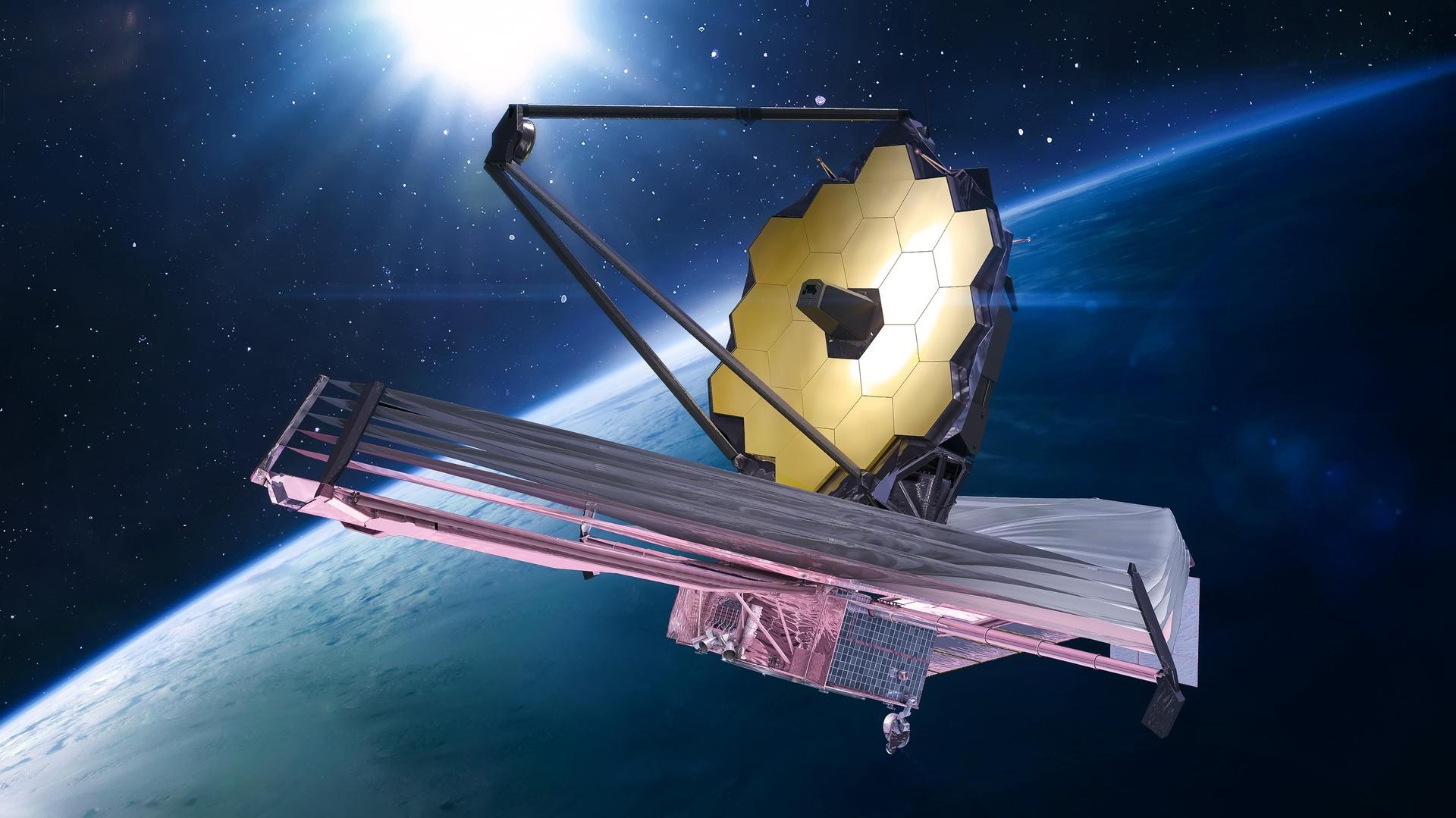
Astronomers believe the James Webb Space Telescope has identified what may be the second most distant object ever observed: a ‘dark star.’ This theoretical celestial body is hypothesized to derive its power from dark matter, a stark contrast to conventional stars fueled by nuclear fusion.
Scientists analyzing light wavelengths gathered by the James Webb Space Telescope (JWST) have identified four celestial bodies as potential dark star candidates. One of these objects notably exhibits what researchers are calling a “smoking gun” helium absorption signature. These findings were detailed in a study published on September 30 in the journal PNAS.
First hypothesized in 2007, dark stars are believed to be among the earliest celestial bodies — designated Population III stars — that emerged in the universe following the Big Bang. According to theoretical models, their formation occurs when nascent clouds of hydrogen and helium, which would typically collapse into a black hole on their own, instead intertwine with dark matter. These hypothetical stars are envisioned as being extraordinarily massive and luminous, potentially achieving a million times the mass of the Sun and shining with a brilliance a billion times greater.