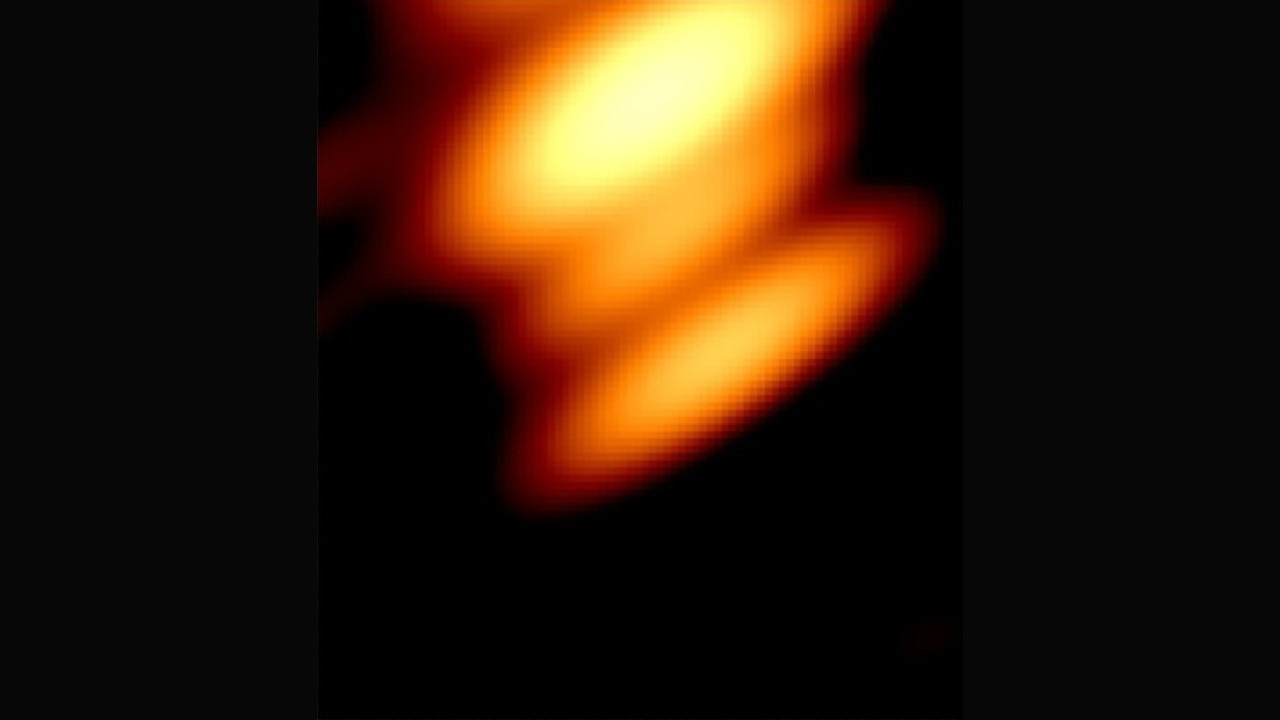
Astronomers have achieved a significant breakthrough, obtaining the first-ever radio image depicting two black holes orbiting each other. This pivotal observation definitively confirms a long-standing theoretical prediction that has eluded scientific verification for decades.
A recently released image has captured a striking view of two supermassive black holes locked in a gravitational embrace. These colossal objects reside within OJ287, a remarkably bright quasar situated approximately 5 billion light-years from Earth in the constellation Cancer. Quasars are recognized as intensely luminous regions at the hearts of galaxies, where the extreme, violent conditions surrounding supermassive black holes cause nearby gas and dust to heat up significantly and glow with brilliant light.
A recent observation has delivered what researchers describe as the clearest evidence yet for the existence of binary black holes – two colossal gravitational entities bound together. Mauri Valtonen, the study’s lead author and an astronomer at the University of Turku, Finland, highlighted in a statement that the target of this research, Quasar OJ287, shines with such intensity that it can be detected even by amateur astronomers utilizing personal telescopes.
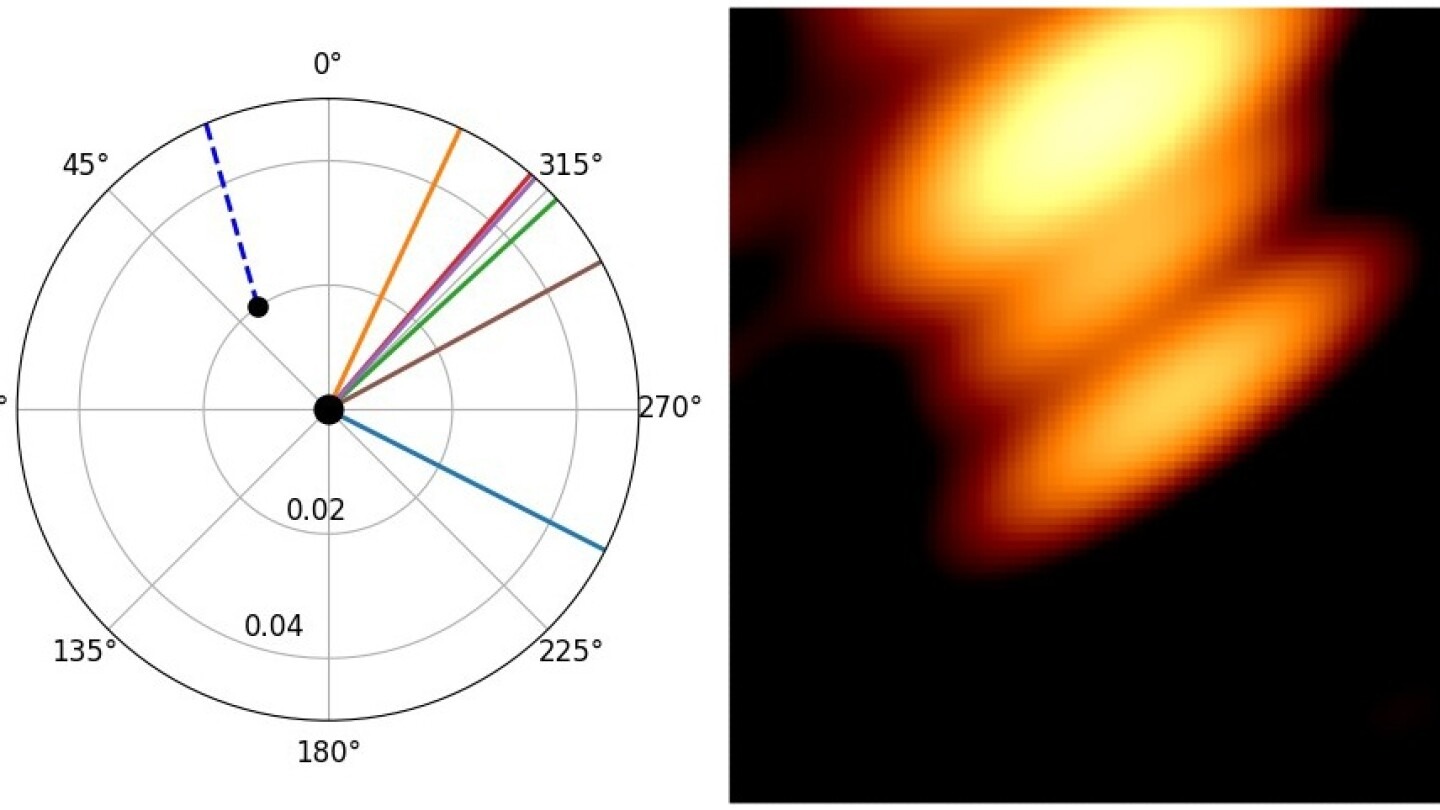
Quasars stand as some of the most luminous objects known in the universe. While astronomers have previously succeeded in imaging individual black holes, such as the supermassive entities at the core of our own Milky Way galaxy and Messier 87, the direct observation of two black holes locked in a mutual orbit has not yet been achieved.
While gravitational wave observations have provided compelling indirect evidence for the existence of binary black hole systems and their ultimate mergers, the two black holes comprising OJ287 had persistently evaded visual resolution. Existing telescopes, lacking sufficient power, were unable to distinguish them as separate entities, instead portraying them as a singular point of light.
The quasar OJ287 boasts a remarkably long observational record, spanning more than a century. Its presence was inadvertently captured in photographic plates taken in the late 1800s, decades before scientists even conceived of the existence of black holes or the powerful, luminous quasars they fuel.

The celestial object OJ287 first captured scientific interest in 1982 when Finnish astronomer Aimo Sillanpää observed a consistent 12-year fluctuation in its luminosity. This discovery prompted the compelling hypothesis that OJ287 harbors a pair of orbiting black holes, each actively accreting surrounding matter. Since then, hundreds of astronomers have committed to monitoring OJ287, aiming to rigorously test this theory and secure definitive proof that these two colossal black holes indeed share the same galactic nucleus.
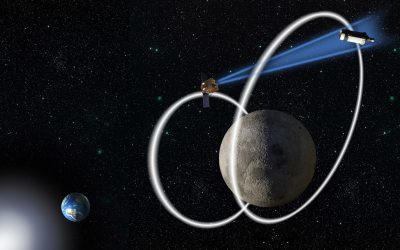
The long-awaited confirmation has now emerged from a sophisticated network of radio observations. This research combined ground-based telescopes with the Russian RadioAstron (Spektr-R) satellite, which operated from 2011 to 2019. By extending its orbit halfway to the moon, the satellite enabled astronomers to achieve an observational sharpness approximately 100,000 times greater than typical optical images.
Scientists confirmed that the new radio image precisely matched theoretical predictions, showing the two black holes exactly at their anticipated positions.
Despite their intrinsic darkness, black holes become observable through distinctive phenomena: powerful particle jets or the radiant gas that orbits their event horizon, Valtonen noted.
New imagery has revealed a distinctive “twisted garden hose” appearance in the jet emanating from the smaller of two black holes. This unusual coiling is directly attributed to its rapid orbital motion around the larger black hole. Researchers anticipate this jet will visibly “wag back and forth like a cosmic tail” as the smaller black hole completes its 12-year orbit, providing a rare opportunity to observe their dynamic evolution in real time.
On October 9, *The Astrophysical Journal* published an article that formally detailed this research.