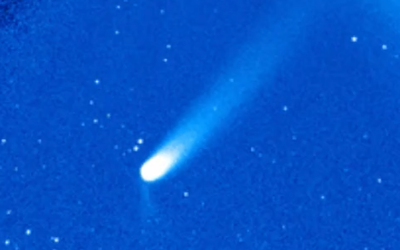

The third interstellar object ever identified, 3I/ATLAS, has ignited a wide range of speculation and scientific proposals. While some theories venture into the realm of conspiracy, suggesting the object could be an alien spacecraft, more grounded ideas have also emerged. Among the well-considered suggestions is the innovative concept of utilizing Martian-based probes to observe the comet as it streaks past the Red Planet.
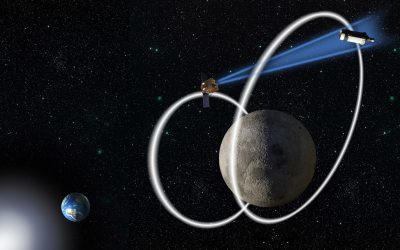
A recent paper, co-authored by Samuel Grand of the Finnish Meteorological Institute and Geraint Jones of the European Space Agency (ESA), outlines an inventive strategy. The study, pre-published on arXiv and accepted for publication in the Research Notes of the American Astronomical Society, suggests leveraging two currently active spacecraft, already en route to their distinct destinations, to potentially detect ionic particles emanating from the celestial object’s spectacular tail, which has rapidly formed as it draws closer to the Sun.