
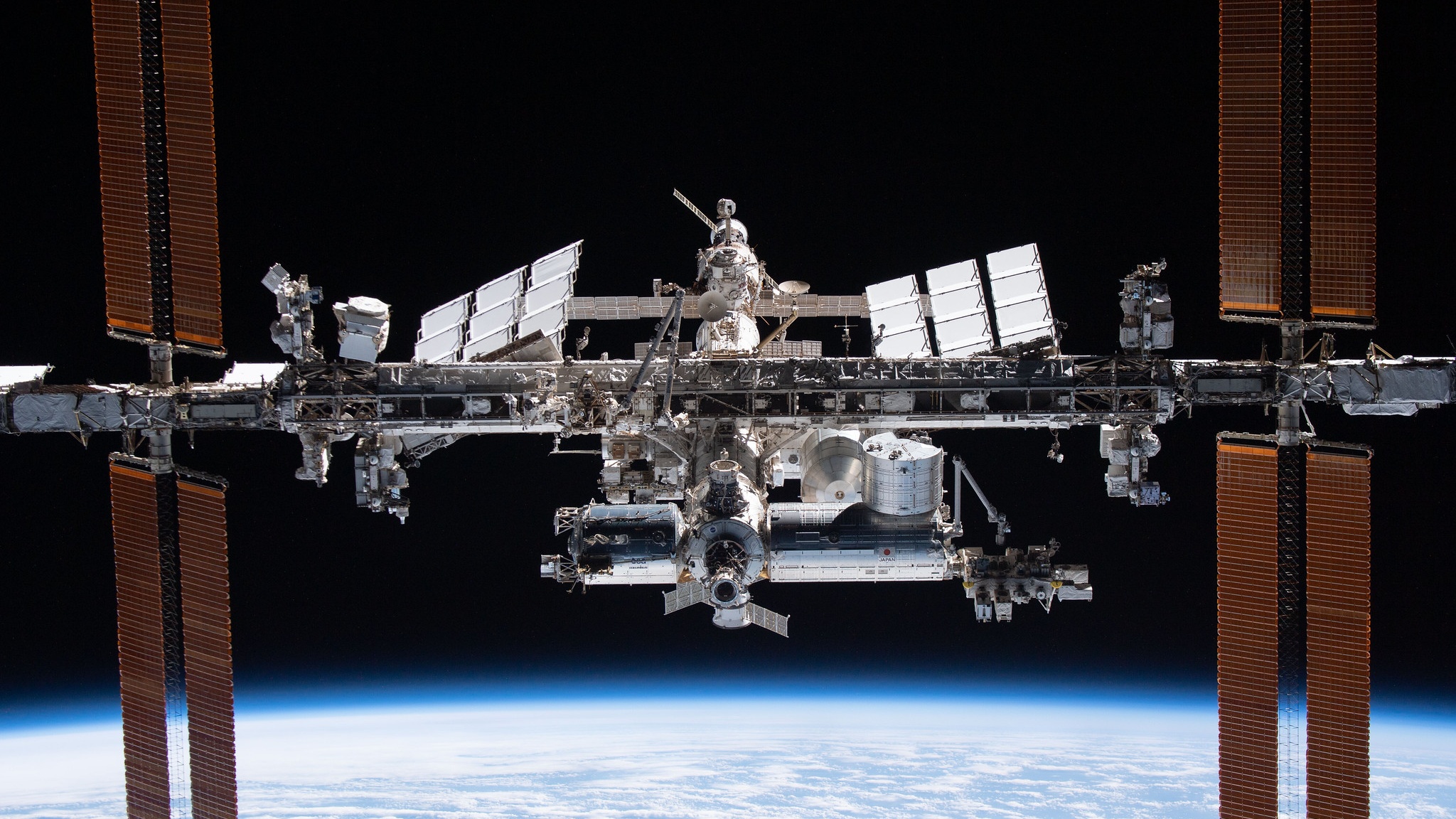
By 2030, the International Space Station is slated for a controlled, fiery re-entry into Earth’s atmosphere, an event predicted to leave an immeasurable void in scientific research. Yet, as its decommissioning approaches, it also rekindles a persistent debate: did the station’s significant achievements ultimately align with humanity’s ambitious initial vision for its orbiting laboratory?
When the International Space Station (ISS) ultimately undertakes its controlled de-orbit over the Pacific Ocean, it will have marked an extraordinary three decades of continuous human presence in low Earth orbit. This remarkable era commenced on November 2, 2000, with the arrival of Expedition 1 – a pioneering crew comprising one astronaut and two cosmonauts – who first docked with the then-nascent, partially constructed orbiting laboratory.
As the ISS now approaches the twilight of its operational lifespan, focus is increasingly shifting to its profound legacy. Experts and the public alike are reflecting on whether the station achieved its original objectives, and contemplating the indelible void its eventual departure will leave in humanity’s ongoing journey in space.
The eventual decommissioning of the International Space Station (ISS) is expected to evoke a profound sense of loss among many, mirroring the bittersweet sentiment felt when a beloved Mars rover, having pushed the boundaries of exploration, finally concludes its groundbreaking mission. While future generations of rovers will undoubtedly continue humanity’s quest on the Red Planet, they will forge their own distinct legacies. Similarly, new orbital outposts will emerge to further our presence in space, yet none will precisely replicate the unique role and history established by the ISS.
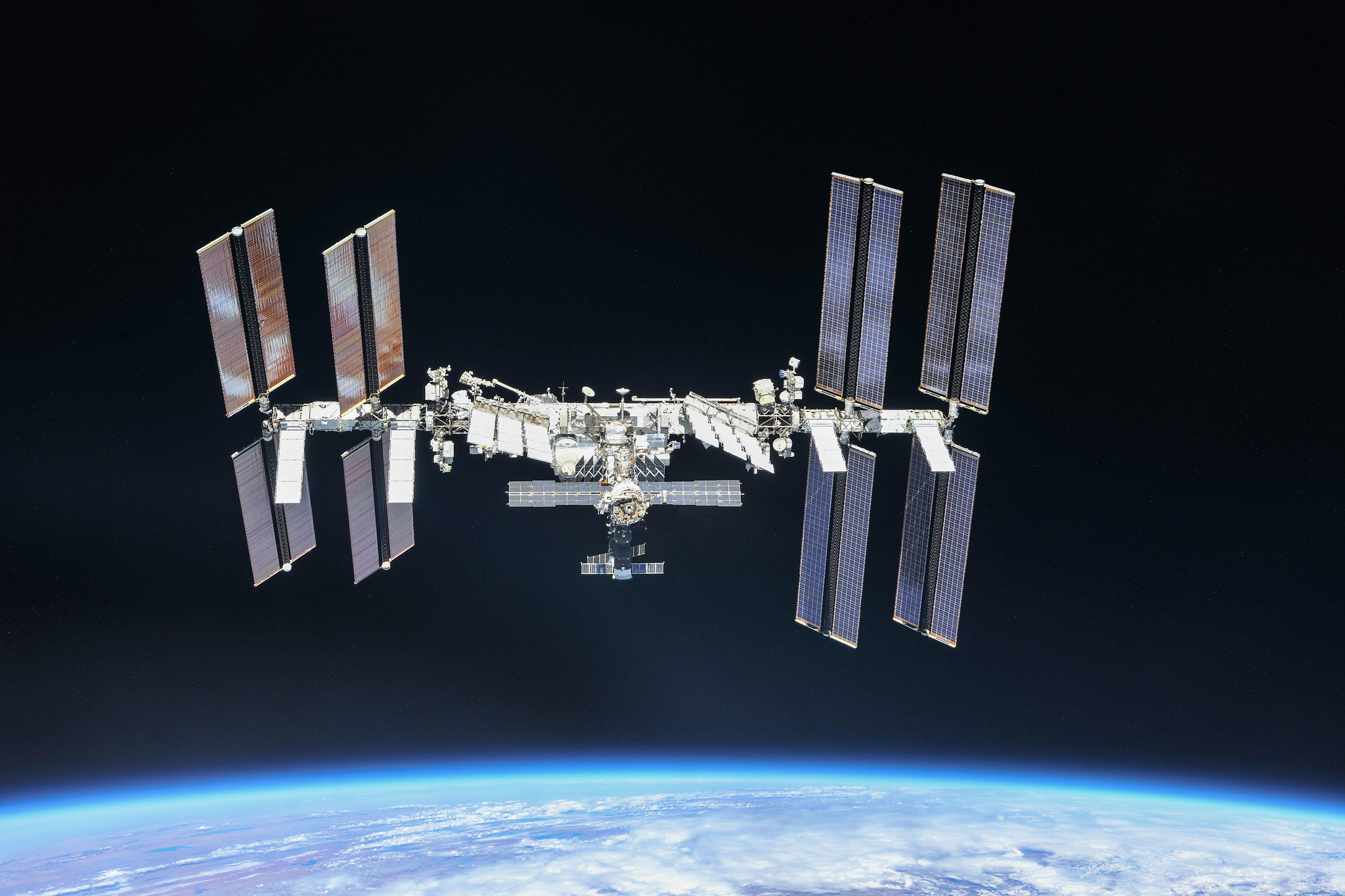
However, the impending end of the International Space Station (ISS) will not be universally lamented, according to sociologist Paola Castaño-Rodriguez of the University of Exeter. She observes that a segment of critics and observers has consistently viewed the orbiting outpost as a costly “white elephant”—an expensive project whose practical utility, in their estimation, never justified its substantial investment. For this group, the ISS’s eventual decommissioning will be met with little to no regret.
The collective “we” often invoked in discussions of spaceflight warrants closer examination, a sociologist told Space.com. From her disciplinary vantage point, the immediate query is, “who exactly is this ‘we’?” She highlighted a stark division: for every enthusiast celebrating space endeavors, a considerable portion of the public views such spending as an “obscene waste of money,” revealing a significant split in sentiment.
Castaño-Rodriguez’s research delves into the unique scientific ecosystem of the International Space Station (ISS). She meticulously examines the methodologies of orbital experimentation, the remarkable global collaborations that fuel its research, and the diverse criteria by which its scientific output is evaluated.
Further elaborating on these themes, she is authoring the forthcoming book, “Beyond the Lab: the Social Lives of Experiments on the International Space Station.” This publication illuminates these complex dynamics through case studies of three pivotal ISS experiments: the groundbreaking cultivation of lettuce in space, the renowned “twin experiment” involving astronauts Mark and Scott Kelly, and the sophisticated Alpha Magnetic Spectrometer particle physics apparatus, which operates from the station’s exterior hull.

The International Space Station (ISS) has consistently drawn criticism for its significant financial demands. To date, its construction and operational costs total $150 billion, with NASA contributing a hefty $3 billion annually for its upkeep.
Such a substantial investment naturally raises expectations for profound scientific outputs. Indeed, when the space station was conceived in the 1990s, its core scientific justification posited that experiments conducted aboard the ISS could lead to breakthroughs like curing cancer or discovering dark matter.
Castaño-Rodriguez suggested that a core issue for the space station stems from its initial funding presentation. The ambitious promises scientists made to secure financing, he noted, have now become the demanding criteria against which the station is held accountable.
The impending de-orbiting of the International Space Station (ISS) is prompting varied evaluations of its scientific legacy. The assessment of what will be lost is deeply influenced by the criteria and perspective of the judge. For those primarily seeking monumental, headline-grabbing “eureka moments” of discovery, the ISS’s contributions might be perceived as modest.
However, NASA recently highlighted the extensive research conducted aboard the orbiting laboratory. Over its 25-year operational lifespan, the ISS has facilitated more than 4,000 science experiments, resulting in the publication of 4,400 scientific papers. While substantial in volume, these findings have predominantly advanced knowledge through steady, incremental progress rather than delivering revolutionary breakthroughs.

However, adopting such a narrow perspective on scientific achievement would entirely overlook what Castaño-Rodriguez champions as the true and profound success of the station’s research. This deeper impact, they contend, is precisely what will be most acutely lamented once operations conclude.
She argues that public discourse often overlooks the foundational infrastructure, complex operations, and intricate processes that she considers the true triumph of the space station: mastering scientific research in an extremely adverse environment.
This perspective, she explained, necessitates re-educating audiences about the genuine value of science. It’s not merely about the “shiny headline discovery,” but rather the profound body of knowledge generated to advance entire fields. Performing experiments aboard the space station, she underscored, represents an exceptionally challenging and complex undertaking.
Future space exploration efforts will critically depend on a foundational understanding of infrastructure. Experts anticipate significant knowledge gaps, and the strategy for addressing these deficiencies through alternative platforms or technologies currently remains undefined.
NASA is charting a course for the future of human presence in low-Earth orbit, envisioning commercial space stations as the successors to the venerable International Space Station (ISS). To facilitate this transition, several private sector players, including Axiom Space, Blue Origin, and a joint venture between Starlab Space and Northrop Grumman, have secured Space Act agreements with the agency to design and build these next-generation orbital platforms. This significant shift towards a commercial model, however, introduces a crucial uncertainty: the extent to which the diverse functions, research capabilities, and operational scope currently embodied by the ISS will be seamlessly transferred to these new, privately developed orbiting habitats.
A significant portion of the expertise driving new commercial space ventures comes directly from former NASA spaceflight personnel. This crucial transfer of talent ensures that invaluable knowledge isn’t lost when the International Space Station (ISS) is eventually retired. Instead, the rigorous processes and core values honed at NASA will be seamlessly integrated, fundamentally shaping the identity and operations of these emerging private space stations.
Here are a few options, maintaining a clear, journalistic tone:
**Option 1 (Concise):**
“Conversely, commercialization carries the risk of diminished transparency.”
**Option 2 (Emphasizing a potential downside):**
“However, a significant concern is that commercialization could lead to a loss of operational transparency.”
**Option 3 (Focusing on a consequence):**
“Yet, the pursuit of commercial interests often threatens to undermine openness and accountability.”
**Option 4 (More direct):**
“Nonetheless, the introduction of market forces could compromise the integrity of transparent practices.”
In the United States, the strategic course of federally funded scientific research is meticulously chartered through the National Academy of Sciences’ decadal surveys. This esteemed peer-review mechanism provides the foundational guidance, directly informing NASA’s decisions on which research projects receive funding for the International Space Station. Crucially, this robust process guarantees that all scientific endeavors conducted aboard the ISS are selected and judged exclusively on their inherent scientific merits.
Castaño-Rodriguez has raised critical questions regarding the accountability of private companies to established scientific roadmaps, specifically referencing decadal surveys. A core concern, she emphasized, revolves around the future process for selecting experiments. The underlying implication, she noted, is a potential paradigm shift where scientists might transition into mere “paying customers,” leading to a scenario where access to research facilities is dictated primarily by financial viability rather than scientific merit.
On the International Space Station (ISS), scientific endeavors are fundamentally public. A clear mandate dictates that all data gathered from experiments performed aboard the orbiting laboratory must be openly released and made accessible through designated public repositories.
Castaño-Rodriguez highlighted a “huge deal” in space research: the ability to analyze space station data without requiring direct involvement in spaceflight. He explained that this ethos of open science, while often an understated aspect of the space station’s history, constitutes a pivotal international infrastructure. It empowers researchers worldwide to actively participate in, engage with, and critically re-evaluate the vast trove of data produced aboard the orbiting laboratory, thereby fostering global scientific collaboration.
The upcoming transition from the publicly funded International Space Station (ISS) to commercial space platforms presents a significant risk: the potential curtailment of publicly accessible open data. However, Castaño-Rodriguez offers a tempered sense of optimism, noting that former NASA personnel—who historically championed data transparency—are now employed by these private space ventures.
Castaño-Rodriguez further posits that privately-operated orbital outposts could achieve a level of global cooperation and diverse participation rivaling that of the International Space Station (ISS).
These emerging initiatives are forging new pathways for a growing number of middle-to-high-income nations to independently fund their own astronaut missions, according to Castaño-Rodriguez. A prime example of this trend is Axiom Space, which has already facilitated orbital journeys for two Saudi astronauts, alongside carrying the pioneering first Turkish astronaut into space. This marks a notable evolution from earlier engagements, such as NASA’s 1985 mission that saw a Saudi prince fly aboard the Space Shuttle Discovery.
The international contingent aboard the International Space Station has, for the most part, been perceived less as equal partners and more as “paying guests,” highlighting a key distinction in the nature of their involvement.
Future commercial space stations are expected to bear little resemblance to the distinctive multinational architecture of the International Space Station (ISS), according to Castaño-Rodriguez. He noted that the ISS, a unique marvel of cooperative engineering, is fundamentally a reflection of the specific historical and geopolitical era in which it was conceived and built.
The close of the nearly five-decade Cold War paved the way for the 1990s and 2000s, an era that optimistically, though perhaps prematurely, heralded renewed international cooperation both on Earth and in space. During this transformative period, the International Space Station (ISS) emerged as a unique crucible for thawing geopolitical tensions. Astronauts, many with military backgrounds from opposing ideological blocs, found themselves working shoulder-to-shoulder, collaborating with individuals they had previously been trained to consider adversaries. This unprecedented level of cooperation, evident in the daily interactions of crew members, the intricate coordination of mission control teams, and joint scientific endeavors, proved instrumental in dismantling long-standing international barriers.
The impending decommissioning of the International Space Station (ISS) will mark more than the end of its physical operations or the loss of a vital platform for scientific research in low-Earth orbit. It will also signify the conclusion of a profound era of international collaboration, a true cornerstone of space history that fostered trust and cooperation among nations still navigating complex geopolitical relationships.
Remarkably, this spirit of unity has persisted even amidst significant global tensions. Despite Russia’s invasion of Ukraine and the subsequent worldwide upheaval, Russian cosmonauts continue to operate seamlessly alongside their international crewmates aboard the station, demonstrating an unparalleled level of daily, sustained diplomatic engagement.
However, replicating this deep and prolonged international camaraderie, particularly within the current intricate geopolitical landscape, appears exceptionally challenging for the commercial orbital platforms poised to succeed the ISS. The unique environment of the ISS, which enabled such enduring partnerships, may prove to be an irreplaceable legacy.
The International Space Station (ISS) has served as an unparalleled crucible for human ingenuity, an orbital laboratory where humanity has collectively mastered the complexities of living and working together beyond Earth’s atmosphere. Future space exploration endeavors will owe an immense debt to the groundbreaking legacy of the ISS. While the physical station will eventually be decommissioned, the “infrastructural knowledge” it forged—a concept highlighted by Castaño-Rodriguez—is destined to endure. This invaluable body of expertise will critically inform and guide the next ambitious chapters of crewed spaceflight.
Researcher Castaño-Rodriguez has conducted extensive interviews with nearly a hundred astronauts, engineers, and scientists, all of whom offer unparalleled insights into the significance of the International Space Station (ISS). These individuals, intimately involved with the orbiting science platform, provide unique perspectives on its profound importance. For many, the ISS’s enduring legacy is perhaps most eloquently captured by Sergei Krikalev, a cosmonaut who served on the pioneering Expedition 1 mission a quarter-century ago.
Castaño-Rodriguez recounted a memorable exchange with an Expedition 1 astronaut. When he inquired about specific scientific experiments from the mission, the astronaut’s direct gaze and succinct response offered a powerful insight: “The space station *is* the experiment.”





