This article, originally published by The Conversation, has been contributed to Space.com’s ‘Expert Voices: Op-Ed & Insights’ platform.
Frank Sinatra’s enduring 1960s classic, “Fly Me to the Moon,” became the quintessential anthem for a nation reaching for the stars, inextricably linked with the historic Apollo missions. This optimistic track, recorded in 1964, emerged at a critical juncture when America’s triumph in the intense space race against the Soviet Union was by no means a certainty.
The historic 1969 lunar landing by the Apollo 11 crew cemented a particular Frank Sinatra song as an iconic anthem for its time. It perfectly captured the prevailing spirit of boundless optimism in the Western world, where seemingly anything was achievable.
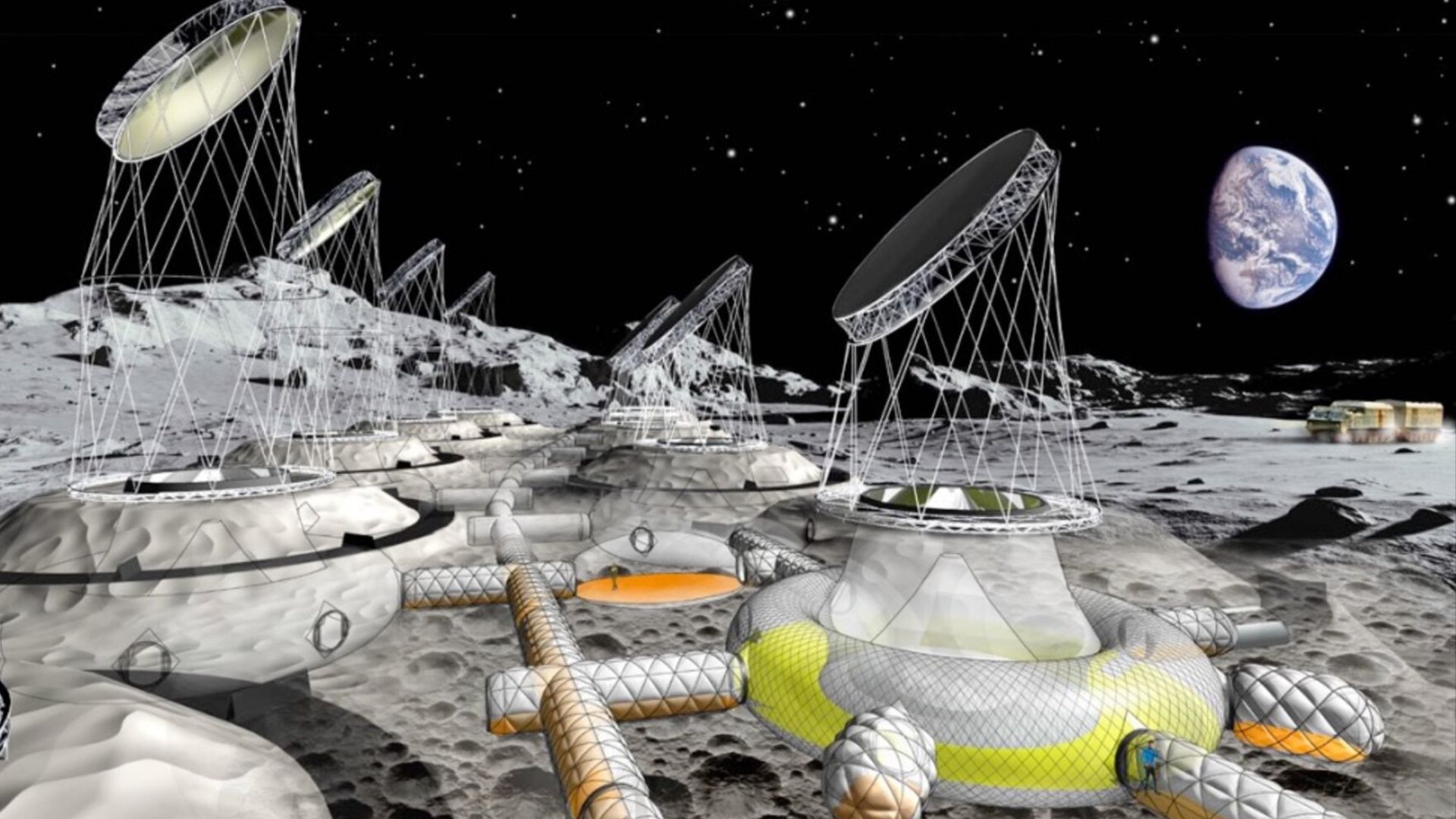
The 21st century is ushering in a transformative era of lunar exploration, shifting from temporary visits to a concerted global effort to establish a lasting human presence. Major powers, including the United States, China, and their respective international partners, are actively formulating plans for permanent bases on the Moon’s surface. This renewed and competitive push for sustained lunar settlement, however, inherently raises concerns about the potential for future geopolitical conflict.
The lunar South Pole has emerged as a strategic focal point for future missions, primarily due to its rich repository of vital resources. Abundant water ice, trapped within the region’s permanently shadowed craters, is a key draw. This invaluable resource could be transformed into essential drinking water for lunar inhabitants and converted into rocket fuel, powering further space exploration and supporting sustained human presence. Furthermore, the Moon’s South Pole is believed to hold significant deposits of valuable minerals, such as rare earth metals, which could become targets for international extraction.
The availability of critical lunar resources, much like prime locations for future landing sites and base construction, will be inherently limited. This scarcity, however, carries a significant implication: the potential for geopolitical tensions and even outright conflict among spacefaring nations cannot be overlooked.

Paving the way for a cooperative future remains an achievable goal, contingent on proactive international measures. Against this optimistic backdrop, the timeless anthem “Fly Me To The Moon” could once again emerge as the defining soundtrack for a burgeoning era of exploration, mirroring the iconic role it played during the groundbreaking space endeavors of the 1960s and 70s.
The future of responsible space operations may well depend on a combination of robust international treaties and a collective willingness from nations to adhere to them. A cornerstone of this regulatory framework is the 1967 Outer Space Treaty. This landmark agreement explicitly forbids any nation from claiming sovereignty over outer space, preventing appropriation through assertions of ownership, use, or occupation.
Crucially, Article I of the same treaty reinforces this principle by designating space as a “global common.” It stipulates that the exploration and utilization of space, along with its valuable resources, are intended for the benefit and access of all nations.
A fundamental question facing space agencies and commercial entities is whether the vast reserves of lunar water ice can be extracted and utilized without implicitly establishing some form of proprietary claim or exclusive control.
Spearheaded by the United States, the Artemis Accords represent a landmark, bottom-up initiative designed to forge common standards of behavior for nations operating in the cosmos. A cornerstone of these international guidelines, Section 10, directly addresses a pivotal legal interpretation: it unequivocally states that “the extraction of space resources does not inherently constitute national appropriation under Article II of the Outer Space Treaty.” This provision offers a critical clarification, aiming to separate the act of resource recovery from claims of national sovereignty over celestial bodies.
The framework introduces the concept of temporary “safety zones” designed to encircle and safeguard resource extraction operations. Furthermore, nations adhering to the Artemis Accords are mandated to provide prior notification of their space activities to other countries, coupled with a firm commitment to proactive coordination to prevent any detrimental interference.
The proposed safety zones, however, have ignited significant controversy. Critics contend that these areas could be perceived as a direct violation of the Outer Space Treaty’s fundamental non-appropriation principles, potentially leading to the practical, if unofficial, acquisition of ownership rights over valuable space resources.
The international embrace of the U.S.-led Artemis Accords continues to expand, with 56 nations now endorsing the framework for lunar exploration. Notably, among these signatories are Thailand and Senegal, both of which are also actively participating in China’s separate lunar base project. This unique dual engagement strategically positions these two nations as potential bridges between the competing American and Chinese space programs, fostering optimism for future collaboration in humanity’s return to the Moon.
Adopted by the United Nations in 1979, the Moon Agreement establishes the legal framework for how humanity should interact with and utilize Earth’s natural satellite. This international treaty incorporates several noteworthy elements, chief among them a clear demand for transparency, mandating that states disclose details of their lunar activities. Additionally, it calls for a concerted international effort to oversee and manage the Moon’s resources.
A central aim of the agreement is to foster trust and strengthen cooperation among its signatory nations. Echoing the foundational principles of the Outer Space Treaty, this accord explicitly prohibits any country from asserting sovereign claims over celestial bodies or extraterrestrial resources.
Despite facing a significant hurdle due to the lack of signatures from major spacefaring nations—China, the United States, and the Russian Federation—many argue that the Moon Agreement remains the most effective existing framework for regulating future lunar activities.
Advocates contend that the current accord already provides a robust blueprint, eliminating the need for further treaties or new international accords. The key, they suggest, lies in nations actively embracing and implementing its provisions. Should minor adjustments be deemed necessary, the agreement’s flexibility allows for targeted amendments to specific articles without requiring a complete overhaul.
The world is entering a groundbreaking era of lunar exploration, marked by an accelerating global ambition to establish a permanent human presence on Earth’s natural satellite. While a competitive spirit exists between nations, particularly the United States and China, regarding who will achieve this first, both are making significant strides.
China, in collaboration with approximately ten other countries, is developing plans for the International Lunar Research Station (ILRS). Meanwhile, NASA is spearheading its own vision for a lunar outpost, designated Artemis Base Camp.
The journey to establish a significant presence beyond Earth will undoubtedly require substantial time and resources, yet leading nations are already making rapid advancements. A prime example is NASA’s Artemis II mission, which is currently targeting a February 2026 launch. This pivotal mission will carry four astronauts on a historic flyby around the Moon. Further demonstrating its long-term vision for lunar exploration, the U.S. space agency also announced a new class of astronauts on September 24, individuals highly likely to embark on future missions to the lunar surface.
Recent developments suggest a significant shift toward a more equitable future in space exploration, moving away from past patterns of representation. This potential is powerfully underscored by the latest astronaut selection, which marks a historic first: women constitute an unprecedented 60% of the 10 new recruits.
China’s ambitious lunar program recently marked a significant advancement with the successful testing of its Lanyue crewed lunar lander. This development coincides with the ongoing expansion of the nation’s International Lunar Research Station (ILRS) project, which is notably attracting partner countries that possess emerging space capabilities but have limited prior experience in human space exploration.
As humanity ventures further into the cosmos, a pivotal question arises: How can nations truly seize the immense potential for collaboration in space, ensuring it doesn’t merely become another arena for entrenched earthly rivalries and systemic inequities?
The antiquated notion of claiming lunar territory through a “first-come, first-served” approach, reminiscent of a Wild West land grab, is decisively off the table for 21st-century space exploration. Future lunar pioneers, regardless of their national allegiance or the flags they carry, will share a singular, unifying identity: “terrestrials”—inhabitants of Earth.
The vast expanse of space presents humanity with a compelling dichotomy: it serves as both a potential arena for diplomatic engagement and a possible flashpoint for conflict. Simultaneously, the exploration and utilization of space offer powerful tools for driving global socio-economic development. These profound implications—spanning from international relations to tangible benefits on Earth—provide potent incentives for humankind to forge partnerships and navigate the final frontier collaboratively.
Establishing humanity’s enduring presence beyond Earth stands as the preeminent challenge of this century and future generations. Meeting this monumental task demands a worldwide, collaborative, and peaceful approach to space exploration – an effort deemed not just possible, but unequivocally imperative.
This article, originally published by The Conversation, is reprinted here under the terms of a Creative Commons license. Readers can access the complete, original version directly from their platform.