Many animals, including iconic navigators like migratory birds and sea turtles, possess an extraordinary innate ability known as magnetoreception, often likened to a “biological GPS.” This sophisticated sense allows a wide array of species to tap into Earth’s magnetic field for precise directional guidance across vast distances. Yet, while the widespread use of this natural compass is well-established, scientists are still striving to unravel the complex biological mechanisms that enable creatures to perceive and interpret these subtle magnetic cues.
A joint research effort by Cambridge University and the Helmholtz-Zentrum Berlin has explored microscopic ancient fossils, abundant on ocean floors, to better understand magnetoreception. The team now reports a significant breakthrough, confirming that these so-called “magnetofossils” definitively exhibit magnetoreception. This discovery is particularly significant because the fossils were recovered from sediments dating back an astonishing 97 million years, offering what could be the first direct evidence that animals have navigated Earth using magnetic fields for an exceptionally long period.
The ancient organism responsible for creating intriguing magnetofossils was almost certainly equipped with precise navigational skills, explained Rich Harrison, co-leader of the research and a specialist from Cambridge University’s Earth Sciences Department.

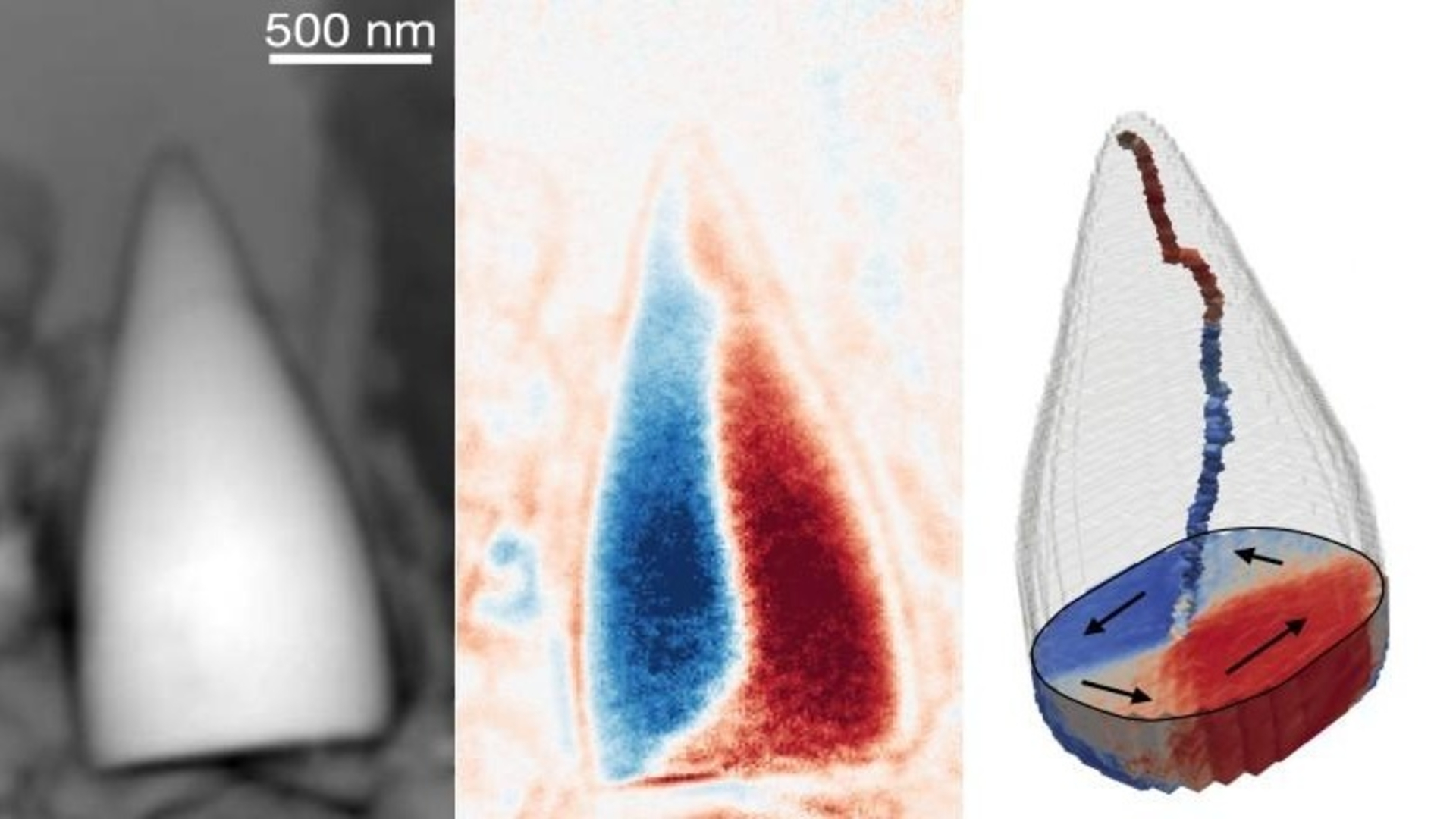
Researchers have unlocked a new window into geological history, employing magnetic tomography to visualize the intricate internal structures of magnetofossils. This innovative technique, which harnesses magnetic fields, has proven crucial for examining larger specimens, including recently discovered examples that previously baffled scientists. Traditional methods, such as standard X-rays, were unable to penetrate the dense outer layers of these substantial fossils, leaving their internal formations hidden until now.
To unravel the mysteries hidden within these ancient structures, study co-author Claire Donnelly, representing Germany’s Max Planck Institute, pioneered a novel technique designed to probe their hidden interiors. Due to their considerable dimensions when contrasted with the microscopic magnetic receptors found in organisms like bacteria, these unique specimens have been aptly labeled “giant” magnetofossils by the research team.
In an official release, Donnelly highlighted that while “mapping the internal magnetic structure with magnetic tomography was a significant achievement in itself,” the true excitement stems from the findings’ ability to “provide insight into the navigation of creatures millions of years ago.”
At Oxford’s state-of-the-art Diamond X-ray facility, a research team, employing Donnelly’s innovative technique, has uncovered compelling evidence regarding ancient life. Their investigation revealed a precise patterning in the magnetic moments – the minute magnetic fields generated by spinning electrons – within the fossilized remains. This distinct arrangement strongly suggests the presence of magnetoreception, the ability to sense magnetic fields, in the prehistoric animals from which these fossils originated.
Jeffrey Neethirajan, a Ph.D. student in Donnelly’s lab, conveyed immense satisfaction at the groundbreaking application of their methodology, noting it was the inaugural instance of its use for studying natural samples.
Despite researchers theorizing that ancient fossil traces indicate navigation via Earth’s magnetic field (magnetoreception), the precise identity of the animals responsible for their creation remains unknown.
According to Harrison, this discovery highlights the critical next phase of the investigation: “We need to identify a migratory marine species that was prevalent enough in the oceans to have left abundant fossil remains.”
Harrison posits eels as a prime candidate, noting their evolutionary timeline of roughly a century and their demonstrated capacity to traverse global waterways.
According to Harrison, the discovery of giant magnetofossils represents a crucial step in unraveling the evolutionary journey that transformed basic bacterial magnetoreception into the highly sophisticated, GPS-like navigation systems found in animals.
The comprehensive findings from the study were formally published in the esteemed journal *Nature* on October 20.