Over seven decades ago, astronomers operating from California’s renowned Palomar Observatory recorded baffling, star-like luminosity that materialized and dissipated in less than an hour. This curious cosmic event was documented years before the inaugural launch of Sputnik 1, humanity’s first satellite to orbit Earth.
New peer-reviewed research is shedding light on a curious midcentury phenomenon. By re-examining old photographic “sky plates,” scientists have identified fleeting points of light, dubbed “transients,” that appeared during the Cold War era.
Remarkably, these transients often coincide with dates of nuclear weapons tests and a historical surge in unexplained aerial phenomena, or UFO reports. This striking confluence has prompted researchers to investigate a potentially profound question: could these seemingly disparate events be connected?
While many anomalous light events in the cosmos can often be attributed to natural phenomena such as variable stars or meteors, or even to instrumental quirks, a subset of observations from the Palomar Observatory presents a perplexing anomaly. Several of these Palomar events exhibit distinctive features, notably comprising sharp, point-like shapes that strikingly align in straight rows. According to the authors of new research, these specific characteristics defy explanation by any known natural phenomenon or instrumental malfunction.
Having eliminated more conventional explanations, researchers are now compelled to consider a radical hypothesis: that certain observed phenomena could be artificial objects of non-terrestrial origin. This significant revelation comes from Stephen Bruehl, an anesthesiologist at Vanderbilt University School of Medicine and a co-author on the pertinent studies, who shared his insights with Live Science. Bruehl, known for his interest in unidentified flying objects, collaborated on two recent scientific papers with Beatriz Villarroel, an astronomer at the Nordic Institute for Theoretical Physics in Sweden.
Bruehl articulated a profound challenge: if the elusive “transients” are indeed artificial, reflective objects orbiting Earth – a phenomenon observed *before* humanity’s first satellite, Sputnik – then two pivotal questions demand answers. He asked: Who placed these mysterious artifacts into orbit, and what drives their apparent fascination with nuclear testing?
The interpretations drawn from the images have not garnered universal consensus among researchers, with some experts emphasizing that the technological limitations of the era make definitive analysis of such historical data exceptionally challenging. Michael Garrett, director of the University of Manchester’s Jodrell Bank Centre for Astrophysics in the U.K., who was not involved in the recent studies, commended Villarroel’s team for their innovative use of archival information. However, he also issued a caution against interpreting these results too literally.
A significant concern has been raised, not regarding the proficiency of the research team, but rather the integrity of the data accessible to them. According to one individual, information predating the Sputnik era is deemed particularly unreliable. This issue is especially pronounced in the realm of anecdotal reports concerning Unidentified Anomalous Phenomena (UAP), formerly known as UFOs, which Villarroel’s team has openly acknowledged were not subjected to any validity assessment.
Speaking to Live Science, Garrett explained that while the scientific method is uniquely well-suited for investigating anomalies, its rigorous application inherently demands significant time, meticulous replication, and unwavering patience. He further posited that, with access to improved data, these perceived correlations would ultimately disappear.
Transient objects—ephemeral astronomical phenomena—are a recurring and dynamic feature of the universe that consistently captivate scientists. Modern sky surveys, notably California’s Zwicky Transient Facility and Hawaii’s Pan-STARRS, have already cataloged thousands of these fleeting cosmic events. However, this prolific discovery rate is set to dramatically accelerate. Over the next decade, the eagerly anticipated Vera C. Rubin Observatory is projected to identify millions of such transients *each night*, ushering in an unprecedented era of astronomical discovery.
Numerous fleeting cosmic events, often referred to as transients, have been definitively attributed to a range of established astrophysical phenomena. These include the sudden flares observed erupting from comets and asteroids, the cataclysmic explosive deaths of stars, the unpredictable variability in accreting black holes, and the violent mergers of neutron stars that give rise to bright kilonova afterglows.
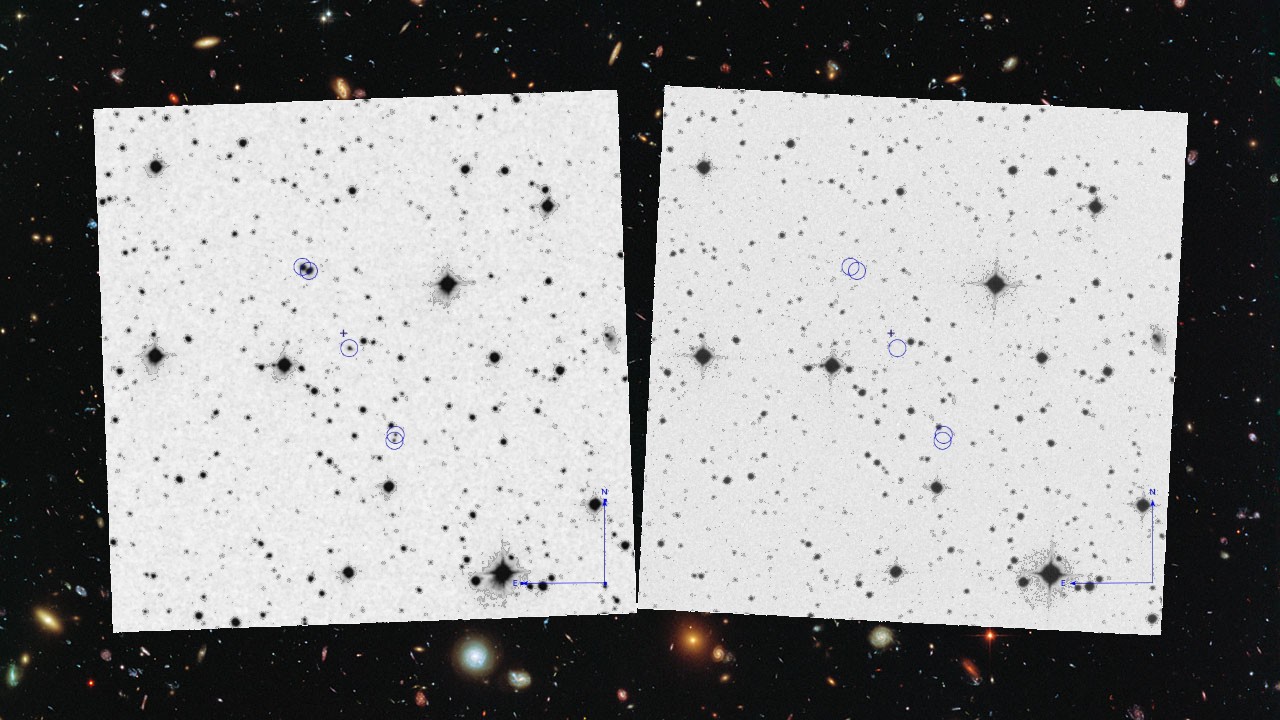
To uncover celestial phenomena from the pre-space-age era, new research has delved into digitized images from the pioneering first Palomar Observatory Sky Survey (POSS-I), which was carried out between 1949 and 1958.
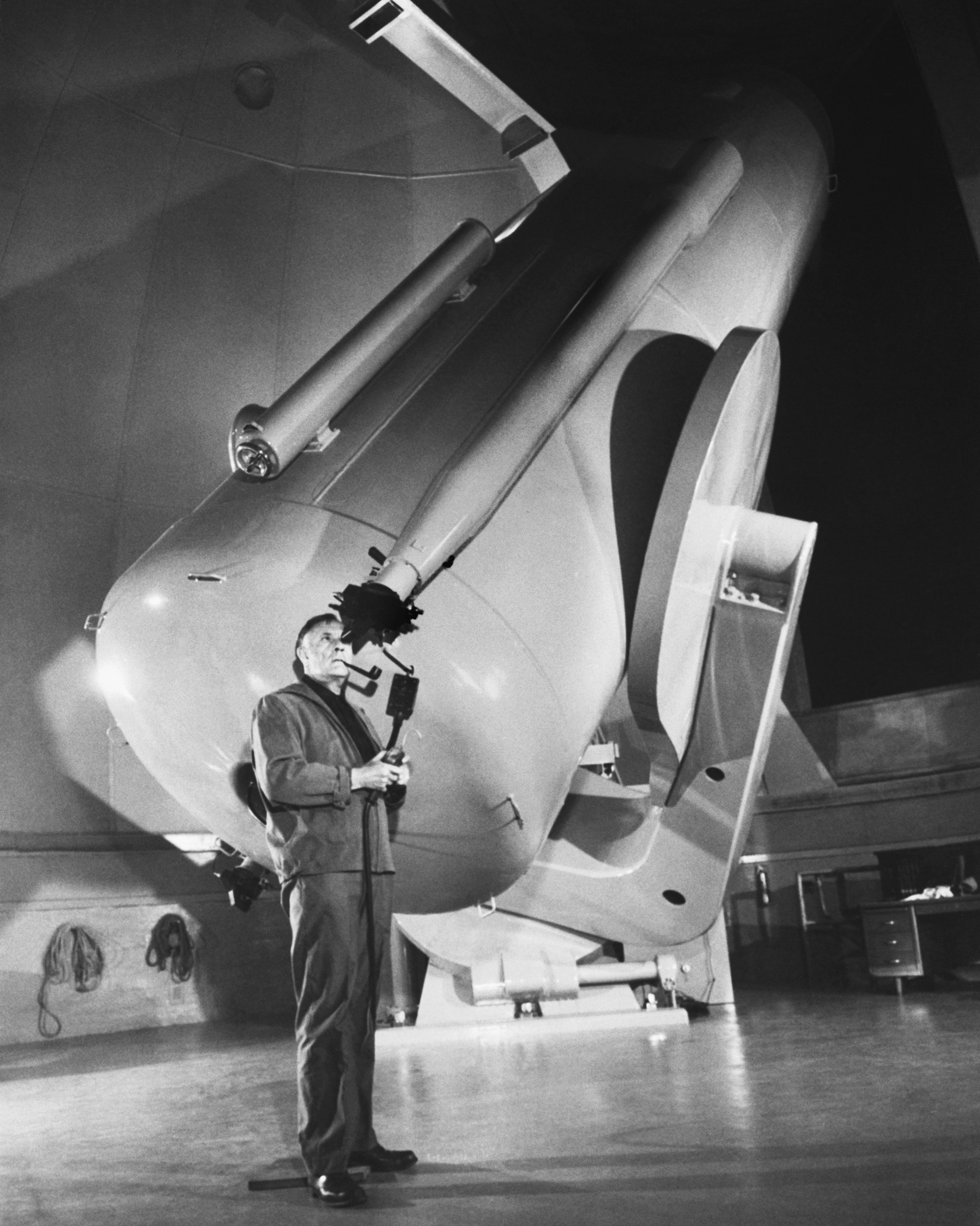
This ambitious survey relied on approximately 2,000 photographic glass plates. Each plate was coated with a light-sensitive emulsion, designed to react to incoming light and thus preserve an imprint of stars, galaxies, and other cosmic bodies. The plates were manually loaded into the Samuel Oschin Schmidt Telescope, where they underwent 50-minute exposures to capture broad expanses of the northern sky. Subsequently, these invaluable records were scanned and transformed into a comprehensive digital archive, making them accessible for modern astronomical study.
An extensive analysis led by Villarroel’s team, spanning 2,718 days of sky survey data, has unearthed a striking phenomenon: numerous transient celestial events. Researchers documented these enigmatic flashes on 310 separate nights, observing as many as 4,528 individual occurrences across multiple locations on a single day. Crucially, these events proved incredibly elusive, vanishing immediately after detection; they were entirely absent from images captured moments before or after, and left no trace in any subsequent sky surveys.
A recent analysis, conducted by researchers comparing their findings with the UFOCAT database of historical UFO reports, has revealed intriguing correlations. The study found that “transient” events were 45% more likely to occur within 24 hours following aboveground nuclear tests carried out by the United States, the Soviet Union, and Great Britain. Additionally, the investigation highlighted a direct link between UAP (Unidentified Aerial Phenomenon) sightings and these transients, noting that each supplementary UAP report logged on a particular day corresponded to an 8.5% rise in transient occurrences.
A recently published analysis has unveiled a compelling, statistically significant connection between transient celestial events, nuclear weapons testing, and reports of Unidentified Aerial Phenomena (UAP).
Published October 20 in the journal *Scientific Reports*, the study highlights these connections as “associations beyond chance,” suggesting they are not merely coincidental. According to the research team, this discovery lends an intriguing echo to long-standing speculative theories that extraterrestrial entities might be drawn to humanity’s nuclear activities.
Crucially, however, the authors emphasize that while the data reveal a strong correlation, they do not provide proof of any direct causal link or definitively confirm these long-held alien theories.
Conversely, some experts propose a more straightforward explanation for the enigmatic flashes and even certain reported UFO sightings: they may be direct by-products of nuclear detonations. Nuclear astrophysicist Michael Wiescher of the University of Notre Dame, in an interview with Scientific American, highlighted that such explosions have the capacity to propel metallic debris and radioactive dust high into the upper atmosphere. When viewed through a telescope, these ejected particles could then appear as brief, star-like bursts of light.
In their rigorous analysis, researchers Villarroel and Bruehl meticulously examined and ultimately dismissed several conventional explanations for the perplexing flashes. They contended that phenomena such as radiation-induced glows or fallout contamination would invariably produce indistinct smudges or elongated streaks on the photographic plates, rather than the sharp, star-like points that were actually observed.
Moreover, the hypothesis suggesting the flashes were fragments of bomb casings propelled into orbit was also deemed improbable. For such orbital debris to appear motionless during a 50-minute photographic exposure, it would necessitate an improbable geostationary altitude of approximately 22,000 miles (35,000 kilometers) above Earth, a region typically occupied by modern communications satellites.
According to Bruehl, who spoke with Live Science, the prospect of such a scenario unfolding is exceedingly remote, necessitating nothing short of “a miracle.” He further underscored the enduring mystery surrounding both the true nature of these “transients” and their consistent emergence during nuclear detonations, noting that a simple explanation remains elusive.
A number of astronomers contend that the elusive mystery likely stems not from celestial phenomena, but from the technical shortcomings of early photographic plates and the era’s error-prone observational records.
Princeton University astronomer Robert Lupton, an expert in developing algorithms to decipher optical data, offered a significant historical perspective. Though not involved in the latest research, Lupton highlighted astronomy’s enduring challenge with misinterpreting apparent celestial alignments. He pointed to the early debates surrounding quasars as a prime example, where scientists initially believed the objects’ visible pairings in the sky indicated a physical connection, only to later confirm these were merely coincidental arrangements.
Speaking with Live Science, Lupton highlighted the formidable task of accurately identifying true data anomalies amidst a potentially vast array of unusual or unexpected occurrences. While praising the ingenuity of incorporating pre-Sputnik era data, he conceded that the approach presented significant inherent difficulties.
Apparent alignments observed in data, such as those from the Palomar Observatory, may in fact stem from imperfections within the photographic material itself, according to Nigel Hambly, a survey astronomer at the University of Edinburgh. In a 2024 paper, Hambly examined this issue, explaining that spurious linear features can arise from surprisingly mundane origins.
These common causes include diffraction spikes, which are line-like patterns produced by bright stars, as well as dust, hair, and other debris that adhere to the photographic emulsion, mimicking genuine aligned transients. Hambly also noted that scratches introduced during the copying or digitization of old photographic plates can similarly create such deceptive artifacts.
Hambly highlighted a critical vulnerability in research: when teams, such as Villarroel’s, rely on reproductions rather than original sources, the potential for error significantly increases. He explained that inherent flaws often endure and multiply through successive generations of copies, perpetuating inaccuracies.
Leading researchers universally emphasize the importance of independent analysis and have put forth proposals for a comprehensive re-evaluation of historical astronomical data. Their recommendations specifically call for scrutinizing archives of scanned photographic plates from observatories active prior to 1957, ideally those located in the Northern Hemisphere and providing complete time-series images, such as the extensive collection from Palomar Mountain.
Beyond reviewing digital scans, Hambly also suggested a direct, microscopic “forensic” examination of the original Palomar plates themselves. This meticulous process, he indicated, would be crucial in definitively ascertaining whether any reported transient celestial events were genuinely recorded on the initial plates or were introduced at a later stage.
Direct visual examination of photographic plates frequently reveals critical differences between authentic discoveries and mere imperfections in the emulsion. This nuanced level of detail, notes Hambly, is often lost in digital scans, even those utilizing very high-resolution imaging.
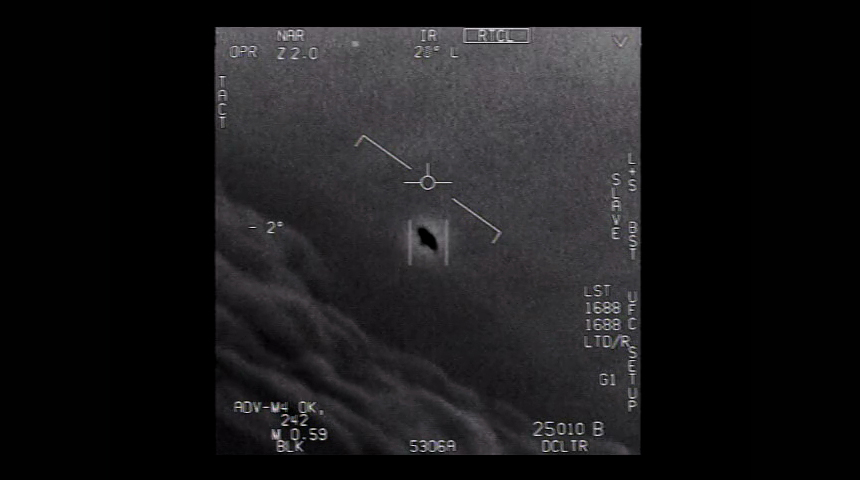
The true nature of these enigmatic flashes remains a subject of intense speculation: Are they genuine UAPs, advanced classified military technology, or merely spectral artifacts from an antiquated imaging process? Regardless of their ultimate origin, the persistent discourse surrounding these anomalies vividly illustrates the very essence of scientific inquiry—a relentless quest to probe the unknown and rigorously test the boundaries of the extraordinary.
David Windt, a Columbia University research scientist unaffiliated with the recent studies, suggested to Live Science that the publication of these findings could eventually be viewed as a pivotal moment. He posited that it might solidify mainstream acceptance of Unidentified Flying Objects (UFOs) as a credible area deserving rigorous academic scientific investigation and serious media scrutiny.