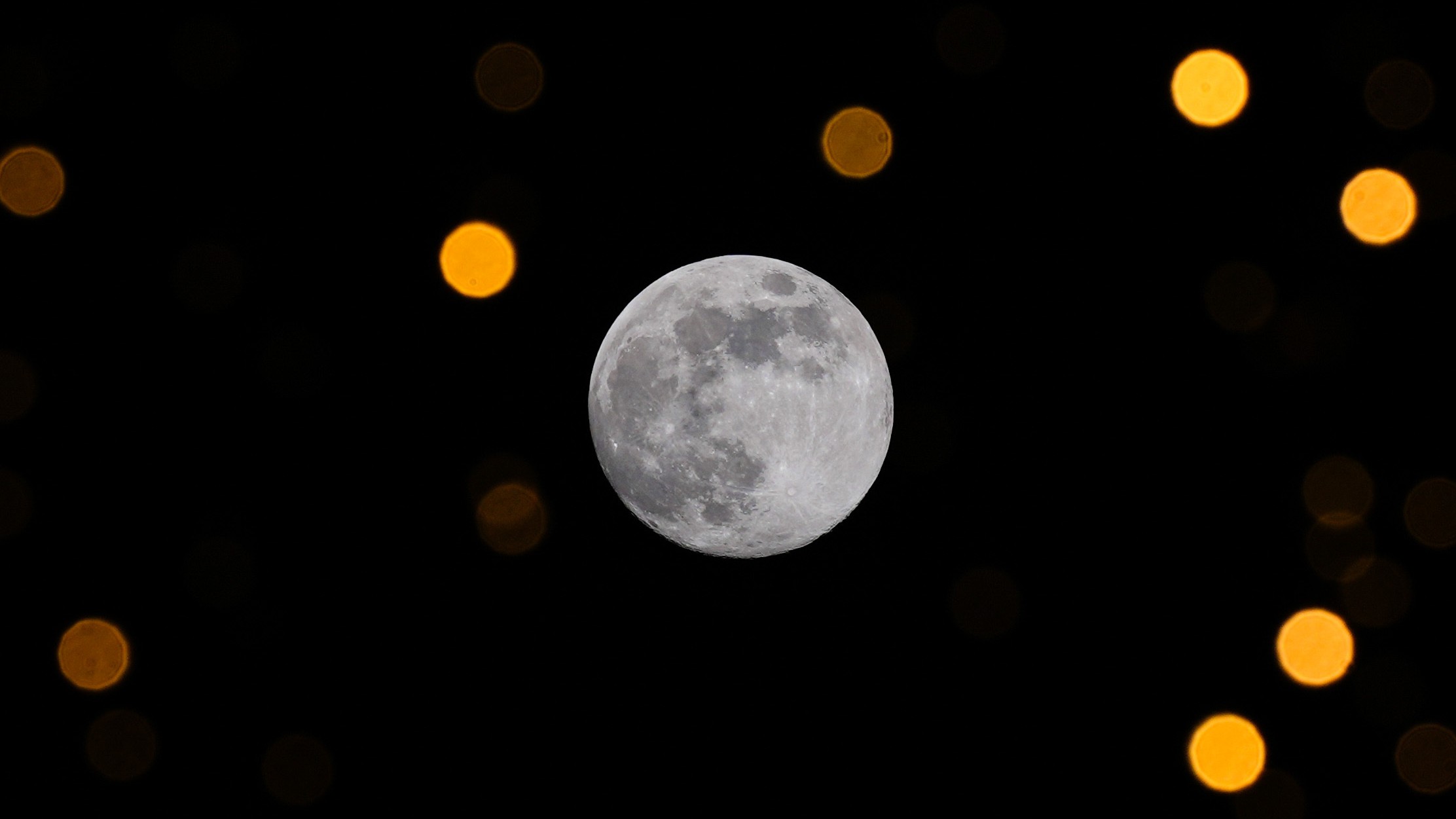
This week, skywatchers are in for a truly spectacular celestial event. The Cold Supermoon, set to be the second-largest full moon of 2025, will grace our skies, emerging dramatically from the eastern horizon at dusk. Adding to its prominence, this particular full moon is also projected to climb higher in the night sky than any other throughout the entire year, promising an exceptionally striking display for observers.
The moon officially achieved its full phase at 6:14 p.m. EST on Thursday, December 4. This celestial milestone saw the lunar orb ascend from the eastern horizon, charting its course within the constellation Taurus. While the moon’s technical “fullness” is instantaneous, its most visually captivating appearance often coincides with moonrise in your local sky, when it presents a magnified and more dramatic spectacle as it hangs low over the horizon.
Marking the third in a rare series of four consecutive celestial events, this supermoon stands as the second-largest of the year, surpassed only by November’s upcoming “Beaver Moon.” This impressive lunar display, colloquially known as a “supermoon,” occurs when a full moon coincides with the moon’s closest orbital approach to Earth, a point scientifically termed “perigee.” The phenomenon results in a noticeably larger appearance, with the moon’s disc appearing roughly 10% bigger than an average full moon.
While the Cold Moon officially reaches its peak illumination at dusk on December 4, sky-watchers can anticipate its brilliant, full appearance throughout the surrounding days. An especially striking display is predicted for Friday, December 5, when the moon will ascend into the night sky roughly an hour after sunset. This perfectly timed celestial event offers an ideal opportunity for burgeoning astronomers and casual observers alike to test out new binoculars or a small beginner telescope, perhaps a recent holiday acquisition.
**December’s Cold Moon Reaches Annual Celestial Peak**
Each December, the “Cold Moon” graces the night sky with a remarkable distinction: it climbs higher than any other full moon observed throughout the year.
This annual celestial peak is directly linked to the imminent winter solstice, which arrives around December 21st in the Northern Hemisphere. During the solstice, the sun appears at its lowest daily position. In stark contrast, the full moon, by its very nature positioned opposite the sun, ascends to its highest point, offering a dazzling nocturnal display.
December’s full moon, a celestial event often steeped in cultural significance, carries a variety of evocative names rooted in ancient traditions and observations of the winter landscape.
According to The Old Farmer’s Almanac, numerous Native American tribes bestowed descriptive titles upon this frosty luminary. The Cree recognized it as the “Frost Exploding Trees Moon,” while the Oglala referred to it as the “Moon of the Popping Trees,” both reflecting the harsh sounds of intense cold. The Dakota saw it as the “Moon When the Deer Shed Their Antlers,” marking a key natural cycle. Other names include the “Winter Maker Moon” from the Western Abenaki and the straightforward “Cold Moon” from the Mohawk. The Mohican people called it the “Long Night Moon,” a name that directly references its proximity to the winter solstice, the year’s shortest day, which occurs on December 21st this year.
Echoing this theme of extended darkness, historical records compiled by Time and Date show that Old English and Anglo-Saxon cultures also identified December’s full moon as the “Moon Before Yule” and, similarly, the “Long Night Moon,” highlighting its enduring association with the deepest part of winter.
The first full moon of 2026, known as the “Wolf Moon,” is set to grace the night sky on January 3. This event carries dual significance: it not only begins the new year’s lunar calendar but also marks the fourth and final supermoon in a consecutive series. Moreover, 2026 promises an active year for lunar observers, featuring a total of 13 full moons. This additional full moon is attributed to a “Blue Moon,” which occurs when two full moons appear within a single calendar month, slated for May.