
Breakthroughs in battery technology are poised to revolutionize both mobility and energy systems, according to Kurt Kelty, General Motors’ vice president of battery, propulsion, and sustainability.
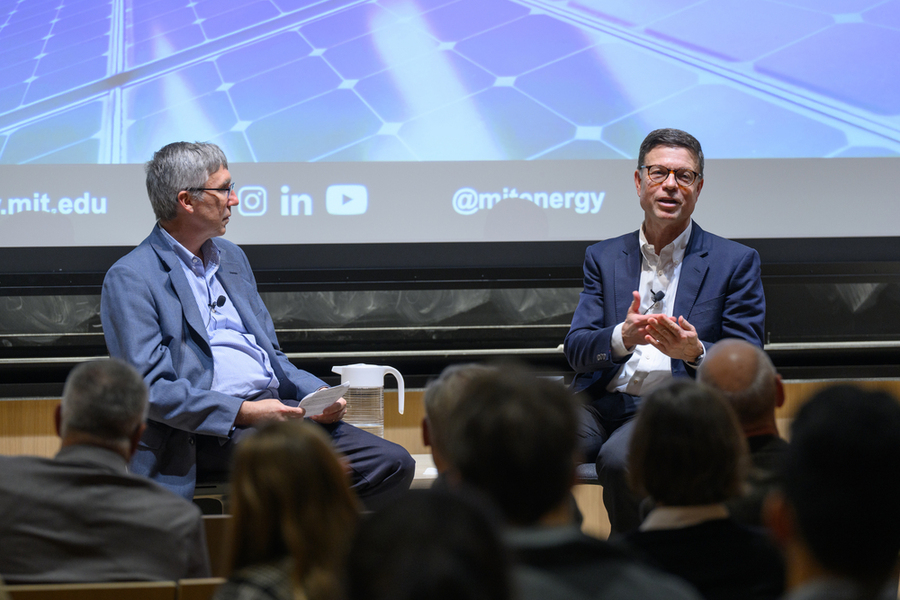
Speaking at the MIT Energy Initiative (MITEI) Fall Colloquium, Kelty detailed GM’s aggressive strategy to move next-generation battery innovations from the laboratory into commercial production, significantly advancing American leadership in this crucial sector. Kelty’s presentation was a key component of the ongoing MITEI Presents: Advancing the Energy Transition speaker series.
At General Motors, a dedicated team led by Kelty is strategically addressing three pivotal areas to accelerate electric vehicle (EV) adoption and bolster manufacturing independence.
Their foremost objective is to enhance EV affordability, aiming to make electric cars more accessible to a broader consumer base. Kelty highlighted that a significant portion of the cost barrier lies in battery technology, which constitutes approximately 30 percent of a vehicle’s total price.
Secondly, the team is intensively focused on advancing battery performance. This encompasses developing faster charging speeds and improving energy density, crucial factors for consumer convenience and vehicle range.
Finally, GM is prioritizing the localization of its supply chain. Kelty explained that this initiative is essential for cultivating North American resilience and independence, thereby reducing reliance on critical materials sourced from overseas, particularly China.
Significant investment in virtualization technology is dramatically accelerating research and development efforts. This strategic allocation of resources now allows teams, such as Kelty’s, to leverage artificial intelligence for advanced upfront modeling. What once consumed months of work can now be accomplished in a matter of days, marking a substantial increase in efficiency.
Kelty emphasized the efficiency of their modeling system, explaining that even minor adjustments to a battery’s nickel content can be rapidly analyzed. This swift assessment projects how such modifications would affect critical metrics like energy density, safety, and charging capacity. These insights are then comprehensively extrapolated across all scales, from the individual cell to the full battery pack and ultimately the entire vehicle system.
Kelty has announced a significant development in battery technology, introducing lithium manganese-rich (LMR) batteries as a solution to critical industry hurdles. The company asserts that this innovation addresses issues of affordability, accessibility, and commercial viability within the battery market.
Historically, the industry has aimed to reduce battery production costs by minimizing cobalt content and increasing the proportion of nickel. These high-nickel batteries, which offer extended range, are currently dominant in electric vehicles across the United States.
However, LMR batteries represent an evolution of this approach. They further drive down manufacturing expenses by substantially reducing nickel and instead incorporating a greater quantity of manganese. This strategic shift not only promises to lower overall battery costs but also maintains the essential factor of vehicle range.
In China, Lithium-iron-phosphate (LFP) batteries have become the dominant choice, prized for their cost-effectiveness, extended lifespan, and robust safety credentials. However, a significant advancement is emerging with Lithium Manganese Rich (LMR) batteries. These new power sources are poised to redefine expectations by offering a cost profile comparable to LFP technology, while simultaneously delivering a driving range that closely rivals more energy-dense high-nickel chemistries. This unique combination, blending affordability with expanded range capabilities, represents “what’s really a breakthrough,” according to Kelty.
General Motors is reportedly on the cusp of a significant breakthrough in electric vehicle technology, having successfully navigated the long-standing commercialization hurdles for Long-Range Manganese-Rich (LMR) batteries. While the inherent potential of LMR technology has been acknowledged for years, its widespread adoption faced critical obstacles, primarily in developing viable mass production methods and seamless integration into EVs—challenges that experts like Kelty previously highlighted. With GM now claiming to have resolved these complex issues, the automaker is set to become the first to introduce these advanced batteries into its electric vehicles, with an anticipated market launch in 2028.
Kelty highlighted the exciting future prospects of vehicle-to-grid (V2G) technologies. He elaborated that bidirectional chargers would enable a two-way flow of energy, allowing electric vehicles not only to draw power from the grid but also to send stored energy from their batteries back into it. This innovative capability would empower consumers to charge their vehicles during off-peak hours when electricity rates are low, and then discharge that power during the day when prices are significantly higher, presenting a strategic opportunity to optimize energy costs.
Diversifying its portfolio beyond traditional automotive applications, General Motors is now directing its formidable battery expertise towards the burgeoning field of grid-scale energy storage. This strategic pivot aims to address the growing demand for large-scale power solutions. According to Kelty, this market is not only significant in its current state but is also experiencing a swift surge in growth, primarily fueled by the accelerating expansion of data centers.
Kelty expressed profound optimism regarding the future of battery manufacturing and electric vehicles in the United States. He emphasized the nation’s existing technological prowess and long-standing innovative spirit, noting that these strengths are now being synergistically combined with a burgeoning domestic manufacturing sector. Kelty concluded that this convergence presents an unparalleled opportunity for the U.S. to cultivate a dominant battery industry.
A new speaker series is poised to showcase leading energy experts and visionary leaders who are actively shaping the scientific, technological, and policy solutions crucial for revolutionizing our energy systems. For a comprehensive schedule and further details on this and other events, please consult MITEI’s official Events page.