
Scientists have taken a significant step forward in tackling one of physics’ most profound and enduring mysteries: the fundamental question of why matter exists in the universe. This crucial progress comes courtesy of a pioneering, combined analysis of data gathered by two of the world’s leading neutrino experiments.
In a landmark international collaboration, the NOvA experiment in the United States and the T2K experiment in Japan have unveiled the most precise understanding to date of how neutrinos and their antimatter counterparts transform during their journeys. This breakthrough, achieved by meticulously pooling nearly 16 years of accumulated measurements, offers an unprecedented glimpse into the behavior of these elusive particles.
The pivotal findings, detailed on October 22nd in the prestigious journal Nature, are set to significantly advance the scientific quest for subtle behavioral distinctions between neutrinos and antineutrinos. Identifying such differences could provide a crucial explanation for one of the universe’s greatest puzzles: why matter overwhelmingly prevailed over antimatter in the early cosmos.
The very existence of our matter-dominated universe presents a fundamental cosmic enigma. According to the Standard Model of particle physics, the Big Bang, which occurred nearly 14 billion years ago, should have created perfectly symmetrical quantities of matter and its antimatter twin. Given that these opposing particles instantly annihilate upon contact, such an equilibrium would have resulted in a cosmos filled solely with pure energy. Instead, today’s observable universe is overwhelmingly composed of matter, strongly implying that a subtle, yet still-mysterious mechanism afforded matter a slight, decisive advantage in the earliest moments of creation.

Scientists are increasingly focusing on the neutrino, an enigmatic subatomic particle, as a potential key to understanding one of the universe’s greatest mysteries: the imbalance between matter and antimatter. Dubbed “ghost particles” due to their ethereal, nearly massless nature and their astonishingly rare interactions with other matter, neutrinos permeate the cosmos almost without leaving a trace.
For decades, physicists have questioned whether neutrinos and their antimatter counterparts, antineutrinos, exhibit subtly different behaviors that could be observed in experiments. Even a minor disparity, a phenomenon known as CP violation, could profoundly illuminate how matter ultimately came to dominate the universe, providing its “cosmic edge” over antimatter.
Ryan Patterson, a physics professor at the California Institute of Technology and co-lead of the NOvA team, highlighted to Space.com that while further comprehension is still needed, the central experimental challenge is distinctly clear: can this specific symmetry violation be definitively observed within neutrinos, and if so, what is its precise magnitude?
Neutrinos, already renowned for their elusive nature, possess an added layer of intrigue through their remarkable capacity for identity transformation. These subatomic particles manifest in three distinct “flavors,” and as they journey through space, they continuously oscillate between these types. This constant metamorphosis stems from the fact that each neutrino flavor is, in essence, a unique blend of three underlying mass states. Consequently, as a neutrino travels, these foundational mass states subtly shift, compelling the particle to seamlessly morph from one flavor into another.
A recent Caltech statement offered a vivid analogy to describe an unexpected, fundamental shift: likening the change to discovering one’s strawberry ice cream cone had inexplicably transformed into chocolate on the way home.
By meticulously tracking these particles’ “flavor” transformations, scientists can precisely quantify the minuscule mass differences that drive neutrino oscillations. This intricate data, coupled with a comparative analysis of how neutrinos and their antimatter counterparts behave, offers a crucial pathway for researchers to probe the fundamental phenomenon of CP violation.
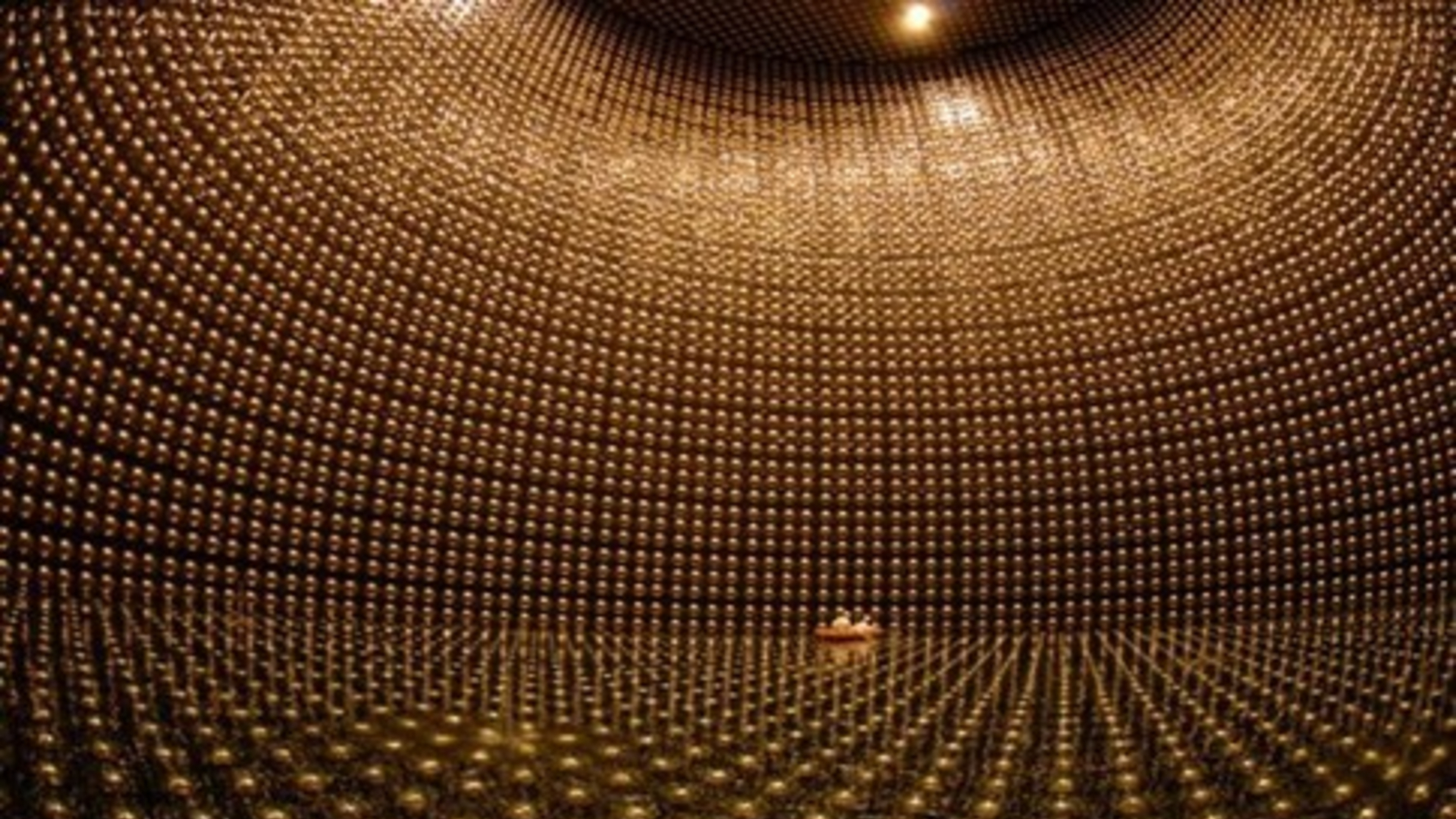
To achieve its scientific goals, the NOvA (NuMI Off-axis νe Appearance) experiment launched a beam of neutrinos from Fermilab, near Chicago, on a 500-mile (800-kilometer) journey to a detector located in Minnesota. Meanwhile, across the Pacific, Japan’s T2K (Tokai-to-Kamioka) experiment executed a similar feat, dispatching its own beam 183 miles (295 kilometers) from the Japan Proton Accelerator Research Complex in Tokai. This beam was aimed at the colossal Super-Kamiokande detector, impressively situated approximately 0.6 miles (about 1 kilometer) deep beneath a mountain in Kamioka.
By leveraging experiments conducted at distinct distances and energy levels, scientists gain unique, yet complementary, perspectives on neutrino oscillations. The integration of this diverse data proves critical, empowering researchers to precisely isolate the subtle parameters that govern the intricate transformations of these elusive particles.
A groundbreaking collaborative analysis has yielded an exceptionally precise measurement of the neutrino mass splitting, a fundamental oscillation parameter critical to understanding these elusive particles. Through this joint effort, scientists have constrained the parameter’s value to an unprecedented 2 percent uncertainty, positioning it as one of the most accurate measurements ever reported in the history of science.
Patterson underscored the profound significance of this scientific development, noting it “underlies all the other measurements we make.” He further elaborated that this breakthrough paves the way for scientists to finally ascertain the neutrino mass hierarchy – the still-unknown ordering of the three distinct neutrino mass states.
While physicists currently accept the existence of three distinct neutrino families, each associated with unique masses, a profound mystery persists. Federico Sanchez, an experimental physicist specializing in neutrino physics and a longtime T2K collaborator, explained to Space.com that scientists fundamentally lack an understanding of why precisely three families exist—rather than two, four, or more—and what determines the specific values of their observed mass differences.
The mass hierarchy is a critical foundation for countless theoretical calculations and predictions, the expert noted. Moreover, he emphasized, it yields tangible results that can be directly benchmarked against established scientific models.
The subtle but significant impact of the neutrino mass hierarchy dictates how neutrinos and antineutrinos oscillate differently—a crucial element in the hunt for charge-parity (CP) violation in the universe.
In what is termed the “normal hierarchy,” muon neutrinos demonstrate a greater tendency to transform into electron neutrinos compared to their antimatter counterparts, muon antineutrinos. Should an “inverted hierarchy” prove to be the case, this specific pattern of transformation preference would be entirely reversed.
The recent joint analysis, while insightful, has not yet definitively settled the question of the neutrino mass hierarchy. However, physicist Patterson notes a crucial distinction regarding future findings.
Should subsequent experiments confirm an inverted hierarchy, current data already provides preliminary indications that neutrinos might indeed violate charge-parity (CP) symmetry. Conversely, if observations affirm the normal hierarchy, a substantially larger dataset would be indispensable to fully differentiate between the various competing effects at play.
Kendall Mahn, a professor at Michigan State University and T2K co-spokesperson, highlighted the inherent complexities of neutrino physics, describing it as “a strange field” where isolating specific effects proves exceptionally challenging. Mahn emphasized that significant progress is achieved by integrating multiple analyses, a strategy she noted is crucial for pinpointing individual effects and advancing scientific understanding.
Beyond specific scientific discoveries, researchers involved in the collaboration highlight a foundational achievement: the establishment of a shared framework. This “common language” standardizes how neutrino interactions are described, ensuring unprecedented consistency and clarity across all participating experiments.
Despite being grounded in the same fundamental physics, each scientific experiment implements distinct approximations and methodological choices, largely shaped by its unique detector design. According to Sanchez, two particularly critical assumptions revolve around understanding how neutrinos interact with matter—an essential component for accurately reconstructing their energy—and precisely how many neutrinos are produced at any given energy level.
Experts caution that even subtle variations in research models can significantly skew the interpretation of critical oscillation patterns. To mitigate this challenge, a collaborative initiative has successfully unified these foundational assumptions, yielding a crucial standardized template. This framework is designed for adoption by future experiments, ensuring that all subsequent findings are unequivocally comparable and fostering greater scientific coherence.
According to Sanchez, in a statement to Space.com, the meticulous accuracy of these measurements is paramount. He emphasized that even the slightest divergence could signify a departure from established models, potentially hinting at groundbreaking new physics. Conversely, a highly precise agreement between observations and theoretical predictions strengthens scientists’ conviction in the validity of their current understanding.
The timing for such advancements could not be more opportune. Scientists emphasize that a unified theoretical framework will be critical for the success of the next wave of ultra-sensitive experiments. Two colossal neutrino detectors, the Deep Underground Neutrino Experiment (DUNE) in Illinois and South Dakota, and Japan’s Hyper-Kamiokande, are currently under construction and slated to commence operations in 2028.
These cutting-edge facilities are designed to achieve significantly greater measurement sensitivity than their predecessors, NOvA and T2K. This enhanced precision holds the profound potential to deliver definitive evidence of charge-parity (CP) violation – a crucial asymmetry in the laws of physics – within the next decade.
A pivotal discovery could redefine our understanding of the cosmos: if neutrinos are confirmed to interact differently with matter and antimatter, scientists may finally unravel the long-standing mystery of why our universe exists in its current matter-dominated form. This revelation would provide the long-sought explanation for the universe’s fundamental composition.
The comprehensive research outlining these findings officially premiered on October 22, appearing in the prestigious journal *Nature*.





