China’s national space agency has announced plans to retrieve a damaged spacecraft from its Tiangong orbital station, initiating an uncrewed return mission to Earth. The vessel, currently docked at the station, was reportedly compromised by a suspected strike from space debris, rendering it unfit and unsafe for crewed operations. Consequently, the spacecraft will be brought back without astronauts aboard.
China’s Shenzhou 20 mission has unexpectedly postponed its return to Earth, originally slated for November 5. The trio of Chinese taikonauts, poised to depart the nation’s orbital outpost, will now remain aboard the space station following a surprise announcement from the China Manned Spaceflight Agency (CMSA).
The agency revealed that the spacecraft sustained damage, with a suspected debris strike leaving a critical crack in the vessel’s viewport. This compromise has rendered a safe journey back to Earth too hazardous for the crew.
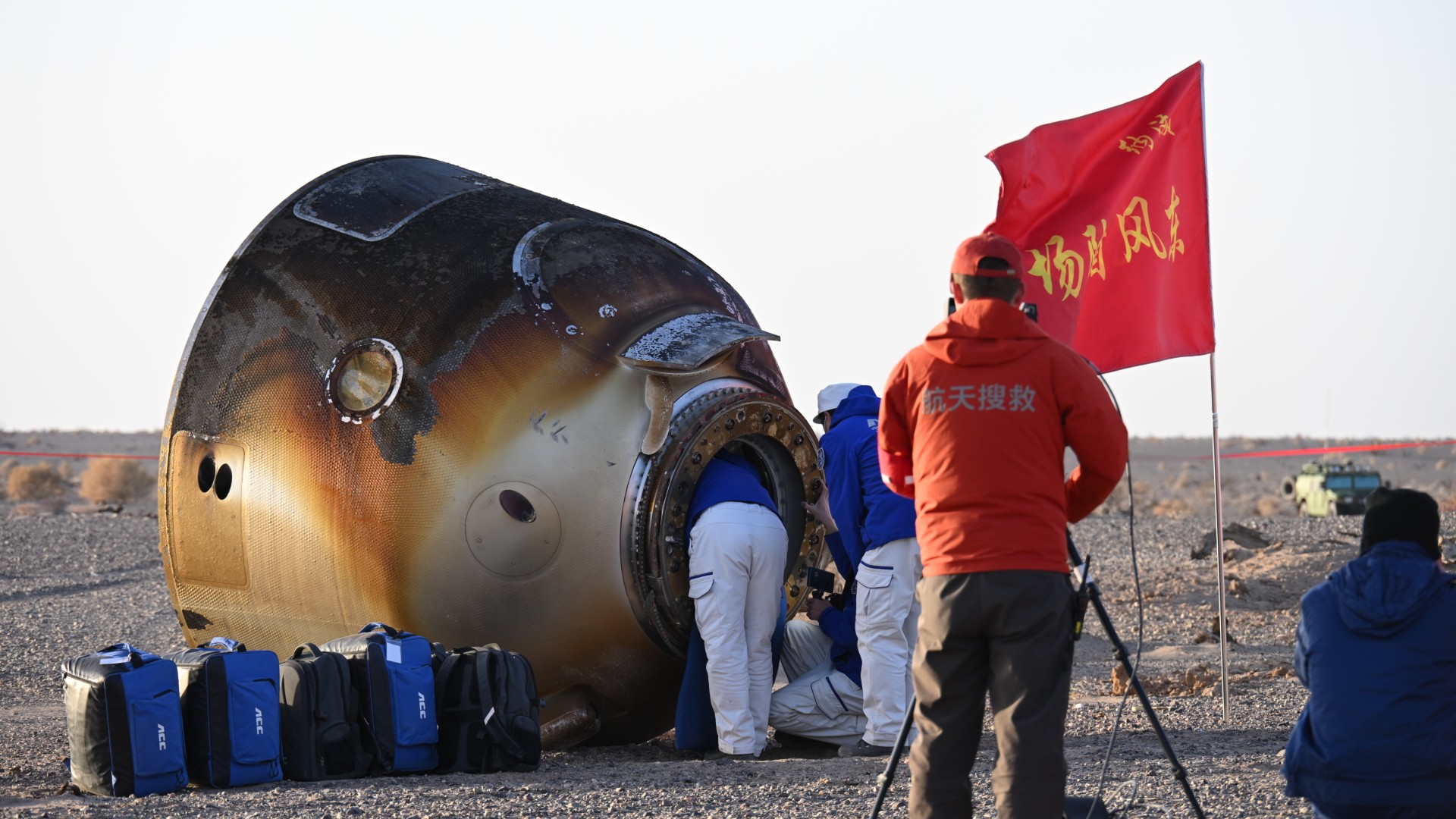
The three Shenzhou 20 astronauts returned to Earth on November 14, utilizing their relief crew’s spacecraft for the journey. This left the three-person Shenzhou 21 mission crew temporarily without an emergency return vehicle aboard the Tiangong space station. China swiftly rectified this safety concern, launching a new craft on November 22 to serve as their dedicated lifeboat.
Now, the China Manned Space Agency (CMSA) has announced plans to retrieve the previously damaged Shenzhou 20 craft. Announced on December 1, the spacecraft will be brought back to Earth for inspection. According to state news agency Xinhua, the aim is to “generate meaningful real-world experimental data for subsequent missions.” A specific return date for the Shenzhou 20 craft has not yet been disclosed.

New details have emerged regarding the structural integrity of the Shenzhou 20 spacecraft. Officials from the China Manned Space Agency (CMSA), as reported by Xinhua, have elaborated on the damage, revealing the vessel sustained “penetrating cracks.” This significant impairment was caused by a minuscule piece of debris, less than a millimeter in size, which impacted the craft at an exceptionally high velocity.
Officials made the prudent decision to bring the spacecraft home uncrewed, prioritizing safety. This precautionary measure was taken to avert a catastrophic scenario where existing cracks, potentially worsened by the intense pressure and heat of atmospheric reentry, could cause the viewport’s outer pane to detach, leading to a complete structural failure of the craft.
China’s Shenzhou 21 crew is now fully immersed in the remainder of their six-month mission aboard the Tiangong space station. During their extended stay, the taikonauts will focus on conducting a comprehensive series of scientific experiments and engaging in crucial outreach programs. Their tenure is set to conclude with the arrival of their successors, the Shenzhou 23 crew, which is currently projected to launch in April 2026.
China’s recent Shenzhou 20 incident echoes last year’s somewhat similar situation with the astronauts of Boeing Starliner’s first crewed test flight, who were left aboard the ISS without a dedicated ride home. The difference, however, was that there was a plan in place to bring that crew home in the event of an emergency; they could have squeezed into extra seats inside a SpaceX Crew Dragon spacecraft. Still, some spaceflight experts say these incidents are a “wake up call” for the need for dedicated space rescue services and increased international cooperation to avoid future disasters during these types of emergencies.