**FOR IMMEDIATE RELEASE**
**Gemini Observatory Unveils Breathtaking Nebula Image to Celebrate 25th Anniversary**
**MAUNAKEA, HI –** The Gemini Observatory has marked its 25th anniversary by releasing a stunning new image: a breathtaking celestial portrait of a vibrant emission nebula and an accompanying star cluster.
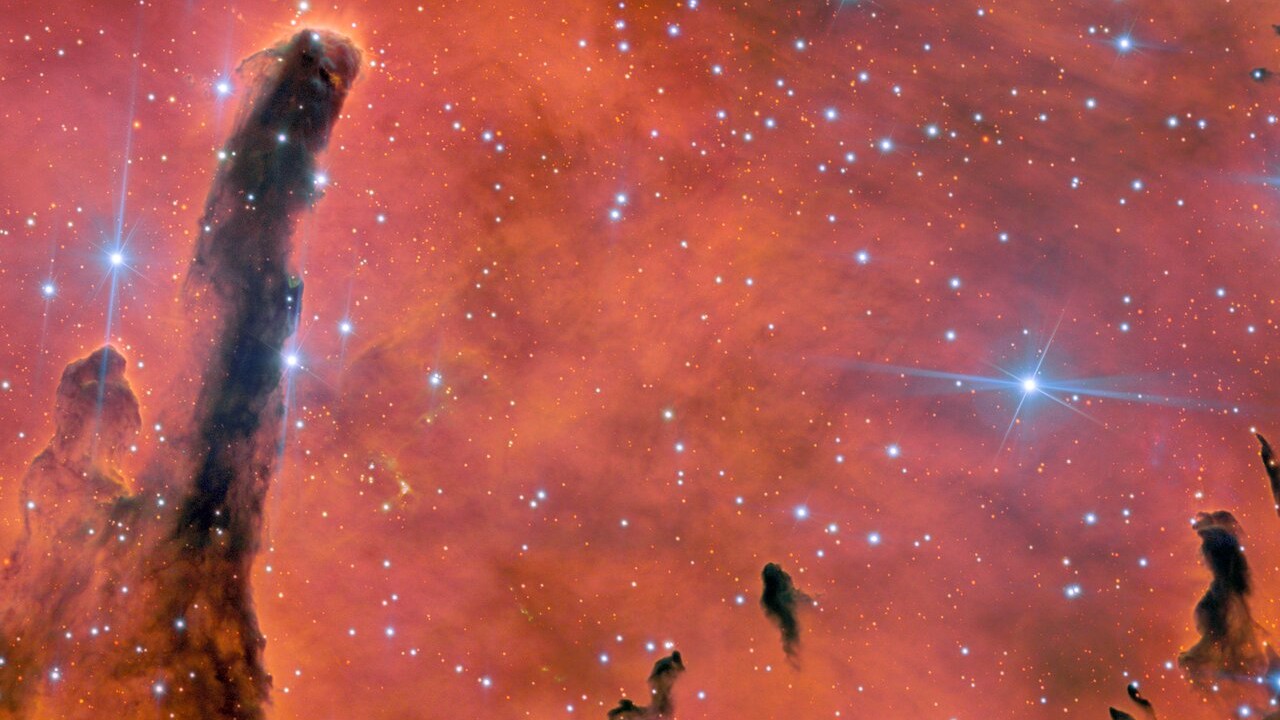
The spectacular photograph captures the emission nebula—a vast cosmic cloud of gas and dust—glowing brilliantly as it is energized by the intense radiation of nearby stars. This visually striking image serves as a commemorative tribute to the observatory’s quarter-century milestone in astronomical discovery.
A captivating new anniversary image has been released, drawing immediate parallels to the iconic “Pillars of Creation.” This celebrated view, famously captured by the Hubble Space Telescope in 1995 and more recently by the James Webb Space Telescope within the Eagle Nebula, finds its echo in the stunning depiction of emission nebula NGC 6820 and the accompanying star cluster NGC 6823.
This captivating image showcases the dynamic interplay within a stellar nursery. Brilliant, massive stars residing in NGC 6823, depicted as intense blue-white points of light, powerfully illuminate the vast, crimson veil of gas that constitutes NGC 6820. This radiant energy, in turn, meticulously sculpts towering pillars of gas and dust from the surrounding nebula, a direct consequence of the stars’ blistering radiation.
NGC 6820 and NGC 6823 are positioned squarely within the Summer Triangle, the celebrated asterism formed by the brilliant trio of Deneb, Vega, and Altair. Observers in the Northern Hemisphere can currently spot these celestial objects low on the western horizon, becoming visible shortly after nightfall.
In Hawaii, a region deeply connected to both cutting-edge astronomy and ancient celestial wisdom, a recent initiative has further intertwined scientific discovery with local culture. While the Gemini North telescope has been observing the cosmos from the islands since June 1999, the night sky itself holds millennia of local lore—including the traditional recognition of the Summer Triangle as Mānaiakalani, or the Great Fishhook of Maui.
Continuing this tradition, four local high school students participating in the University of Hawaii’s Project Hōkūlani summer internship have bestowed a new Hawaiian name upon a recently released astronomical image. They dubbed it Ua ‘Ōhi’a Lani, a poignant title meaning “The Heavenly ‘Ōhi’a Rains,” thereby enriching the scientific observation with profound cultural resonance.
The accompanying image was captured by the Gemini North telescope, situated high on the summit of Maunakea, Hawaii. This iconic shield volcano is a renowned astronomical hub, hosting 13 large observatories. Gemini North, however, is one half of the International Gemini Observatory, a pair of powerful 8-meter telescopes. Its twin, Gemini South, is located thousands of miles away on Cerro Pachón in the Chilean Andes, having seen its ‘first light’ in November 2000. Together, these two colossal instruments provide astronomers with access to nearly the entire night sky, significantly expanding our cosmic view.
The celestial body glows a striking crimson, reminiscent of molten lava, a vibrant hue directly attributed to the abundance of hydrogen gas present within the nebula. This visual phenomenon was explained by Hope Arthur, a Gemini intern, in a recent statement. The nebula’s evocative name itself draws from Hawaiian mythology, honoring Pele, the revered goddess of volcanoes and fire, who is also legendary for creating the Hawaiian Islands.
Arthur highlighted a profound connection between a cherished Hawaiian myth and astronomical cycles. He explained that the well-known Pele story of ‘Ōhi’a and Lehua, which chronicles regrowth after tragedy and the genesis of new beginnings, felt deeply resonant with the cosmic rhythm of stellar life, death, and rebirth.
Iolani Sanches, an intern at the University of Hawaii at Mānoa, highlighted a striking visual connection, noting that the “baby blue stars” in the image brought to mind rain. Sanches further explained this association by referencing the Hawaiian legend of ‘Ōhi’a and Lehua, a tale where picking lehua blossoms is said to cause rainfall.
For a richer collection of awe-inspiring astronomical visuals, delve into our dedicated “Space Photo of the Week” archives.