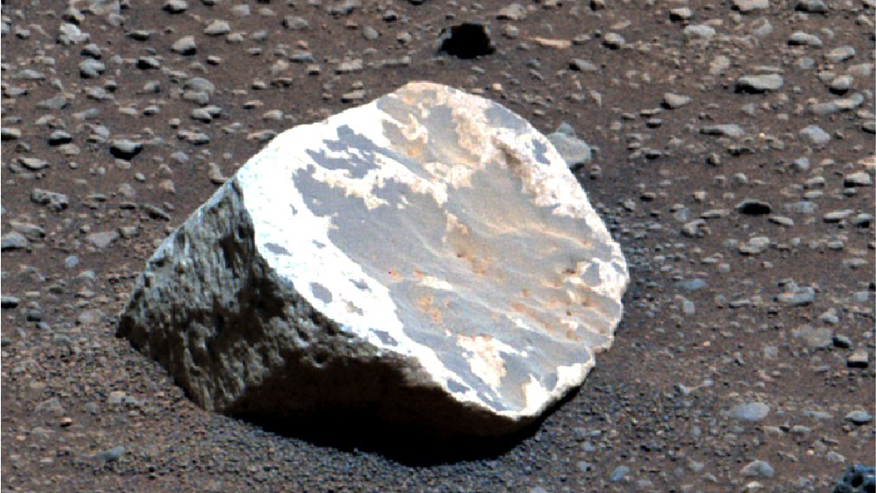
A recent study examining distinctively bleached rock formations on Mars offers compelling evidence that the Red Planet was once a significantly wetter world. Researchers suggest ancient Mars harbored humid regions that experienced intense, tropical-like rainfall, mirroring conditions found in Earth’s equatorial zones.
NASA’s Perseverance rover has unearthed a significant discovery on the Martian surface, captivating researchers with its find of unusual, light-colored rock formations. What initially appeared to be peculiar geological features has now been definitively identified as kaolinite, an aluminum-rich clay mineral. Scientists presented these findings in a study published December 1 in the journal *Communications Earth & Environment*.
On Earth, kaolinite, a mineral commonly found, almost invariably emerges from exceptionally warm and humid environments, akin to the sweltering conditions of tropical rainforests. Its formation typically occurs in rock formations thoroughly leached of other minerals, a process that demands millions of years of persistent rainfall. This starkly contrasts with the notoriously frigid and arid landscape that defines present-day Mars.
The discovery of kaolinite on Mars offers compelling evidence of a dramatically different past for the Red Planet, one characterized by an abundance of liquid water. Despite Mars’ current barren, frigid, and water-scarce surface, the presence of this mineral indicates that water was once far more prevalent than it is today, explained Adrian Broz, a soil scientist at Purdue University and lead author of the study.
A research team led by Broz conducted a detailed comparison of Martian kaolinite, extensively analyzed by instruments aboard the Perseverance rover, with terrestrial samples collected from South Africa and San Diego. The findings revealed a remarkable structural resemblance between the extraterrestrial and Earth-based clays, strongly suggesting they formed under similar geological conditions.
Orbital imagery of the Martian surface suggests the presence of significantly larger kaolinite deposits in areas beyond current exploration zones. While these extensive concentrations have been identified from space, ground missions, including NASA’s Perseverance rover, have not yet investigated these specific regions.
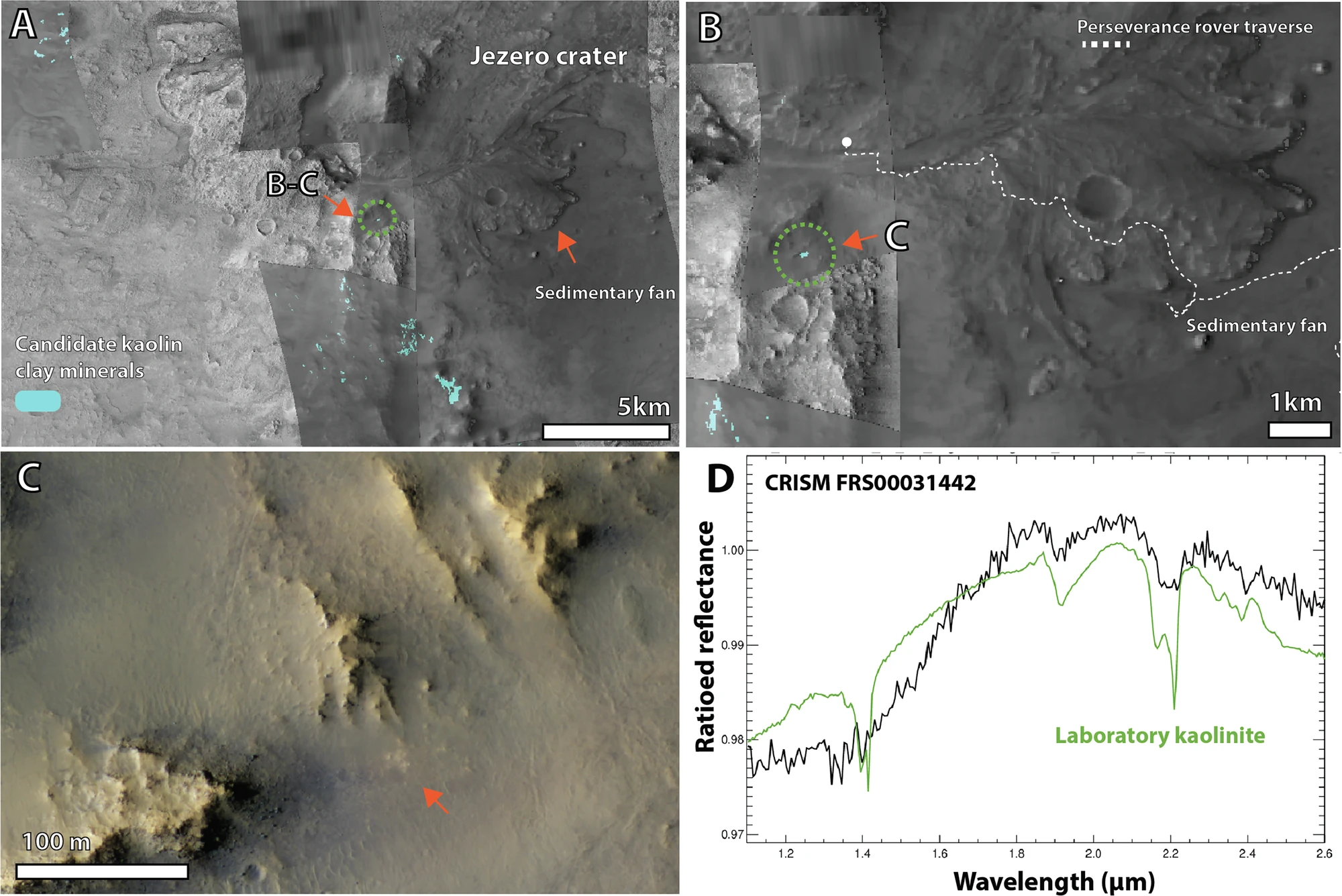
Planetary scientist Briony Horgan of Purdue University, a co-author of the study, emphasized the critical importance of smaller geological features. She stated that these modest rocks currently represent the sole direct, on-the-ground evidence available to researchers, a situation that will persist until the rover successfully reaches and investigates larger outcroppings.
The discovery of kaolinite on Mars provides significant new evidence, robustly bolstering the long-held hypothesis that the Red Planet once thrived as a veritable wet oasis. However, the precise timeline and geological mechanisms that led to this ancient watery world ultimately drying out remain subjects of intense scientific debate.
Leading scientific hypotheses propose that Mars shed its liquid water reserves sometime between three and four billion years ago. This monumental shift is largely attributed to the planet’s weakening magnetic field, which subsequently allowed relentless solar winds to erode its atmosphere. However, experts underscore that this desiccation process was likely intricate and involved multiple contributing factors. By studying ancient clay deposits on Mars, researchers believe they can gain deeper understanding into the precise mechanisms and timeline of this pivotal environmental transformation.
According to Broz, the findings also hold the potential to unlock crucial insights into Mars’ capacity for life, underscoring that water is indispensable for all known biological existence.