

The human body is a marvel of intricate design, featuring numerous orifices and a handful of exits. But precisely how many openings does each individual possess?
While it might seem straightforward to tally up the number of openings, the reality is far more complex. Defining precisely what constitutes a “hole,” and whether every conceivable gap qualifies, introduces significant ambiguity. This nuance often leads to surprising conclusions, even for mathematicians, who might draw distinctions between seemingly similar objects like a straw and a doughnut.
To ensure we’re on the same page, let’s clarify what mathematicians mean by a “hole.” According to Katie Steckles, a mathematics lecturer at Manchester Metropolitan University in the U.K. and a freelance mathematics communicator, the term refers to a void that pierces through a shape entirely, much like the opening in a donut.
When most people dig a hole at the beach, their intention isn’t to reach the opposite side of the globe. While commonly perceived as a cavity within a solid mass, this type of excavation isn’t considered a “true” hole because it possesses a bottom, according to Steckles.
According to James Arthur, a mathematician and science communicator based in the U.K., the definition of a “hole” in topology is quite specific: it refers to a **through hole**, meaning one that you could pass your finger through.
Engineers constructing undersea tunnels, such as the Chunnel linking the United Kingdom and France, initially excavate two separate entry points. However, the moment these two parallel boring operations successfully meet, the tunnel undergoes a profound transformation. What engineers, including Arthur, would classify as a “through hole” is created, akin to a conduit or a hollow tube with access at both extremities.
Pose the seemingly simple question: How many holes does a straw have? You’ll likely encounter a surprisingly diverse array of answers, ranging from one or two to a categorical zero. This widespread disagreement isn’t arbitrary; it stems directly from the varied, often informal, ways we colloquially define what precisely constitutes a ‘hole’.
For a consistent and definitive understanding, mathematics provides the necessary framework. Specifically, the discipline of topology is uniquely equipped to address the intricate challenge of classifying and quantifying the number of ‘holes’ present in any given object.
Topology, a distinctive branch of mathematics, places little emphasis on the precise physical form of objects. Its focus, as Steckles explained, is instead directed toward understanding the intrinsic properties of shapes and the intricate ways elements connect within space.
In the abstract realm of topology, objects are categorized not by their rigid shape, but by a more fundamental property: the number of holes they contain. From this unique mathematical perspective, the superficial differences between a golf ball, a baseball, or even a Frisbee vanish.
As Steckles explained, the underlying principle is continuous deformation. If these everyday items were crafted from a pliable material like plasticine or putty, they could theoretically be stretched, squashed, or otherwise manipulated to resemble one another. Crucially, this transformation would occur without ever creating new holes, sealing existing ones, or fusing separate parts together, rendering them topologically identical.
From a topologist’s viewpoint, the presence and number of holes fundamentally differentiate objects. A bagel, a doughnut, and a basketball hoop, for instance, are topologically distinct from a solid sphere, as each possesses a single, continuous hole. Extending this principle, a figure-of-eight, defined by its two holes, and a pretzel, recognized for its three, are considered separate topological objects, distinct both from the single-holed items and from each other.

To grasp the mathematical perspective on the “straw problem,” Arthur proposes a vivid mental exercise: envision a straw crafted from play dough.
He suggests a careful compression of the straw from its top down to its base, diligently preserving the central aperture, until it assumes the distinct form of a doughnut. According to Arthur, this visual metamorphosis illustrates a key concept: mathematicians would declare the straw to be “homeomorphic to a doughnut,” signifying a profound topological equivalence between the two shapes.
The common perception of a straw having two distinct openings, a notion perhaps fueled by its elongated shape and the distance between its ends, is a perspective that differs significantly from a topologist’s view. According to Steckles, from a topological standpoint, objects such as bagels, basketball hoops, and doughnuts share a fundamental characteristic with a straw: they all possess a single, continuous hole. Steckles explained that the “hole” in a straw is, in essence, a singular passage that extends from one end to the other, with the opening at the opposite end simply representing the termination of that same continuous void.
When applying the precise mathematical definition of a “hole” as understood by topologists, we can now confront the intriguing question: How many holes does the human body possess? To begin, let’s enumerate the body’s external orifices. The most readily apparent include the mouth, the urethral opening for urination, and the anus. Additionally, we have openings in our nostrils and ears. For some individuals, the body also features milk ducts within the nipples and the vaginal opening.
Beyond the more familiar orifices, our bodies possess a network of lesser-known gateways. Situated in the inner corners of our eyelids, near the nose, are four lacrimal puncta. These tiny structures serve a vital function, channeling tears from our eyes down into our nasal passages. On an even finer level, the skin is dotted with pores, microscopic openings that allow sweat to exit our system and sebum to keep our skin moisturized. While the sheer number of these openings could be in the millions, a question arises: do they all qualify as “holes”?
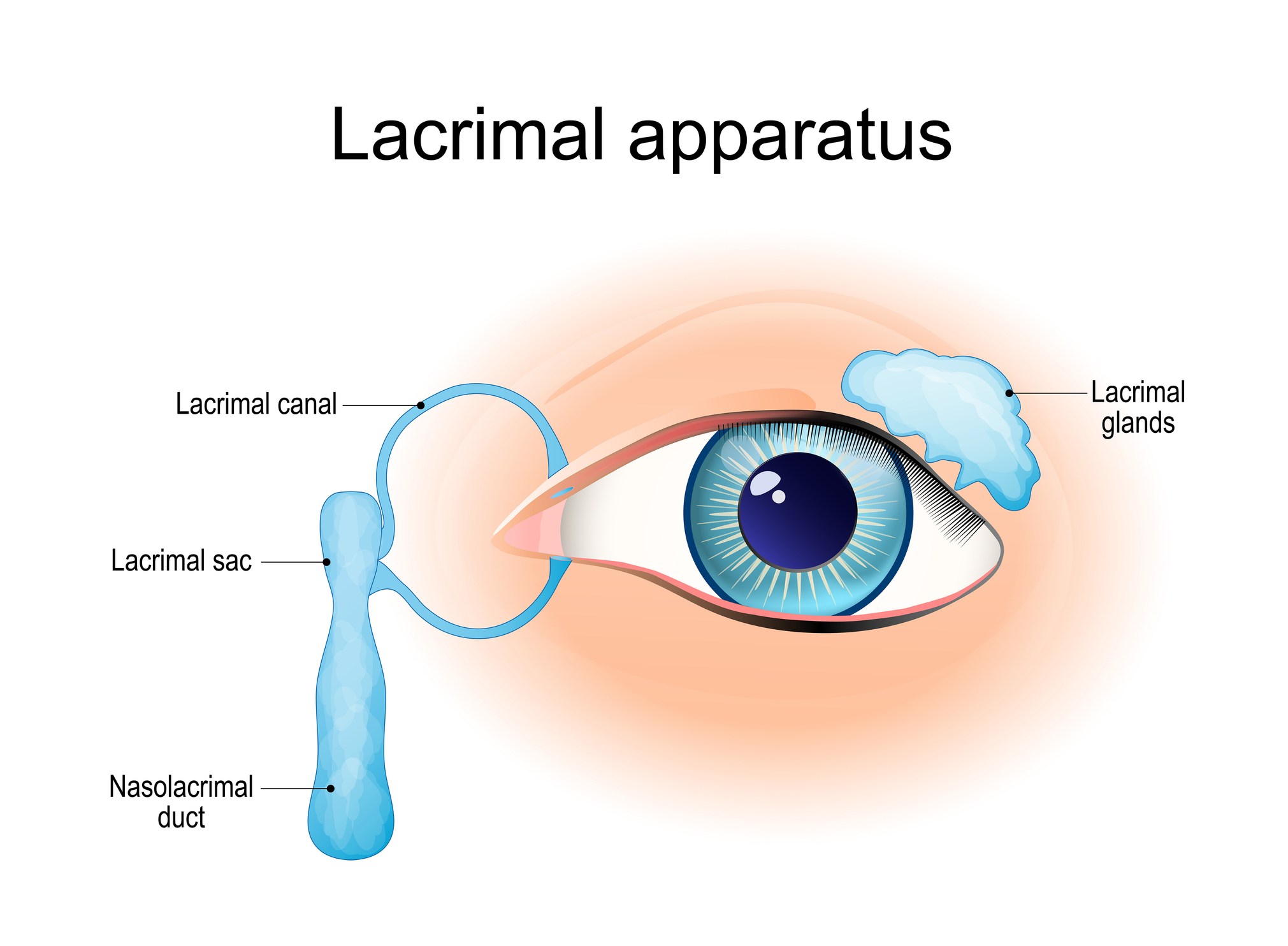
Imagine a microscopic probe, no thicker than a strand of hair at its finest, meticulously designed to navigate the body’s intricate pathways. Scientists are exploring the possibility of introducing a filament, measuring approximately 60 microns – a mere 60 millionths of a meter – into the body’s smallest openings, akin to the pores found on our skin.
However, a critical hurdle emerges: while such a fine thread might successfully enter a pore, its exit is severely restricted. The cells lining the pore’s base present a formidable barrier, their thickness exceeding the filament’s diameter. This prevents it from traversing further into the blood vessels, or vasculature, that sustain the pore’s delicate structure.
According to Steckles, these formations are not true holes in a topological context. Instead, they are best described as “blind pits,” as they do not extend through the material.
Based on this definition, we must exclude all pores, milk ducts, and urethras. It’s impossible to pass a string through one of these openings and emerge from another. Even the ear canals are disqualified, as they are isolated from the rest of the sinus system by the eardrums.
Here are a few paraphrased options, aiming for a unique and engaging journalistic tone:
**Option 1 (Focus on the surprising revelation):**
> “Think you know all the body’s openings? According to Arthur, we’ve been underestimating our own anatomy. He reveals that beyond the commonly recognized mouth, anus, and nostrils, there are four additional, less obvious apertures: the tear ducts. Each eye, he explains, possesses both an upper and a lower tear duct, bringing the total to an unexpected eight.”
**Option 2 (More direct and concise):**
> Arthur has identified a surprising number of openings in the human body, stating we possess eight in total. While the mouth, anus, and nostrils are typically acknowledged, he points to the tear ducts as the overlooked quartet, with each eye featuring both an upper and lower duct.
**Option 3 (Slightly more conversational, yet professional):**
> Prepare to rethink your understanding of human physiology. Arthur has outlined a comprehensive list of our body’s openings, revealing a total of eight. Beyond the expected exits like the mouth, anus, and nostrils, he highlights the often-forgotten tear ducts – two per eye, an upper and a lower – as contributing to this surprising count.
**Option 4 (Emphasizing the “hidden” aspect):**
> We often count our mouth, anus, and nostrils as the primary openings in our bodies. However, Arthur asserts that this count is incomplete, revealing four hidden apertures. These, he explains, are the tear ducts: two located in each eye, an upper and a lower, bringing the body’s total openings to eight.
Choose the option that best fits the overall tone and context of your writing.
Steckles clarified that the presence of internal connections between holes complicates the counting process, meaning the number of holes isn’t as straightforward as a simple visual count of external openings.
Here are a few ways to paraphrase the provided text, aiming for a unique, engaging, and original journalistic tone:
**Option 1 (Focus on the Puzzle):**
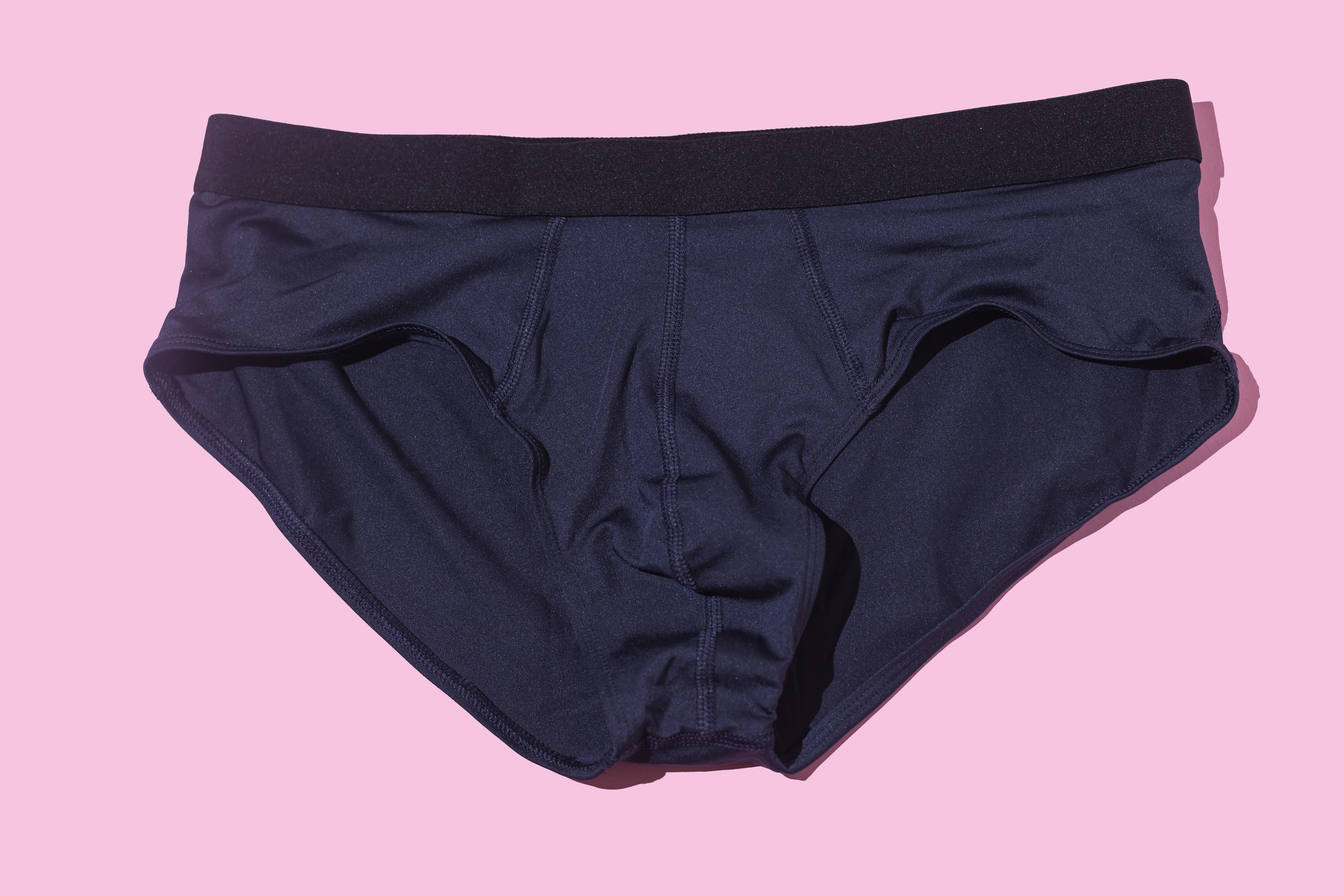
> Ever wondered about the true number of “holes” in a common garment like underwear? According to topologist [or “experts like”], a simple trick unlocks the answer: imagine flattening the item. As explained by Steckles, “If we were to stretch the waistband of the pants out onto a big hula hoop, we’d see the two trouser legs sticking down, each being one hole.” This perspective reveals that what appears to be a single piece of fabric can, in fact, be viewed as having distinct openings.
**Option 2 (More Direct and Explanatory):**
> Topologists employ a clever method to determine the number of holes in everyday objects, including something as seemingly straightforward as a pair of underwear. Steckles offers a practical analogy: visualize stretching the waistband of trousers onto a large hula hoop. From this viewpoint, the two leg openings become distinct “holes” extending downwards. This approach highlights how topological analysis can reveal a different understanding of an object’s structure compared to its everyday appearance.
**Option 3 (Slightly More Evocative):**
> The seemingly simple garment of underwear presents a fascinating topological riddle: how many “holes” does it truly possess? Topologists find a way to demystify this, as Steckles suggests. The key lies in imagining the item in a flattened state. Picture, for instance, a pair of trousers with its waistband expanded to form a hula hoop. The two dangling legs, in this visualization, clearly represent separate openings. This method transforms our perception of an ordinary item into a subject of mathematical inquiry.
**Key changes and why they were made:**
* **Introduction:** Instead of stating “A pair of underwear, for example…”, the paraphrased versions use more engaging hooks like “Ever wondered…” or “The seemingly simple garment… presents a fascinating topological riddle…”.
* **”Not immediately clear”:** This phrase is rephrased to highlight the surprising or puzzling nature of the question (e.g., “a fascinating topological riddle,” “a different understanding”).
* **”Useful trick”:** This is elevated to “clever method,” “practical analogy,” or “demystify this.”
* **Direct Quote Integration:** The quote is woven into the narrative more smoothly, often introduced with phrases like “As explained by Steckles” or “Steckles offers a practical analogy.”
* **Word Choice:** Synonyms and more descriptive language are used (e.g., “garment,” “analogy,” “visualize,” “demystify,” “perception,” “mathematical inquiry”).
* **Sentence Structure:** Sentences are varied to create a more dynamic flow.
* **Journalistic Tone:** The language is more objective and informative, suitable for reporting on a concept.
Here are a few paraphrased options, each with a slightly different emphasis, while maintaining a journalistic tone:
**Option 1 (Focus on the core paradox):**
> Intriguingly, a pair of underwear, despite possessing three distinct openings, effectively contains only two holes. This is because, as explained by Steckles, when these openings converge centrally, the resulting structure features one less hole than the initial points of access. Extending this topological principle to a more complex system, the human body, with its eight interconnected openings, is understood to have seven unique cavities.
**Option 2 (More direct and concise):**
> While a pair of underwear might seem to have three openings, topology reveals it actually has just two holes. Steckles explains this discrepancy: “When the holes connect together in the middle, there’s one fewer hole than there are openings.” This same mathematical concept applies to the human body, where eight interconnected openings translate to seven distinct holes.
**Option 3 (Slightly more explanatory):**
> The seemingly counterintuitive nature of holes versus openings is illuminated by a simple example: a pair of underwear. Although it presents three points of entry, the garment’s design results in only two actual holes. Steckles clarifies, “So when the holes connect together in the middle, there’s one fewer hole than there are openings.” This principle of topology, which deals with the properties of shapes that are preserved under continuous deformations, helps us understand that even with eight interconnected openings, the human body is topologically defined by seven separate cavities.
**Option 4 (Emphasizing the application of topology):**
> Topology offers a unique perspective on what constitutes a “hole,” even in everyday objects. Consider a pair of underwear: it boasts three openings, yet due to their convergence, it possesses only two holes. Steckles elaborates on this topological characteristic, stating, “So when the holes connect together in the middle, there’s one fewer hole than there are openings.” This same mathematical framework reveals that the human body, with its intricate network of eight openings, is fundamentally characterized by seven distinct topological holes.
While typically considered a singular opening, the female reproductive tract may, in fact, contain an additional passage. The vagina, although appearing as a terminal point, connects to the uterus, which in turn leads to one of two fallopian tubes. These tubes possess an open distal end, extending into the peritoneal cavity in close proximity to the ovary.
The responsibility of capturing the ovulated egg falls to the finger-like projections, known as fimbriae, situated at the funnel-shaped opening of the fallopian tube. Intriguingly, research has shown that an egg released from one ovary can be retrieved by the fallopian tube on the opposite side. This indicates a potential pathway for passage between the open ends of both fallopian tubes. Consequently, it is conceivable that a slender object could traverse the entire length of the female reproductive tract, from one fallopian tube opening to the other, effectively demonstrating another “hole.”
From a mathematical perspective, often rooted in topological principles, the human body is determined to possess either seven or eight distinct orifices.
Ultimately, the critical insight into any system lies not in a mere tally of its surface openings, but in comprehending the profound interconnectedness of its various components. From a topological perspective, this suggests a structure far more sophisticated than the simple, isolated voids of Swiss cheese. Instead, it more accurately mirrors the continuous, intricately designed surface of a custom garment, engineered to encompass a being with complex, branching forms.