
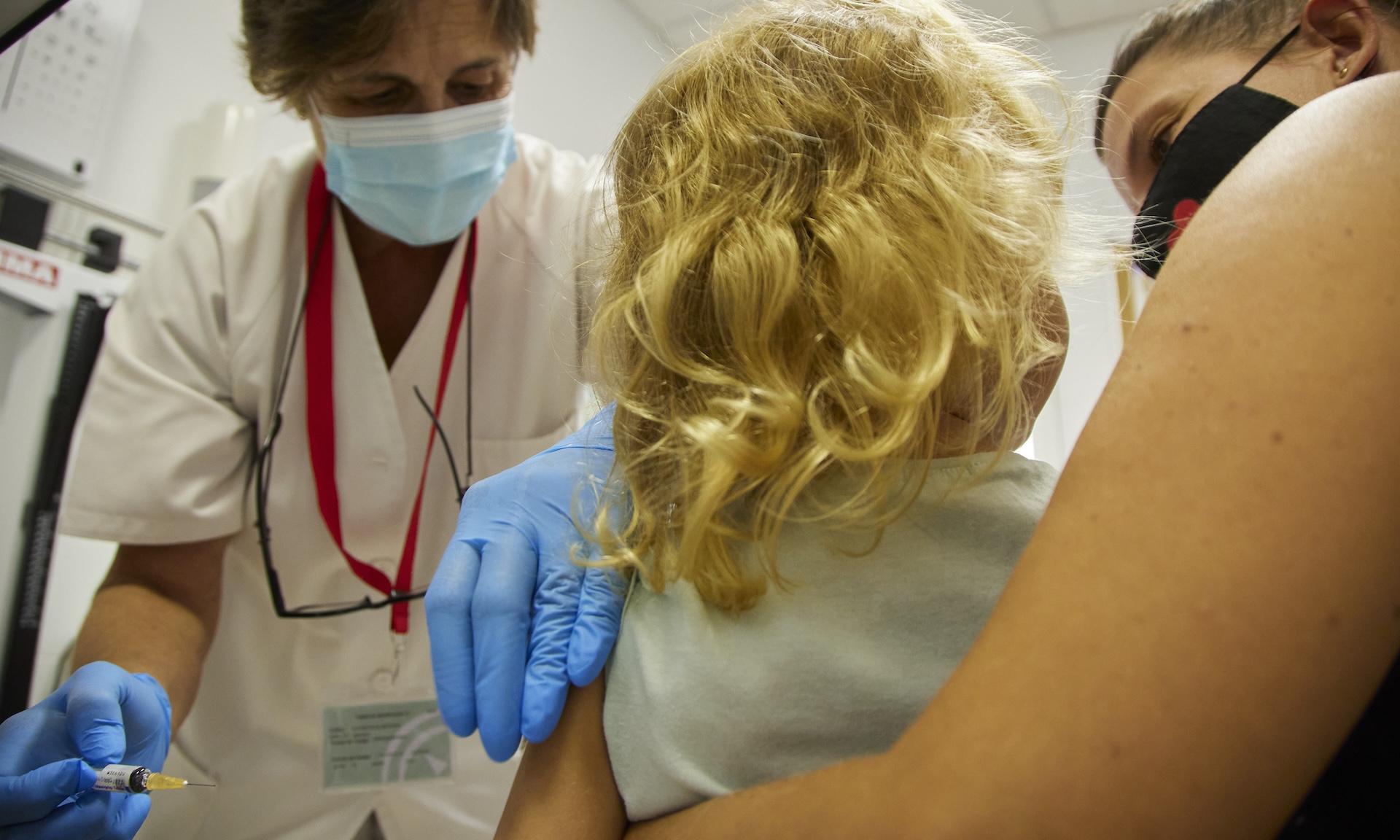
In a significant policy adjustment, the U.S. federal government has revamped its childhood vaccine schedule, substantially reducing the number of universally recommended immunizations for individuals aged 18 and under. The updated guidelines now advise 11 shots, down from an approximate previous total of 17.
A recent policy overhaul has significantly altered the recommendations for several crucial childhood vaccinations, including those protecting against rotavirus, influenza, and hepatitis A. Previously, these immunizations were universally advised for all children by default. Under the new guidelines, however, they will now primarily be suggested only for specific “high-risk” populations or become available through “shared clinical decision-making” consultations between parents and healthcare providers.
A proposal for “shared clinical decision-making” that would mandate caregivers consult a medical provider before their child receives a routine vaccine, while seemingly benign, could undermine public understanding and create significant access issues, according to Dr. Daniel Jernigan.
Jernigan, formerly the director of the Centers for Disease Control and Prevention’s (CDC) National Center for Emerging and Zoonotic Infectious Diseases, told STAT that such a requirement risks sowing confusion about which vaccines are deemed effective and medically necessary. Furthermore, he cautioned, it could introduce substantial logistical hurdles, complicating the process for families seeking essential immunizations.
Jernigan warned that classifying these vaccines as a shared clinical decision creates an additional impediment, potentially preventing children from receiving crucial, life-saving inoculations.
Official new guidance now classifies vaccines and immunizations into three core categories:
Federal health guidelines continue to advocate for comprehensive childhood immunization, encompassing shots against 11 specific diseases: measles, mumps, rubella, polio, pertussis, tetanus, diphtheria, Haemophilus influenzae type B (Hib), pneumococcal disease, varicella (chickenpox), and human papillomavirus (HPV).
However, a significant adjustment is now being proposed for the HPV vaccine. The Department of Health and Human Services (HHS) is reportedly recommending just one dose, a notable deviation from the traditional two-dose regimen, according to a STAT report.
**Special Immunization Guidelines for Vulnerable Groups Issued**
Individuals identified as belonging to “high-risk” populations are now being advised to receive vaccinations against a specific set of infectious diseases. These include Respiratory Syncytial Virus (RSV), Hepatitis A, Hepatitis B, Dengue fever, and two distinct forms of meningococcal disease.
It is important to note that the immunization strategy for RSV differs based on age. Pregnant individuals are eligible for a prenatal vaccine, while infants and young children can receive antibody-based treatments. Currently, there is no direct RSV vaccine available for pediatric use.
Here are a few paraphrased options, focusing on a clear, journalistic tone:
**Option 1 (Focus on Shared Decision-Making):**
> For certain vaccinations, including those for meningococcal disease, hepatitis A and B, rotavirus, COVID-19, and influenza, medical professionals and patients will engage in a shared decision-making process to determine the best course of action.
**Option 2 (More Direct):**
> Vaccinations targeting meningococcal disease, hepatitis A and B, rotavirus, COVID-19, and the flu are now subject to a “shared decision-making” approach, meaning the choice to administer these vaccines will involve discussion and agreement between healthcare providers and patients.
**Option 3 (Emphasizing the Scope):**
> A range of important vaccines, from those protecting against meningococcal disease and hepatitis A and B to immunizations for rotavirus, COVID-19, and influenza, fall under a “shared decision-making” framework.
**Option 4 (Slightly More Active Voice):**
> Patients and their doctors will jointly decide on the administration of vaccines for meningococcal disease, hepatitis A and B, rotavirus, COVID-19, and the flu, as these are categorized under “shared decision-making.”
Here are a few paraphrased options, each with a slightly different emphasis, while maintaining a journalistic tone:
**Option 1 (Focus on direct consequence):**
> Dr. Michael Osterholm, director of the University of Minnesota’s Center for Infectious Disease Research and Policy, warned The Associated Press that altering vaccine recommendations for influenza, hepatitis, and rotavirus, along with a change to the HPV vaccine guidance made without public input on its risks and benefits, will inevitably result in an increase in hospitalizations and preventable deaths among American children.
**Option 2 (More active voice, emphasizing the impact):**
> An estimated rise in hospitalizations and avoidable deaths among American children is likely to follow changes to vaccine recommendations for influenza, hepatitis, and rotavirus, according to Michael Osterholm, who leads the University of Minnesota’s Center for Infectious Disease Research and Policy. Osterholm told The Associated Press that the decision to alter HPV vaccine guidance without a public evaluation of its risks and benefits will have serious consequences.
**Option 3 (Concise and impactful):**
> “We will see more hospitalizations and preventable deaths in American children,” stated Michael Osterholm, of the University of Minnesota’s Center for Infectious Disease Research and Policy, in comments to The Associated Press. He argued that abandoning recommendations for vaccines against influenza, hepatitis, and rotavirus, and modifying the HPV vaccine guidance without a public review of risks versus benefits, will have dire outcomes.
**Option 4 (Slightly more explanatory):**
> The University of Minnesota’s Michael Osterholm, head of the Center for Infectious Disease Research and Policy, expressed concerns to The Associated Press that the removal of vaccine recommendations for influenza, hepatitis, and rotavirus, coupled with an unpublicized shift in HPV vaccine guidance concerning its risk-benefit profile, will lead to a surge in preventable hospitalizations and fatalities among American children.
Each of these options aims to:
* **Be unique:** They rephrase the original sentence structure and vocabulary.
* **Be engaging:** They use more active verbs and clearer phrasing.
* **Be original:** They avoid simply rearranging the original words.
* **Maintain core meaning:** The key vaccines and the predicted outcomes remain the same.
* **Use a clear, journalistic tone:** They are factual, objective, and attribute the information clearly.
Here are a few paraphrased options, playing with slightly different emphasis and phrasing:
**Option 1 (Focus on anticipation):**
> Following weeks of anticipation, stakeholders were prepared for the policy shift that was officially announced on Monday, January 5th.
**Option 2 (More direct and active):**
> The policy change, which stakeholders had been expecting for several weeks, was formally unveiled on Monday, January 5th.
**Option 3 (Emphasizing the timing):**
> By the time the policy change was announced on Monday, January 5th, stakeholders had already spent several weeks steeling themselves for the development.
**Option 4 (Slightly more formal):**
> Stakeholders had been anticipating the policy revision for several weeks leading up to its official announcement on Monday, January 5th.
**Key changes made:**
* **”Bracing for”** was replaced with synonyms like “prepared for,” “expecting,” “steeling themselves for,” and “anticipating.”
* **”Policy change”** was varied with “policy shift” and “policy revision.”
* **”By the time it was announced Monday (Jan. 5)”** was rephrased to be more active or to integrate the date more smoothly.
* The overall sentence structure was adjusted for variety and flow.
In early December, President Donald Trump directed federal officials to scrutinize the U.S. childhood vaccine schedule, drawing a comparison to those of “peer nations” and suggesting other countries may have more effective policies. Later that month, Politico revealed that Robert F. Kennedy Jr., who leads the Department of Health and Human Services (HHS), had expressed an interest in aligning the U.S. schedule more closely with Denmark’s. Denmark’s vaccination program currently recommends protection against 11 diseases.
Developed nations typically advise vaccinations against a spectrum of 12 to 15 different pathogens. However, Austria and the United States have historically offered a more extensive immunization schedule, recommending protection against approximately 17 distinct agents.
**U.S. Vaccine Schedule Stands Firm Amidst International Scrutiny**
U.S. health officials are reinforcing the established vaccine schedule, asserting that current protocols have undergone extensive evaluation and that recent adjustments were not prompted by novel safety or efficacy findings. The nation’s immunization roadmap remains based on a wealth of data and a robust testing process.
In parallel, experts caution against directly mirroring the public health strategies of smaller nations, citing significant demographic and systemic differences. Denmark, a nation of approximately 6 million with universal healthcare and a relatively uniform population, presents a vastly different landscape compared to the United States. With a population exceeding 340 million, the U.S. grapples with a complex, fragmented healthcare system and persistent health disparities, making direct comparisons and policy adoptions challenging.
Here are a few paraphrased options, each with a slightly different emphasis:
**Option 1 (Focus on the “why”):**
> The American Academy of Pediatrics (AAP) explains that vaccine recommendations, while generally aligned among developed nations, can vary significantly from one country to another. These differences stem from a complex interplay of factors, including the specific diseases prevalent in a region, the characteristics of its population, the structure and accessibility of its healthcare system, economic considerations, governmental policies, and the availability and implementation of vaccination programs.
**Option 2 (More concise and direct):**
> According to the American Academy of Pediatrics (AAP), variations in vaccine guidance between developed countries, despite broad similarities, are driven by a range of distinct factors. These include differing disease risks, population profiles, healthcare infrastructure, cost-effectiveness, government frameworks, and the logistics of vaccine procurement and distribution.
**Option 3 (Emphasizing the nuanced nature of guidance):**
> The American Academy of Pediatrics (AAP) clarifies that while developed countries often share common ground on vaccine guidance, country-specific nuances are inevitable. These divergences are shaped by unique disease landscapes, demographic variations, the intricacies of national health systems, financial realities, governmental structures, and the practicalities of vaccine supply and delivery programs.
**Option 4 (Slightly more active voice):**
> The American Academy of Pediatrics (AAP) highlights that national vaccine guidance, while largely consistent among developed nations, can diverge due to a multitude of country-specific elements. These include variations in disease threats, population demographics, healthcare system capacities, economic factors, government organization, vaccine availability, and the specific programs in place for delivering immunizations.
Each of these options aims to:
* **Be Unique:** They rephrase the original sentence structure and vocabulary.
* **Be Engaging:** They use stronger verbs and more varied sentence construction.
* **Maintain Core Meaning:** All the key reasons for differing guidance are preserved.
* **Use a Journalistic Tone:** The language is clear, objective, and informative.
Here are a few options for paraphrasing the provided text, each with a slightly different nuance, while maintaining a clear, journalistic tone:
**Option 1 (Focus on the contradiction):**
> While national health authorities tailor vaccine recommendations for children based on specific, localized factors, a notable shift has occurred. Federal officials are now asserting that Denmark’s vaccination strategy is demonstrably superior, even when disregarding the unique contextual differences between countries like the United States and Denmark.
**Option 2 (More concise and direct):**
> Country-specific circumstances heavily influence which vaccines are advised for children by health officials. However, despite these contextual variances between nations such as the U.S. and Denmark, federal authorities are now championing Denmark’s approach as the universally better model.
**Option 3 (Emphasizing the officials’ claim):**
> The selection of childhood vaccines recommended by health officials is typically guided by a country’s distinct geographical and epidemiological landscape. Nevertheless, federal authorities have recently declared Denmark’s vaccination strategy to be the superior choice, a claim they are making irrespective of the unique circumstances that differentiate it from the American approach.
**Option 4 (Slightly more active voice):**
> Health officials base their childhood vaccine recommendations on a country’s unique, localized factors. Yet, federal officials are now arguing that Denmark’s vaccination model is the preferable one, asserting its superiority even when such context-specific differences between the U.S. and Denmark are considered.
Each of these options aims to:
* **Be unique:** They rephrase the original sentences using different vocabulary and sentence structures.
* **Be engaging:** They use stronger verbs and more active phrasing where appropriate.
* **Maintain core meaning:** They preserve the key ideas that location-specific factors influence recommendations, and that federal officials are now claiming Denmark’s approach is superior regardless of context.
* **Use a clear, journalistic tone:** They are objective and report the information directly.
Here are a few paraphrased options, each with a slightly different nuance:
**Option 1 (Focus on the shift in strategy):**
> A discernible shift has been underway among officials, moving away from unqualified endorsements for routine vaccinations. Previously, the Department of Health and Human Services (HHS), for instance, advocated for a “shared clinical-decision making” approach for administering COVID-19 vaccines to children and for providing the hepatitis B vaccine to newborns whose mothers tested negative for the virus.
**Option 2 (More direct and action-oriented):**
> Health authorities have been progressively scaling back direct recommendations for standard vaccine schedules. As an illustration, the HHS previously adopted a “shared clinical-decision making” model for deciding on COVID-19 vaccinations for minors and for inoculating infants born to mothers who do not carry the hepatitis B virus.
**Option 3 (Highlighting the change in guidance):**
> Guidance from officials regarding routine immunizations has been evolving, with a move towards less definitive recommendations. For example, the HHS had previously suggested that decisions about COVID-19 vaccinations for children, and hepatitis B vaccinations for infants of mothers who tested negative for the virus, should be made through “shared clinical-decision making.”
**Option 4 (Emphasizing the collaborative aspect):**
> The official stance on routine vaccine recommendations has been transitioning, favoring a more collaborative decision-making process. Notably, the HHS had previously advised a “shared clinical-decision making” framework for administering COVID-19 vaccines to children and for providing hepatitis B vaccinations to infants of mothers who were not infected with the virus.
Each of these options aims to:
* **Be Unique:** They use different vocabulary and sentence structures.
* **Be Engaging:** They employ slightly more active language and varied phrasing.
* **Maintain Core Meaning:** The essential information about the shift away from full recommendations and the specific examples remains intact.
* **Use a Journalistic Tone:** The language is clear, objective, and informative.
Here are a few options for paraphrasing the provided text, each with a slightly different emphasis while maintaining a journalistic tone:
**Option 1 (Focus on Anticipated Disagreement):**
> A significant divergence from the CDC’s latest recommendations is anticipated, as various entities have previously signaled their willingness to challenge federal guidance. Notably, medical organizations, municipal and state health authorities, and regional health networks have previously opposed other vaccine policy shifts from the CDC. Furthermore, the American Academy of Pediatrics (AAP) has pursued legal action against the Department of Health and Human Services (HHS), alleging that changes to COVID-19 vaccine guidance infringed upon established regulatory procedures.
**Option 2 (More Direct and Concise):**
> The CDC’s new recommendations are likely to face pushback from a range of stakeholders. This follows a pattern of dissent, as medical societies, city and state health departments, and regional health alliances have previously rejected other CDC vaccine policy adjustments. Adding to this friction, the AAP has filed a lawsuit against HHS, contending that the agency unlawfully altered COVID-19 vaccine guidance by bypassing established regulatory protocols.
**Option 3 (Emphasizing Precedent):**
> Precedent suggests that the CDC’s newest recommendations will not be universally adopted. Numerous stakeholders have a history of departing from CDC vaccine policy changes, including medical societies, local and state health departments, and regional health collaborations. This trend is further exemplified by the American Academy of Pediatrics’ (AAP) lawsuit against HHS, which accuses the department of violating regulatory norms in its revisions to COVID-19 vaccine guidance.
**Key changes made in these paraphrases:**
* **”break with”** replaced with “divergence from,” “face pushback from,” “departing from,” “challenge federal guidance.”
* **”For instance”** replaced with “Notably,” “Adding to this friction,” “This trend is further exemplified by.”
* **”rejected”** replaced with “opposed,” “rejected” (kept for directness in one option), “departing from.”
* **”other vaccine policy changes”** rephrased for flow and variety.
* **”sued HHS for allegedly violating established rules around vaccine regulatory changes”** rephrased to be more active and varied, such as “pursued legal action against HHS, alleging that…infringed upon established regulatory procedures” or “contending that the agency unlawfully altered…by bypassing established regulatory protocols.”
* **”tweaked its COVID-19 vaccine guidance”** rephrased to “changes to COVID-19 vaccine guidance” or “revisions to COVID-19 vaccine guidance” for a more formal journalistic tone.
Federal health officials’ recent announcement, which inexplicably withdraws recommendations for a multitude of common childhood vaccinations, has drawn sharp condemnation from the American Academy of Pediatrics (AAP).
Dr. Andrew Racine, president of the AAP, branded the decision in a statement as both “hazardous and unjustified,” according to reporting by the clinical news source Contemporary Pediatrics.
“Racine affirmed that the nation’s rigorous, evidence-based framework, which underpins the U.S. immunization review and recommendation process, remains the most effective strategy for safeguarding children’s health and preventing severe complications and hospitalizations.”