
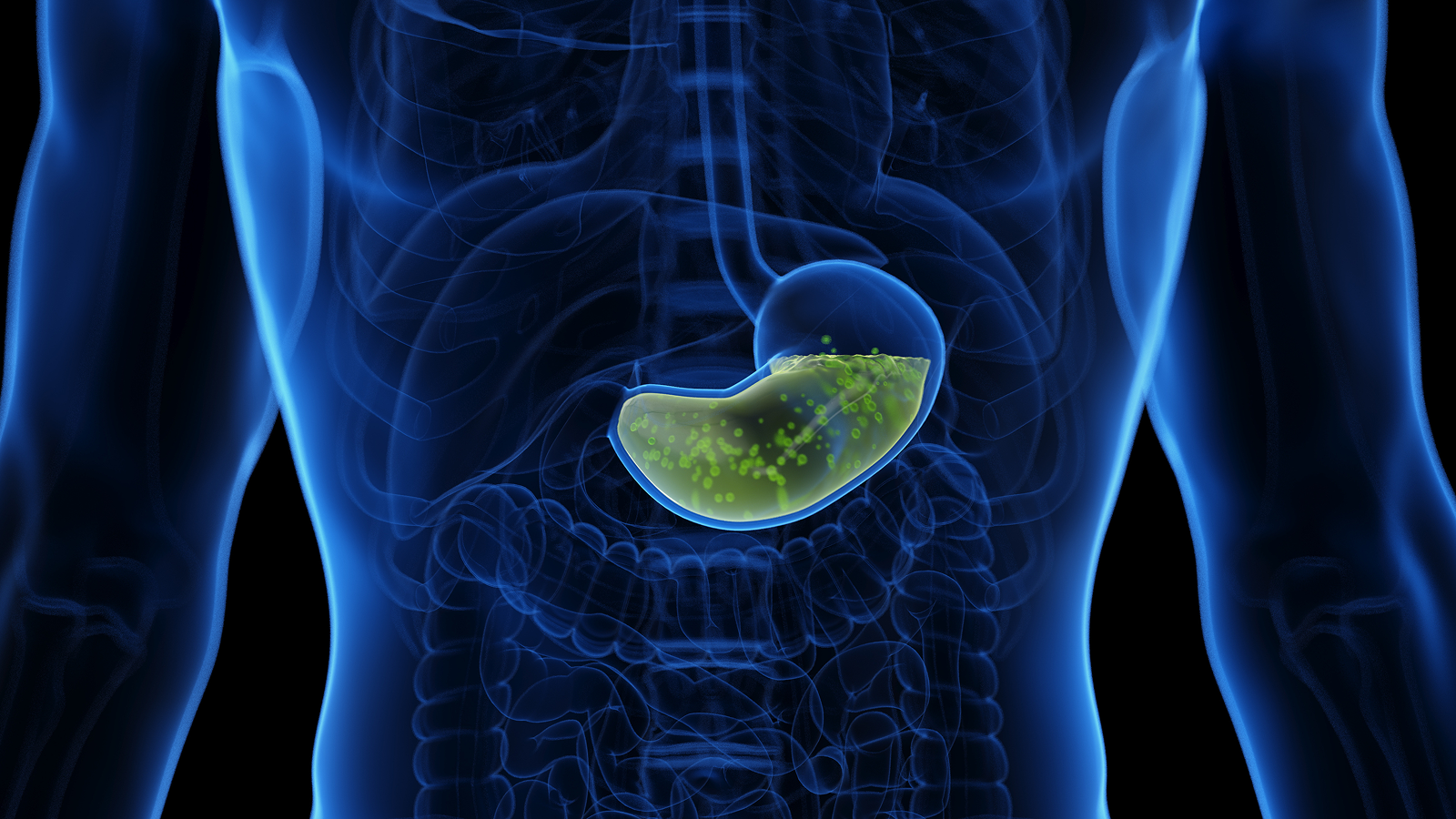
The searing, unwelcome burn in your throat during a bout of acid reflux or before vomiting is a stark reminder of stomach acid’s potent nature. When this corrosive gastric fluid escapes its usual confines and reaches the delicate lining of the esophagus, it causes undeniable irritation. This raises a compelling physiological question: if stomach acid is harsh enough to cause such discomfort and potential damage to your throat, why doesn’t it erode the very organ that produces it?
The human stomach is a remarkable organ, having evolved to generate and withstand intensely corrosive conditions. Its primary role is to meticulously break down solid food into smaller components, a critical process that ensures the contents are adequately prepared for nutrient absorption. As Dr. Sally Bell, a gastroenterologist at Monash University in Australia, explained to Live Science, this preparation is vital so that by the time food reaches the small bowel, it is in a suitable state for the body to absorb essential nutrients.
The stomach is home to specialized cells solely responsible for generating potent digestive chemicals. Chief among these gastric secretions is hydrochloric acid (HCl), a remarkably powerful compound renowned for its ability to dissolve even metal. Accompanying this formidable acid are smaller quantities of the digestive enzymes pepsin and lipase, which meticulously break down proteins and fats, respectively.
Beyond its primary role in digestion, the stomach’s highly acidic environment also serves as a crucial defensive mechanism, according to Dr. Benjamin Levy III, a gastroenterologist at University of Chicago Medicine.
Levy explained that potent gastric acids are instrumental in neutralizing bacterial pathogens, thereby safeguarding the body from illness and strategically impeding the development of bacterial overgrowth. This function, he emphasized, is particularly vital for combating potential foodborne pathogens.
The stomach harbors a potent combination of strong acid and protein-digesting enzymes. Without adequate defense, this corrosive digestive cocktail would swiftly begin to erode the organ’s own wall, leading initially to painful ulcers and potentially causing a dangerous perforation. Crucially, however, the specialized epithelial cells forming the stomach’s inner lining have evolved a unique secretion, providing a vital protective barrier against this constant internal assault.
A distinct type of cell stands out for its unique ability to synthesize a remarkably thick, tenacious layer of mucus. This protective secretion, Bell elaborated, is notably alkaline, allowing it to effectively buffer gastric acid. Furthermore, its composition as a proteinaceous material, rich in bicarbonate, is key to its primary role: shielding the delicate stomach lining from the corrosive force of its own acid and digestive enzymes.
Here are a few options for paraphrasing the provided text, each with a slightly different emphasis, while maintaining a journalistic tone:
**Option 1 (Focus on Protective Function):**
> The stomach’s inner lining is shielded by a robust mucous barrier, diligently maintained and replenished by epithelial cells. This constant renewal is crucial for protecting the stomach’s walls. However, disruptions to this protective layer can have serious consequences. According to Levy, even minor damage can permit the corrosive effects of stomach acid and pepsin to breach the mucus, potentially triggering chronic inflammation and the development of ulcers.
**Option 2 (Focus on Consequences of Damage):**
> A healthy digestive system relies on a continuous mucous layer lining the stomach, actively repaired by epithelial cells to ensure ongoing defense. When this vital barrier is compromised, problems can emerge. Levy explains that even subtle breaches in the mucus can expose the underlying tissue to potent stomach acid and pepsin, paving the way for chronic inflammation and the formation of ulcers.
**Option 3 (More Concise and Direct):**
> Within a healthy digestive tract, epithelial cells constantly generate a protective mucous coating along the stomach walls. This continuous renewal is essential for safeguarding the stomach. Levy points out that damage to this barrier can be problematic; even small perforations allow stomach acid and pepsin to seep beneath the mucus, potentially leading to chronic inflammation and ulcers.
**Option 4 (Emphasizing the “Why”):**
> The stomach’s resilience is largely due to a mucus lining, a vital shield that epithelial cells constantly rebuild. This ongoing renewal process is key to its protective function. However, Levy highlights that when this barrier is damaged, the system is vulnerable. Even slight breaks can allow corrosive acid and pepsin to penetrate, initiating a cascade of inflammation and potentially leading to the formation of ulcers.
Each of these options rephrases the original text using different sentence structures and vocabulary, aiming for originality and engagement while accurately conveying the information about the stomach’s mucous barrier and the implications of its damage.
Here are a few paraphrased options, each with a slightly different emphasis, while maintaining a professional and journalistic tone:
**Option 1 (Focus on the Mechanism):**
> A significant factor contributing to this type of harm is the excessive use of nonsteroidal anti-inflammatory drugs (NSAIDs), including common medications like ibuprofen and naproxen. According to Dr. Levy, these drugs inflict damage on the stomach’s protective lining by blocking cyclooxygenase (COX-1), an enzyme crucial for generating hormone-like substances known as prostaglandins.
**Option 2 (More Direct and Concise):**
> Overconsumption of nonsteroidal anti-inflammatory drugs (NSAIDs), such as ibuprofen and naproxen, is a notable culprit behind such damage. Dr. Levy explained that NSAIDs compromise the stomach lining by inhibiting cyclooxygenase (COX-1), the enzyme responsible for producing prostaglandins, which are hormone-like compounds.
**Option 3 (Emphasizing the Consequence):**
> The stomach lining can be adversely affected by the overuse of nonsteroidal anti-inflammatory drugs (NSAIDs), a category that includes popular options like ibuprofen and naproxen. Dr. Levy highlighted that these medications disrupt the stomach’s protective barrier by inhibiting cyclooxygenase (COX-1), an enzyme essential for the synthesis of prostaglandins, which are hormone-like compounds.
**Option 4 (Slightly More Explanatory):**
> The indiscriminate use of nonsteroidal anti-inflammatory drugs (NSAIDs), exemplified by ibuprofen and naproxen, stands as a primary cause of such damage. Dr. Levy elaborated that the detrimental effect on the stomach lining stems from NSAIDs’ inhibition of cyclooxygenase (COX-1), an enzyme vital for the creation of prostaglandins, which play a role akin to hormones in the body.
Here are a few ways to paraphrase that sentence, maintaining a journalistic tone and the core meaning:
**Option 1 (Focus on the outcome):**
> “The result is a reduction in prostaglandin production, leading to less mucus and bicarbonate being secreted,” Dr. Levy stated.
**Option 2 (More active voice):**
> According to Dr. Levy, this process curtails prostaglandin production, consequently diminishing the secretion of both mucus and bicarbonate.
**Option 3 (Slightly more explanatory):**
> Levy elaborated that this mechanism suppresses prostaglandin generation, which in turn results in lower levels of both mucus and bicarbonate secretion.
**Option 4 (Concise and direct):**
> “By reducing prostaglandin production, we see a decrease in both mucus and bicarbonate secretion,” Levy explained.
**Key changes made and why:**
* **”This reduces” vs. “The result is a reduction,” “curtails,” “suppresses”:** These offer more varied and professional-sounding verbs.
* **”which causes a decrease in” vs. “leading to less,” “consequently diminishing,” “which in turn results in lower levels of”:** These phrases provide more sophisticated transitions and avoid repetition.
* **Adding “Dr.” or “Levy elaborated”:** This adds a touch of journalistic style and attribution.
* **Sentence structure variations:** Changing the order of clauses and using different conjunctions makes the phrasing unique.
Here are a few paraphrased options, each with a slightly different emphasis, while maintaining a journalistic tone:
**Option 1 (Focus on direct impact):**
> Lifestyle habits like smoking and alcohol consumption can directly damage the digestive tract’s protective lining, thereby elevating the risk of certain digestive ailments, according to Dr. Bell. Furthermore, consuming highly acidic or spicy foods can compromise the stomach’s natural defenses, leading to irritation or acid reflux into the esophagus.
**Option 2 (More concise and action-oriented):**
> Dr. Bell highlights that detrimental lifestyle choices, including smoking and excessive alcohol intake, pose a direct toxic threat to the digestive lining, increasing susceptibility to specific disorders. Additionally, the stomach’s protective mechanisms can be overwhelmed by acidic or spicy foods, triggering irritation or reflux into the esophagus.
**Option 3 (Emphasizing the body’s defenses):**
> The integrity of the digestive system can be compromised by lifestyle factors such as smoking and alcohol consumption, which act as direct irritants to its lining, Dr. Bell explained. Moreover, the stomach’s inherent protective barriers are vulnerable to being overwhelmed by acidic or spicy foods, potentially causing irritation or leading to reflux into the esophagus.
**Option 4 (Slightly more explanatory):**
> Beyond other factors, certain lifestyle decisions, such as smoking and drinking, can significantly heighten the risk of this digestive condition by directly harming the gastrointestinal lining, stated Bell. The body’s natural defenses can also be strained by acidic or spicy food choices, leading to stomach irritation or the unwelcome upward flow of acid into the esophagus.
Even in the stomach’s highly acidic environment, bacterial infections can pose a threat. As Dr. Levy explained, certain bacteria, like *Helicobacter pylori*, possess the means to dismantle the stomach’s defenses. These microbes can release enzymes, specifically proteases and lipases, that break down the protective gastric mucus and damage the vital phospholipid layer lining the stomach’s epithelial surface. Fortunately, once identified, *H. pylori* infections are treatable with a course of antibiotics.
Here are a few paraphrased options, each with a slightly different emphasis, maintaining a clear, journalistic tone:
**Option 1 (Focus on essential functions):**
> Ultimately, the stomach’s potent acid is crucial for breaking down food and warding off pathogens. To manage this aggressive environment, the organ has evolved an impressive ability to safeguard and regenerate its internal lining.
**Option 2 (Highlighting the protective mechanism):**
> The key takeaway is that stomach acid is vital for both digestion and immune defense. Consequently, this organ possesses an extraordinary mechanism for self-protection, allowing it to continuously repair and renew its protective lining.
**Option 3 (More concise and direct):**
> In essence, stomach acid is indispensable for digestion and disease prevention. The stomach, therefore, has a remarkable capacity to shield itself and regenerate its lining.
**Option 4 (Emphasizing the balance):**
> The critical point is that while stomach acid is essential for breaking down food and defending the body, the stomach has developed an impressive resilience to protect and continuously rebuild its own lining.





