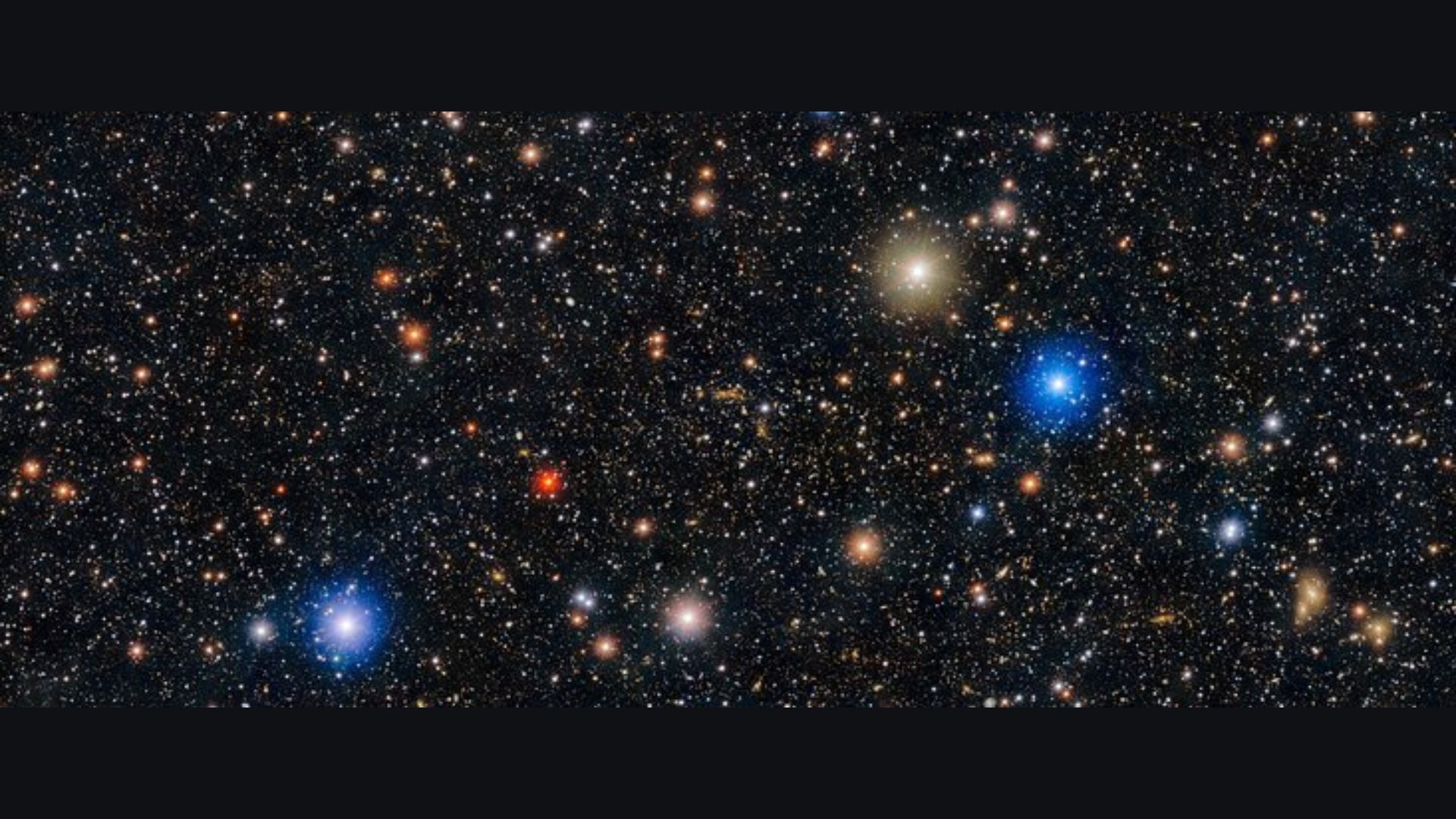
A monumental six-year astronomical survey, meticulously charting the positions of 669 million galaxies, has unveiled crucial new insights into dark energy – the enigmatic force believed to be behind the universe’s accelerating expansion.
A groundbreaking new survey has unveiled a complex picture of our cosmic understanding, revealing that two prominent theories of cosmology are equally adept at explaining the latest observations of the universe’s expansion. However, despite their success in this area, both models crucially fall short when attempting to fully account for the observed clustering of matter throughout the cosmos. This significant gap strongly indicates that further scientific inquiry and theoretical refinement are essential to unlock the universe’s remaining mysteries.
A comprehensive analysis from the Dark Energy Survey (DES) has synthesized four distinct data types, all collected by the Victor M. Blanco Telescope in Chile. These crucial observations, which span approximately one-eighth of the celestial sphere, focus intently on charting the universe’s past and present expansion. The findings dramatically tighten the constraints on existing cosmological models, delivering a level of precision roughly double that achieved by previous studies.
Regina Rameika, associate director of the U.S. Department of Energy’s Office of High Energy Physics, stated that the latest findings from the Dark Energy Survey are profoundly advancing our understanding of the cosmos and its ongoing expansion. She emphasized that these results powerfully demonstrate how sustained investment in research, coupled with the integration of diverse analytical methods, can unlock critical insights into some of the Universe’s most enduring mysteries.
Comprising an estimated 70% of the universe’s total energy, dark energy remains one of cosmology’s most profound mysteries. Despite its overwhelming cosmic dominance, astronomers still grasp very little about its true nature. The concept was initially proposed to explain a perplexing observation: the universe is not merely expanding, but doing so at an ever-accelerating rate. To unravel this fundamental phenomenon, collaborations such as the Dark Energy Survey (DES) are among several major scientific initiatives dedicated to its detailed study.
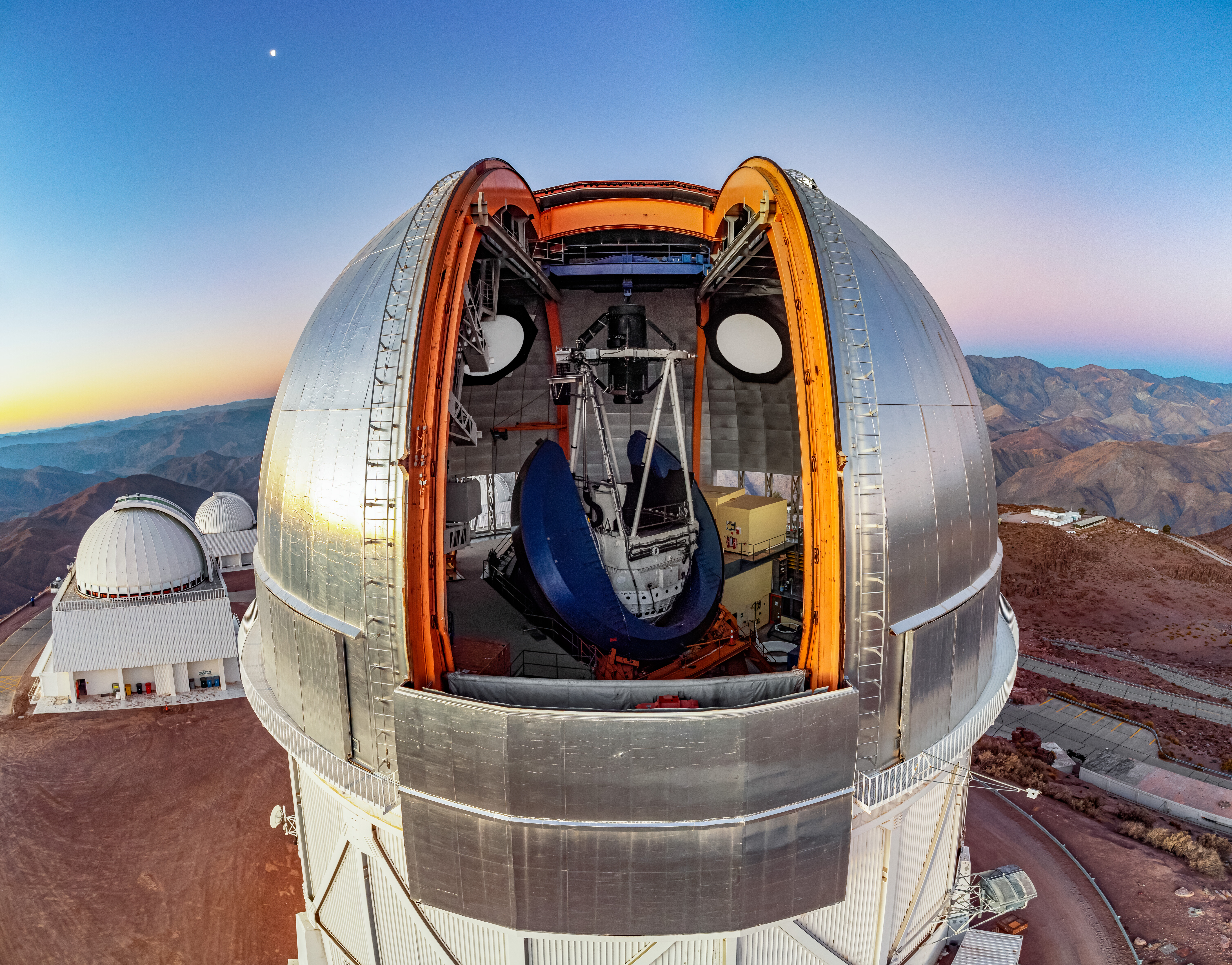
Scientists from the Dark Energy Survey (DES) have unveiled groundbreaking insights into the universe’s ongoing expansion, employing a multi-pronged observational strategy. Their comprehensive findings, detailed in a new paper posted January 21 on the preprint server arXiv, leverage four distinct cosmic markers to probe the cosmos’s relentless growth.
The DES team first analyzed baryonic acoustic oscillations (BAOs), which represent ancient ripples in the density of ordinary matter distributed throughout the universe, acting as a ‘standard ruler’ for cosmic distances. They then incorporated observations of Type Ia supernovas, specific stellar explosions known for their consistent brightness, enabling precise measurements of vast cosmic distances. The third method involved scrutinizing galaxy clusters, colossal gravitational groupings of galaxies. Finally, the researchers leveraged weak gravitational lensing, a phenomenon where the immense mass of these galaxy clusters warps the fabric of spacetime, subtly distorting the apparent shapes of objects situated behind them.
This extensive investigation is further supported by an accompanying suite of 18 detailed papers, each delving deeper into specific facets of the groundbreaking research.
New research on dark energy reinforces existing understandings, while simultaneously refining our models of cosmic evolution. The findings largely support the prevailing cosmological model, which posits a steady dark energy density. Although the data also accommodate a theoretical framework where dark energy density fluctuates, this alternative model did not demonstrate a superior fit compared to the standard explanation.
Here are a few paraphrased options, maintaining a journalistic tone:
**Option 1 (Focus on Achievement):**
“Witnessing these outcomes, which are the product of extensive data analysis and the successful deployment of all four planned probes by the Dark Energy Survey (DES), is an extraordinary experience,” stated Yuanyuan Zhang, a co-author of the study and astronomer at the National Science Foundation’s NOIRLab, which oversees the telescope. “When DES began its data collection, achieving this was beyond my wildest aspirations, and now that dream has materialized.”
**Option 2 (Focus on Exceeding Expectations):**
Astronomer Yuanyuan Zhang of NOIRLab, a facility managed by the National Science Foundation, expressed immense satisfaction with the groundbreaking results, noting, “It’s an incredible feeling to see these outcomes, built upon comprehensive data and the complete execution of DES’s four planned probes. This achievement far surpassed what I dared to imagine when the DES commenced its data gathering; the dream has now become a reality.”
**Option 3 (More Concise):**
The culmination of extensive data analysis and the successful deployment of all four planned probes by the Dark Energy Survey (DES) has yielded “incredible results,” according to study co-author Yuanyuan Zhang, an astronomer at the National Science Foundation’s NOIRLab. Zhang added, “This is something I would have only dared to dream about when DES started collecting data, and now the dream has come true.”
While the collected data aligns reasonably well with the prevailing cosmological model, certain lingering questions persist. Researchers noted that the observed distribution of galaxies, a phenomenon known as galaxy clustering, doesn’t perfectly match the theoretical forecasts of this standard model. However, they cautioned that the discrepancies are not significant enough to definitively challenge the model’s validity.
In an ongoing effort to unravel the mysteries of dark energy, researchers involved in the Dark Energy Survey (DES) are set to collaborate with the Vera C. Rubin Observatory in Chile. This partnership will involve rigorous testing of the DES model for dark energy, alongside other theoretical frameworks, with the ultimate goal of achieving a more precise and comprehensive understanding of this enigmatic cosmic force.
Here are a few options for paraphrasing that quote, maintaining a professional, journalistic tone:
**Option 1 (Focus on Impact):**
> According to Chris Davis, NSF program director for NOIRLab, the Rubin Observatory’s groundbreaking exploration of the southern celestial hemisphere promises to unlock novel ways to scrutinize gravity and illuminate the mysteries of dark energy.
**Option 2 (More Active Voice):**
> “This unprecedented survey of the southern sky will empower us to conduct new tests of gravity and deepen our understanding of dark energy,” stated Chris Davis, NSF program director for NOIRLab.
**Option 3 (Concise and Direct):**
> The Rubin Observatory’s pioneering survey of the southern sky is poised to facilitate new gravitational tests and provide crucial insights into dark energy, as noted by Chris Davis, NSF program director for NOIRLab.
**Option 4 (Emphasizing the “Unprecedented”):**
> Chris Davis, NSF program director for NOIRLab, highlighted that the Rubin Observatory’s unparalleled survey of the southern sky will serve as a vital tool for advancing our understanding of gravity and dark energy through novel testing.