For generations, a persistent debate has clouded our understanding of the Moon’s magnetic past: Did our celestial neighbor once boast a powerful magnetic field, or was its influence always faint? Now, a groundbreaking new analysis of Apollo-era lunar rocks offers a compelling resolution to this long-standing mystery.
The fresh research suggests the Moon’s magnetic field was predominantly weak throughout much of its history, punctuated only by brief, yet intense, bursts of magnetic activity. This finding provides a definitive answer, potentially closing the book on decades of scientific speculation about lunar magnetism.
A new study published Thursday (Feb. 26) in the esteemed journal *Nature Geoscience* reveals fascinating insights into our Moon’s ancient past. Researchers have discovered that the lunar magnetic field underwent significant, albeit fleeting, intensifications during its early development, specifically between 3.5 and 4 billion years ago. However, this period of robust magnetism stands in stark contrast to the majority of the Moon’s 4.5-billion-year existence, throughout which its magnetic field has largely remained weak.
According to Claire Nichols, an associate professor of planetary geology at the University of Oxford, a powerful, albeit fleeting, magnetic field once characterized the Moon. Nichols, who was the lead author on the study, explained in a statement that this intense magnetic presence persisted for remarkably short intervals—ranging from mere decades to a maximum of 5,000 years—and was driven by the melting of titanium-rich rocks deep within its core-mantle boundary.
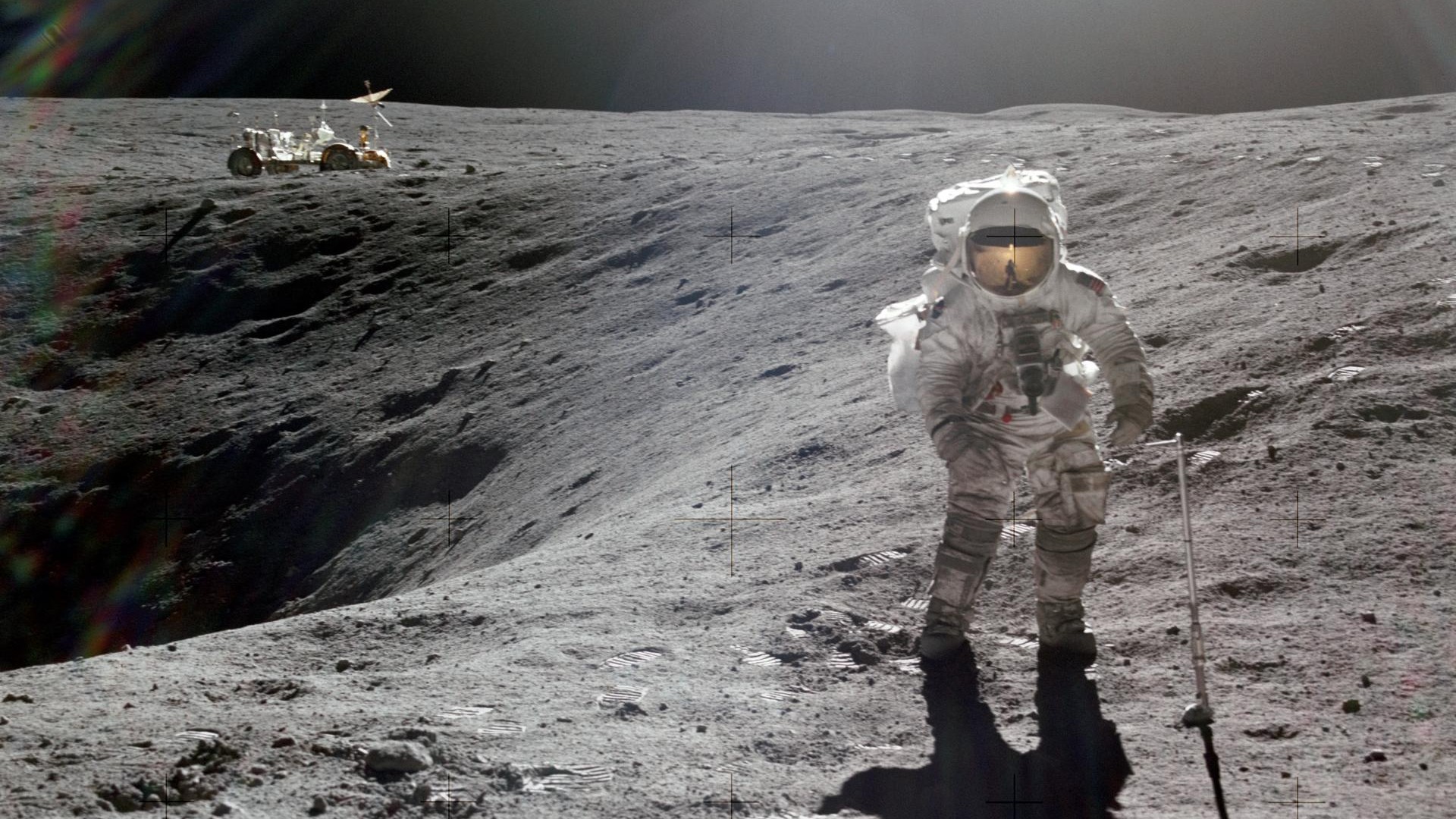
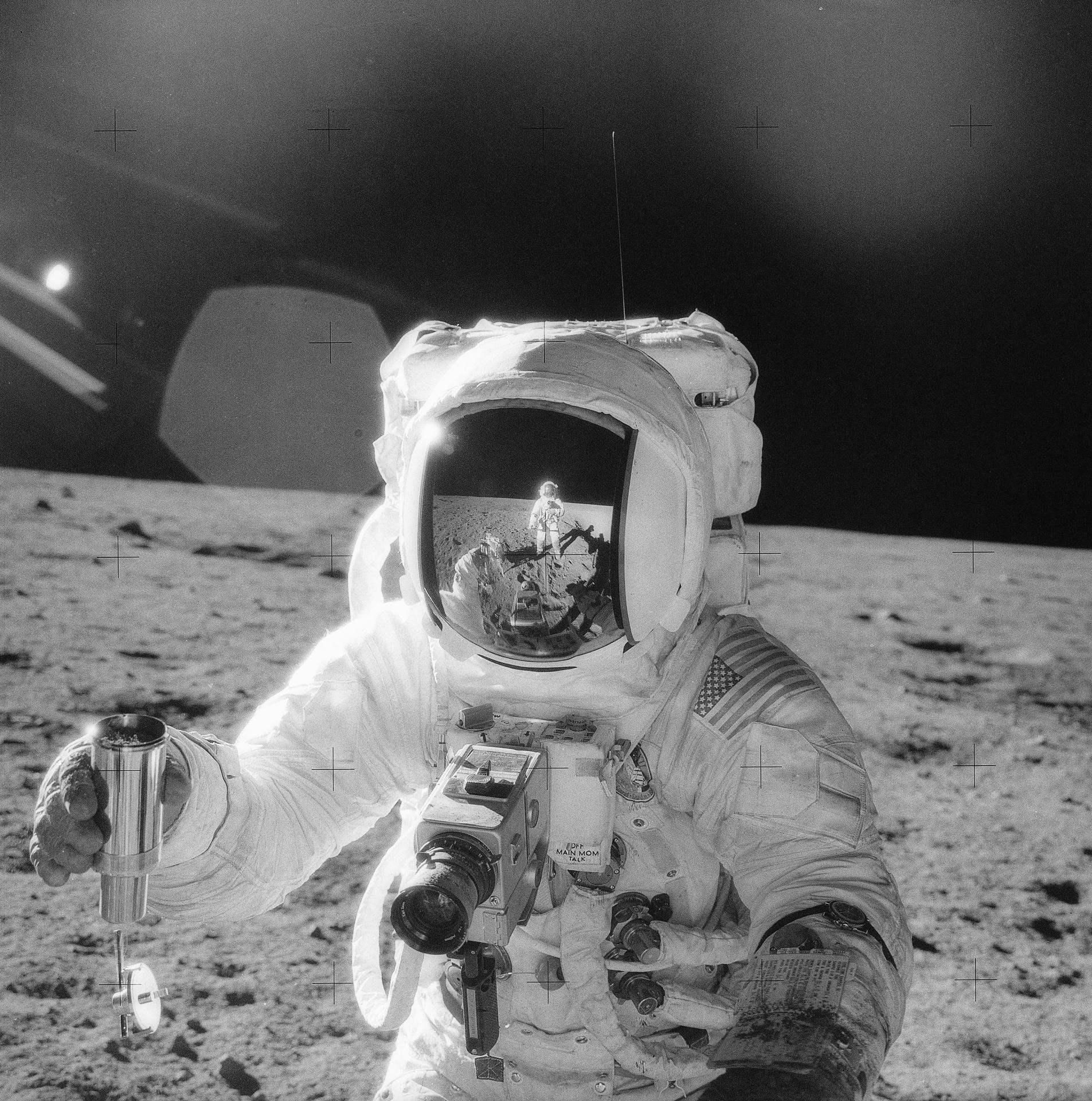
The ongoing scientific debate surrounding the Moon’s ancient magnetic field is largely fueled by a critical limitation: the sparse collection of lunar rock samples available for study. These vital specimens were exclusively retrieved during six Apollo missions, which touched down on the lunar surface between 1969 and 1972.
However, researchers emphasize a significant caveat regarding these expeditions. All six landings occurred in a relatively narrow band predominantly clustered around the lunar equator. This geographical confinement meant the missions explored similar zones and, consequently, yielded rocks of comparable geological composition, thus restricting the diversity of data points.
For their delicate lunar descents, astronauts consistently favored the sprawling, level basaltic expanses known as ‘maria.’ These dark plains are, in fact, ancient seas of solidified lava, sculpted over millennia by cataclysmic meteorite collisions that liquefied the moon’s primordial surface. Investigations of these specific Apollo landing zones have revealed a distinct abundance of titanium-rich basalts.
New scientific investigations have revealed a significant correlation between the titanium content of lunar samples and their magnetic strength. Researchers meticulously charted the levels of titanium in moon rocks against the intensity of their magnetization, uncovering a clear pattern. They found that rock samples containing less than six percent titanium exhibited weak magnetic fields, while those with higher titanium concentrations displayed notably stronger magnetic properties.
A significant connection is being drawn between the Moon’s strong magnetic field and the prevalence of its high-titanium rocks. Researchers assert that both phenomena share a common origin: the melting of titanium-rich material deep inside the lunar interior. This profound geological activity, they suggest, temporarily gave rise to an exceptionally potent magnetic field.
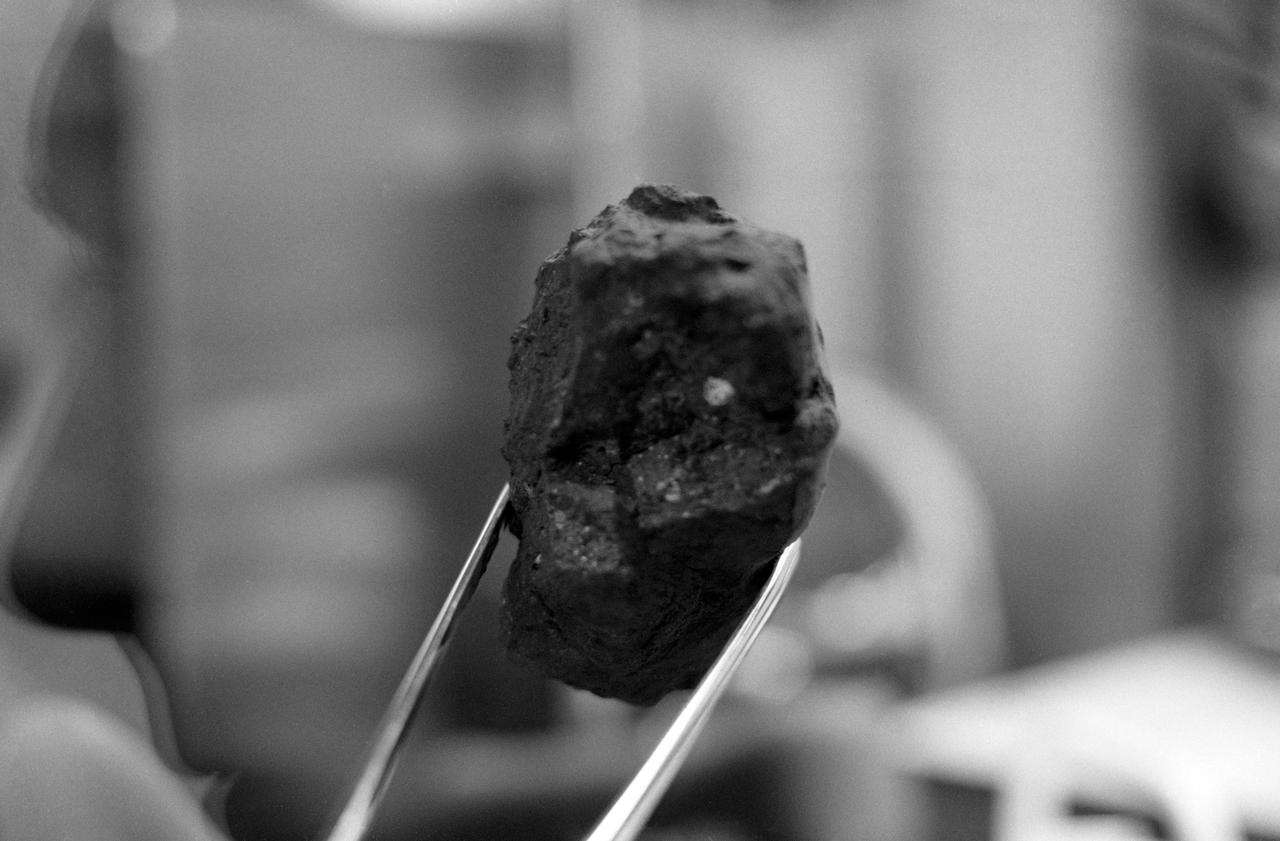
Earth’s collection of lunar material represents a compelling inventory, compiled through both cosmic delivery and human exploration. While an estimated 1,433 pounds (650 kilograms) of moon rocks on our planet arrived as lunar meteorites, according to auction house Christie’s, a significant portion of this terrestrial treasure was meticulously gathered by astronauts. NASA confirms that the Apollo missions alone contributed a substantial 842 pounds (382 kg) to this unique archive of samples from our celestial neighbor.
Analyses of titanium-rich rocks returned by the Apollo missions led many scientists to believe the Moon once possessed a strong, persistent magnetic field, a perception echoed in an Oxford statement. This view suggested a lunar dynamo capable of sustaining powerful magnetism over extended periods of its history.
However, this interpretation has been met with considerable skepticism from other researchers. Their primary contention revolves around the Moon’s notably small core, which measures a mere one-seventh of its total radius. Such a diminutive core, they argue, would fundamentally struggle to generate and maintain a robust magnetic field for prolonged durations, challenging the long-held assumption.
Scientists have identified a significant sampling bias in lunar rock analysis. Their modeling revealed that a randomly selected collection of moon samples would disproportionately contain few rocks exhibiting a strong magnetic field. This suggests that current sample sets may not fully represent the Moon’s diverse geological past.
The upcoming NASA-led Artemis missions aim to address this by targeting a wider array of landing sites. The goal is to collect samples that offer a more comprehensive and varied glimpse into the Moon’s 4.5-billion-year history.
Here are a few paraphrased options, each with a slightly different journalistic nuance:
**Option 1 (Focus on Analogy):**
> Imagine extraterrestrial visitors making their first half-dozen landings on Earth. According to Jon Wade, an associate professor of planetary materials at Oxford and a co-author of the study, they would likely exhibit a similar sampling bias, particularly if they consistently chose flat terrain. “It was sheer luck that the Apollo missions concentrated their efforts on the Moon’s mare regions,” Wade explained. “Had they landed elsewhere, we might have wrongly assumed the Moon possessed only a weak magnetic field, completely overlooking a crucial period in its early history.”
**Option 2 (More Direct and Concise):**
> A study co-author, Jon Wade of Oxford University, drew a parallel to alien explorers on Earth, suggesting a similar sampling bias would occur if they, like the Apollo missions on the Moon, favored flat landing sites. “The Apollo missions’ focus on the lunar mare was coincidental,” stated Wade, an associate professor of planetary materials. “A different landing strategy could have led us to conclude the Moon had a perpetually weak magnetic field, obscuring vital details of its ancient past.”
**Option 3 (Emphasizing the “Missed Opportunity”):**
> The Apollo missions’ concentration on the Moon’s mare regions may have inadvertently skewed our understanding of its magnetic history, according to study co-author Jon Wade. The Oxford associate professor of planetary materials likened the situation to aliens studying Earth, noting a similar bias would arise if they exclusively sampled flat surfaces. “It was entirely by chance that the Apollo missions focused so heavily on the mare,” Wade remarked. “Had their landings occurred elsewhere, we could have missed this significant chapter of early lunar history and wrongly concluded the Moon’s magnetic field was consistently weak.”
**Key changes made in these paraphrases:**
* **Sentence Structure:** Varied sentence beginnings and lengths.
* **Vocabulary:** Replaced words like “probably,” “similar,” “especially,” “chance,” and “entirely” with more dynamic alternatives like “likely,” “parallel,” “particularly,” “coincidental,” “sheer luck,” and “obscuring vital details.”
* **Active Voice:** Where appropriate, shifted to a more active voice.
* **Flow and Engagement:** Improved the overall readability and made the explanation more compelling.
* **Journalistic Tone:** Maintained a professional, informative, and objective style.
* **Clarity:** Ensured the core message about sampling bias and its impact on scientific conclusions remains clear.