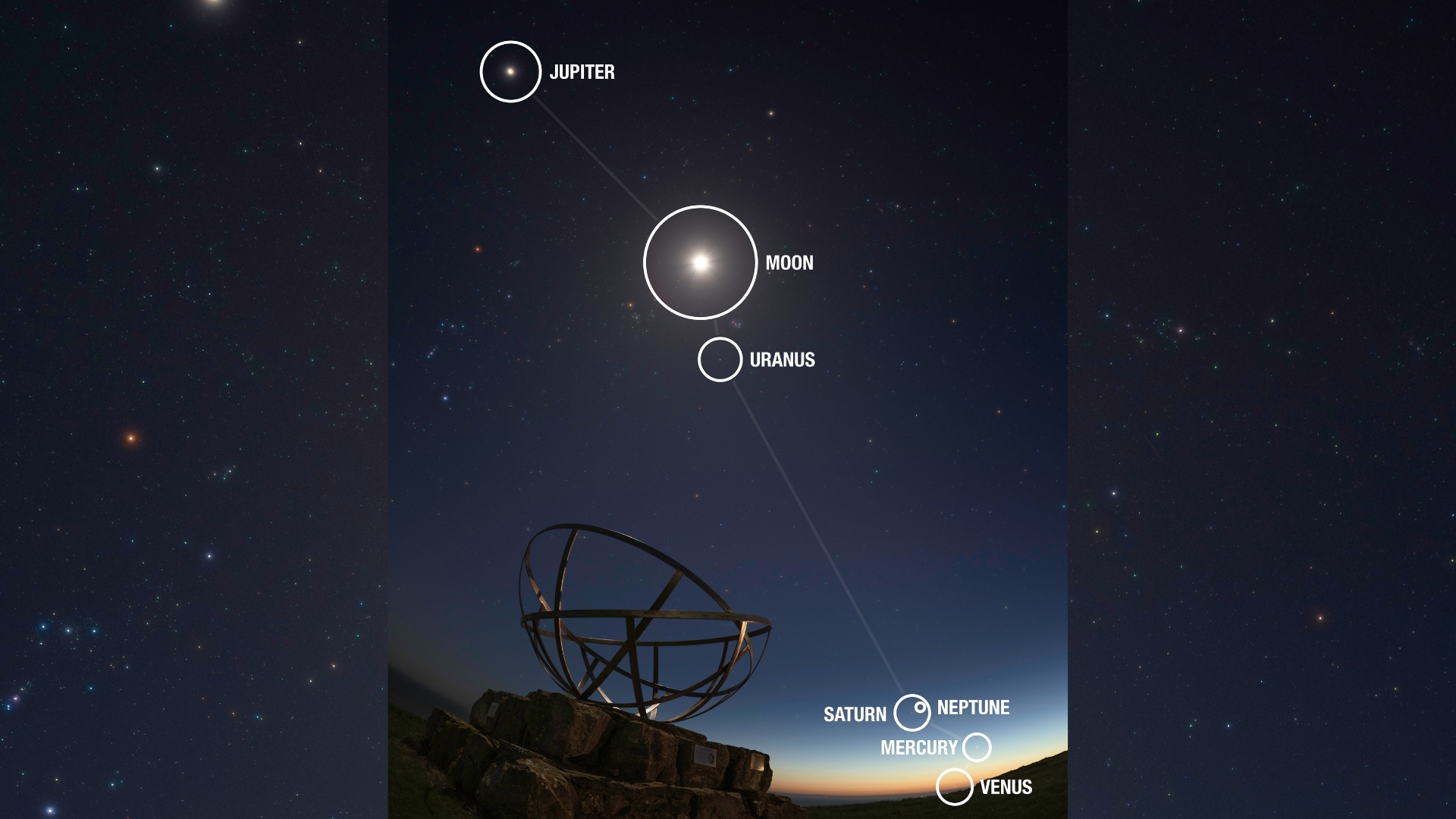
Award-winning photographer Josh Dury has captured an extraordinary and rare “parade” of six planets, spectacularly illuminating the U.K. night sky in a striking new astrophotograph.
From England’s southern coast, Dury recently captured an extraordinary celestial event: a rare planetary alignment. The striking image, taken on Tuesday, February 24th, at 6:35 p.m. local time, showcased a stunning array of most of the visible planets, dazzling across the sky shortly after sunset.
Under a canopy of clear, fading skies, the 2026 planetary parade unfolded as a truly magnificent astronomical event. “It was a veritable joy to witness,” an enthusiastic Dury recounted to Space.com in an email, describing the rare celestial alignment.
The spectacle began shortly after sunset with Venus making its brilliant appearance, soon followed by Mercury and Saturn. The Moon and Jupiter were also prominently visible, shining brightly for all to see. For observers with keen eyes, Uranus could be located near the distinctive Pleiades star cluster (M45), while Neptune was spotted in close proximity to Saturn.
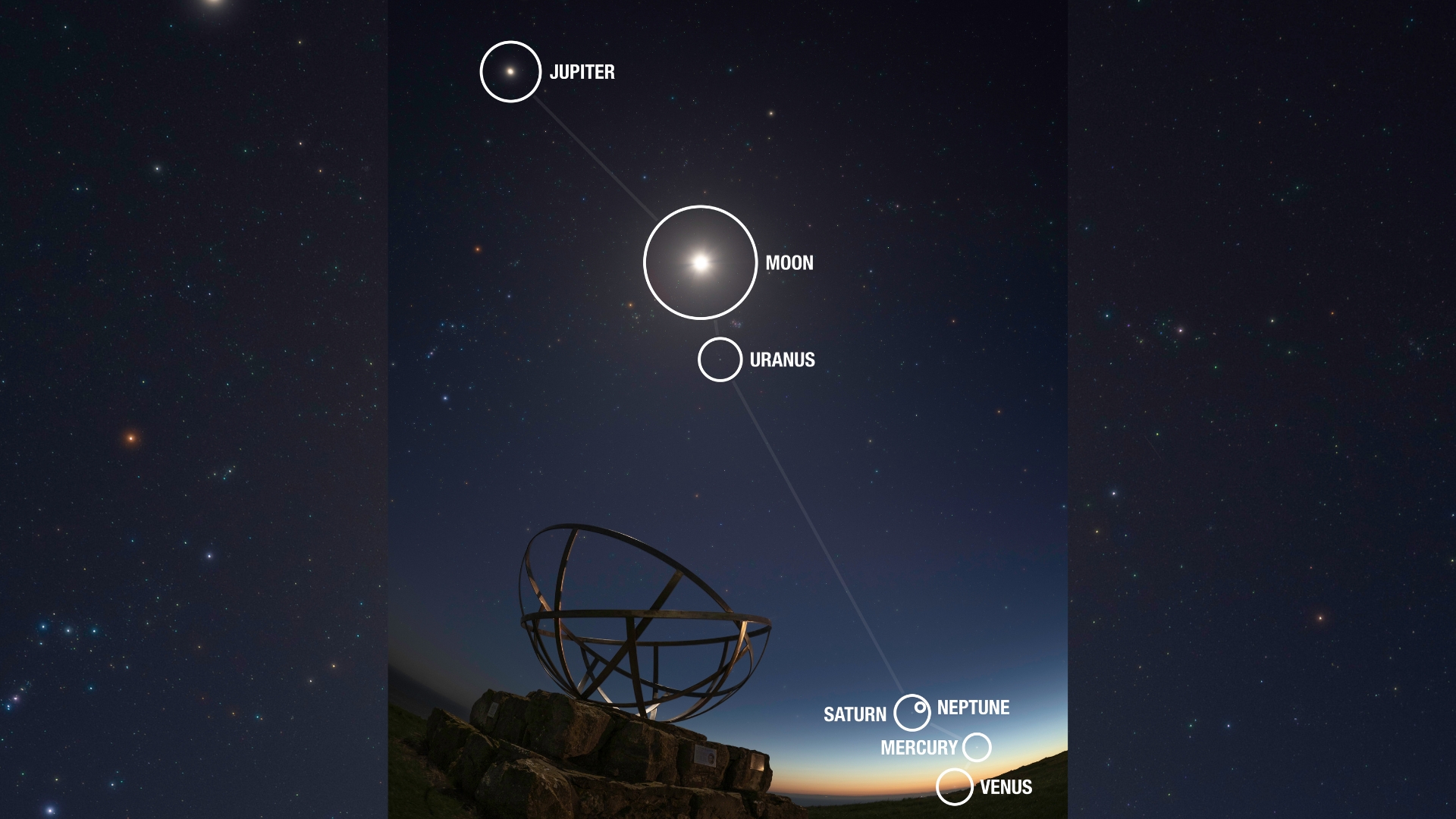
A remarkable alignment of six planets—Mercury, Venus, Jupiter, Saturn, Uranus, and Neptune—is currently visible, offering skygazers a rare treat. Mars is the sole planet absent from this celestial display.
This event is observable until February 28. While a few planets may be visible to the naked eye, capturing the entire sextet will likely require binoculars or a telescope. Successful viewing also demands an unobstructed western horizon and clear skies within a narrow, 30-minute window.
Even for Dury, an astrophotographer with extensive experience, the task of documenting the complete planetary alignment presented a significant challenge. He explained that “the framing of the shot would prove challenging due to the scale of the parade of planets,” a situation that necessitated deploying an ultra-wide lens capable of encompassing nearly 180 degrees of the night sky.
Further complicating matters, the lingering glow of twilight and the prominent first-quarter moon presented significant observational hurdles. According to Dury, this necessitated waiting for deeper darkness to accurately document and confirm the elusive positions of the fainter planets.
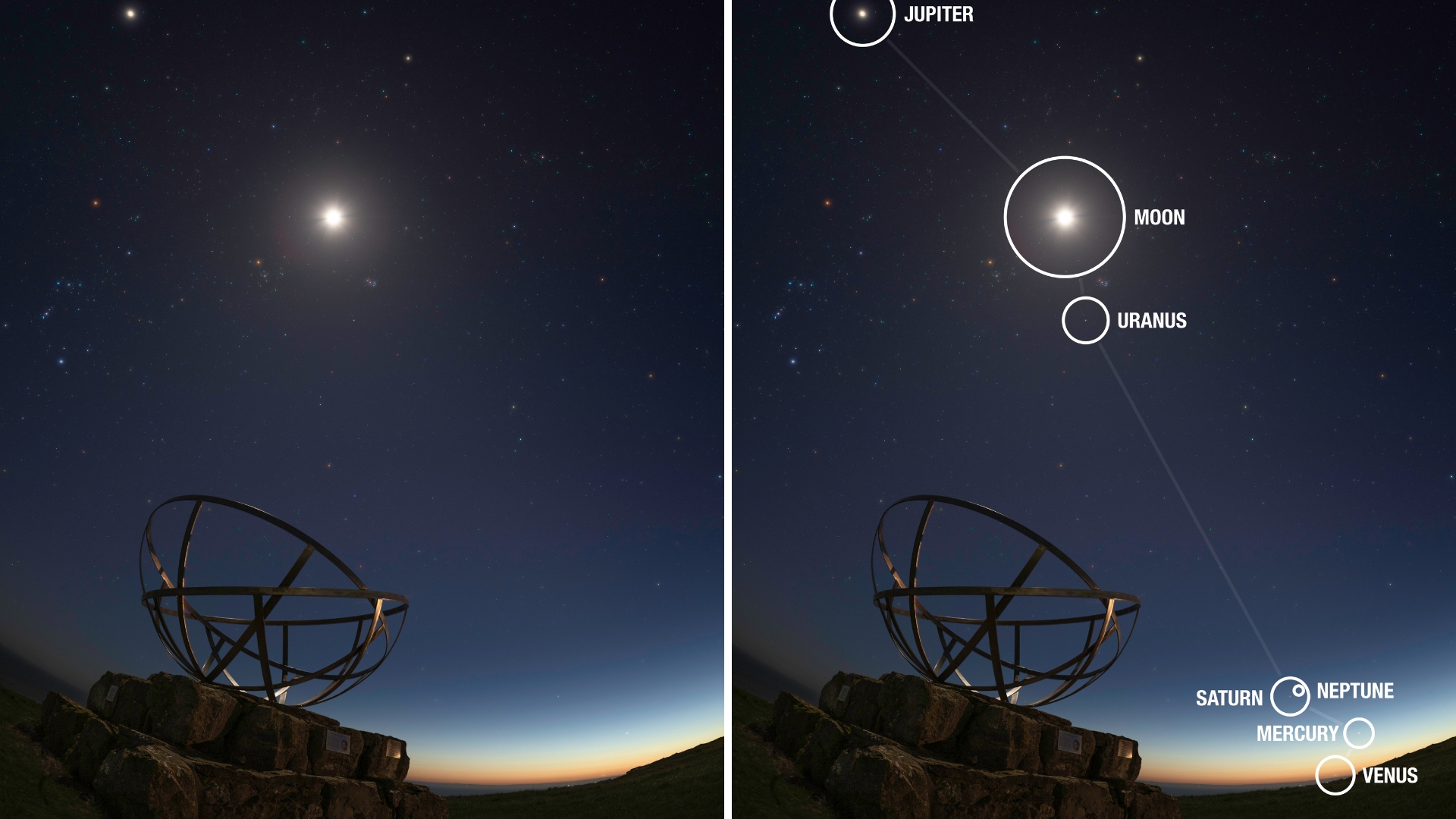
To achieve a sweeping celestial panorama, Dury opted for a Sigma 15mm diagonal fisheye lens. This specialized optic enabled him to capture a near 180-degree perspective, encompassing a vast stretch of sky that featured Jupiter prominently in the southeast and Venus positioned to its left. Further enhancing the visual impact, Dury deployed a NiSi Starsoft diffuse filter. This subtle addition was crucial for illuminating the fainter planets, effectively “increasing their surface brightness,” as Dury explained, allowing them to shine out against the backdrop of the night sky.
Dury’s masterful composition went beyond capturing mere celestial beauty, deliberately incorporating a telecommunication memorial into the frame. This thoughtful juxtaposition, he explained, was intended to “evoke the narrative of the search for life on other planets amidst the ongoing planetary alignment,” offering a poignant visual commentary on humanity’s persistent quest for extraterrestrial existence.
While Dury savored the celestial spectacle, it unexpectedly stirred recollections of a similar astronomical event from the previous year. He pointed out that, in contrast to the grand planetary alignment anticipated in 2025, Mars is currently observable at sunrise on the opposite side of the Sun. This marks a departure from last year, when all seven planets visible without optical aid were simultaneously in view.

Aspiring astronomers and celestial photographers, take note: Whether you’re aiming to get a closer look at our solar system’s planets with a new telescope or binoculars, or you’re eager to capture breathtaking images of the night sky, our curated guides are here to equip you. Discover the top binoculars and telescope deals to suit your observational needs, and find the perfect cameras and lenses for astrophotography to document your next cosmic adventure.