
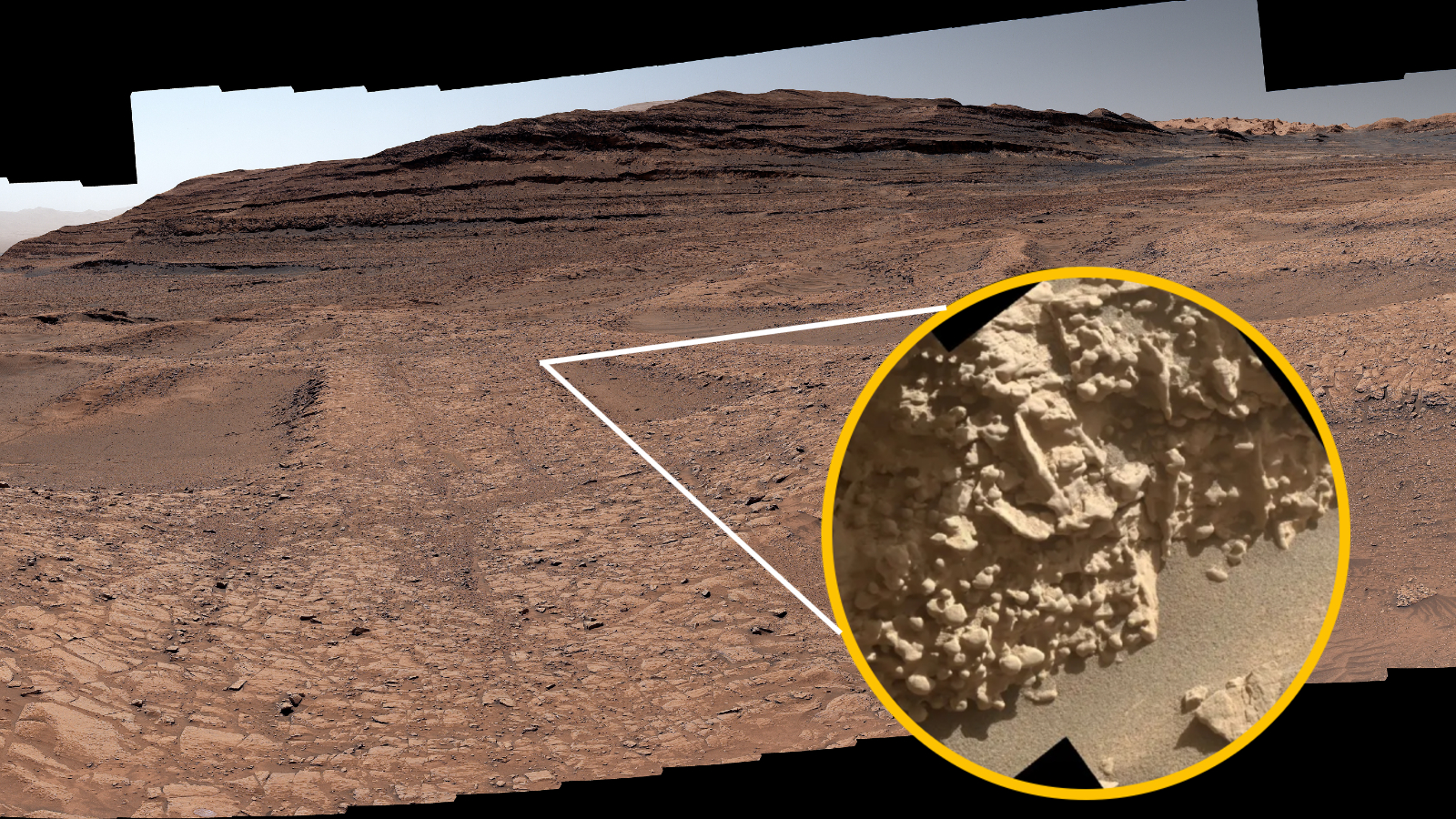
NASA’s Curiosity rover has delivered a captivating new series of images from Mars, showcasing vast, intricate patterns across the red planet’s terrain that scientists have colloquially dubbed “spiderwebs.” However, one particular photograph has unveiled a fresh enigma: previously unseen, egg-like spheroids intricately scattered across these expansive formations, whose very presence is now baffling researchers. Scientists are currently grappling to understand the origin and nature of these mysterious structures.
For the past eight months, NASA’s Curiosity rover has been conducting an intensive examination of a distinctive geological feature within Gale Crater: a network of interconnected rocky ridges, informally dubbed “boxwork.” Situated on the slopes of Mount Sharp, these extensive formations stretch for up to 12 miles (20 kilometers) across.
Scientists believe the ridges were sculpted billions of years ago, when ancient Martian groundwater permeated the planet’s subsurface. While orbital spacecraft first detected these structures in 2006, they have remained largely unexplored at close range until Curiosity’s current detailed investigation.
These newly observed web-like formations are distinct from the well-known “spiders on Mars.” Those intriguing geological features on the Red Planet are sculpted when subterranean carbon dioxide ice sublimates directly into gas, etching patterns into the surface that, from above, bear a striking resemblance to swarming arachnids. Interestingly, these Martian “spiders” were recently recreated in terrestrial experiments, while a similar “wall demon” phenomenon has also been documented on Jupiter’s moon, Europa.
NASA has unveiled unprecedented views of the enigmatic “boxwork” structures on Mars, captured by its Curiosity rover. Following an initial release of images in June 2025, shortly after the rover reached its rocky ridge destination, the agency on Monday, February 23rd, published two additional photographs. These latest snaps offer significantly enhanced detail, providing scientists and the public with a much clearer look at the unique geological formations.
New insights into Mars’ geology have emerged from recent imagery. A captivating ground-level photograph, captured on September 26 of last year, showcased distinctive Martian ridges standing prominently 3 to 6 feet (1 to 2 meters) above the planet’s surface. However, a subsequent close-up image, acquired on August 21, yielded a significant revelation: certain sections of these formations are uniquely textured with tiny, irregularly shaped lumps—or nodules—a feature previously unseen and marking a novel discovery.
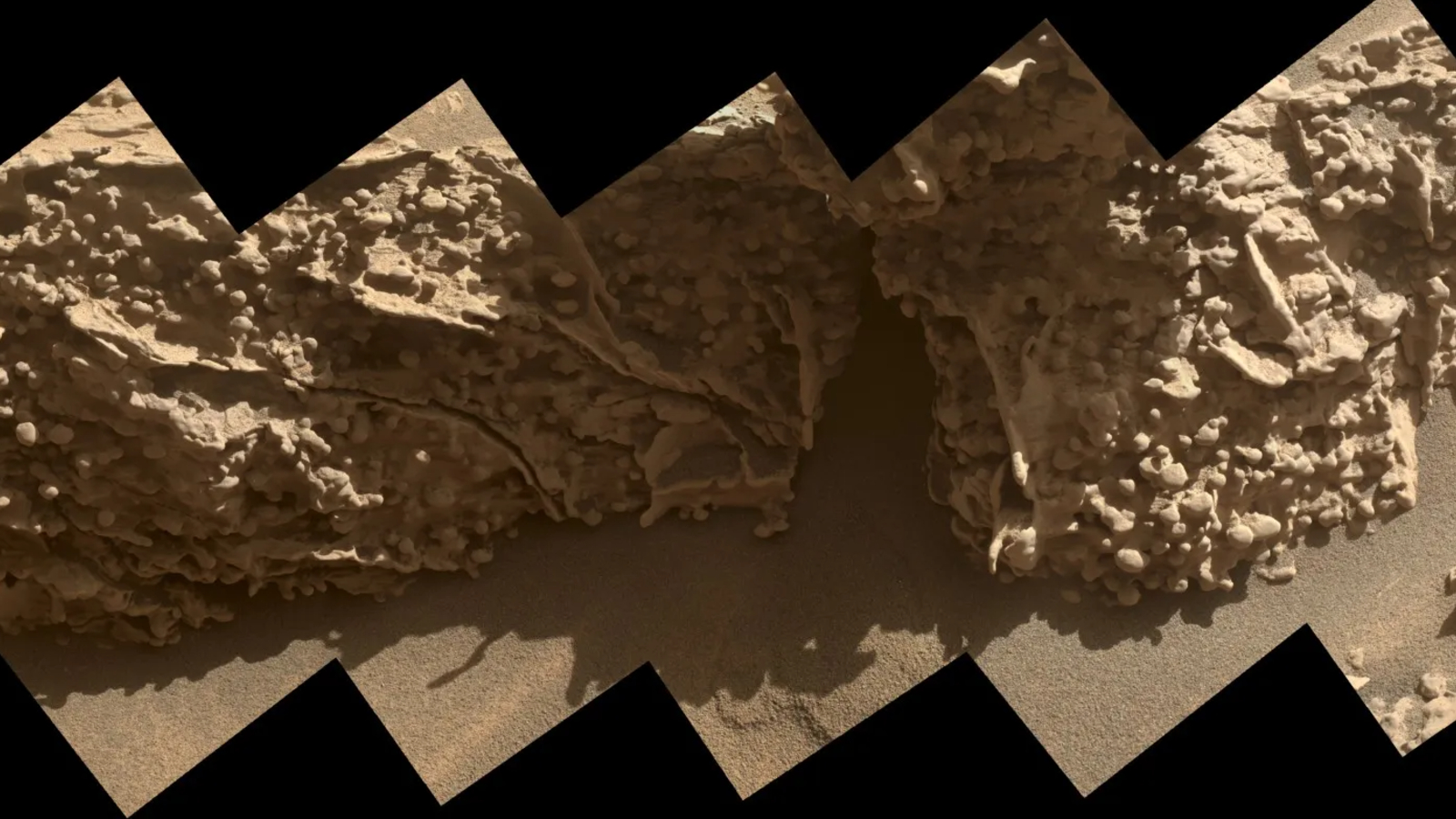
A curious “spider egg” rock, discovered last year by NASA’s Perseverance rover in Mars’ Jezero Crater, continues to puzzle scientists. Its surface features numerous tiny, spherical nodules that strikingly resemble miniature spheroids, the very origin of which remains unknown. Compounding the enigma, researchers are also struggling to explain the precise formation mechanism of these minute, box-like “eggs” that comprise the rock’s intricate structure.
The precise reasons behind the enigmatic placement of Martian nodules continue to baffle scientists, according to Tina Seeger, a planetary scientist at Rice University in Houston who leads the Curiosity rover’s boxwork investigations. Seeger notes that researchers are currently unable to fully explain why these distinctive formations appear in their specific locations.
A leading hypothesis, proposed by Seeger, suggests that mineral cementation may have initially formed the ridges. Subsequent episodes of groundwater activity could then have deposited the nodules around these already-cemented structures. However, Seeger emphasizes that this theory requires substantial further investigation to be conclusively confirmed.
Despite the nodules and boxwork exhibiting a strikingly organic appearance, scientific analysis has found no direct ties to extraterrestrial life.
Mars’s rugged topography features a distinctive geological phenomenon known as boxwork, characterized by an intricate network of criss-crossing ridges composed of mineral-rich rock.
While these Martian formations are grand in scale, analogous, though significantly smaller, structures are also found on Earth. Primarily observed within subterranean cave systems, these terrestrial counterparts develop through a fascinating hydrological process. According to the National Speleological Society, boxwork forms when water saturated with calcite percolates through fissures in existing rock. As the less mineralized surrounding rock gradually erodes over time, the more resistant, mineralized veins are left exposed, creating the characteristic lattice-like patterns. This formation mechanism mirrors the geological processes responsible for iconic cave features like stalagmites and stalactites.
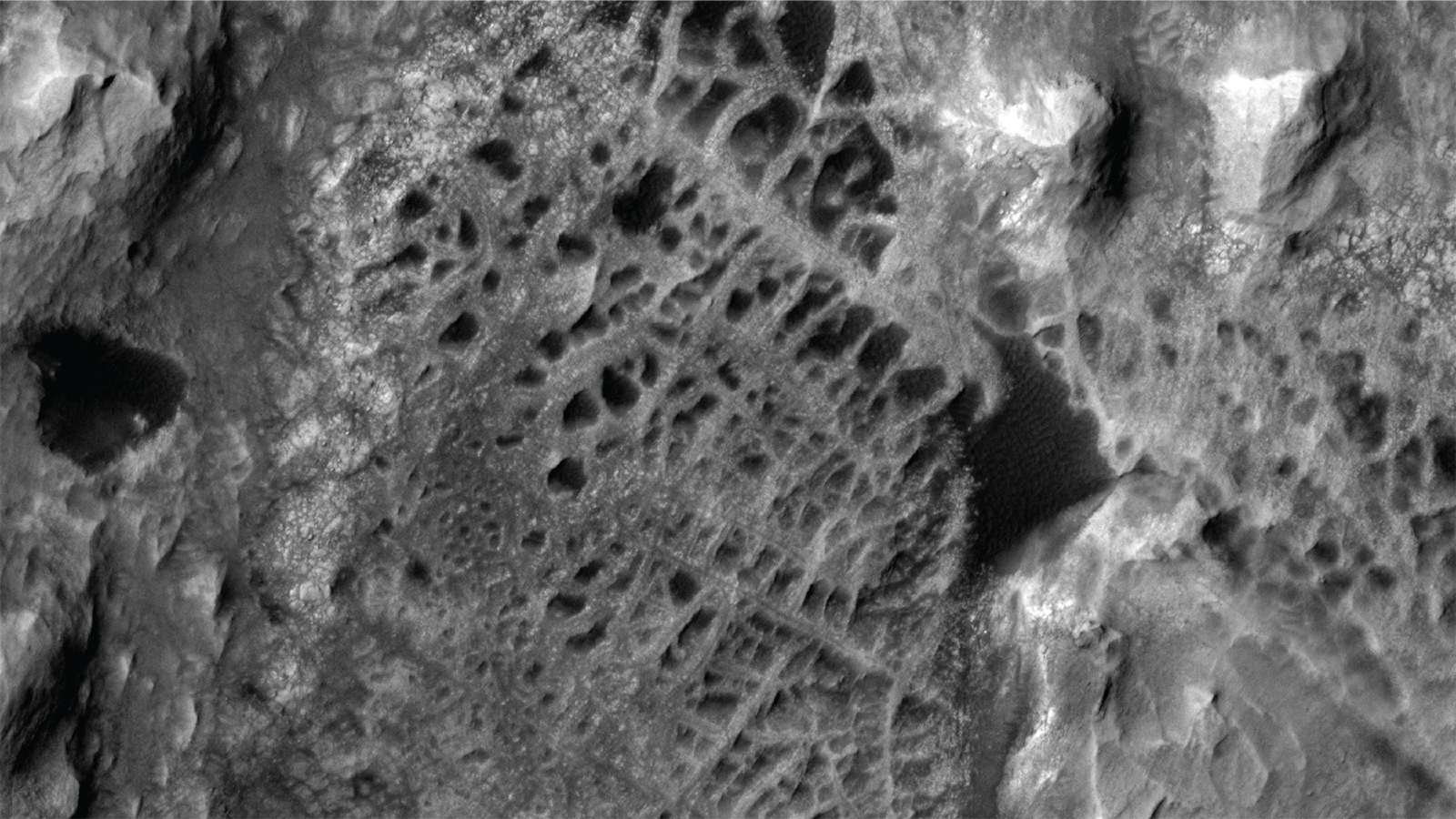
On Mars, however, these striking boxwork formations owe their intricate architecture to the planet’s fierce, scouring winds. As NASA representatives previously detailed, the underlying bedrock ridges are believed to have originated from groundwater seeping through ancient rock, depositing minerals into existing cracks and fissures. Over countless millennia, these mineral deposits solidified into a cement-like material. Then, eons of intense Martian wind erosion “sandblasted” away the softer surrounding rock, ultimately exposing these enduring networks of resistant, mineral-rich ridges.
Scientists are closely examining a distinctive boxwork formation on Mount Sharp, which has garnered particular interest due to its isolated genesis and unusually high perch on the mountain’s slopes. This peculiar geological feature promises to yield vital insights into Mars’ enigmatic, water-rich past.
The presence of boxwork formations at such an elevation indicates a significantly elevated groundwater table, according to geologist [Seeger’s Name]. This discovery suggests that water may have persisted in this region for a considerably longer duration than previously estimated.
Further investigation will critically examine the specific geological and environmental conditions that shaped these structures. Researchers are particularly keen to ascertain whether these conditions could have provided a hospitable environment for any ancient Martian microbial life.
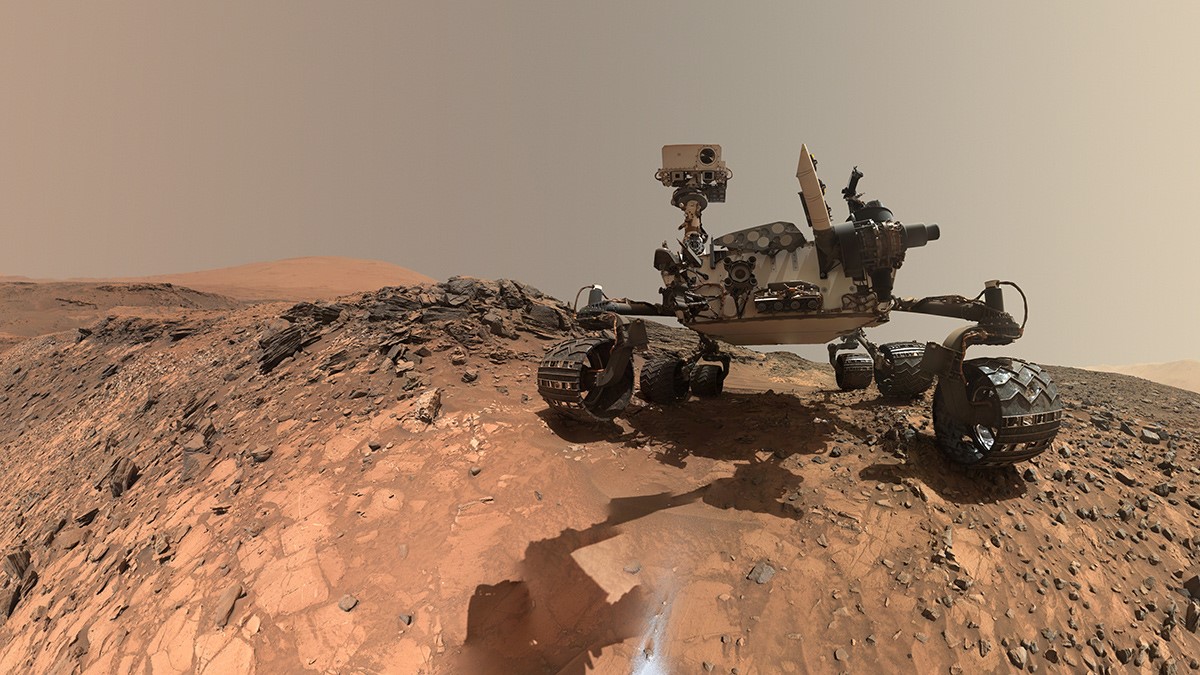
Kirsten Siebach, a Curiosity mission scientist at Rice University who has extensively studied the area, previously shed light on the distinctive Martian ridges. She explained that these geological formations likely contain minerals that crystallized deep underground, in an environment characterized by warmer temperatures and the presence of flowing, salty liquid water. Siebach emphasized the profound implications of this discovery, noting that such conditions strikingly mirror those on early Earth where microbial life could have thrived. This potential for past habitability, she concluded, positions the region as an exceptionally compelling target for ongoing exploration.
Here are a few options for paraphrasing the text, maintaining a clear, journalistic tone while being unique, engaging, and original:
**Option 1 (Emphasizing contrast):**
“Despite beaming back a wealth of fascinating data, the Curiosity rover’s latest stage of Martian exploration is proving to be one of its most intricate and demanding navigational challenges yet.”
**Option 2 (Focus on the difficulty):**
“While the Curiosity mission continues to yield intriguing discoveries, its current phase presents some of the most formidable operational and navigational hurdles encountered to date.”
**Option 3 (More active voice):**
“The Curiosity rover is uncovering captivating new insights, but this particular segment of its mission is emerging as one of the hardest for its ground team to precisely navigate.”
**Option 4 (Concise and direct):**
“Generating fascinating results, Curiosity’s current exploration phase on Mars is simultaneously one of the most challenging in terms of navigation.”
Navigating what is arguably its most formidable challenge since touching down in Gale Crater in 2012, NASA’s car-sized rover is currently traversing treacherous “boxwork” terrain. This intricate landscape demands a precise and perilous balancing act from the robotic explorer.
According to Ashley Stroupe, a systems engineer at NASA’s Jet Propulsion Laboratory in Southern California, the rover must gingerly trace elevated ridges, metaphorically described as “highways,” while meticulously avoiding any slip into the deep “hollows” that lie between them.
Here are a few options, maintaining a clear, journalistic tone:
**Option 1 (Focus on escalation):**
“Controlling the rover has become an increasingly intricate endeavor, a complexity exacerbated by the discovery of a prominent hole in one of its wheels, initially observed in late 2024.”
**Option 2 (Focus on cause and effect):**
“A significant breach in one of the rover’s wheels, first detected in late 2024, has markedly intensified the difficulty of controlling the robotic explorer.”
**Option 3 (More direct):**
“Operational challenges for the rover have mounted significantly, following the identification of a gaping puncture in one of its wheels in late 2024.”
**Option 4 (Emphasizing the damage):**
“The already complex task of commanding the rover has been further complicated by a substantial perforation in one of its wheels, a critical issue first reported in late 2024.”
Here are a few options for paraphrasing the text, maintaining a unique, engaging, and original journalistic tone:
**Option 1 (Concise):**
> Stroupe emphasized that every problem has a resolution, asserting that finding it often requires exploring a variety of approaches.
**Option 2 (Slightly more descriptive):**
> According to Stroupe, a solution can always be uncovered; the key, he noted, lies in the willingness to pursue different avenues.
**Option 3 (Focus on adaptability):**
> No challenge is insurmountable, Stroupe noted, explaining that discovering the way forward demands adaptability and the exploration of diverse strategies.
**Option 4 (Emphasizing the journey):**
> Stroupe highlighted the fundamental principle that for every problem, a solution exists—it simply necessitates the persistence to navigate various paths.





