
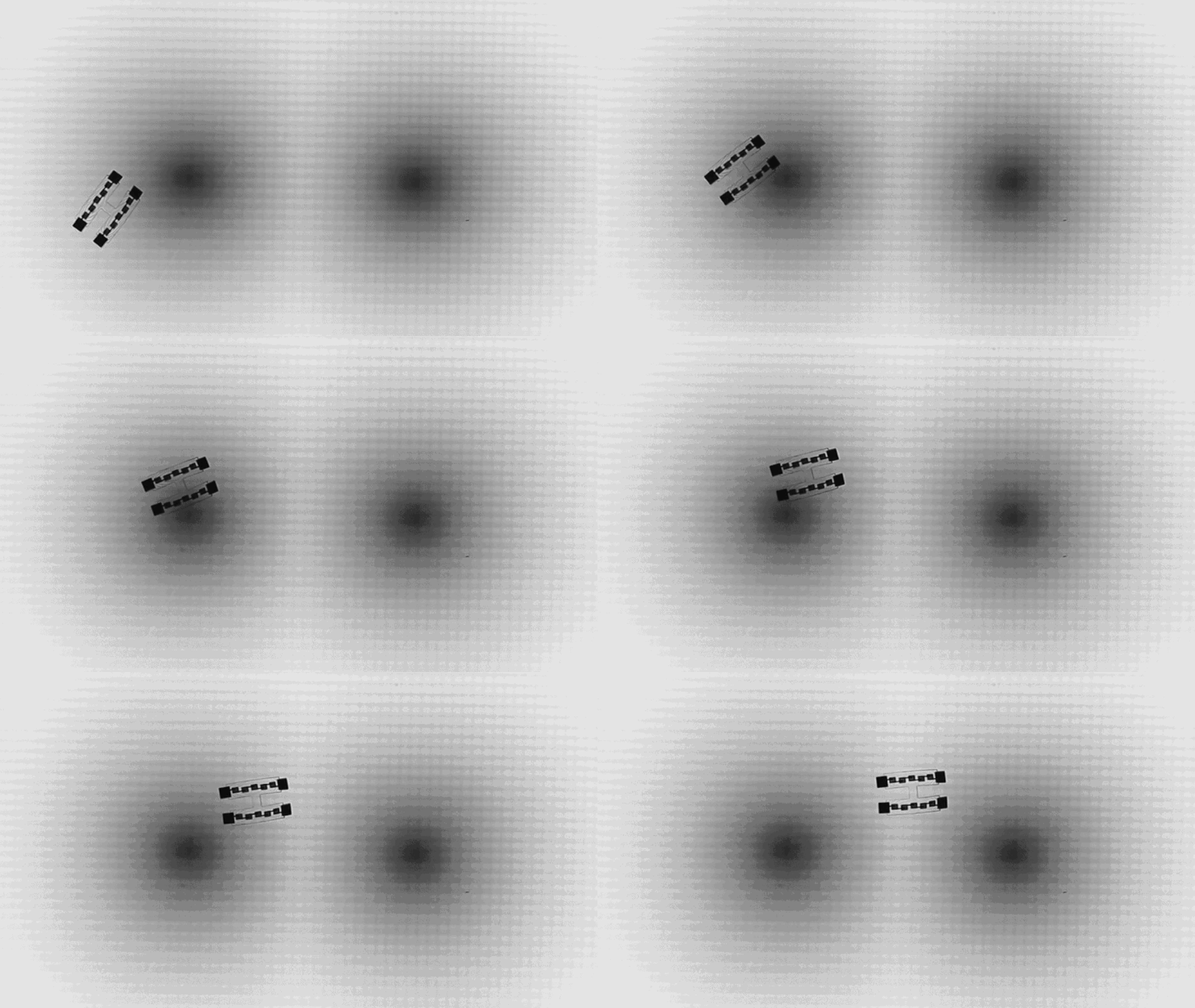
In a significant scientific breakthrough, researchers have developed a novel method to precisely steer microscopic swimming robots. This innovative technique harnesses both intricate light patterns and fundamental principles derived from Einstein’s theory of relativity. The advancement represents a pivotal first step toward deploying these minuscule autonomous devices in a wide spectrum of real-world applications, which could range from revolutionizing medical treatments to optimizing complex manufacturing processes.
Developing microrobots for practical applications faces a significant hurdle: designing them to navigate precisely without the inclusion of bulky sensors and electronic components. Such additions would inevitably swell their size, rendering them too large for intended operations, particularly within the confines of the human body.
In a pioneering effort to overcome this crucial limitation, physicists at the University of Pennsylvania have introduced an ingenious solution. They have successfully created what they term “artificial space-time” – a novel construct designed to orchestrate the movement of these miniature machines, guiding their trajectories in a manner reminiscent of how spacecraft or light traverses the vastness of the universe.
In a recent study, scientists deployed microscopic electrokinetic (EK) robots – each a mere 100 microns wide, roughly the diameter of a human hair – into an ionized solution. Their mission: to navigate a simple maze.
These ingenious micro-swimmers were engineered with miniature solar cells and strategically placed electrodes at both ends. Illumination activated these photovoltaic cells, which in turn energized the electrodes. This process generated a localized electric field, effectively propelling the robots through the liquid medium.
Solving a complex microscopic navigation puzzle demanded a profound understanding of the universe’s most fundamental principles: Einstein’s theory of general relativity. The formidable challenge involved precisely guiding minuscule machines through an intricate spatial maze, ensuring they reached a specific point without impediment.
The key to this precision lay in leveraging the cosmic mechanics of gravity. Einstein’s groundbreaking theory posits that massive objects don’t merely exert a pull; they fundamentally warp the four-dimensional fabric of spacetime around them. In this curved environment, light and all objects naturally follow the shortest possible paths, known as geodesics. While these paths are mathematically “straight” within the warped spacetime, their trajectories *appear* undeniably bent from an external perspective.
This counter-intuitive principle is dramatically illustrated by gravitational lensing. Consider light traversing the vast cosmos along its straightest possible course—its geodesic. Yet, as these light beams pass through the immense gravitational well of a colossal entity, like a sprawling galaxy cluster, their path is visibly deflected. The outcome is the stunning phenomenon of distant objects appearing distorted and magnified, a direct consequence of spacetime’s curvature guiding what seems to be a bent light ray.
A groundbreaking study has uncovered a remarkable parallel between microscopic robotics and fundamental physics: the intricate movements of EK robots within patterned light fields precisely replicate the trajectories light follows as dictated by Einstein’s theory of general relativity.
“We showed that the way EK robots behave in patterned light fields is identical to the paths light follows in general relativity,” explained lead study author Marc Miskin, an assistant professor of electrical and systems engineering at the University of Pennsylvania.
This profound equivalence, Miskin noted, opens the door for dual applications. He stated that the robots can astonishingly serve as a physical analog for gravity itself, thanks to this exact correspondence. Conversely, the very concepts of general relativity can be repurposed and leveraged to effectively guide these robots, much in the same way gravitational forces pull objects towards a common point in space.
To achieve this effect, researchers first conceptualized the maze not as a flat surface, but as a curved virtual space, ingeniously applying principles from relativity equations. Within this novel theoretical construct, the traditionally complex, winding paths leading to the target simplified dramatically, appearing as straightforward linear trajectories.
This abstract spatial model was then translated back into a practical 2D light intensity map. The navigational programming for the bots was elegantly straightforward: they were instinctively drawn towards areas of diminishing light and repelled by more brightly illuminated zones. Crucially, the maze’s final destination was designated as the darkest point – an artificial ‘faux black hole’ – while all impeding obstacles were distinctly and brightly lit.
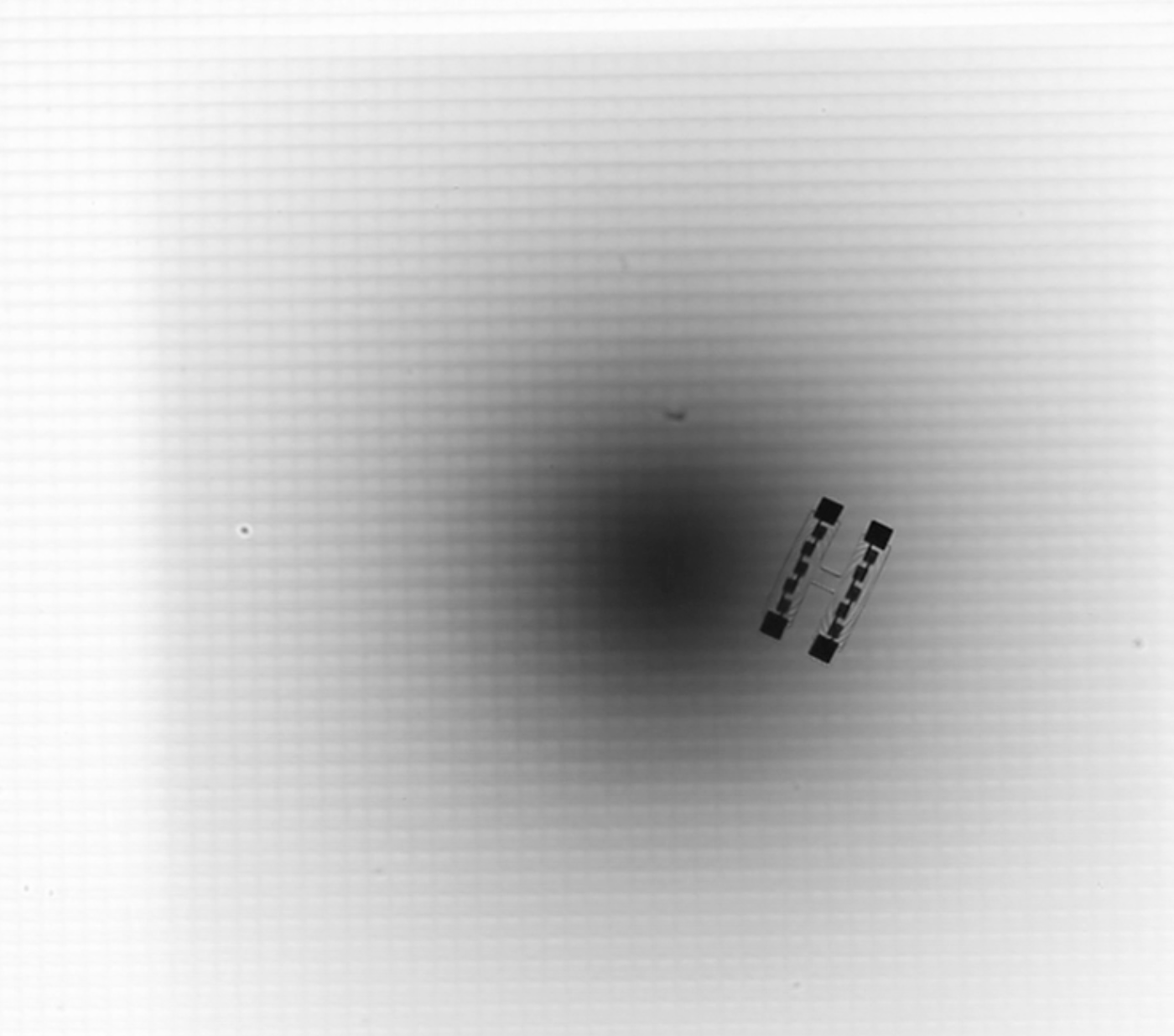
**Robots Navigate Complex Environments Like Water Flowing Downhill**
In a breakthrough for autonomous navigation, researchers have developed sophisticated “EK bots” capable of effortlessly traversing intricate, obstacle-filled spaces. These innovative robots demonstrated an uncanny ability to follow natural, shortest-path routes, known as geodesics, automatically avoiding walls as if guided by an unseen force.
The findings, published in November 2025 in the esteemed journal npj Robotics, reveal how these bots, irrespective of their starting positions, instinctively plotted courses that mimicked the motion of sliding downhill within a warped spatial dimension. This naturalistic movement suggests a significant leap forward in creating robots that can navigate dynamic and unpredictable environments with remarkable fluidity and efficiency.
Miskin views this research as a collaborative effort, uniting the fields of physics and technology rather than pitting them against each other. He explained that while the fundamental principles of relativity and light are well-established, integrating reactive control with these concepts opens up novel approaches and provides robust tools for the field of robotics.
Conversely, general relativity and optics, with their abstract concepts like the curvature of spacetime, can be challenging to grasp. Robotics, in contrast, offers a tangible and mechanistic understanding, making its operations intuitively clear. The experiments not only demonstrate how novel robotic systems function in accordance with established optical theories but also offer researchers a deeper understanding of general relativity. Miskin highlighted that this work provides valuable insights into the behavior of “flat spacetimes” within two-dimensional environments.
The maze study, though in its nascent stages, holds the potential for practical applications to emerge within the next decade, according to Miskin.
Here are a few paraphrased options, maintaining a journalistic tone and original phrasing:
**Option 1 (Focus on application breadth):**
> The potential applications for this technology are vast, according to Miskin, ranging from post-root canal dental assessments and precise tumor margin verification to non-biological tasks like microchip assembly with miniature robotic systems. He emphasized the untapped potential of this “microworld,” suggesting these initial concepts represent only a fraction of what’s possible.
**Option 2 (Highlighting the “microworld” aspect):**
> Miskin highlighted a range of intriguing use cases for this technology, emphasizing its potential in the microscopic realm. These include crucial dental follow-ups after procedures like root canals, conducting dental biopsies to ensure complete clearance, and verifying cancerous cell removal by precisely measuring tumor margins. Beyond medicine, he noted potential applications in areas like microchip manufacturing, where tiny robotic assistants could be employed. Miskin described the microworld as a “fascinating place,” hinting that current ideas are merely the beginning.
**Option 3 (More concise and direct):**
> Exploring the capabilities of this technology, Miskin outlined several key areas of interest. These include monitoring teeth after root canals, performing dental biopsies to confirm successful treatment, identifying and clearing cancerous tumors with localized measurements, and even, in non-medical contexts, the assembly of microchips using miniature robotic aids. Miskin characterized the microworld as a realm ripe with discovery, predicting that these initial explorations are just the start.
**Key changes made across the options:**
* **”Some use cases we’re interested in exploring include”** was replaced with phrases like “The potential applications for this technology are vast,” “Miskin highlighted a range of intriguing use cases,” and “Exploring the capabilities of this technology, Miskin outlined several key areas of interest.”
* **”checking up on teeth following a root canal”** was rephrased as “post-root canal dental assessments” or “crucial dental follow-ups after procedures like root canals.”
* **”a kind of dental biopsy to make sure everything was cleared”** became “conducting dental biopsies to ensure complete clearance” or “performing dental biopsies to confirm successful treatment.”
* **”eliminating tumors after making local measurements to confirm cells are cancerous”** was transformed into “precise tumor margin verification,” “verifying cancerous cell removal by precisely measuring tumor margins,” or “identifying and clearing cancerous tumors with localized measurements.”
* **”or even, outside of bio, assembly of microchips with tiny robotic helpers”** was rephrased to “to non-biological tasks like microchip assembly with miniature robotic systems,” “Beyond medicine, he noted potential applications in areas like microchip manufacturing, where tiny robotic assistants could be employed,” or “and even, in non-medical contexts, the assembly of microchips using miniature robotic aids.”
* **”The microworld is a fascinating place; I wouldn’t be surprised if these ideas are just the tip of the iceberg”** was reworded to convey the same sentiment more formally, such as “He emphasized the untapped potential of this ‘microworld,’ suggesting these initial concepts represent only a fraction of what’s possible,” “Miskin described the microworld as a ‘fascinating place,’ hinting that current ideas are merely the beginning,” or “Miskin characterized the microworld as a realm ripe with discovery, predicting that these initial explorations are just the start.”





