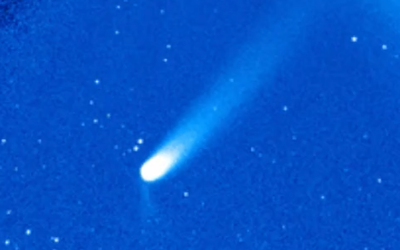
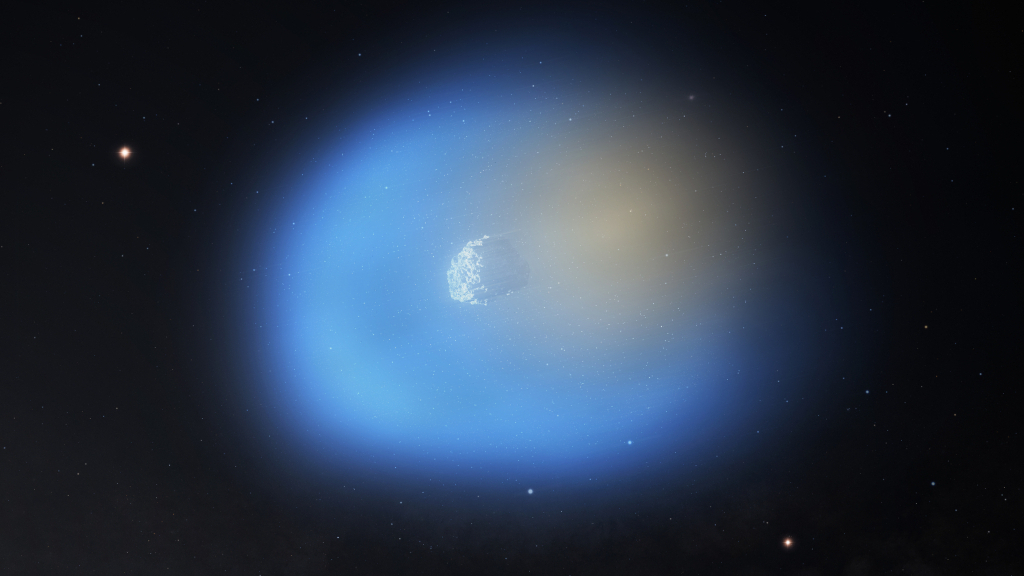
Astronomers studying the enigmatic interstellar visitor 3I/ATLAS have uncovered a surprising find: the comet contains an astonishing abundance of alcohol. This unprecedented chemical signature offers a crucial clue, potentially unlocking secrets about the intricate processes by which planets and icy celestial bodies take shape around distant stars.
Leveraging the formidable radio antennas of the Atacama Large Millimeter/submillimeter Array (ALMA) in Chile, scientists have identified exceptionally robust signals of methanol (CH3OH), a basic alcohol molecule, within the comet’s expanding gaseous halo.
As Comet 3I/ATLAS journeyed closer to the sun, it underwent a significant transformation. The intensifying solar radiation began to warm its frozen surface, prompting a dramatic release of gas and dust. This expelled material coalesced into a brilliant, glowing halo — known as a ‘coma’ — enveloping the comet’s core. This crucial development proved invaluable, enabling the ALMA observatory to conduct an unprecedented, detailed analysis of the comet’s precise chemical composition.
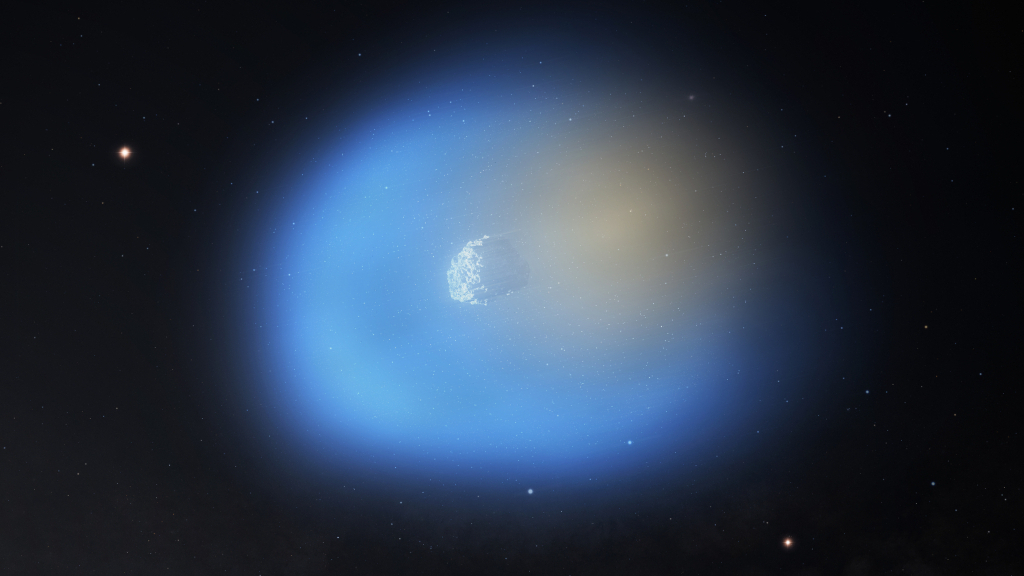
New measurements of comet 3I/ATLAS reveal an unusually high abundance of methanol relative to hydrogen cyanide, a chemical signature markedly different from what astronomers typically observe in comets originating from our own solar system. This pronounced chemical imbalance suggests the interstellar comet likely formed in a planetary system characterized by significantly different physical conditions—such as considerably colder temperatures or a distinct chemical inventory—according to a statement from the National Radio Astronomy Observatory (NRAO).
Studying the interstellar comet 3I/ATLAS provides a unique chemical “fingerprint” from beyond our solar system, according to Nathan Roth, lead author of the study and a professor at American University. Roth emphasized that the comet’s detailed composition reveals an extraordinary abundance of methanol—a characteristic profoundly different from what is typically observed in comets originating within our own cosmic neighborhood.
Methanol, an industrial alcohol distinct from the drinkable ethanol, is a ubiquitous compound in the cosmos. It originates on the frozen surfaces of icy dust grains found in interstellar clouds and is commonly integrated into comets during the process of planet formation.
However, the amount of methanol detected within the interstellar object 3I/ATLAS is remarkably high. This concentration significantly surpasses the ratios typically observed in comets originating from our own solar system. Such an anomaly transforms 3I/ATLAS into an invaluable chemical “fingerprint,” offering scientists a direct insight into the unique chemical composition of a distant planetary system.
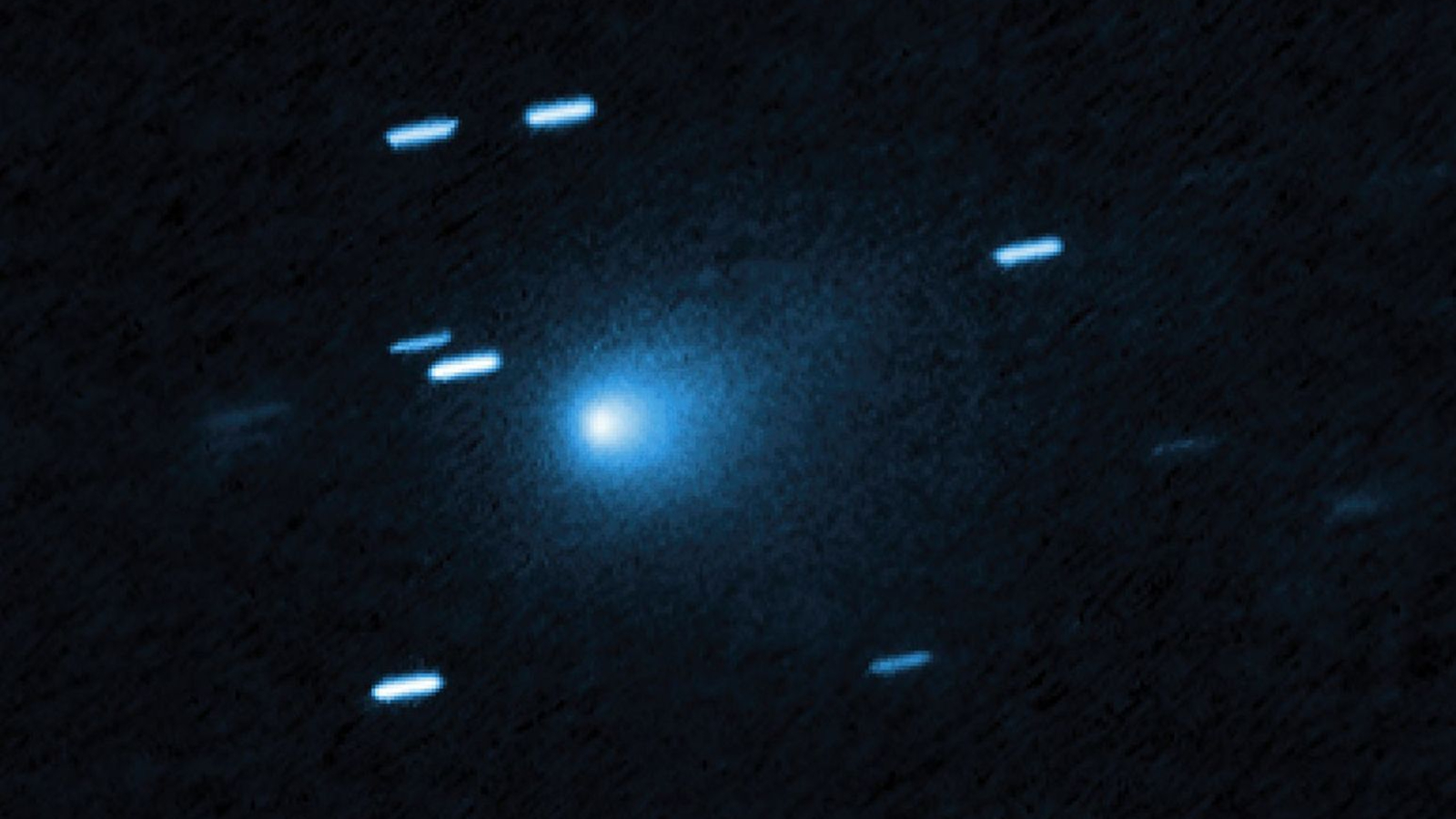
The solar system has just welcomed a rare new visitor from beyond its stars. Identified in July 2025 by the Asteroid Terrestrial-impact Last Alert System (ATLAS), the object, officially designated 3I/ATLAS, marks only the third confirmed instance of an interstellar traveler journeying into our stellar neighborhood. Its arrival follows two groundbreaking predecessors: ‘Oumuamua, the enigmatic first interstellar visitor detected in 2017, and 2I/Borisov, which entered our system in 2019, distinguishing itself by displaying a more traditional comet-like appearance.
Since its discovery, Comet 3I/ATLAS has been under continuous observation by a global network of astronomical instruments, notably including the Hubble Space Telescope and the James Webb Space Telescope. As the comet traverses the inner solar system, images captured by these observatories vividly display a widespread, diffuse coma and a faint dust tail. These signature features arise when solar radiation heats the comet’s icy surface, triggering the release of gas and dust into space.
These emissions aren’t just a curiosity; they also offer a compelling explanation for a striking observation: a vast cloud of X-ray-emitting gas surrounding the comet. This luminous halo forms when charged particles from the solar wind violently impact material streaming away from the nucleus.
Further insights from ALMA’s observations meticulously mapped distinct outgassing behaviors – a groundbreaking first for an interstellar object. Researchers discovered that hydrogen cyanide predominantly streams directly from the comet’s nucleus. Methanol, however, exhibits a dual origin, being released both from the nucleus and from icy grains within the coma that effectively act as miniature comets, actively shedding their own material.
The recent arrival of the interstellar object 3I/ATLAS has ignited a flurry of online speculation, with some theories even suggesting an artificial origin. However, a rapidly expanding body of scientific evidence — showcasing a distinct comet-like tail, active gas jets, and a telltale molecular composition — overwhelmingly indicates that 3I/ATLAS is, in fact, a natural icy body from beyond our solar system.
Here are a few paraphrased options, each with a slightly different journalistic emphasis:
**Option 1 (Focus on scientific significance):**
> The true thrill for astronomers lies in celestial visitors like 3I/ATLAS. These interstellar travelers serve as invaluable dispatches from beyond our solar system, retaining the ancient chemical signatures of their birthplaces from billions of years ago. Their presence offers a unique chance to scrutinize the fundamental components of alien worlds, all without venturing beyond our cosmic neighborhood.
**Option 2 (More active and dynamic):**
> For the astronomical community, objects such as 3I/ATLAS ignite genuine excitement. These wanderers from other star systems are essentially cosmic couriers, carrying pristine chemical snapshots of their formation environments dating back billions of years. They provide astronomers with extraordinary opportunities to investigate the very building blocks of distant planets, right here from within our own solar system.
**Option 3 (Concise and impactful):**
> Astronomers find profound excitement in entities like 3I/ATLAS. These objects act as emissaries from other planetary systems, preserving the precise chemical conditions of their ancient origins from eons ago. They grant us rare windows into the fundamental materials of distant worlds, achievable without ever departing our solar system.
**Key changes and why they work:**
* **”Real excitement”** is replaced with synonyms like “true thrill,” “ignite genuine excitement,” and “profound excitement,” adding variety and impact.
* **”Messengers from other planetary systems”** becomes more descriptive with phrases like “celestial visitors,” “interstellar travelers,” “cosmic couriers,” and “emissaries from other planetary systems.”
* **”Preserving the chemical conditions present where they formed billions of years ago”** is rephrased to emphasize the ancient and pristine nature of the material, using terms like “retaining the ancient chemical signatures,” “carrying pristine chemical snapshots,” and “preserving the precise chemical conditions of their ancient origins.”
* **”Offering rare opportunities to study the building blocks of distant worlds without ever leaving our own solar system”** is made more active and highlights the unique nature of the opportunity, using phrases like “unique chance to scrutinize,” “extraordinary opportunities to investigate,” and “grant us rare windows into.”
* **Journalistic tone:** The language is direct, informative, and avoids overly technical jargon where possible, while still conveying the scientific importance.
Here are a few ways to paraphrase that sentence, maintaining a clear, journalistic tone:
**Option 1 (Focus on accessibility):**
> A new study has been submitted for peer review and is currently accessible to the public as a preprint on arXiv.
**Option 2 (Focus on the stage of research):**
> Researchers have submitted their latest study for publication, and it is presently available as a preprint on the arXiv repository.
**Option 3 (More direct):**
> The findings of a new study have been submitted for publication and can be found as a preprint on arXiv.
**Option 4 (Slightly more formal):**
> Prior to formal publication, a new study has been submitted for review and is currently offered as a preprint on arXiv.
Choose the option that best fits the overall flow and emphasis of your writing.