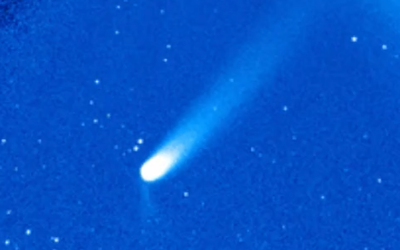
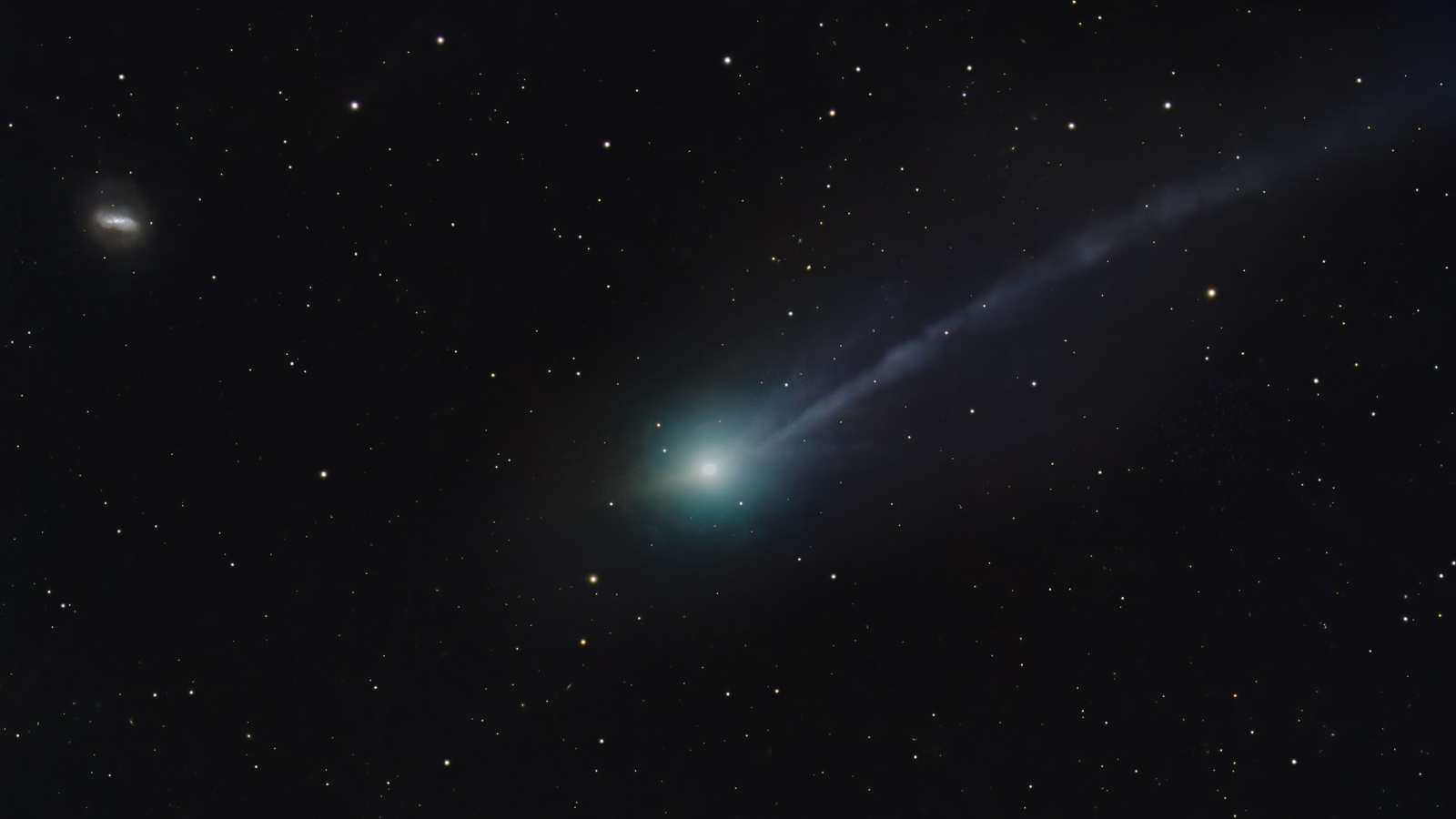
New observations from the James Webb Space Telescope suggest that interstellar comet 3I/ATLAS is a truly ancient celestial anomaly, potentially up to 12 billion years old and possessing characteristics fundamentally distinct from any object yet discovered within our solar system.
Comet 3I/ATLAS catapulted into the celestial spotlight last year after the enigmatic interstellar object was first detected on a trajectory through our cosmic neighborhood. Its sudden appearance quickly ignited a wave of online speculation, proposing the celestial body might, in fact, be an alien spacecraft. Yet, despite the digital chatter, the overwhelming consensus among astronomers maintains that 3I/ATLAS is precisely what it appears to be: a comet, a cosmic wanderer originating from a distant, unidentified star system.
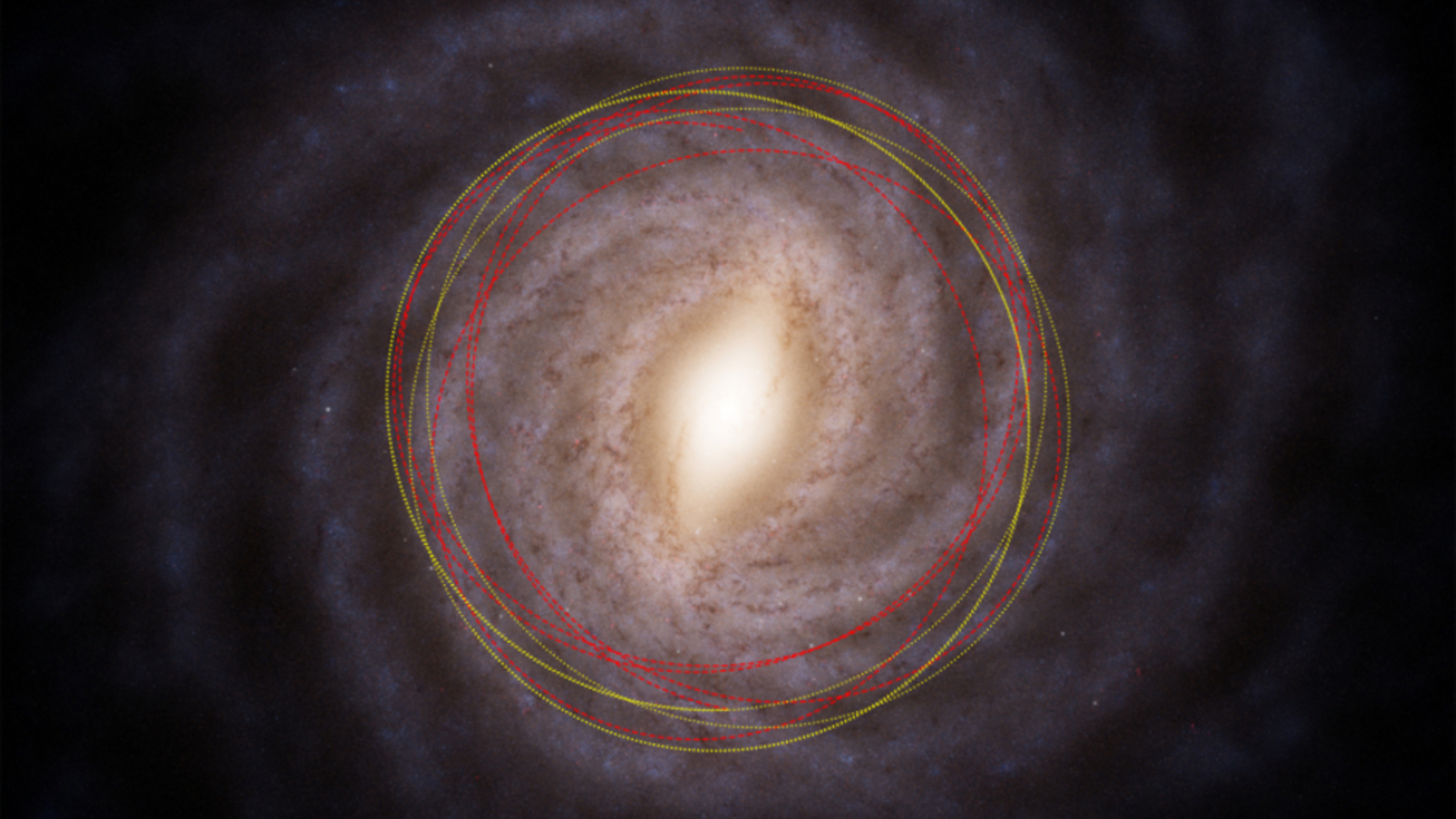
New preliminary findings are shedding light on the extraordinary age of Comet 3I/ATLAS, suggesting it is a truly ancient celestial body. According to a study posted on the preprint server Research Square — findings which are still undergoing peer review — the comet likely originated in a cold, distant region of the Milky Way between 10 billion and 12 billion years ago.
This remarkable timeline would position Comet 3I/ATLAS as more than twice the age of both Earth, which formed approximately 4.5 billion years ago, and our solar system, estimated to be 4.6 billion years old. At the upper end of its projected age, the comet would be a near-contemporary of the Milky Way galaxy itself, which is around 13.6 billion years old, and the universe, estimated at approximately 13.8 billion years old.
The comet’s extraordinary speed and trajectory had already earmarked it as a prime contender for the title of the oldest celestial wanderer ever observed. Prior analyses had initially placed its formation at a staggering 3 to 11 billion years ago. However, new findings have now allowed researchers to pinpoint its age and origin with unprecedented precision. This breakthrough stems from detailed isotope measurements meticulously captured by the James Webb Space Telescope (JWST) during the comet’s close flyby of Earth in December 2025.
New analysis reveals the isotopic composition of the celestial object 3I/ATLAS is profoundly different from that of comets originating within our own solar system, pointing to an exceptionally ancient genesis.
According to Romain Maggiolo, a research scientist at the Royal Belgian Institute for Space Aeronomy who was not involved in the study, 3I/ATLAS likely formed an estimated 10-12 billion years ago. Maggiolo further elaborated in an email to Live Science, explaining that this suggests the object coalesced in a stellar environment distinct from ours. It emerged not only in a different cosmic locale but also much earlier in the Milky Way’s timeline, predating significant portions of the galaxy’s history by billions of years.
In a truly rare celestial event, Comet 3I/ATLAS has made history as only the third interstellar object ever recorded within our solar system. This massive cosmic traveler, with its dimensions estimated by Hubble Space Telescope observations to span between 1,400 feet (440 meters) and 3.5 miles (5.6 kilometers) wide, dramatically entered our solar system last year. It hurtled inward at an astounding speed of approximately 137,000 mph (221,000 km/h) before executing a gravitational slingshot maneuver around the sun.
In a sequence of celestial events culminating in crucial scientific insights, a comet made its closest approach to our star, reaching a point known as perihelion, on October 29, 2025. Following this solar rendezvous, the icy body then swept closest to Earth on December 19, coming within approximately 168 million miles (270 million km) of our planet. Just three days later, on December 22, the advanced James Webb Space Telescope (JWST) captured the vital observations that have since been meticulously analyzed as part of a significant new study.
As comets journey closer to stars, the intense stellar radiation causes their frozen surfaces to heat rapidly. This dramatic increase in temperature triggers a process known as sublimation, transforming surface ice directly into a gaseous plume. By meticulously analyzing the chemical composition of this expelled gas, scientists gain invaluable clues, not only about the very materials that constitute these celestial wanderers but also the primordial conditions present during their ancient formation.
New research, detailed in a recent preprint, reveals an extraordinary isotopic composition within material outgassed by comet 3I/ATLAS.
Scientists analyzing the proportions of different elemental versions discovered that the comet’s water boasts an unprecedented enrichment of deuterium—a heavier hydrogen isotope—surpassing levels found in any previously studied comet. Moreover, its carbon isotope ratios similarly registered levels significantly higher than those typically observed throughout our solar system.
These findings offer a compelling glimpse into the environmental conditions that characterized the primordial planetary systems where this comet first took shape, billions of years ago in the early, formative stages of the Milky Way galaxy.
According to Maggiolo, the implications are profound should the study’s age assessment of 3I/ATLAS prove accurate. The celestial object’s substantial volatile molecule content suggests that complex prebiotic chemistry may have been actively unfolding in star-forming regions during the earliest epochs of our Galaxy’s formation.
The study’s findings also paint a vivid picture of the comet’s intensely cold origins, revealing it formed in an environment hovering around a frigid 30 kelvins—a chilling minus 406 degrees Fahrenheit (or minus 243 degrees Celsius). Researchers postulate this icy cradle was likely situated within the dense, well-shielded confines of a protoplanetary disk.
Here are a few paraphrased options, maintaining a journalistic tone:
**Option 1 (Focus on researcher confidence):**
> Despite its preprint status, the study on comet 3I/ATLAS has garnered a nod of approval from Maggiolo, an expert who has dedicated his own research to the celestial object. He stated that the new data provides valuable insights, enabling scientists to “better understand this interstellar messenger.”
**Option 2 (Highlighting the significance of new data):**
> According to Maggiolo, who is personally investigating comet 3I/ATLAS, a recently published preprint offers compelling new measurements. He expressed no significant reservations, emphasizing that this data will be instrumental in furthering our comprehension of the “interstellar messenger.”
**Option 3 (More direct and concise):**
> Maggiolo, a researcher familiar with comet 3I/ATLAS, has reviewed a new preprint on the object. He indicated no major issues with the study, noting that the updated measurements are crucial for scientists to “better understand this interstellar messenger.”
**Option 4 (Slightly more active voice):**
> The latest findings on comet 3I/ATLAS, presented in a preprint, have been met with confidence by Maggiolo, who has extensively studied the object. He commented that these new measurements will allow researchers to “better understand this interstellar messenger.”
Josep Trigo-Rodríguez, a leading researcher in asteroids, comets, and meteorites at Spain’s Institute of Space Sciences (CSIC/IEEC), has lauded new scientific findings as a robust collection of data. Trigo-Rodríguez, who previously identified active “ice volcanoes” on comet 3I/ATLAS, emphasized that the work draws upon diverse methodologies from highly respected experts in the field.
Here are a few paraphrased options, maintaining a journalistic tone:
**Option 1 (Focus on the comet’s origin and significance):**
> According to Dr. Mateo Trigo-Rodríguez, the findings presented in this manuscript highlight interstellar comets as exceptional celestial objects capable of offering insights into distant corners of the Milky Way. He conveyed this perspective to Live Science via email.
**Option 2 (More direct and punchy):**
> Interstellar comets are unique bodies that provide a window into remote regions of our Milky Way galaxy, a fact exemplified by this manuscript, explained Dr. Mateo Trigo-Rodríguez in an email to Live Science.
**Option 3 (Emphasizing the “sampling” aspect):**
> This manuscript serves as a prime example of how interstellar comets act as cosmic explorers, gathering information from far-flung areas of the Milky Way, Dr. Mateo Trigo-Rodríguez informed Live Science in an email.
**Option 4 (Slightly more formal):**
> In an email to Live Science, Dr. Mateo Trigo-Rodríguez stated that the research detailed in this manuscript demonstrates the distinctive nature of interstellar comets and their ability to probe remote galactic territories.
**Key changes made:**
* **”exemplifies that” replaced with more active or descriptive phrasing:** “highlight,” “demonstrates,” “serves as a prime example of how.”
* **”unique bodies that are able to sample” rephrased:** “exceptional celestial objects capable of offering insights into,” “unique bodies that provide a window into,” “cosmic explorers, gathering information from,” “distinctive nature of… and their ability to probe.”
* **”remote regions of our Milky Way galaxy” varied:** “distant corners of the Milky Way,” “remote galactic territories.”
* **Attribution integrated smoothly:** Placed the “told Live Science in an email” at the end or within the sentence for better flow.
* **Journalistic tone maintained:** Using clear, declarative sentences and professional language.
Pinpointing the stellar birthplace of comet 3I/ATLAS presents a significant scientific challenge, with researchers likely to remain in the dark about its origins. This celestial wanderer is estimated to have traversed the vastness of space for billions of years, undertaking an immense journey.
Dr. Maggiolo’s own investigations have revealed that the comet has been heavily exposed to radiation. This prolonged exposure to cosmic rays during its extensive travels may have irrevocably altered its chemical makeup, thus obscuring the clues to its original home.
Here are a few paraphrased options, maintaining a journalistic tone:
**Option 1 (Concise and direct):**
> “The gas released by comet 3I/ATLAS offers vital new insights, though much remains unknown,” stated Maggiolo, emphasizing that the full picture is still developing.
**Option 2 (Slightly more descriptive):**
> According to Maggiolo, the isotopic makeup of the gases emanating from 3I/ATLAS is a significant addition to our understanding, but he cautioned that the scientific community is still a long way from a complete picture.
**Option 3 (Focus on the “puzzle” metaphor):**
> “We’ve gained a crucial new piece to the puzzle with the isotopic composition of 3I/ATLAS’s outgassing,” Maggiolo explained, while also noting that the overall mystery is far from solved.
**Option 4 (Emphasizing the “new” aspect):**
> Maggiolo highlighted the isotopic fingerprint of 3I/ATLAS’s released gases as a critical new development in unraveling its secrets, but stressed that the investigation is ongoing and far from conclusive.
**Astronomers are in a critical race against the clock to gather data on comet 3I/ATLAS as it makes its swift exit from our solar system.** The celestial visitor is currently traversing the orbit of Jupiter, with its closest encounter with the colossal planet slated for Sunday, March 15. This cosmic rendezvous will bring the comet within approximately 33 million miles (54 million kilometers) of Jupiter, a significantly closer pass than it had with Earth.
This cosmic visitor, embarking on its outward bound voyage, will soon pass through the realm of Saturn in July. Its journey will then take it past Uranus in April of 2027, followed by a rendezvous with Neptune’s orbit in March of 2028. For those eager to follow its path, NASA’s Eyes on the Solar System simulation offers a real-time visualization of the comet’s trajectory.