

**Invisible Data Stream: Scientists Achieve Undetectable Information Transfer Using ‘Negative Light’**
In a groundbreaking development, researchers have successfully engineered a novel technology capable of transmitting digital information completely invisibly. The innovative system effectively camouflages data by embedding it within ordinary background thermal radiation, making it imperceptible to external observation.
Harnessing a unique phenomenon dubbed “negative light,” the scientific team demonstrated the transfer of information at a rapid rate of 100 kilobits per second. Crucially, this data stream remained entirely undetectable to outside observers, showcasing a remarkable leap forward in covert communication and stealth technology.
Breaking from conventional data concealment strategies that either embed information within other data or scramble it with encryption requiring a key, a novel technique promises an unprecedented level of security. This new method makes data transmissions virtually imperceptible, offering no outward indication that any information is being sent at all. This inherent invisibility makes interception exceedingly challenging.
As detailed by the research team in a paper published March 5 in the journal *Light: Science & Applications*, the system can also be fortified with traditional encryption methods for an even more robust layer of protection.
This unique energy transfer, otherwise hidden from plain sight, is made possible by an intriguing phenomenon dubbed “negative light.” At its core, this process harnesses infrared radiation—a segment of the electromagnetic spectrum found just beyond the red edge of visible light. While imperceptible to the human eye, infrared radiation is readily detected by specialized thermal cameras. We commonly experience it as the warmth radiating from hot objects, a universal characteristic, as all matter inherently emits a faint, continuous glow in the infrared spectrum.
Researchers have harnessed a unique principle known as negative luminescence, enabling them to *dim* an existing glow rather than intensifying it. Explaining this innovative approach, lead author Michael Nielsen, a professor of engineering at the University of New South Wales Sydney, drew a striking analogy. He likened the technology to a specialized flashlight that could “project darkness” onto ambient light, actively subtracting illumination instead of merely being switched off.
Utilizing innovative thermoradiative diodes, a research team has successfully engineered a method to embed data within subtle shifts in infrared radiation. These precisely generated patterns, appearing as slight variations in heat or light, are designed to be virtually indistinguishable from the natural infrared background noise. Despite their inherent stealth, these encoded signals can be reliably extracted and interpreted as data by specialized receiving equipment.
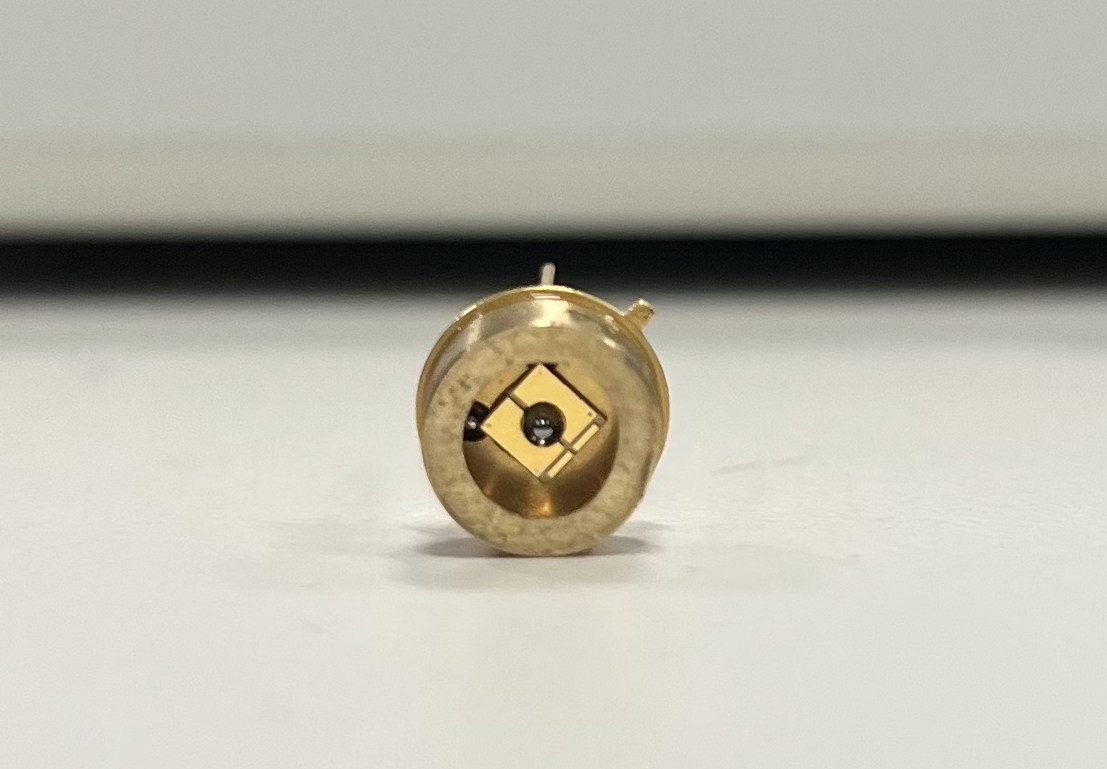
The genesis of thermoradiative diodes traces back to a distinct research endeavor that achieved a remarkable breakthrough: generating solar power long after the sun had set. This innovative approach, dubbed “night-time solar” technology, operates by capturing the infrared radiation emitted by the Earth as it naturally cools, having absorbed solar energy throughout the day. It was within this context that the team successfully employed thermoradiative diodes to convert this nocturnal thermal release into a modest electrical current.
**Initial data transfer speeds, while modest at 100 kilobits per second, are expected to significantly increase, according to Nielsen.** The primary obstacle to achieving higher velocities has been the procurement of specialized electronic components. However, the team asserts that with current technology, this method is theoretically capable of data rates in the tens of megabits per second. Further advancements in device and detector design, they predict, could propel these speeds into the gigabit-per-second range.
Here are a few paraphrased options, each with a slightly different nuance, while maintaining a journalistic tone:
**Option 1 (Focus on Immediacy):**
> Breakthroughs suggest that commercial products capable of delivering data at megabit-per-second speeds could become a reality within the next few years, according to Ned Ekins-Daukes, a professor at UNSW specializing in photovoltaic and renewable energy engineering and a co-leader of the research.
**Option 2 (Focus on the Research’s Impact):**
> The research, co-led by UNSW professor Ned Ekins-Daukes, indicates that the development of commercial products offering megabit-per-second data rates is on the horizon, potentially within a few years, according to a statement from the institution.
**Option 3 (More Direct Quote Integration):**
> “We may see commercial products delivering megabit-per-second data rates in just a few years,” stated Ned Ekins-Daukes, a professor of photovoltaic and renewable energy engineering at UNSW and a co-leader of the research.
**Option 4 (Slightly More Formal):**
> According to Ned Ekins-Daukes, a professor of photovoltaic and renewable energy engineering at UNSW and co-leader of the research, the potential for commercial products to achieve megabit-per-second data rates may be realized within the coming years.
**Key changes made across these options:**
* **”In fact” replaced:** Words like “Breakthroughs suggest,” “The research indicates,” or simply starting with the core statement create a stronger opening.
* **”may be possible” varied:** “could become a reality,” “is on the horizon,” “may be realized” offer more engaging phrasing.
* **”just a few years” rephrased:** “within the next few years,” “within a few years,” “within the coming years” maintain the timeframe while sounding more professional.
* **Sentence structure altered:** Reordering clauses and combining information from the quote and the attribution provides originality.
* **Journalistic Tone Maintained:** The language is objective, factual, and avoids overly casual or technical jargon.
Researchers are exploring the use of graphene, a material consisting of a single layer of carbon atoms in a hexagonal lattice, as a replacement for traditional semiconductor materials in diodes. This innovation could dramatically accelerate data transmission speeds, potentially reaching gigabits per second and possibly even hundreds of gigabits, according to Ekins-Daukes.
Here are a few paraphrased options, each with a slightly different emphasis:
**Option 1 (Focus on Broad Impact):**
> A significant advancement in data security promises to revolutionize practices across numerous sectors, from healthcare and defense to finance and manufacturing. According to Nielsen, this breakthrough technology holds potential for any industry where security needs extend beyond conventional encryption methods.
**Option 2 (More Direct and Action-Oriented):**
> Enhanced data security capabilities, born from Nielsen’s team’s latest innovation, are poised to make substantial inroads in critical industries like healthcare, defense, finance, and manufacturing. Nielsen suggests that the technology is applicable to virtually any communication scenario demanding a higher level of security than standard encryption can provide.
**Option 3 (Highlighting the “Breakthrough” Aspect):**
> A game-changing development in data security, spearheaded by Nielsen’s team, offers profound benefits for a wide array of industries, including vital sectors such as healthcare, defense, finance, and manufacturing. Nielsen posits that this breakthrough is ideal for any communication that requires security measures surpassing those offered by current encryption standards.
**Option 4 (Concise and Punchy):**
> Businesses in healthcare, defense, finance, and manufacturing stand to gain immensely from improved data security, thanks to a recent breakthrough by Nielsen’s team. Nielsen believes the technology’s potential extends to any communication needing robust security beyond standard encryption.
Each of these options aims to:
* **Be Unique:** By using different sentence structures and vocabulary.
* **Be Engaging:** By employing stronger verbs and more descriptive language.
* **Be Original:** While conveying the same core information.
* **Maintain Core Meaning:** The industries and the scope of the application remain consistent.
* **Use a Clear, Journalistic Tone:** Professional, objective, and informative.
Here are a few paraphrased options, each with a slightly different nuance, while maintaining a journalistic tone:
**Option 1 (Focus on security):**
> According to researcher Glenn Nielsen, the primary benefit of this method lies in its inherent security; without the specific technology to decode it, an external party would be unaware that any communication is even occurring.
**Option 2 (Focus on obscurity):**
> Nielsen explained to Live Science that the technique’s significant advantage is its ability to conceal the act of communication itself from those lacking the necessary interception technology.
**Option 3 (More direct and concise):**
> The core strength of this approach, Nielsen stated, is that the communication signal or event remains invisible to any observer who doesn’t possess the requisite interception technology.
**Option 4 (Emphasizing the “hidden” aspect):**
> “The true strength of this technique is that the communication itself, or even the signal, is cloaked from view if an outside observer lacks the necessary technology to intercept it,” Nielsen communicated to Live Science via email.