SpaceX’s ambitious proposal to launch an unprecedented constellation of one million orbiting data centers has ignited significant alarm within the astronomical community. Scientists warn that this vast network would generate persistent satellite streaks across the night sky, which they contend could profoundly impair astronomical observations, jeopardizing crucial research and the clarity of our view into the cosmos.
The astronomical community, still adapting to the proliferation of low Earth orbit (LEO) broadband megaconstellations like SpaceX’s Starlink, now confronts a significantly escalated threat: Elon Musk’s conceptualized network of one million orbital data centers.
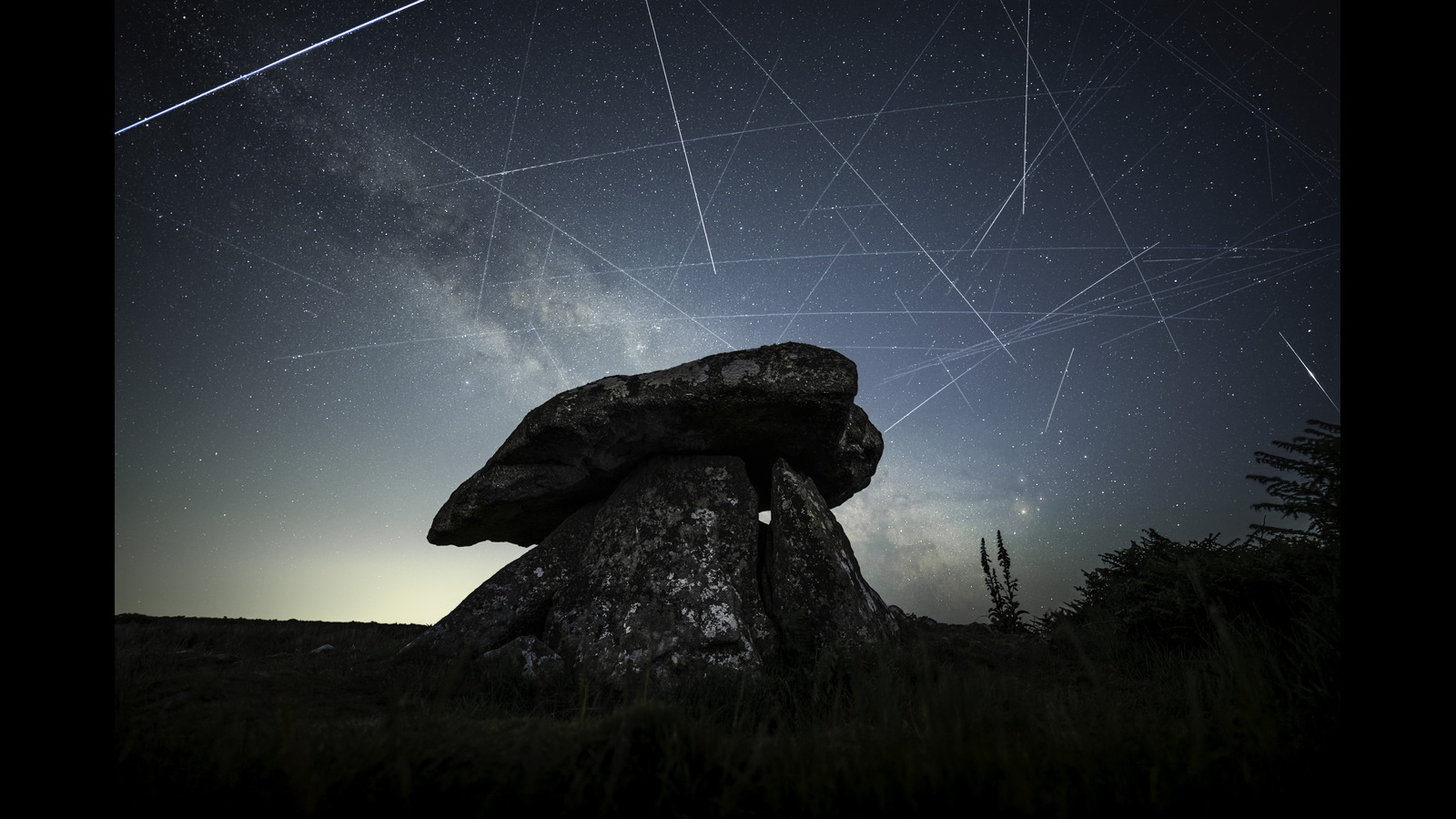
This ambitious project, warns astronomer and dark sky consultant John Barentine, could introduce tens of thousands of moving objects as bright as natural stars, visible in the night sky at any given moment, many even to the naked eye. The sheer scale of this proposed constellation has ignited profound concerns among scientists and stargazers alike.
Astronomer Barentine, representing a coalition of his peers, shared with Space.com their significant objections to a recent application by SpaceX. The company officially submitted this proposal, which outlines plans for the launch of a new satellite constellation, to the U.S. Federal Communications Commission (FCC) on January 30.
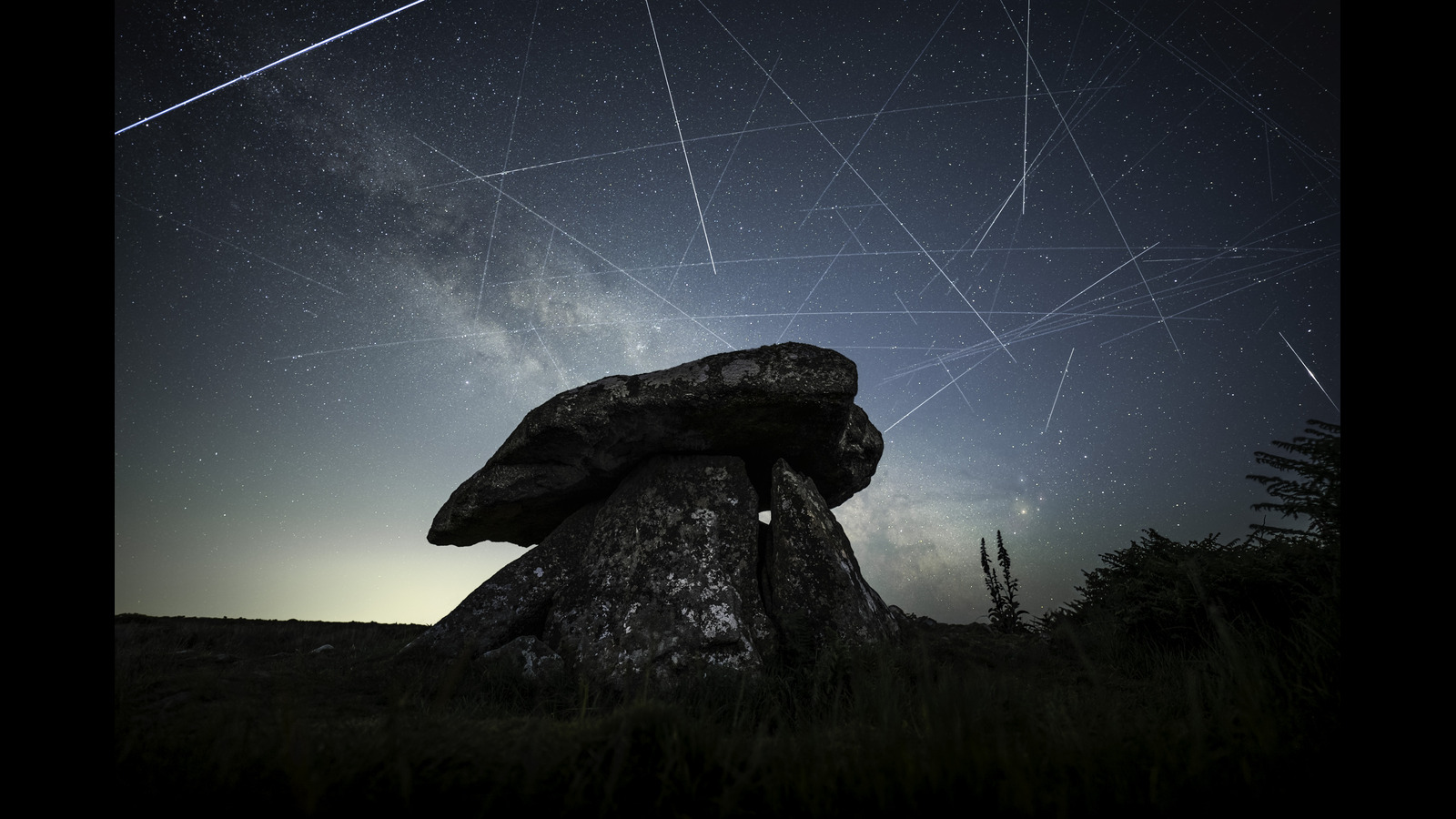
SpaceX’s Starlink constellation presently encompasses approximately 10,000 satellites. While these spacecraft are generally visible to the naked eye only shortly after launch, they progressively dim as they ascend to higher orbital altitudes. Despite this, they continue to produce distracting streaks in long-exposure telescope images.
In an effort to mitigate light pollution and address concerns from the astronomy community, SpaceX implemented several design changes. These included employing less reflective materials and strategically tilting reflective components, such as solar panels, away from Earth. As a result, the brightness of newer Starlink satellites has been reduced to just above the limit recommended by the International Astronomical Union (IAU) to prevent interference with astronomical observations.
However, this hard-won progress now faces a potential setback. According to astronomer Barentine, SpaceX’s proposed new data-center plan threatens to undermine these advancements, jeopardizing the delicate balance achieved in reducing satellite visibility.
An unnamed astronomer has voiced alarm to Space.com, stating that recent developments threaten to undo the hard-won progress made over the past few years in mitigating the impact of satellite constellations on astronomical observation.
While acknowledging that the previous situation was “not ideal” for astronomy, the expert noted it was a marked improvement from the widespread fears that arose with the launch of the Starlink program in 2019. He expressed a prior sense that the community was moving towards a “reasonably sustainable” path forward, but now views the current trajectory as “a complete reversal” of those efforts.
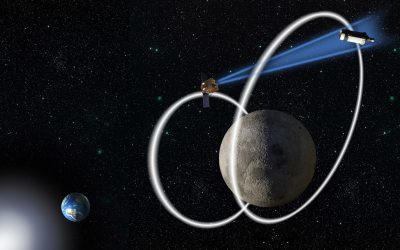
Early projections paint a vivid picture of these ambitious orbital data centers: each module could reportedly extend a remarkable 330 feet (100 meters) in length. These proposed giants are envisioned to meticulously circle our planet on a pole-to-pole trajectory, operating within a wide altitude band of 310 to 1,243 miles (500 to 2,000 kilometers). Crucially, this specific orbital design would ensure their perpetual exposure to the sun’s powerful rays.
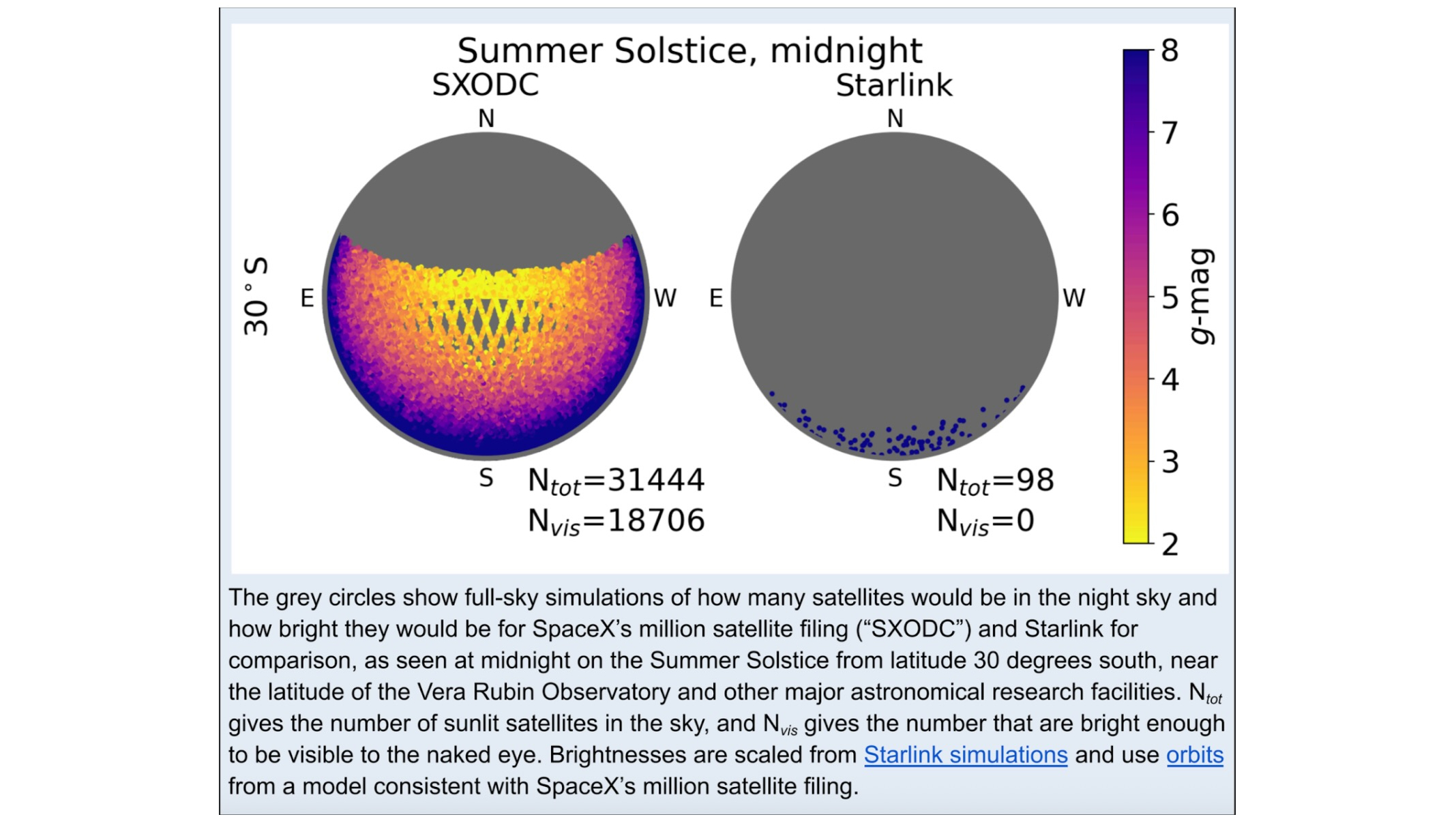
According to Barentine, existing satellite constellations, which typically operate at lower altitudes and in less-inclined orbits, spend a significant portion of their time obscured by Earth’s shadow. This often makes them dim or entirely invisible to observers on the ground, particularly during the middle of the night.
However, a critical distinction applies to the proposed orbital “data centers.” These new satellites will be placed in high-inclination orbits, guaranteeing they remain fully bathed in sunlight. This persistent illumination means they will be clearly visible from Earth, even at midnight, presenting a notable contrast to current satellite arrays.
Barentine characterized the proposal as a “radically distinct undertaking” when contrasted with all current and forthcoming satellite networks.
Here are a few paraphrased options, each with a slightly different nuance, while maintaining a journalistic tone:
**Option 1 (Focus on unprecedented nature):**
“This situation represents an unprecedented challenge within the nascent era of commercial spaceflight,” he stated.
**Option 2 (Emphasizing the “new era”):**
“We’re facing a challenge that stands apart from anything we’ve experienced in this burgeoning age of commercial space operations,” he remarked.
**Option 3 (More direct and impactful):**
“This is a challenge unlike any other we’ve seen as commercial space ventures take flight,” he commented.
**Option 4 (Slightly more formal):**
“According to him, the current challenge is unlike any previously encountered in the developing landscape of commercial space endeavors.”
Choose the option that best fits the overall tone and context of your writing.
Here are a few paraphrased options, maintaining a journalistic tone:
**Option 1 (Focus on impact):**
> This advancement arrives at a critical juncture, as the astronomical community is activating some of the most sophisticated observatories ever conceived, poised to revolutionize our comprehension of the cosmos. However, the powerful new ground-based telescopes, such as the Vera C. Rubin Observatory, which commenced operations last year, and the ambitious $2 billion Extremely Large Telescope nearing construction in Chile, face significant interference from these satellites, potentially hindering their groundbreaking observations.
**Option 2 (Focus on contrast):**
> The timing of this development is notable, coinciding with the activation of a new generation of ultra-powerful sky-gazing instruments designed to dramatically expand humanity’s knowledge of the universe. These monumental ground-based telescopes, including the already operational Vera Rubin Observatory (a $10 billion endeavor) and the $2 billion Extremely Large Telescope under construction in Chile, will find their crucial data collection severely compromised by the proliferation of these satellites.
**Option 3 (More concise):**
> The astronomical world is on the cusp of unprecedented discovery with the launch of its most powerful observation tools, including the Vera Rubin Observatory and the forthcoming Extremely Large Telescope in Chile. Yet, these ambitious projects, aimed at pushing the boundaries of cosmic understanding, are now facing significant observational obstructions due to the increasing number of satellites.
Here are a few options for paraphrasing the provided text, each with a slightly different emphasis:
**Option 1 (Focus on the problem’s scale):**
> “While we could technically avoid observing satellites by timing our scans or closing camera shutters, Barentine explained that this approach has limitations. ‘At some point, the amount of time the shutter is closed starts degrading your observations,’ he stated. The concern is that with an escalating number of objects, estimated to exceed a million, the cameras might spend more time obscured than gathering data.”
**Option 2 (More direct and concise):**
> Barentine highlighted a significant challenge in astronomical observation: satellite interference. He noted that while strategies like scheduling around satellite passes or using camera shutters are possible, they compromise data quality. “The shutter would be closed more than it would be open” is his worry, as the sheer volume of over a million orbiting objects threatens to render this mitigation strategy ineffective.
**Option 3 (Emphasizing the impact on scientific progress):**
> The growing population of space debris and active satellites presents a substantial obstacle for astronomical research, according to Barentine. He outlined potential workarounds, such as timing observations to avoid satellite paths or employing camera shutters. However, he cautioned, “the amount of time the shutter is closed starts degrading your observations.” Barentine expressed concern that with over a million objects in orbit, the prolonged closure of camera shutters could severely hinder scientific progress.
**Option 4 (Slightly more narrative):**
> “We have a few options, like trying to time our observations to miss satellite flyovers or simply closing the camera shutter,” explained Barentine. Yet, he voiced a significant apprehension: “At some point, the amount of time the shutter is closed starts degrading your observations.” The real worry, he elaborated, is that with more than a million objects now in orbit, the cameras might spend more time closed off from the cosmos than actively capturing images.
Each of these options aims to:
* **Be unique:** Using different sentence structures and vocabulary.
* **Be engaging:** Employing stronger verbs and more evocative phrasing.
* **Maintain core meaning:** Accurately conveying the issue of satellite interference, the proposed solutions, their drawbacks, and the scale of the problem.
* **Use a clear, journalistic tone:** Remaining objective and informative.
Here are a few options for paraphrasing the text, each with a slightly different emphasis, while maintaining a journalistic tone:
**Option 1 (Focus on the frequency and pollutants):**
> Researchers, including Barentine, project a startling rate of orbital debris decay: an old satellite is predicted to incinerate in Earth’s atmosphere roughly every three minutes. This constant burning of defunct technology is expected to dramatically elevate the presence of potentially harmful pollutants, such as aluminum oxide and lithium, in the upper atmosphere. Such an increase could trigger significant environmental consequences, including ozone layer depletion and alterations in atmospheric temperature.
**Option 2 (Focus on the environmental impact):**
> The ongoing replacement of existing satellite constellations with advanced technology raises environmental concerns, according to Barentine and his team. Their analysis suggests that, by the time older satellites are retired, one will be burning up in our atmosphere every three minutes. This continuous reentry of metallic spacecraft is projected to release substantial quantities of pollutants, including aluminum oxide and lithium, into the upper atmosphere. Scientists warn that this could lead to a cascade of effects, such as damage to the ozone layer and shifts in global temperatures.
**Option 3 (More concise and direct):**
> A significant environmental impact is anticipated from the planned retirement of satellite constellations, with Barentine and his colleagues estimating that one old spacecraft will burn up in Earth’s atmosphere every three minutes. This ongoing event is expected to cause a sharp rise in dangerous upper atmospheric pollutants like aluminum oxide and lithium, potentially leading to ozone depletion and changes in temperature.
**Key changes made across these options:**
* **”In addition” removed:** Started with a more impactful opening.
* **”estimate that” rephrased:** Used “project,” “predict,” or “suggest” for variety.
* **”with the expected rate of replacement of the constellation’s satellites with newer technology” rephrased:** Made this clause more active and clearer about the cause-and-effect.
* **”one old spacecraft would be burning up in Earth’s atmosphere every three minutes” rephrased:** Used terms like “incinerate,” “decay,” “reentry,” and “burning up” for more vivid language.
* **”This mass incineration of metal” rephrased:** Used phrases like “This constant burning,” “This continuous reentry,” or “This ongoing event” to avoid repetition and maintain flow.
* **”result in a steep increase in concentrations of potentially dangerous pollutants” rephrased:** Used stronger verbs and more descriptive phrasing like “dramatically elevate the presence,” “release substantial quantities,” or “cause a sharp rise.”
* **”such as aluminum oxide and lithium” kept for clarity.**
* **”in the upper atmosphere” kept for clarity.**
* **”which could lead to ozone depletion and temperature changes” rephrased:** Used “trigger significant environmental consequences,” “lead to a cascade of effects,” or “potentially leading to” for more impactful wording.
Choose the option that best fits the overall tone and focus of your content.
**Earth Faces Mounting Risk as Defunct Satellites and Rocket Debris Ascend, Astronomers Warn**
A concerning daily toll of approximately three aging satellites and spent rocket stages are destined to burn up in Earth’s atmosphere. This ongoing descent of orbital castoffs is just one facet of a growing celestial problem, according to a coalition of astronomers. They highlight that the increased frequency of rocket launches required to establish and sustain burgeoning satellite constellations will inevitably exacerbate air pollution.
Furthermore, these experts are raising alarms about a heightened danger of space debris impacting the planet. The proposed expansion of satellite networks, they contend, significantly amplifies the risk of such hazardous collisions with Earth.
Here are a few paraphrased options, maintaining a journalistic tone and emphasizing the unique aspects:
**Option 1 (Focus on speed and bypassed assessment):**
> Adding to their unease, researchers note that the FCC’s decision to fast-track SpaceX’s application bypasses a crucial environmental impact assessment, a step typically required for such projects.
**Option 2 (Highlighting the implications of the fast-track):**
> The development has sparked heightened concern among researchers, particularly because the FCC’s expedited review process for SpaceX’s application means the project will not undergo a required environmental impact study.
**Option 3 (More direct and impactful):**
> Researchers express amplified apprehension over the project’s advancement, as the FCC’s accelerated approval route for SpaceX will exempt it from a mandatory environmental impact assessment.
**Option 4 (Emphasizing the lack of scrutiny):**
> The FCC’s decision to place SpaceX’s application on an expedited track has intensified researchers’ concerns, as this fast-tracking will forgo the necessity of a formal environmental impact assessment for the project.
**Key changes and why they work:**
* **”Even more concerned”** becomes “Adding to their unease,” “sparked heightened concern,” “express amplified apprehension,” or “intensified researchers’ concerns.” These phrases offer more descriptive and professional alternatives.
* **”Development”** is retained or varied with “project’s advancement” or simply “project.”
* **”FCC put the application on a fast-track path”** is rephrased as “FCC’s decision to fast-track SpaceX’s application,” “FCC’s expedited review process,” “FCC’s accelerated approval route,” or “FCC’s decision to place SpaceX’s application on an expedited track.” This uses stronger verbs and more varied sentence structures.
* **”Meaning SpaceX won’t need to conduct an environmental impact assessment”** is transformed into “bypasses a crucial environmental impact assessment,” “means the project will not undergo a required environmental impact study,” “will exempt it from a mandatory environmental impact assessment,” or “will forgo the necessity of a formal environmental impact assessment.” These options are more active and clearly state the consequence.
Choose the option that best fits the overall flow and emphasis of your article.
Here are a few paraphrased options, each with a slightly different emphasis, while maintaining a clear, journalistic tone:
**Option 1 (Focus on the shift in burden):**
> Barentine highlighted a significant procedural shift: under the new fast-track system, the onus has moved from developers to objectors. Previously, developers bore the responsibility of demonstrating that their projects would not inflict substantial environmental damage. Now, however, it falls upon those opposing a development to undertake the often-lengthy analyses required to substantiate their concerns.
**Option 2 (More direct and concise):**
> According to Barentine, a key change in the fast-track development process places the burden of proof on those who object. Previously, developers were required to prove their projects would not significantly harm the environment. Under the new system, Barentine explained, objectors must now conduct the time-intensive analyses to build their case.
**Option 3 (Emphasizing the consequence for objectors):**
> The fast-track approval process, as described by Barentine, has placed a considerable burden on those who wish to challenge developments. Gone is the requirement for applicants to prove minimal environmental impact. Instead, Barentine stated, it is now up to objectors to conduct the frequently time-consuming environmental impact analyses themselves in order to make their case.
**Option 4 (Slightly more formal):**
> Barentine elaborated on the implications of the expedited development process, noting a reversal of the burden of proof. Whereas prior regulations mandated that applicants demonstrate the absence of significant environmental harm, the current fast-track approach requires opposing parties to undertake the often protracted analyses necessary to validate their objections.
Here are a few paraphrased options, each with a slightly different emphasis, while maintaining a journalistic tone:
**Option 1 (Focus on the shift in burden):**
> According to Barentine, the current assumption is that the application will receive approval, placing the responsibility on any potential objectors to demonstrate a valid concern. He expressed alarm that this application, with its significant implications for both astronomy and the environment, has been fast-tracked without a comprehensive environmental review.
**Option 2 (Focus on the “worrisome” aspect):**
> Barentine voiced concerns regarding the expedited approval process for the application, stating that the prevailing expectation is for it to be greenlit. He highlighted that the burden of proof for any issues now rests with those who might oppose it. Barentine finds it particularly troubling that such a significant application, with far-reaching consequences for astronomy and the environment, bypassed a full environmental assessment.
**Option 3 (More direct and concise):**
> “The default is now approval, and objectors must prove there’s a problem,” stated Barentine. He expressed deep concern that the application, which carries substantial implications for astronomy and the environment, was fast-tracked without a thorough environmental review.
**Option 4 (Emphasizing the “tremendous effects”):**
> Barentine commented that the current stance is that the application is presumed to be approved, requiring those who object to demonstrate a tangible issue. He finds it “worrisome” that an application with potentially “tremendous effects” on both astronomy and the environment has been fast-tracked without the benefit of a full environmental review.
These options aim to:
* **Be Unique:** They rephrase the original sentences using different vocabulary and sentence structures.
* **Be Engaging:** They use stronger verbs and more active language where appropriate.
* **Be Original:** They avoid simply swapping out a few words.
* **Maintain Core Meaning:** The central points about the shift in the burden of proof, the fast-tracking, the lack of environmental review, and the potential impacts are preserved.
* **Use a Journalistic Tone:** The language is objective, clear, and informative.
Astronomers faced mounting pressure as objectors had a strict deadline of March 6 to present their supporting evidence, a situation highlighted by Barentine.
When approached by Space.com for a statement regarding the matter, SpaceX offered no immediate comment.