It’s a foundational principle of optics: wherever light encounters an opaque object, a shadow is invariably cast. This universal law applies even on a planetary scale, with Earth itself projecting a vast shadow by obstructing the sun’s powerful illumination.
Yes, Earth’s shadow is indeed visible. According to astronomers consulted by Live Science, not only can it be perceived, but it is also cast upon various objects. Remarkably, under optimal conditions, this phenomenon can even be observed on a daily basis.
Due to the Sun’s nature as an extended light source rather than a single point, Earth casts a complex shadow structured into three distinct parts. The innermost and darkest region is known as the **umbra**, representing the area of total shadow. Surrounding the umbra is the **penumbra**, a lighter, partial shadow zone where some sunlight still reaches. Finally, at greater distances from Earth, a third component emerges: the **antumbra**. In this specific region, the umbra effectively disappears, replaced by the convergence of overlapping penumbral light.
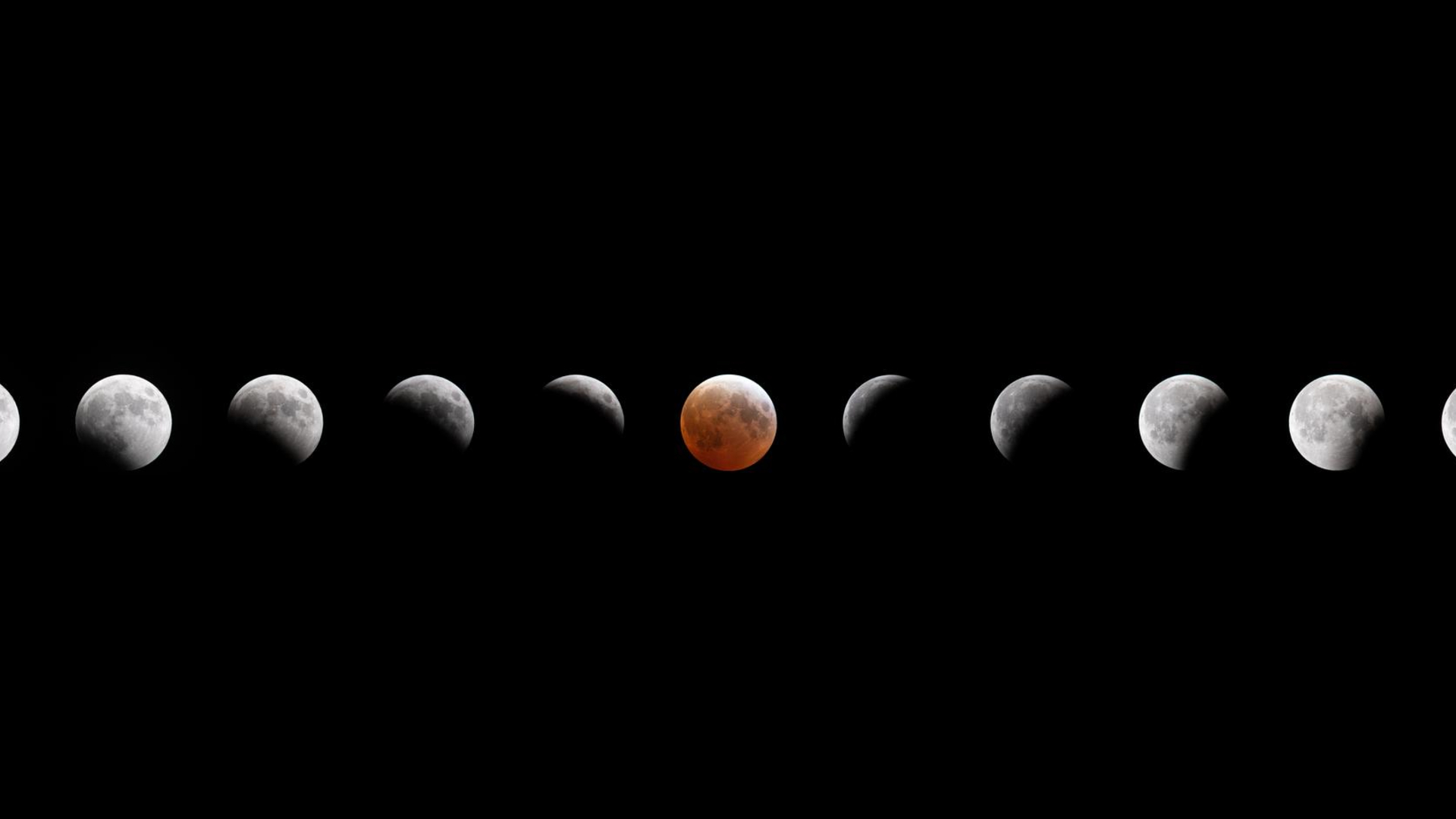
During a total lunar eclipse, the presence of Earth’s shadow is at its most striking. These celestial events unfold as a full moon passes directly through our planet’s shadow. The moon follows a distinct progression, first entering the faint outer shadow, known as the penumbra, before proceeding into the dense, central umbra, and then re-emerging through the penumbra.
Distinguishing the penumbra proves challenging, as the moon’s illumination dims only subtly in this zone. In stark contrast, the umbra, Earth’s deep and concentrated shadow, is far more conspicuous. This darker region, which can measure up to an impressive 2.7 times the lunar diameter, offers a much clearer visual spectacle.
Despite being entirely enveloped by Earth’s deepest shadow, the moon rarely appears as a stark black void during such an event. Instead, its surface is frequently bathed in a reddish glow, spanning from a faint copper to a deep, striking crimson. This distinctive coloration occurs because our planet’s atmosphere scatters sunlight, effectively filtering out shorter wavelengths. It then bends these remaining reddened light rays, directing them into the umbra and onto the lunar surface.
The phenomenon effectively allows observers to witness Earth’s own sunrises and sunsets “painted” across the lunar surface, explained Emily Rice, an astronomy professor at Macaulay Honors College of the City University of New York. Rice shared this intriguing perspective in an email to Live Science.
Here are a few ways to paraphrase that sentence, keeping a journalistic tone:
**Option 1 (Focus on visual impact):**
> The appearance of Earth’s atmosphere can dramatically influence the Moon’s color during an eclipse. According to [her name/title, if known], a dustier or cloudier atmosphere will cast a redder hue onto the lunar surface.
**Option 2 (More direct and concise):**
> Scientists can glean insights into Earth’s atmospheric conditions by observing lunar eclipses. As [she/he] explained, a more clouded or dust-laden atmosphere results in a redder-looking Moon.
**Option 3 (Emphasizing the atmospheric connection):**
> The state of Earth’s atmosphere plays a crucial role in how the Moon appears during an eclipse. A thicker layer of clouds or dust, [she/he] noted, will cause the Moon to take on a more pronounced red color.
**Option 4 (Slightly more descriptive):**
> During a lunar eclipse, the Moon acts as a mirror reflecting Earth’s atmospheric conditions. [Her name/title] observed that the more obscured Earth’s atmosphere is by clouds and dust, the deeper the red tint observed on the Moon.
Here are a few paraphrased options, each with a slightly different nuance, maintaining a journalistic tone:
**Option 1 (Focus on the visual phenomenon):**
> A blackened appearance of the moon occurs when it aligns with both the Earth’s umbra and penumbra simultaneously. This striking visual is a result of a contrast effect, as the section of the moon illuminated by the penumbra is approximately 500 times brighter than the portion within the umbra, according to astrophysicist Fred Espenak’s writings on EclipseWise.
**Option 2 (More direct and concise):**
> The moon can appear blackened when it passes through the boundary zone between Earth’s umbra and penumbra. Astrophysicist Fred Espenak explains on EclipseWise that this is due to a contrast effect, with the moon’s penumbral portion being roughly 500 times more luminous than its umbral segment.
**Option 3 (Emphasizing the “why”):**
> Astrophysicist Fred Espenak, writing on EclipseWise, details that a blackened moon is observable when the celestial body traverses the edge of Earth’s shadow, encompassing both the umbra and penumbra. This phenomenon arises from a stark contrast, as the moon’s penumbral illumination is a remarkable 500 times brighter than its presence within the umbra.
**Key changes made and why:**
* **”In comparison” removed:** This phrase suggests a previous point of comparison, which isn’t present in the isolated text. Removing it makes the sentence stand-alone.
* **”seeing a blackened moon is possible” rephrased:** Used more active and descriptive language like “A blackened appearance of the moon occurs,” “The moon can appear blackened,” or “a blackened moon is observable.”
* **”straddles Earth’s umbral-penumbral boundary” rephrased:** Used phrases like “aligns with both the Earth’s umbra and penumbra simultaneously,” “passes through the boundary zone between Earth’s umbra and penumbra,” or “traverses the edge of Earth’s shadow, encompassing both the umbra and penumbra.” These are more descriptive and less technical while retaining accuracy.
* **”This stems from a contrast effect” rephrased:** Varied the introductory phrase to “This striking visual is a result of,” “This is due to,” or “This phenomenon arises from.”
* **”since the portion of the moon in the penumbra is 500 times brighter than in the umbra” rephrased:** Used synonyms for “brighter” like “luminous” and “illumination.” Quantified the difference clearly.
* **”astrophysicist Fred Espenak wrote on EclipseWise” integrated:** Woven into the sentence for better flow, indicating the source of the information.
* **Word choice:** Substituted words like “possible” with “observable,” “stark,” “striking,” “remarkable,” and “luminous” to enhance engagement.
* **Sentence structure:** Adjusted sentence beginnings and clauses to create variety and a more professional journalistic feel.
During a partial lunar eclipse, the Earth’s imposing shadow, known as the umbra, can be observed as it gradually obscures a portion of the moon.
Here are a few paraphrased options, maintaining a journalistic tone:
**Option 1 (Concise & Direct):**
> You don’t need an eclipse to witness Earth’s shadow. As twilight deepens just before dawn and lingers after dusk, our planet’s silhouette becomes a visible phenomenon in the sky, appearing opposite the sun near the horizon.
**Option 2 (Slightly More Descriptive):**
> Earth’s shadow isn’t confined to eclipse events. In the fleeting moments before sunrise and the quiet period just after sunset, the planet’s distinct outline is cast into space and can be observed in the sky, low on the horizon and in the direction away from the sun.
**Option 3 (Emphasizing Observation):**
> The spectacle of Earth’s shadow can be enjoyed without waiting for an eclipse. During the transitional periods of twilight – immediately preceding sunrise and just following sunset – the planet’s impressive silhouette projects into space and becomes visible low on the horizon, in the quadrant opposite the sun.
**Option 4 (Focus on the “Why”):**
> Earth’s shadow, a celestial display not solely reserved for eclipses, is observable during the transitional hours of twilight. Just before the sun rises and shortly after it sets, our planet’s dark outline is cast into space and becomes visible near the horizon, situated in the sky opposite the sun.
During daylight hours, the sky appears brilliantly clear because direct sunlight illuminates the myriad gas molecules and particulate matter suspended within our atmosphere. These atmospheric constituents then scatter a portion of this incoming light, making the sky luminous.
However, as the sun ascends or descends during sunrise or sunset, Earth’s spherical shape takes on a critical role. Its curvature obstructs the lowest, most grazing solar rays, preventing them from directly reaching and illuminating the atmosphere’s lowest layers. This natural blockage results in a distinctive, curved shadow being cast upon the atmospheric regions directly opposite the sun’s position, as explained by Raymond L. Lee, an adjunct professor in the Mathematics and Science Division at the U.S. Naval Academy.
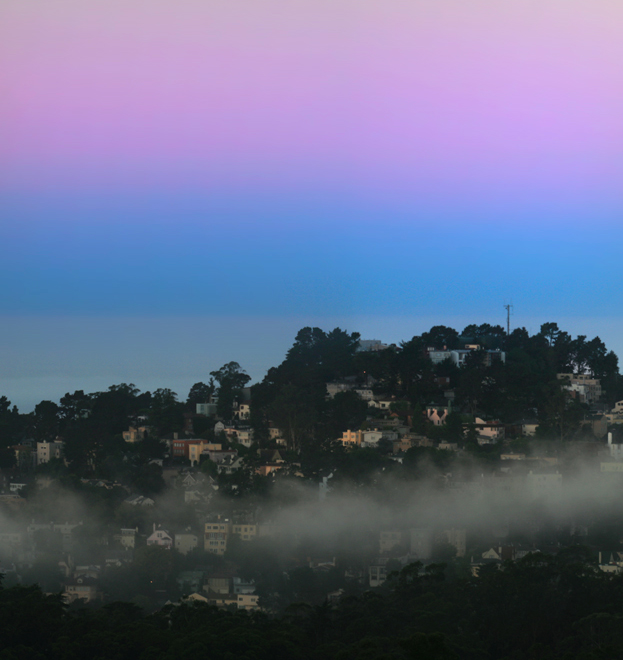
The precise visual characteristics constituting Earth’s shadow remain a subject of considerable debate within the scientific community. A 2017 study published in the journal *Applied Optics* put forward the view that the shadow is composed of two distinct elements: an upper dark-blue band and a lower brown band.
However, this interpretation is challenged by Giovanni di Giovanni, an amateur astronomer who holds a master’s degree in physics from the University of L’Aquila in Italy. Di Giovanni contends that neither of these bands accurately represents the planet’s true shadow. Instead, as he communicated to Live Science in an email, Earth’s actual shadow appears as “a thin, very dark band, but with little contrast compared to the other bands above it.”
The planet’s distinct silhouette becomes visible when the sun is positioned from just above the horizon until it descends approximately four degrees below it. This celestial shadow persists for about 15 minutes, either vanishing with the first rays of dawn or merging seamlessly with the deepening twilight.
Observing Earth’s own shadow is an exceedingly rare visual phenomenon, contingent upon pristine, dust-free atmospheric conditions at significant elevations. According to di Giovanni, the elusive nature of this sight means “Very few observers would notice it.” He emphasized that such a spectacle is typically reserved for the isolated peaks of high mountains or, with even greater clarity, from an airborne vantage point.
Witnessing Earth’s immense shadow cast upon objects in space presents a subtle yet rewarding astronomical challenge. One compelling opportunity arises when the International Space Station (ISS) makes an overhead pass on a clear evening, precisely as the sun dips below the horizon. With a good pair of stargazing binoculars, observers can detect a distinct dimming of the orbiting laboratory as it enters our planet’s vast shadow cone, a transient celestial eclipse visible from Earth.
Telescopes offer a unique opportunity to observe an intriguing celestial event: the momentary disappearance of geostationary satellites. These vital communication platforms maintain a seemingly fixed position above the Earth’s equator, orbiting in perfect sync with the planet’s rotation.
While these satellites typically enjoy uninterrupted sunlight, a fact corroborated by operator Space Norway, this status changes for approximately three weeks around each equinox. During these specific intervals, aptly named “eclipse seasons” by the Australian Space Weather Forecasting Centre, the satellites dip into Earth’s shadow. For several minutes each night, these high-flying objects briefly vanish from sight, only to re-emerge as they clear the planetary silhouette.
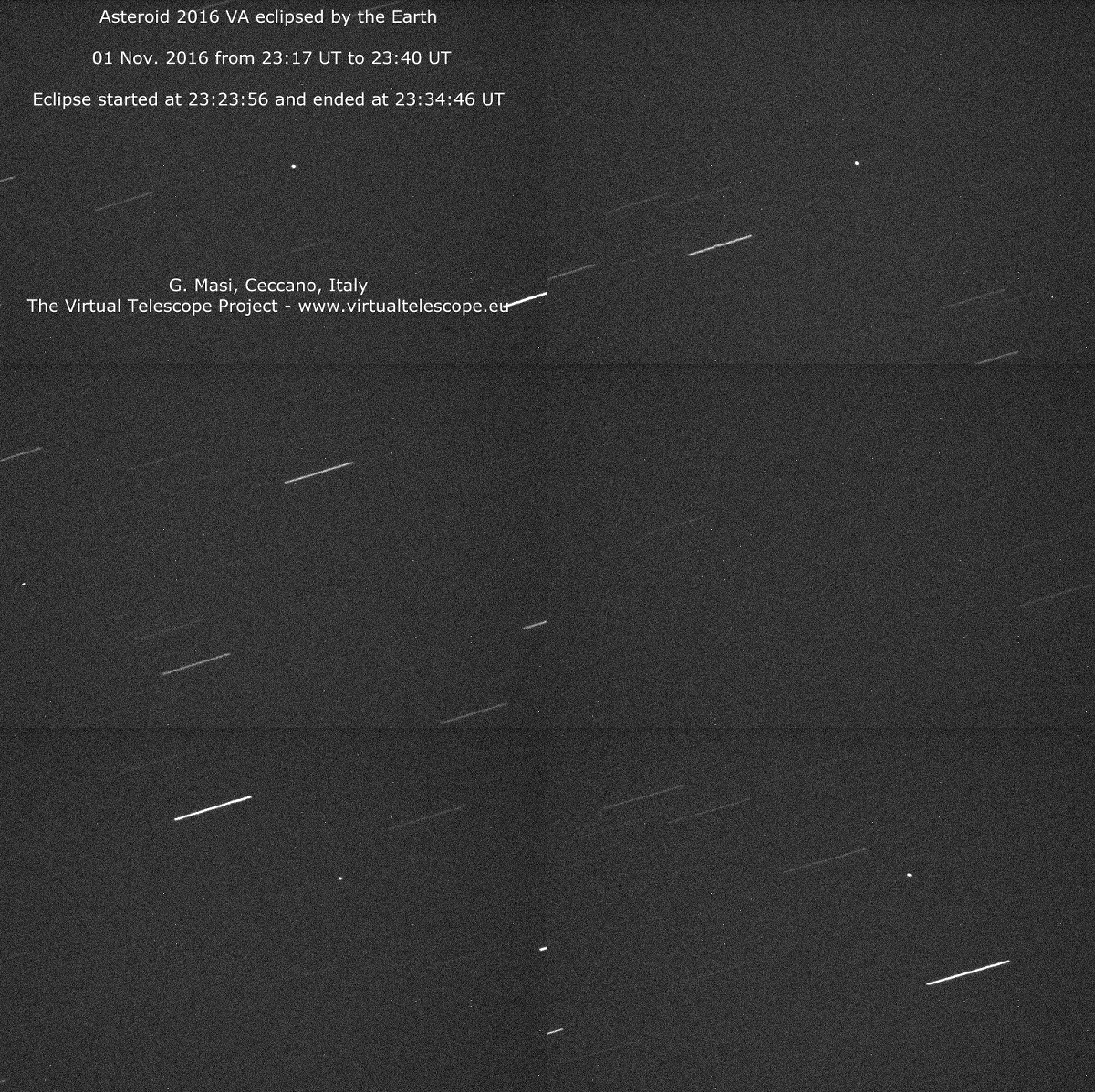
The vast expanse of Earth’s shadow has been definitively observed extending far beyond our atmosphere, impacting even distant asteroids. A compelling instance was documented by astronomer Gianluca Massi, founder of The Virtual Telescope Project. In a blog post, Massi detailed how one of their telescopes recorded the house-sized asteroid 2016 VA as it dimmed and momentarily disappeared. This celestial phenomenon, a result of the asteroid traversing Earth’s shadow, lasted for a precise 10 minutes and 50 seconds. At the time of its obscuration, the asteroid was approximately 74,520 miles (120,000 kilometers) from Earth.
Here are a few options for paraphrasing the provided text, each with a slightly different journalistic emphasis:
**Option 1 (Focus on the Shadow’s Reach):**
> While Earth casts a significant shadow, its reach is not infinite. According to Dr. [Rice’s first name, if available, otherwise just “Rice”], the planet’s umbra, a vast conical shape, extends approximately 1.4 million kilometers (870,000 miles) into space. This means Earth’s shadow falls far short of Mars, which at its nearest point, is a staggering 55 million kilometers (34 million miles) away. Nevertheless, numerous celestial bodies traverse this shadow, offering ample opportunities to observe and appreciate our planet’s silhouette.
**Option 2 (Focus on the Contrast with Mars):**
> Earth’s shadow, a colossal cone extending roughly 1.4 million kilometers (870,000 miles) from our planet, has its limits. “It’s a very long cone shape,” explained [Rice]. This impressive extent, however, is insufficient to reach Mars, a planet that can be as close as 55 million kilometers (34 million miles) away. Despite this cosmic distance, the passage of many objects through Earth’s shadow ensures continued opportunities for awe-inspiring views of our planet’s silhouette.
**Option 3 (More Concise and Direct):**
> Earth’s shadow, a cone-shaped region known as the umbra, extends approximately 1.4 million kilometers (870,000 miles) into space, according to [Rice]. This impressive reach, however, is not enough to touch Mars, which orbits at a minimum distance of 55 million kilometers (34 million miles). Despite this, the frequent passage of various objects through Earth’s shadow provides ongoing opportunities to witness the planet’s unique silhouette.
**Key changes made to ensure uniqueness and engagement:**
* **Varied vocabulary:** “extends,” “reach,” “fall short of,” “touch,” “traverse.”
* **Sentence structure variation:** Combining clauses, using introductory phrases, and altering the order of information.
* **Journalistic tone:** Using phrases like “according to,” “explained,” and focusing on factual reporting.
* **Stronger verbs:** “casts a significant shadow,” “falls far short,” “traverse.”
* **Emphasis on scale:** Highlighting the vast distances involved.
* **Maintaining core meaning:** The limit of Earth’s shadow and its inability to reach Mars, but the continued observation potential.