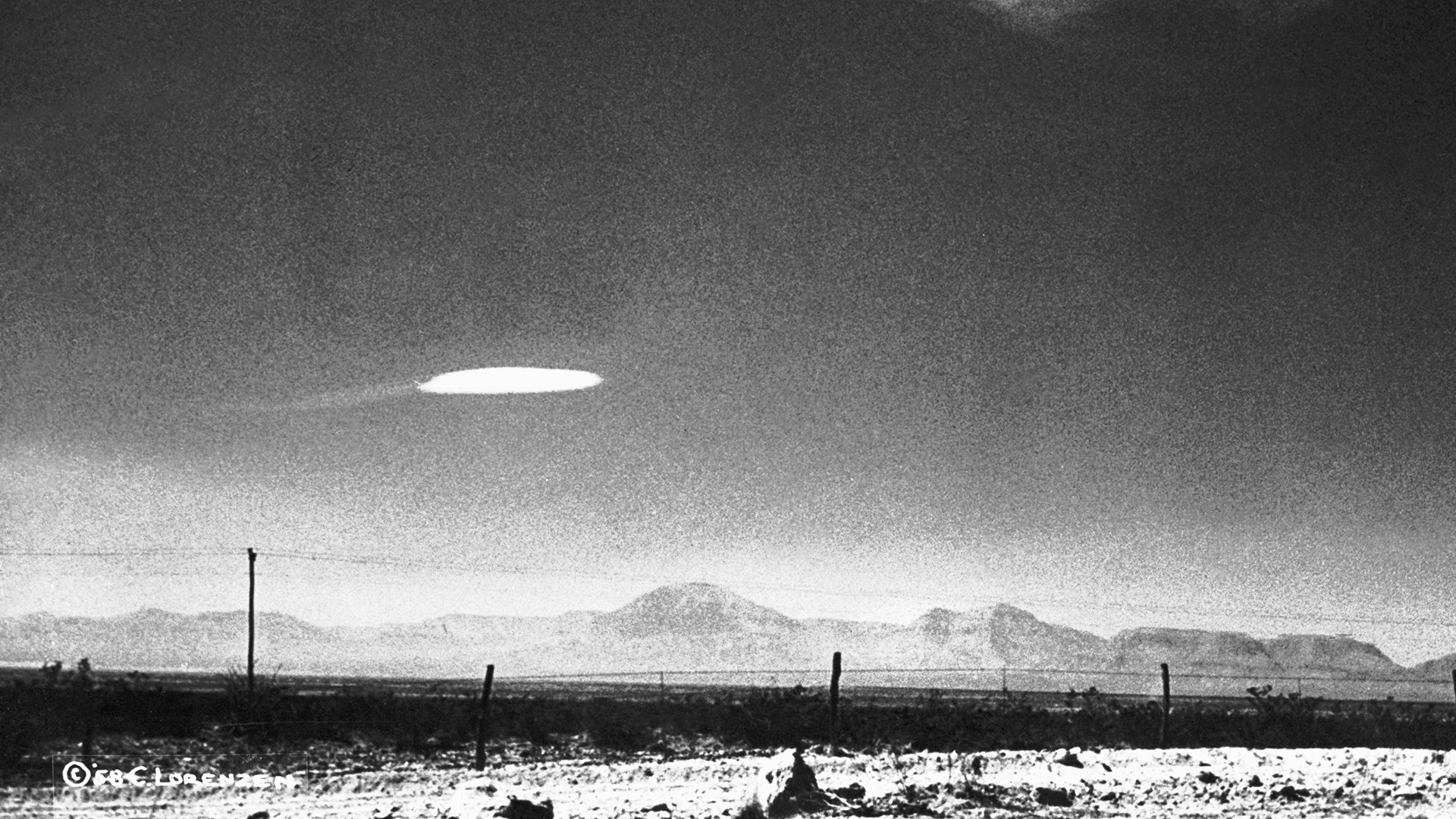
In a significant move, President Donald Trump mandated the declassification of government records concerning Unidentified Flying Objects (UFOs) and Unidentified Anomalous Phenomena (UAP) by February 2026. This directive, issued to the Pentagon and other federal agencies, comes after sustained advocacy from lawmakers, former military personnel who have come forward with insider information, and growing public interest in the subject.
**Unexplained Aerial Phenomena (UAP) investigations have been officially sanctioned by Congress, following their inclusion in the National Defense Authorization Act of December 2022.** This legislative action empowers the Pentagon’s dedicated UAP investigative unit, the All-domain Anomaly Resolution Office (AARO), to meticulously examine a significant backlog of over 2,000 reports. These incidents, stretching as far back as 1945, are now under formal scrutiny, a number confirmed earlier this year by Defense Secretary Pete Hegseth.
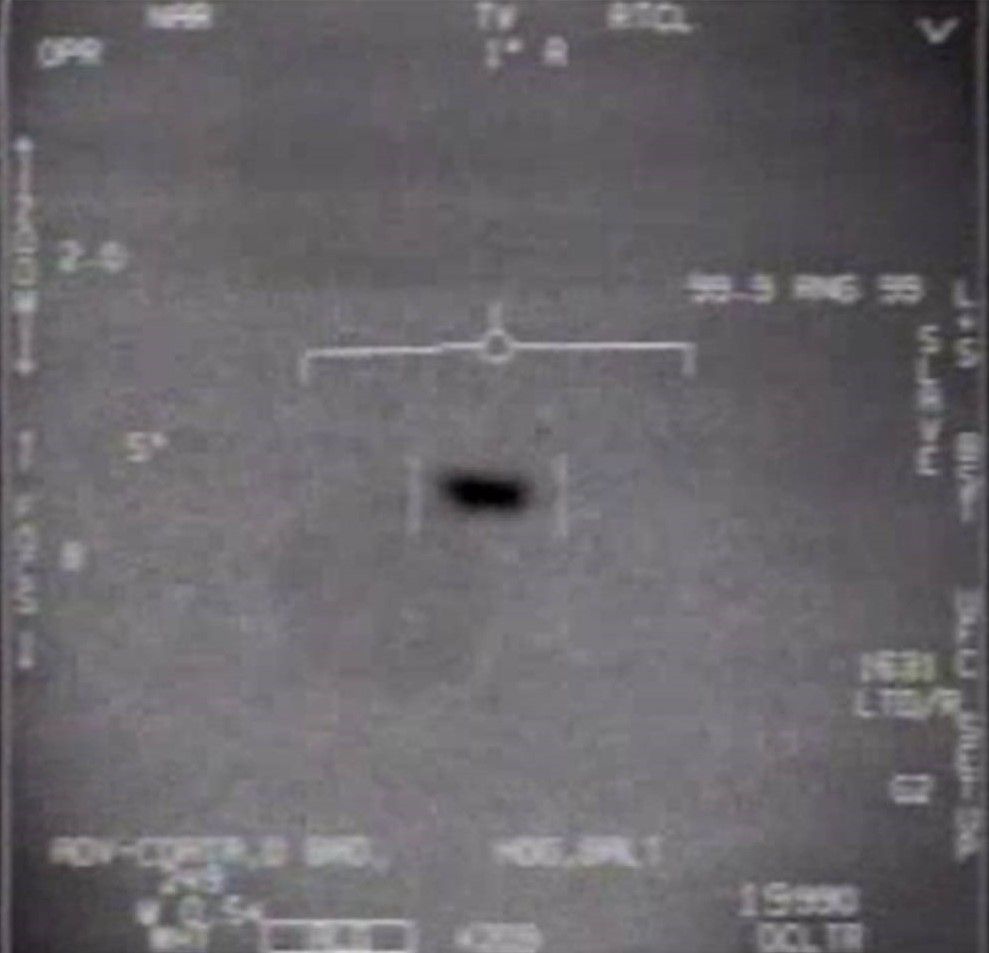
Reports of unidentified aerial phenomena (UAP) have been filed by individuals serving in the military, as well as pilots and government workers. These accounts detail sightings of airborne objects that defy conventional explanations, ruling out familiar aircraft, drones, or meteorological events. Notably, this phenomenon is not confined to one nation; governments in Japan, France, Brazil, and Canada are actively pursuing their own official investigations into these mysterious occurrences.
**Universities Largely Sit Out UAP Inquiry Despite Growing Government Transparency**
Despite increasing openness from governments regarding Unidentified Aerial Phenomena (UAP), major research universities appear to be largely absent from the burgeoning scientific discourse. To date, no prominent university has established a dedicated center for UAP research, nor do federal science agencies offer competitive grant funding specifically for such investigations. Furthermore, no doctoral programs exist to train future researchers in UAP methodologies. This significant disconnect between official government acknowledgment and academic willingness to engage in UAP study presents a challenge to purely intellectual explanations.
In my personal pursuit of UAP (Unidentified Anomalous Phenomena) research, I’ve addressed this knowledge gap through the development of a novel tool. My work on the “temporal aerospace correlation tool,” a standardized methodology designed to cross-reference civilian UAP sightings with official rocket launch data from Cape Canaveral, is presently undergoing peer review for publication in *Limina: The Journal of UAP Studies*.
Developing this research framework presented a significant challenge, as it required making crucial methodological choices without the benefit of established community standards, dedicated institutional funding, or the robust professional infrastructure that researchers in more traditional fields often have at their disposal. The absence here isn’t a lack of curiosity or available data; rather, it’s the crucial shared foundation that is needed to transform individual lines of inquiry into a cohesive and progressive body of scientific knowledge.
Compelling research from a peer-reviewed study published in *Humanities and Social Sciences Communications* by Marissa Yingling, Charlton Yingling, and Bethany Bell offers the strongest indication of a disconnect between academic interest in Unidentified Anomalous Phenomena (UAP) and the readiness of faculty to formally investigate the subject.
A recent national survey involving 1,460 faculty members across 14 major disciplines at 144 prominent U.S. research universities has shed light on the academic community’s views on Unidentified Aerial Phenomena (UAP). The findings reveal a prevailing sentiment that UAP research holds significant importance, with curiosity emerging as a stronger driver than skepticism across all surveyed fields.
Despite this widespread interest, a striking disconnect exists between belief and practice. While nearly one-fifth of the respondents reported personally witnessing an unidentified aerial object, fewer than 1% indicated they had ever undertaken research specifically related to UAP. This suggests a substantial untapped potential within academia for investigating these unexplained phenomena.
Instead of outright intellectual disagreement, a significant factor contributing to the research gap was rooted in apprehension. Scientists were not largely dissuaded by doubts regarding the subject’s validity. Rather, their concerns stemmed from potential repercussions such as jeopardizing funding, enduring professional scorn, or facing subtle career setbacks. Reports indicate that faculty members were advised to proceed with caution.
**Academics Express Hesitation Over Tenure for UAP Researchers**
A recent 2024 study reveals a significant segment of academics, approximately 28%, would reportedly consider voting against a colleague’s tenure application if their research focused on Unidentified Aerial Phenomena (UAP). This sentiment persists even among those who acknowledge the potential merit and importance of investigating the topic. The findings highlight a potential barrier within academia for those seeking to explore unconventional or stigmatized research areas.
The renowned historian and philosopher of science, Thomas Kuhn, put forth a compelling argument: scientific communities, he contended, often actively suppress unconventional lines of inquiry. This isn’t because these “anomalous” questions are inherently unanswerable, Kuhn argued, but rather because they diverge from the collectively established boundaries of what the community deems worthy of investigation.
Sociologist Thomas Gieryn introduced the concept of “boundary work” to define the active and deliberate process through which scientists police the borders of legitimate science. This entails a constant effort to determine and enforce what qualifies as credible scientific inquiry, effectively drawing lines between valid research and other forms of knowledge or practice.
Scientists and researchers investigating Unidentified Anomalous Phenomena (UAPs) are not lacking the fundamental resources—data and tools—required for their studies. Instead, the primary obstacle appears to be a systemic lack of social and professional permission to openly engage with the subject. This absence of endorsement often leaves them vulnerable to professional stigma or career repercussions, effectively chilling serious inquiry into the phenomenon.
No academic discipline springs fully formed into existence. Instead, their very foundation and growth hinge upon a meticulously constructed framework. This critical infrastructure includes specialized journals that serve as vital platforms for research dissemination, standardized methodologies that ensure rigor and reproducibility, rigorous graduate programs designed to cultivate the next generation of scholars, and influential professional societies that foster community, set ethical standards, and advance the field.
The genesis of cognitive neuroscience offers a compelling blueprint for understanding how new academic disciplines coalesce. Notably, its pioneers faced an uphill battle. Prior to the 1980s, scholars endeavoring to integrate the study of the brain with the study of the mind often encountered significant skepticism and resistance from both established neuroscience and conventional cognitive psychology.
The widespread acceptance of these interdisciplinary fields was ultimately catalyzed by a confluence of critical factors. Key among them were strategic funding initiatives from the Alfred P. Sloan Foundation, the breakthrough development of advanced brain-imaging technologies, and the deliberate formation of academic programs designed to establish clear career pathways for emerging researchers.
Crucially, the scientists operating at the nexus of these disciplines did not defer progress while awaiting the resolution of foundational theoretical questions. Instead, they proactively invested in building the necessary infrastructure, a foundational effort that, in turn, unlocked and facilitated subsequent advancements.
While the burgeoning field of Unidentified Aerial Phenomena (UAP) studies is beginning to establish its foundational components, much of this development is occurring beyond the traditional academic sphere. Organizations like the Society for UAP Studies, a collective of academics and investigators, are fostering scholarly rigor through initiatives such as Limina, a double-blind, peer-reviewed journal. They have also organized international gatherings that bring together experts from diverse fields including physics, the philosophy of science, and social sciences. However, without the institutional backing and permanent faculty typically found within universities, a nonprofit scholarly society, by itself, does not yet represent a fully established academic discipline.
Transforming the study of Unidentified Aerial Phenomena (UAP) into a legitimate academic discipline hinges on fulfilling three crucial requirements.
**Securing competitive research grants emerged as the most significant driver of faculty engagement in a recent study by Yingling.** The research highlighted that these grants are not merely supplementary; they are foundational to the progression of academic inquiry. Without adequate funding, researchers face insurmountable obstacles, including the inability to recruit student assistants, the prohibitive cost of essential equipment maintenance, and the challenge of sustaining the long-term, ambitious projects that yield impactful discoveries.
To advance UAP research, establishing common methodological standards is crucial. This would involve agreeing on consistent protocols for gathering, documenting, and analyzing UAP reports. Such uniformity would enable researchers to effectively compare findings across different studies and build upon collective knowledge.
Here are a few paraphrased options, focusing on a clear, journalistic tone:
**Option 1 (Concise & Direct):**
> Furthermore, academic institutions could publicly commit to evaluating rigorous scholarship on Unidentified Aerial Phenomena (UAP) based solely on its scientific merit during tenure assessments. This approach mirrors existing practices where universities have adopted similar standards for research into areas like gun violence and psychedelic-assisted therapy.
**Option 2 (Slightly More Elaborate):**
> A third avenue for progress involves institutions issuing public declarations that they will impartially assess the scientific rigor of UAP scholarship during tenure and promotion reviews. This aligns with precedent set by universities that have already established such frameworks for evaluating groundbreaking research in fields like gun violence and psychedelic therapies.
**Option 3 (Emphasizing Precedent):**
> Institutions should also consider publicly affirming their commitment to evaluating robust UAP scholarship on its scientific merits when conducting tenure reviews. This move would follow the lead of several universities that have already implemented similar policies for the scientific examination of subjects such as gun violence and psychedelic-assisted therapy.
**Key changes made in these paraphrases:**
* **”Affirm that they will evaluate”** changed to more active and formal phrasing like “commit to evaluating,” “issue public declarations that they will impartially assess,” or “affirming their commitment to evaluating.”
* **”Appropriately rigorous UAP scholarship”** made more descriptive with terms like “rigorous scholarship on Unidentified Aerial Phenomena (UAP),” “rigor of UAP scholarship,” or “robust UAP scholarship.”
* **”On its scientific merits”** kept consistent or slightly rephrased for flow.
* **”During tenure reviews”** rephrased as “during tenure assessments,” “during tenure and promotion reviews,” or “when conducting tenure reviews.”
* **”Several universities have already done this for…”** rephrased to emphasize the precedent and alignment, such as “This approach mirrors existing practices where universities have adopted similar standards for research into areas like…” or “This aligns with precedent set by universities that have already established such frameworks for evaluating groundbreaking research in fields like…”
These options aim to be unique, engaging, and original while retaining the core message and factual information in a professional, journalistic style.
Here are a few paraphrased options, maintaining a journalistic tone and the original meaning:
**Option 1 (Focus on the pattern):**
> This phenomenon is not unique. Studies on near-death experiences and adverse childhood experiences have mirrored this path, transforming from subjects that could jeopardize a professional’s standing to widely accepted areas of research once institutional obstacles were cleared.
**Option 2 (More direct and active):**
> The trajectory seen here is not an anomaly. Both research into near-death experiences and the study of adverse childhood experiences followed a comparable progression, evolving from career risks to mainstream legitimacy as institutional barriers were dismantled.
**Option 3 (Emphasizing the shift):**
> Similar to the journeys of research into near-death experiences and adverse childhood experiences, these instances are not isolated. Both fields transitioned from being professional impediments to gaining mainstream acceptance once institutional roadblocks were removed.
**Option 4 (Slightly more descriptive):**
> This pattern extends beyond these specific examples. The fields investigating near-death experiences and adverse childhood experiences have undergone a similar evolution, shifting from professional liabilities to recognized areas of legitimate study as institutional constraints were lifted.
While the United States grapples with a void in scholarly research on Unidentified Aerial Phenomena (UAP), France has maintained a consistent and transparent approach for decades. Since 1977, the French national space agency has housed GEIPAN, a specialized investigative body actively studying UAP. GEIPAN has amassed and publicly disclosed a significant archive of around 5,300 French UAP cases, with a remarkably low percentage – just 2% to 3% – defying conventional explanation even after thorough scientific scrutiny.
Here are a few options for paraphrasing the provided text, maintaining a journalistic tone and focusing on uniqueness and engagement:
**Option 1 (Concise and Direct):**
> Japan has taken significant steps to address unidentified aerial phenomena (UAP), formalizing reporting procedures for its Self-Defense Forces in 2020. This initiative has gained momentum in the political sphere, with over 80 lawmakers establishing a parliamentary UAP investigation group by June 2024. This group has since proposed the creation of a dedicated UAP research office to the nation’s defense minister, a proposal submitted by May 2025. Meanwhile, Canada initiated its own cross-agency UAP investigation survey in 2023.
**Option 2 (Slightly More Emphatic):**
> In a notable shift towards acknowledging and investigating unidentified aerial phenomena, Japan established formal reporting protocols for its Self-Defense Forces in 2020. The issue has since escalated to the highest levels of government, with a cross-party parliamentary group of over 80 lawmakers dedicated to UAP inquiries formed by June 2024. This proactive assembly formally recommended the establishment of a specialized UAP research office to the defense minister by May 2025. Across the border, Canada also launched its own multiagency survey to investigate UAP in 2023.
**Option 3 (Focus on Action and Timeline):**
> Japan moved to formalize the reporting of unidentified aerial phenomena (UAP) within its Self-Defense Forces in 2020, marking a crucial step in national defense oversight. The subsequent years saw growing parliamentary engagement, culminating in the formation of an investigation group comprising more than 80 lawmakers by June 2024. This dedicated body formally put forth a proposal for a specialized UAP research office to the defense minister by May 2025. Concurrently, Canada launched its own comprehensive, multiagency UAP investigation survey in 2023.
**Key changes and why they work:**
* **Varied sentence structure:** Sentences are reordered and combined to avoid sounding like a direct lift.
* **Stronger verbs:** “Formalized” becomes “taken significant steps to address,” “established formal reporting protocols,” or “moved to formalize.” “Formed” becomes “establishing,” “dedicated to,” or “comprising.”
* **Synonym substitution:** “Branch of the Japanese military responsible for national defense” is integrated more smoothly or implied. “Proposed” becomes “recommended the establishment of” or “put forth a proposal for.”
* **Connecting phrases:** Words like “Meanwhile,” “Across the border,” “Concurrently,” and “This initiative has gained momentum” create smoother transitions.
* **Emphasis on “why”:** Phrases like “shift towards acknowledging and investigating” add context.
* **Journalistic tone:** The language remains objective, factual, and avoids sensationalism.
* **Clarity and conciseness:** The core information is preserved without unnecessary jargon.
Choose the option that best fits the overall tone and flow of your larger piece of content.
American research universities have remained notably unresponsive to these developments. Unlike government programs, which are inherently limited in their analytical capabilities, universities offer independent, peer-reviewed assessments.
In a significant academic development, the University of Würzburg in Germany took a pioneering step in 2022 by officially acknowledging Unidentified Aerial Phenomena (UAP) as a valid subject for scholarly inquiry, integrating its study into the university’s formal research agenda. This move makes Würzburg the first Western institution of higher learning to formally legitimize UAP investigation.
Meanwhile, researchers based at Stockholm University and the Nordic Institute for Theoretical Physics in Sweden have already established a track record of peer-reviewed UAP research. Their work has been consistently published since 2017, with their latest findings appearing in the esteemed journal *Scientific Reports* as recently as October 2025.
Here are a few paraphrased options, each with a slightly different emphasis:
**Option 1 (Focus on Momentum):**
> With Congress mandating action, the Pentagon actively investigating, and the President ordering the release of government records, the debate has shifted. The crucial question now is not *if* governments are taking Unidentified Aerial Phenomena seriously, but rather *when* and *which* universities will join the effort to study them.
**Option 2 (More Direct and Assertive):**
> The era of governments dismissing Unidentified Aerial Phenomena (UAP) is over. Congressional action, Pentagon investigations, and presidential directives for record disclosure signal a clear shift in official seriousness. The next frontier for this burgeoning field lies with academia: the challenge is now on universities to engage with the subject and determine who will be at the forefront of this new academic pursuit.
**Option 3 (Highlighting the University’s Role):**
> The U.S. government is demonstrably taking Unidentified Aerial Phenomena (UAP) seriously, underscored by recent legislative action, ongoing Pentagon probes, and presidential orders for transparency. This official acknowledgment now raises a pivotal question for higher education: will universities rise to the occasion, and which institutions will lead the charge in exploring this evolving area of research?
**Option 4 (Concise and Punchy):**
> Governments are no longer shying away from Unidentified Aerial Phenomena. Legislation has passed, the Pentagon is investigating, and records are being declassified at the President’s behest. The focus now pivots to universities: will they embrace the study of UAP, and who among them will seize this opportunity first?
These options aim to:
* **Be Unique:** They use different sentence structures and vocabulary.
* **Be Engaging:** They frame the information with a sense of forward movement and anticipation.
* **Maintain Core Meaning:** They accurately reflect the original statement about government action and the impending university involvement.
* **Use a Journalistic Tone:** They are objective, clear, and report on the facts.
Here are a few ways to paraphrase that sentence, maintaining a journalistic tone and emphasizing originality:
**Option 1 (Focus on source and reuse):**
> This article, originally published on The Conversation, is being shared here under a Creative Commons license, allowing for republication. You can find the original piece on their platform.
**Option 2 (More direct and concise):**
> Originally featured on The Conversation and published under a Creative Commons license, this article is now being presented to you again. The original version remains accessible.
**Option 3 (Slightly more active voice):**
> We are republishing this article from The Conversation, which is made available under a Creative Commons license. The original publication can be viewed at its source.
**Option 4 (Emphasizing the “republished” aspect):**
> This piece, a republication from The Conversation, adheres to a Creative Commons license. The original article is available for review.
**Key elements used in these paraphrases:**
* **Journalistic Tone:** Clear, direct, and informative language.
* **Uniqueness:** Different sentence structure and word choices.
* **Engagement:** Still conveys the necessary information without being overly dry.
* **Core Meaning:** The fact that it’s a republication from The Conversation under a Creative Commons license is preserved.
* **Originality:** The phrasing is new.