
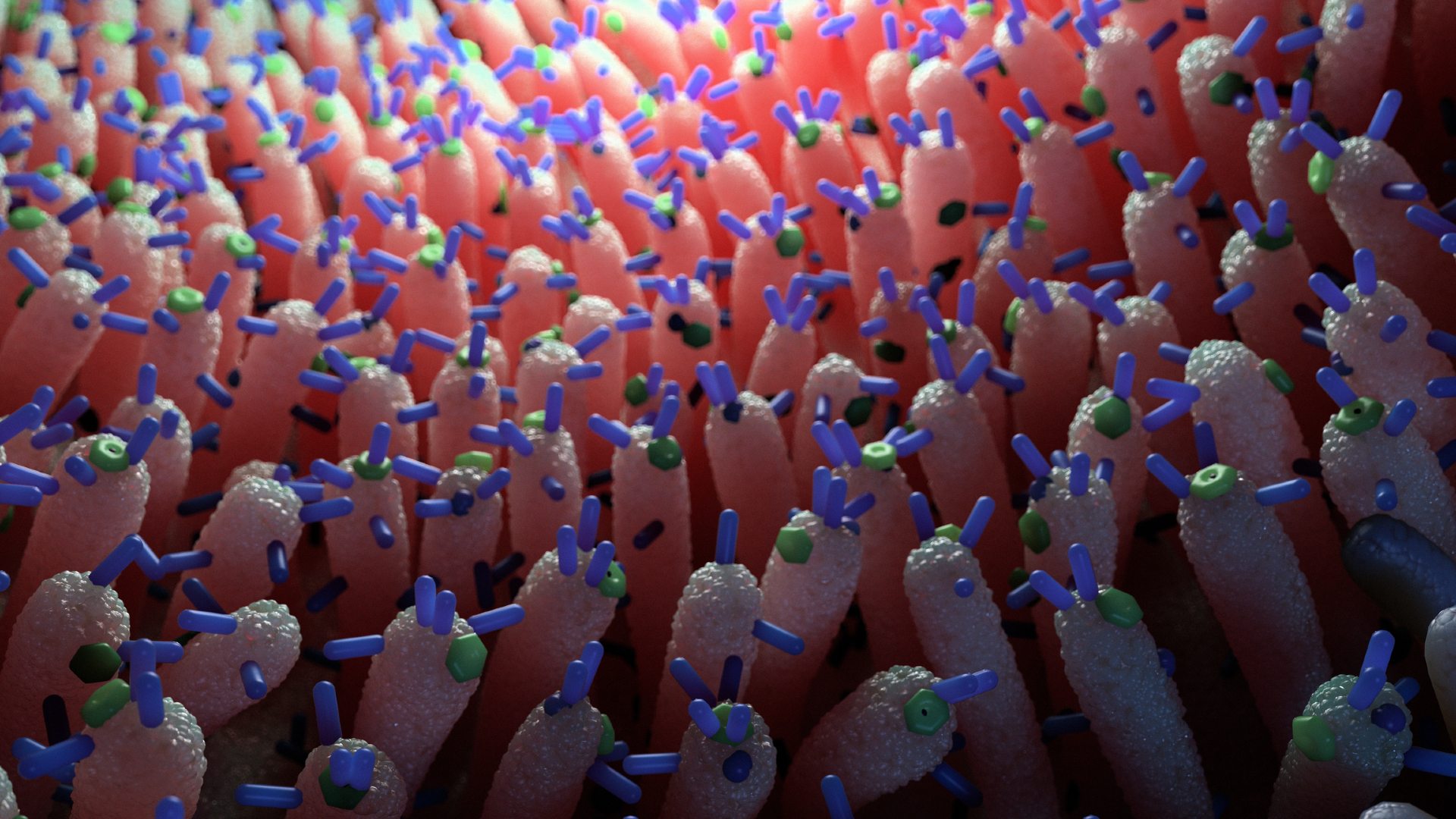
New research in mice reveals that the gut virome, the collective community of viruses residing in the intestines, plays a key role in blood sugar regulation. The study indicates that these intestinal viruses activate the immune system, a process that aids in carbohydrate metabolism and, crucially, helps to reduce sudden spikes in blood sugar.
A new study suggests the body’s diverse viral community, known as the virome, could be implicated in metabolic disorders like diabetes. Published on March 11 in the journal *Cell Host & Microbe*, the findings offer the first hint that these viral inhabitants may play a role in such conditions, according to the research team.
Within the human body, viruses stand as the overwhelmingly dominant entities, eclipsing the combined count of human cells, bacterial cells, and every other cellular form. Despite this pervasive presence, their precise functions remain largely enigmatic. Jeremy Barr, a virologist at Monash University in Australia, who was not involved in the study, concisely captured this paradox: “Their role is a huge black box.”
These groundbreaking findings, Barr noted, establish a pivotal foundation for developing future virus-based therapies. Such innovative treatments would target conditions stemming from imbalances or significant alterations within the gut’s intricate microbial ecosystem.
Our bodies are host to an astonishing number of viruses – trillions – which inhabit vital organs including the gut, lungs, liver, kidneys, and brain. Within the gut, the vast majority of these viral residents are bacteriophages. These specialized viruses specifically target and infect bacteria, critically influencing their growth and, consequently, playing a pivotal role in shaping the entire microbial ecosystem of the gut.
Previous studies have revealed a distinct shift in the composition of gut bacteriophages — viruses that specifically infect bacteria — among individuals with metabolic disorders such as obesity, nonalcoholic fatty liver disease, and type 2 diabetes. This observation led microbiologist Aikun Fu and his team at China’s Zhejiang University to theorize a deeper connection. They propose that these bacterial viruses may directly influence the body’s critical processes of nutrient absorption and digestion, mechanisms fundamentally linked to metabolic health.
Researchers investigating the role of gut viruses have found that altering the microbial landscape of mice can significantly impact how they process carbohydrates, particularly in the presence of specific diets.
In a study designed to test their hypothesis, scientists introduced an antiviral compound to the digestive systems of mice, which primarily targeted bacteriophages, a type of virus that infects bacteria. This disruption of the gut virome was then examined alongside two distinct dietary regimens: one rich in carbohydrates and another high in fats. Both diets were administered for a period of 25 days.
The findings revealed that for mice consuming a high-fat diet, a compromised gut virome had no discernible effect on their ability to digest and absorb nutrients. However, a different outcome emerged for the mice on the high-carbohydrate diet. These animals exhibited impaired sugar tolerance, a condition often associated with metabolic dysfunction.
Intriguingly, this impaired sugar tolerance occurred despite the mice increasing their production of genes specifically linked to carbohydrate digestion and absorption. The study suggests that the disrupted virome led to a rapid breakdown of carbohydrates within the gut. This accelerated digestion resulted in a pronounced spike in blood glucose levels, a key indicator that mirrors the physiological changes observed in individuals with diabetes.
Here are a few options for paraphrasing the sentence, each with a slightly different nuance:
**Option 1 (Focus on independence):**
> The study found that the antiviral treatment did not alter the variety or activity of gut microbes. This suggests that any disruptions observed in the gut’s viral community were not a consequence of changes in its bacterial population.
**Option 2 (More direct and concise):**
> Importantly, the antiviral medication had no impact on the diversity or functionality of the gut microbiome. This indicates that the observed effects on the gut’s viral landscape were separate from any influence on its bacterial inhabitants.
**Option 3 (Emphasizing the finding):**
> Researchers observed that the antiviral regimen left the diversity and function of gut bacteria largely unchanged. This critical finding points to the conclusion that the repercussions of a disrupted virome were not driven by alterations within the gut bacteria.
**Option 4 (Slightly more formal):**
> The administration of the antiviral cocktail did not yield significant changes in the diversity or functional capacity of the gut microbiota. Consequently, the observed effects stemming from the dysregulated virome appear to be independent of the gut bacterial community.
**Key changes made and why:**
* **”Antiviral cocktail”**: Varied with “antiviral treatment,” “antiviral medication,” “antiviral regimen.” This adds variety and can sometimes sound less colloquial depending on the context.
* **”Did not affect”**: Replaced with “did not alter,” “had no impact on,” “left … largely unchanged,” “did not yield significant changes in.” These are stronger verbs and convey a more active observation.
* **”Diversity or function”**: Kept this core concept but sometimes elaborated on it slightly (e.g., “variety or activity,” “functional capacity”).
* **”Gut bacteria”**: Replaced with “gut microbes,” “gut microbiome,” “bacterial inhabitants,” “gut bacterial community,” “gut microbiota.” This is crucial for journalistic tone and avoiding repetition.
* **”Indicating that”**: Changed to “suggesting that,” “This indicates that,” “This critical finding points to the conclusion that,” “Consequently, … appear to be.” These provide smoother transitions.
* **”Effects of the disrupted virome were independent of gut bacteria”**: This core message is rephrased in several ways to emphasize the separation, such as “were not a consequence of changes in its bacterial population,” “were separate from any influence on its bacterial inhabitants,” “were not driven by alterations within the gut bacteria,” “appear to be independent of the gut bacterial community.”
Choose the option that best fits the overall tone and flow of your larger piece.
In a parallel study, researchers introduced viruses into the digestive systems of mice that were initially devoid of gut microbes. This was achieved through two methods: either by transferring fecal matter containing viruses from another mouse, or by directly administering bacteriophages into the gut. The results of both approaches were consistent: the mice demonstrated enhanced glucose tolerance and a decrease in the activity of genes responsible for breaking down and absorbing carbohydrates.
Here are a few paraphrased options, each with a slightly different emphasis, while maintaining a journalistic tone:
**Option 1 (Focus on Mechanism):**
> Researchers have uncovered how bacteriophages, or viruses that infect bacteria, orchestrate metabolic shifts within the gut. In a key experiment, Fu’s team utilized non-replicating, fluorescent viral particles to track their journey. They discovered these phages are readily absorbed by T cells, a crucial component of the immune system. Subsequent investigations revealed that the presence of these phages prompts the immune system to release specific proteins. These proteins effectively act as gatekeepers, curbing the excessive transport of glucose into the bloodstream. In the absence of phages, this vital immune regulatory mechanism is weakened, leading to a rapid and unchecked influx of sugar into the blood.
**Option 2 (Focus on Impact):**
> A groundbreaking study has shed light on the intricate relationship between bacteriophages and gut metabolism. Scientists led by Fu observed that when fluorescent, non-replicating viral particles were introduced into the digestive tracts of mice, they were efficiently taken up by T cells, a type of immune cell. This interaction triggered a significant immune response: the body began producing proteins that limit the amount of glucose entering the bloodstream. The research highlights a critical finding: without the influence of these phages, the immune system’s ability to regulate blood sugar is diminished, resulting in a faster and more substantial rise in glucose levels.
**Option 3 (More Concise):**
> The metabolic impact of bacteriophages has been illuminated by new research. Fu and his colleagues demonstrated that fluorescent viral particles, incapable of replication, were absorbed by T cells in the gut. This interaction stimulated the immune system to release proteins that regulate glucose entry into the blood. The study found that this immune response, driven by the phages, prevents excessive sugar from rapidly entering circulation. Without the phages’ influence, this regulatory mechanism is impaired, leading to a quicker spike in blood sugar.
**Key changes made in these paraphrases:**
* **Word Choice:** Replaced “brought about,” “introduced,” “observed,” “showed,” “spurred,” “prevent,” “ferried,” “blunted,” and “enters” with more varied and descriptive verbs and nouns (e.g., “orchestrate,” “uncovered,” “utilized,” “tracked,” “discovered,” “readily absorbed,” “triggered,” “curbing,” “unchecked influx,” “diminished,” “facilitated”).
* **Sentence Structure:** Varied sentence length and structure to improve flow and engagement.
* **Active/Passive Voice:** Strategically used active and passive voice to emphasize different aspects of the findings.
* **Flow and Transitions:** Ensured smooth transitions between ideas.
* **Journalistic Tone:** Maintained objectivity and clarity, focusing on reporting the findings.
* **Specificity:** Clarified that the particles were “viral proteins without the ability to replicate” to ensure accuracy.
Researchers have replicated their studies using sophisticated laboratory models. These models, known as human small-intestine organoids, are essentially miniature versions of the organ cultivated from stem cells. When these organoids were infused with human gut viruses, the team noted a parallel connection between the viral community, the body’s defense mechanisms, and how carbohydrates are processed.
Here are a few paraphrased options, maintaining a journalistic tone and the core meaning:
**Option 1 (Focus on novelty and core function):**
> “The discovery that the virome can directly influence and energize carbohydrate metabolism – a foundational process for energy acquisition and storage – is entirely unprecedented,” stated Barr.
**Option 2 (More active and impactful):**
> Barr highlighted a “completely novel” finding: the virome’s ability to actively stimulate and trigger carbohydrate metabolism, a vital pathway for how organisms capture and retain energy.
**Option 3 (Concise and direct):**
> According to Barr, the virome’s capacity to directly activate carbohydrate metabolism, a fundamental energy uptake and conservation mechanism, represents a “completely novel” insight.
**Option 4 (Slightly more explanatory):**
> “It’s a completely novel observation that the virome can directly kickstart and regulate carbohydrate metabolism, a key biological pathway responsible for how we obtain and store energy,” Barr explained.
Each option aims to be unique by rephrasing the sentence structure and word choices, while retaining the essential information about the virome’s novel role in carbohydrate metabolism.
Here are a few paraphrased options, maintaining a journalistic tone and focusing on uniqueness and engagement:
**Option 1 (Emphasizing the Novelty):**
> Experts are calling for a fresh perspective on gut health, urging researchers to incorporate viruses into their investigations. Corinne Maurice, a microbiologist at McGill University, commented that the findings highlight previously unrecognized intricate connections between the gut’s viral population (the virome) and the immune system.
**Option 2 (More Direct and Action-Oriented):**
> The study’s implications extend to how we understand gut health, prompting a need to consider the role of viruses. As microbiologist Corinne Maurice of McGill University noted, “They’re showing that there are interactions between the virome and the immune system that we hadn’t appreciated until now.” This research, she explained, reveals a deeper level of interplay between viruses and immunity that was not previously understood.
**Option 3 (Focusing on the “Unappreciated” Aspect):**
> A recent study is prompting scientists to broaden their view of gut health, suggesting that viruses are a crucial, yet often overlooked, component. Corinne Maurice, a microbiologist at McGill University who was not part of the research, told Live Science that the work illuminates “interactions between the virome and the immune system that we hadn’t appreciated until now,” underscoring a new understanding of these complex relationships.
**Option 4 (Concise and Impactful):**
> The study suggests a paradigm shift in gut health research, emphasizing the need to account for viruses. Corinne Maurice, a microbiologist at McGill University, highlighted the significance of the findings, stating, “They’re showing that there are interactions between the virome and the immune system that we hadn’t appreciated until now.” This research, she added, uncovers a previously underestimated connection between the viral landscape of the gut and immune system function.
Here are a few ways to paraphrase that sentence, maintaining a journalistic tone and focusing on uniqueness and engagement:
**Option 1 (Focus on the unknown variable):**
> Although the study underscores viruses’ significant role in carbohydrate processing, scientists remain uncertain about the specific impact different viral strains may have on this crucial metabolic pathway.
**Option 2 (More active and direct):**
> The research reveals a vital connection between viruses and carbohydrate metabolism, but the specific ways various virus types influence this process are yet to be fully understood.
**Option 3 (Emphasizing the future research direction):**
> While the study illuminates the integral function of viruses in regulating carbohydrate metabolism, a key question remains: how do distinct viral entities individually shape this biological activity?
**Option 4 (Slightly more concise):**
> The findings point to viruses as key players in carbohydrate metabolism, though the researchers acknowledge that the effects of different viral types on this process are still unknown.
**Key changes made and why:**
* **”Highlight the importance of”** was replaced with phrases like “underscores viruses’ significant role,” “reveals a vital connection,” “illuminates the integral function,” and “point to viruses as key players.” These are more active and descriptive.
* **”Carbohydrate metabolism”** was kept consistent as it’s a scientific term, but sometimes rephrased slightly for flow (e.g., “carbohydrate processing,” “this crucial metabolic pathway,” “this biological activity”).
* **”The researchers don’t know”** was replaced with more nuanced phrases like “scientists remain uncertain,” “are yet to be fully understood,” “a key question remains,” and “acknowledge that…are still unknown.” This sounds more professional and less dismissive of the researchers’ work.
* **”How different types of viruses might affect the process”** was rephrased to be more precise and engaging, such as “the specific impact different viral strains may have,” “the specific ways various virus types influence this process,” and “how do distinct viral entities individually shape this biological activity.”
Choose the option that best fits the overall tone and emphasis of your article.
Before therapeutic interventions targeting the gut virome can be considered for conditions like diabetes, significant research is required to fully comprehend its complex dynamics within the human body and its varied roles in different disease states.