NASA is setting its sights on an ambitious future for lunar exploration, announcing groundbreaking plans that include accelerating moon landing missions and developing a nuclear-powered spacecraft, with a target launch date of 2028. The agency has described these objectives as “near-impossible,” underscoring the immense technological and logistical challenges involved.
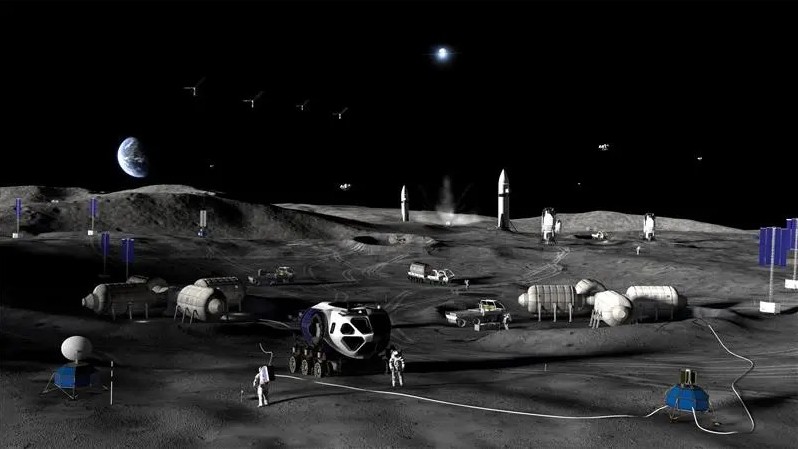
NASA is significantly reorienting its Artemis program, a move that will temporarily halt development of the Lunar Gateway, the agency’s initial planned orbital outpost around the Moon. Resources and components initially earmarked for the Gateway will now be redirected to construct a new, ambitious $20 billion lunar surface base.
NASA is embarking on an ambitious mission to revisit the lunar surface, aiming to establish a permanent human presence on the Moon and solidify American dominance in space exploration before the current presidential term concludes, according to NASA Administrator Jared Isaacman. This endeavor signifies a renewed commitment to what is described as a near-impossible feat, encompassing the construction of a lunar base and the foundational steps for sustained human activity beyond Earth.
During a day-long press event titled “Ignition” on Tuesday, March 24th, businessman Jared Isaacman unveiled his ambitious vision for a lunar base. Concurrently, he announced the development of “Space Reactor‑1 Freedom,” a groundbreaking nuclear-powered spacecraft intended for interplanetary travel. NASA anticipates this vessel will embark on a mission to Mars as early as 2028.
NASA has set an ambitious schedule for 2028, planning to execute two crewed missions to the Moon and deploy an unprecedented spacecraft within that single year.
**NASA’s Ambitious Lunar Timeline Faces Scrutiny Amidst Program Delays**
The space agency’s aggressive schedule for returning humans to the Moon is drawing renewed attention, particularly given the persistent delays that have plagued its Artemis program. Originally, NASA envisioned Artemis III, the mission aimed at landing astronauts on the lunar surface, taking place in 2024. However, with the current year now being 2026, even the preliminary Artemis II mission, designed to be the agency’s first crewed orbital flight around the Moon, has yet to launch. Despite these setbacks, there’s a possibility that Artemis II could finally depart as early as next Wednesday, April 1st.
In his opening address, Isaacman launched a pointed critique, lamenting the “wasted billions and years lost” that have beleaguered the Artemis program. He specifically cited the chronic delays and escalating costs that have become hallmarks of the lunar exploration effort. Isaacman also reiterated NASA’s ambitious objective: to land humans on the moon before the conclusion of then-President Donald Trump’s term. Furthermore, he emphasized a significant external challenge, warning of intense competition from a “real geopolitical rival challenging American leadership in the high ground of space.”
The United States’ long-standing leadership in space exploration faces an accelerating challenge from China, which has boldly declared its aim to land astronauts on the Moon before 2030. As Beijing pushes to surpass its rivals, Washington is determined not to cede its pioneering position. The competition is particularly keen over the lunar south pole, a strategic area both nations are actively targeting for their respective crewed missions.
Isaacman underscored the critical, condensed timeframe, asserting that the ultimate measure of success or failure would unfold within months, not years. He further acknowledged a stark reality: while others might have seized an early advantage, recent trends indicated his own team could already be behind the curve.
NASA is poised to significantly escalate its lunar endeavors, a strategy outlined by Isaacman. The agency intends to achieve this by streamlining rocket architecture, strategically deploying its specialized expertise across the private sector, and establishing a more frequent launch cadence for missions critical to sustaining operations on the Moon.
The “Ignition event” takes place just one month after NASA unveiled a significant strategic recalibration for its ambitious Artemis program, which aims to return humanity to the Moon.
This comprehensive restructuring includes a revised mandate for Artemis III, now slated for 2027. Instead of a direct lunar landing, its primary objective will be to conduct a crucial in-orbit test: the rendezvous and docking of the Orion crew capsule with a lunar lander in Earth orbit.
Following this foundational test, the program will pivot to human lunar surface operations. Artemis IV and Artemis V are now projected for 2028, with both missions targeting crewed landings on the Moon. Notably, Artemis V is designated as the second crewed lunar touchdown and carries the critical responsibility of initiating the groundwork for NASA’s envisioned permanent lunar base.
NASA’s long-held ambition to establish a permanent human presence on the Moon via its Artemis missions has received fresh clarity. New details, unveiled at the recent Ignition event, outline a strategic, three-phase approach for constructing this enduring lunar outpost.
The initial phase is dedicated to extensive experimentation, focusing on foundational design and validating operational functionality for future habitats. Phase two will then transition to the deployment of preliminary, semi-habitable infrastructure, laying the groundwork for sustained occupation. This methodical progression is set to culminate in the final stage with the establishment of a fully operational and permanent lunar base.
Following the recent Ignition event, NASA has outlined its ambitious post-Artemis V strategy, aiming for a cadence of **frequent and cost-effective crewed missions to the Moon, occurring every six months.** This accelerated schedule will be powered by a greater reliance on **commercially procured and reusable space hardware**, signaling a significant shift in the agency’s approach to lunar exploration.
Here are a few options for paraphrasing the provided text, each with a slightly different emphasis, while maintaining a professional, journalistic tone:
**Option 1 (Focus on the impact of lunar activities):**
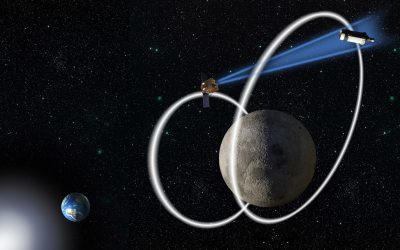
> NASA’s ambitious Gateway space station, envisioned as a crucial hub for lunar exploration and a future home for international crews orbiting the Moon, faces an indefinite delay. Once slated for a 2027 launch and hailed as “central to the NASA-led Artemis missions,” the project’s future is now uncertain. This decision comes as NASA prioritizes accelerating activities on the lunar surface, impacting the long-planned orbiting outpost. Despite significant progress and collaboration with international partners like Europe, Canada, Japan, and the UAE, the Gateway’s deployment has been placed on hold.
**Option 2 (Focus on the uncertainty and international collaboration):**
> The future of NASA’s Gateway, a planned space station designed to orbit the Moon and support rotating international astronaut crews, is now in doubt. While significant advancements have been made in its construction, with vital contributions from European, Canadian, Japanese, and UAE space agencies, the project’s launch, previously scheduled for 2027, is on indefinite hold. This comes as NASA shifts focus towards increasing lunar surface operations, a move that appears to be impacting the timeline for the orbiting outpost, which was once deemed “central to the NASA-led Artemis missions.”
**Option 3 (More concise and direct):**
> A key component of NASA’s lunar ambitions, the Gateway space station, is now on indefinite hold. The orbiting outpost, intended to host international astronauts and play a pivotal role in the Artemis missions, was scheduled for a 2027 launch. However, the project’s future is uncertain as NASA reevaluates its priorities, potentially in favor of stepped-up lunar surface activities. Despite considerable development and collaboration with international partners, the Gateway’s deployment has been sidelined for the foreseeable future.
**Key changes and why they make the text unique and engaging:**
* **Varied Sentence Structure:** The original text has a somewhat repetitive sentence structure. The paraphrased versions introduce more variety, using introductory clauses, different conjunctions, and a mix of sentence lengths.
* **Stronger Verbs and More Vivid Language:** Words like “ambitious,” “crucial hub,” “indefinite delay,” “uncertain,” “accelerating,” “outpost,” and “sidelined” create a more impactful and engaging narrative.
* **Reordering Information:** The information is rearranged to create different narrative flows, focusing on either the impact of lunar activities or the uncertainty surrounding the Gateway.
* **Synonym Substitution:** Common words and phrases are replaced with synonyms that maintain the original meaning but offer a fresh perspective (e.g., “ramping up lunar surface activities” becomes “accelerating activities on the lunar surface” or “stepped-up lunar surface operations”).
* **Journalistic Tone:** The language is direct, objective, and informative, avoiding overly technical jargon while conveying the essence of the situation.
* **Emphasis on “Foreseeable Future”:** This phrase is retained as it effectively communicates the long-term nature of the delay without providing a concrete timeline.
**Lunar Missions Pave Way for Ambitious Mars Exploration, NASA Reveals**
NASA’s strategic vision for venturing beyond Earth’s orbit is increasingly centered on the Moon, not merely as a destination, but as a critical launchpad for future deep-space endeavors, including ambitious missions to Mars. In line with this forward-thinking approach, the agency has unveiled plans for a groundbreaking nuclear-powered spacecraft, dubbed “Space Reactor-1 Freedom.”
This innovative vessel is anticipated to play a pivotal role in accelerating NASA’s Mars operations. According to initial reports, Space Reactor-1 Freedom is slated to deploy “Skyfall” payloads, which will consist of a fleet of miniature helicopters designed for comprehensive exploration of the Martian surface.
While the announcement signifies a significant step in NASA’s long-term goals, the specific details regarding the current development status of the nuclear spacecraft and the Martian helicopter fleet remain undisclosed. The agency has not yet provided clarity on the extent of progress made on these advanced technological components.