
This week’s scientific reports delved deep into the mysteries of the human body, uncovering a host of intriguing revelations. Topping the headlines was a significant finding that casts a long shadow over humanity’s interstellar ambitions: zero gravity, it appears, presents insurmountable obstacles to human reproduction in space.
Humanity’s ambitions for deep-space colonization may face a significant biological hurdle, new research suggests. A recent study reveals that critical reproductive functions—specifically sperm navigation, the act of fertilization, and subsequent embryo development—were severely impaired when subjected to simulated microgravity. This alarming discovery raises profound questions about the feasibility of establishing self-sustaining human populations beyond Earth, posing a serious problem for the long-term future of space exploration and settlement.
Never underestimate humanity’s remarkable capacity for adaptation. As evolutionary anthropologist Herman Pontzer conveyed in an interview with Live Science, our species boasts an unparalleled ability to readily adjust to novel circumstances – a defining evolutionary strong suit.
A striking example of this ingenuity can be found in human fingernails. Though their development predates touch screen technology by tens of millions of years, this significant temporal gap didn’t prevent a resourceful chemistry student from developing a clear polish designed to transform them into functional styluses.
This week’s biological discoveries offered a captivating look into the intricacies of human physiology, from the gut to the brain. New research suggests a potential, and somewhat surprising, role for viruses within the gut microbiome in regulating blood sugar, hinting at their contribution to preventing dangerous spikes. Concurrently, separate findings provided deeper insight into synesthesia, revealing that individuals experiencing this cross-sensory phenomenon exhibit genuine physical reactions in their eyes to perceived colors, as if these internally generated hues were external, tangible stimuli.
Earlier this week, NASA unveiled a dramatically reconfigured strategy for its return to the Moon, prioritizing a sustained human presence on the lunar surface.
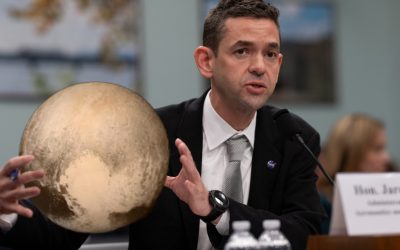
Administrator Jared Isaacman confirmed the cancellation of a previously planned space station in lunar orbit, announcing that its components would instead be repurposed for an ambitious $20 billion permanent base directly on the Moon. Concurrently, the agency is also committing resources to dispatching a nuclear-powered spacecraft on a groundbreaking mission to Mars.
In an ambitious move to secure a strategic advantage in the escalating new space race, recently unveiled lunar-base plans aim to establish a fully operational nuclear power station on the moon’s surface by 2036. This groundbreaking initiative, which will rely on a sophisticated fleet of drones and robotic landers for construction, is widely seen as partially driven by a desire to maintain a competitive edge over China’s burgeoning space program.
Next week will be a pivotal moment for the space agency’s Artemis II lunar mission, as its colossal rocket makes a decisive push for liftoff before the critical April 30 deadline. The outcome of this final launch attempt is expected to reveal whether the ambitious lunar program is a stroke of strategic brilliance or a perilous overreach.
Stay abreast of crucial developments and breaking stories from the ever-expanding realm of space.
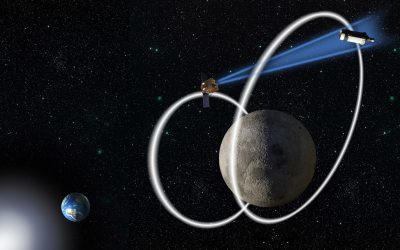
**Chinese Lander Uncovers Major Radiation ‘Cavity’ Between Earth and Moon, Poised to Transform Lunar Mission Safety**
A recent discovery by a Chinese lunar lander has revealed a significant “cavity” — a region of dramatically reduced radiation — located in the space between Earth and the Moon. This groundbreaking finding is expected to have profound implications, potentially altering strategies and enhancing safety protocols for all future lunar exploration missions.
Deep within the Martian mantle, a peculiar geological anomaly is now suspected of wielding dual planetary influence. Experts suggest this subsurface irregularity could not only be a potent trigger for future volcanic eruptions across the Red Planet but may also be subtly altering Mars’ rotational velocity, causing the entire world to spin at an incrementally faster pace.
Here are a few options, maintaining a clear, journalistic tone:
**Option 1 (Focus on Impact):**
“A celestial visitor, described as cannonball-sized, recently plunged through the roof of a Texas home, marking a dramatic localized event amidst a surge of ‘fireball’ sightings reported across the United States.”
**Option 2 (Emphasizing the Broader Context):**
“As multiple luminous ‘fireballs’ streak across American skies, one substantial space rock, roughly the size of a cannonball, made a more personal impact, crashing directly through the roof of a Texas residence.”
**Option 3 (Concise and Direct):**
“A meteorite, said to be the size of a cannonball, unexpectedly pierced the roof of a Texas house. This incident occurred as numerous ‘fireballs’ have been witnessed descending over various regions of the U.S.”
**Cannabis Consumption Triggers Intense Hunger, New Investigation Reveals**
For many who use cannabis, the post-consumption craving for food, often dubbed “the munchies,” is a well-known phenomenon. A recent exploration by Live Science’s Kenna Hughes-Castleberry delves into the underlying scientific reasons behind this powerful effect.
Here are a few paraphrased options, depending on the desired tone and emphasis:
**Option 1 (Direct & Benefit-Oriented):**
> Found this article insightful? Don’t miss out on more fascinating discoveries by subscribing to our Life’s Little Mysteries newsletter.
**Option 2 (Intriguing & Engaging):**
> Curious for more answers to life’s intriguing questions? Sign up for our Life’s Little Mysteries newsletter to keep the revelations coming.
**Option 3 (Concise & Action-Oriented):**
> Enjoyed exploring these mysteries? Subscribe to the Life’s Little Mysteries newsletter for ongoing insights.
**Option 4 (Slightly More Formal/Journalistic):**
> Readers who found this exploration compelling are invited to subscribe to the Life’s Little Mysteries newsletter for continued coverage of intriguing topics.
**Key changes made:**
* **”If you enjoyed this”** was replaced with phrases like “Found this article insightful,” “Curious for more answers,” “Enjoyed exploring these mysteries,” or “Readers who found this exploration compelling.”
* **”sign up for”** was varied with “subscribing to,” “sign up for,” or “are invited to subscribe to.”
* **”our Life’s Little Mysteries newsletter”** was kept as the core element but framed within a sentence that highlights its purpose or benefit.
* The overall tone is more active and encourages continued engagement.
**War’s Environmental Toll: Devastation Unleashes Alarming Carbon Emissions**
As the conflict in Iran grinds into its fifth week with no end in sight, a disturbing environmental reality has come to light. In just the first two weeks of hostilities, the war has already spewed a staggering amount of carbon dioxide into the atmosphere. The primary culprit behind these alarming emissions? The widespread destruction of buildings, a grim precursor to the immense task of demolition and reconstruction that lies ahead.
The ongoing conflict has accelerated the depletion of the world’s carbon budget at a rate surpassing the combined emissions of 84 nations, which represent the lowest carbon emitters globally. Experts anticipate that the long-term consequences of the war will exert a more significant impact on the climate than the direct hostilities. This is largely due to nations scrambling to mitigate the disruptions to fuel and fertilizer supplies, exacerbated by Iran’s actions in the Strait of Hormuz.
Explore the latest developments and compelling stories from our planet.
Here are a few options for paraphrasing the headline, each with a slightly different emphasis:
**Option 1 (Focus on urgency and the unique nature of the tree):**
> Australia’s unique “zombie tree” is facing an urgent battle for survival as a virulent fungal disease rapidly advances.
**Option 2 (More direct and action-oriented):**
> A swift-moving fungal blight is threatening Australia’s “zombie tree,” prompting a desperate scientific effort to protect the species.
**Option 3 (Emphasizing the “zombie” aspect for intrigue):**
> Scientists are in a race against time to rescue Australia’s enigmatic “zombie tree” from a devastating and rapidly spreading fungal infection.
**Option 4 (Concise and impactful):**
> A fast-spreading fungal disease has scientists scrambling to save Australia’s critically endangered “zombie tree.”
These options aim to:
* **Be Unique:** Avoid direct repetition of the original phrasing.
* **Be Engaging:** Use stronger verbs and more evocative language (e.g., “virulent,” “blight,” “enigmatic,” “scrambling”).
* **Maintain Core Meaning:** The key elements – scientists, Australia, “zombie tree,” fungal disease, fast-spreading, race to save – are all present.
* **Use a Journalistic Tone:** Clear, factual, and attention-grabbing without being overly sensational.
New research indicates a potential link between worsening climate change, specifically drought conditions, and an increase in antibiotic-resistant superbugs.
Here are a few options, maintaining the core meaning with a journalistic tone:
**Option 1 (Concise Headline):**
**Antarctica Faces Warming 1.4 Times Faster Than Southern Hemisphere, New Study Projects**
**Option 2 (Slightly More Detail):**
**A recent study reveals Antarctica is poised to warm 1.4 times quicker than the rest of the Southern Hemisphere in the decades ahead.**
**Option 3 (Emphasizing the Discovery):**
**Groundbreaking Research: Antarctica Could See Warming 1.4 Times Faster Than Southern Hemisphere in Coming Decades**
A recent study conducted on mice offers compelling new insights into the mechanisms of brain aging, suggesting a critical breakdown in the regulation of gene expression as a primary driver. Researchers propose that the progressive loss of control over how genes are turned on and off within brain cells is a key factor in the brain’s age-related decline.
A recent study has confirmed a fascinating detail within an ancient Roman mosaic: the vivid depiction of a bare-chested woman engaged in a fierce battle with a leopard inside an arena.
## Ancient Toltec Sacrificial Altar, Human Remains Unearthed in Mexico
**ARCHAEOLOGISTS IN MEXICO** have announced a significant and chilling discovery: a 1,000-year-old altar unequivocally linked to the powerful Toltec Empire, complete with compelling evidence of human sacrifices.
The ancient structure, uncovered at a site in Mexico, offers a stark new glimpse into the ritualistic practices of this influential pre-Hispanic civilization. The find confirms historical accounts and previous archaeological theories regarding the Toltecs’ use of human offerings as part of their elaborate religious ceremonies and worship.
**Groundbreaking AI Breakthrough Creates Self-Healing, Modular Robots**
In a significant leap forward for robotics, artificial intelligence has reportedly compressed billions of years of evolutionary development into mere seconds, birthing a new generation of remarkably resilient machines. Dubbed ‘Lego-like robots’ for their modular design, these creations possess an extraordinary capacity for self-recovery and adaptation.
The AI-driven process rapidly simulated natural selection, allowing for the expedited design of robots capable of maintaining functionality and continuing their tasks even after sustaining significant damage, such as the loss of critical limbs. This rapid-fire evolution has paved the way for highly robust and adaptable autonomous systems, capable of reconfiguring themselves on the fly to overcome physical impairment.
**Twisting Chemistry’s Rules: Scientists Unveil ‘Half-Möbius’ Molecule with Unprecedented Properties**
In a groundbreaking development, researchers have announced the discovery of an extraordinary molecule, dubbed the “Half-Möbius,” which exhibits properties previously unseen by chemists. This peculiar new substance is challenging existing understanding of matter, opening up novel avenues in molecular science with its rare and unique characteristics.
Here are a few paraphrased options, each with a slightly different emphasis:
**Option 1 (Focus on Ubiquity and Potential):**
> Genetic material, constantly circulating in our soil, water, and air, acts as an invisible signature for entire ecosystems. By tracking this pervasive biological residue, scientists could unlock the ability to identify species, reconstruct intricate food webs, and map biodiversity without ever needing to physically observe a single living organism.
**Option 2 (More Direct and Action-Oriented):**
> Invisible genetic traces are dispersed throughout our environment – found in the very soil, water, and air we interact with. Scientists are exploring how to follow these biological fingerprints, a technique that promises to revolutionize species detection, food web mapping, and biodiversity assessment, all without the need for direct organismal observation.
**Option 3 (Emphasizing the “Fingerprint” Metaphor):**
> From the ground beneath our feet to the air we breathe, genetic material is a ubiquitous environmental marker, leaving behind a trail of invisible fingerprints that chronicle entire ecosystems. This discovery holds the potential for scientists to discern species, chart the flow of energy through food webs, and comprehensively measure biodiversity, all by analyzing environmental DNA rather than tracking individual creatures.
**Option 4 (Concise and Punchy):**
> Genetic material is a pervasive environmental presence, leaving behind invisible clues in soil, water, and air that map out entire ecosystems. This allows scientists a novel approach to species identification, food web analysis, and biodiversity charting, bypassing the need to track individual organisms.
Each option aims to:
* **Be Unique:** Uses different vocabulary and sentence structures.
* **Be Engaging:** Employs stronger verbs and more evocative language (e.g., “circulating,” “unlock the ability,” “revolutionize,” “chronicle”).
* **Be Original:** Avoids simply rearranging the original words.
* **Maintain Core Meaning:** Accurately reflects the presence of genetic material, its environmental distribution, and its scientific applications for ecosystem analysis without direct observation.
* **Use a Journalistic Tone:** Remains objective, informative, and clear.
Here are a few paraphrased options, maintaining a journalistic tone and focusing on the core meaning:
**Option 1 (Focus on the Challenge and Solution):**
> The sheer volume of environmental DNA, or eDNA, makes its analysis a monumental challenge. However, this in-depth report from Live Science explores the cutting-edge scientific advancements poised to revolutionize the way we monitor Earth’s living systems in real-time.
**Option 2 (More Active and Forward-Looking):**
> Decoding the complex mixture of ambient DNA presents a formidable scientific hurdle. In this comprehensive feature, Live Science delves into the groundbreaking discoveries that are on the cusp of enabling immediate, continuous surveillance of our planet’s biosphere.
**Option 3 (Emphasizing the “Soup” Metaphor and Impact):**
> Navigating the vast, intricate “soup” of ambient DNA is an undertaking of immense scale. This extensive investigation by Live Science highlights the revolutionary scientific breakthroughs that promise to usher in an era of real-time biodiversity monitoring across the globe.
**Option 4 (Concise and Direct):**
> Identifying the components within the pervasive eDNA environment is an overwhelming endeavor. Live Science’s latest long-read article examines the scientific innovations that could soon provide real-time insights into Earth’s biosphere.
Each option aims to be unique by rephrasing sentence structure, word choice, and emphasis, while staying true to the original message about the difficulty of eDNA analysis and the promise of new technologies for real-time biosphere monitoring.
This weekend, discover a selection of thought-provoking analyses, engaging crosswords, and insightful opinion pieces curated from the week’s top publications.
Here are a few options for paraphrasing that headline, keeping a journalistic tone and aiming for originality:
**Option 1 (Focus on uncertainty and present state):**
> **The Metaverse: A Virtual Dream Fading? Unpacking the Reality of Digital Worlds**
**Option 2 (More direct and questioning):**
> **Is the Metaverse DOA? Examining the Troubled Future of Immersive Virtual Realities**
**Option 3 (Emphasizing the ongoing debate):**
> **Buried or Just Sleeping? The Evolving Story of the Metaverse and its Virtual Aspirations**
**Option 4 (Highlighting the “analysis” aspect):**
> **Beyond the Hype: An In-Depth Look at the Metaverse’s Uncertain Fate in Virtual Living**
**Option 5 (Slightly more evocative):**
> **The Ghosts of the Metaverse: Are Virtual Worlds Becoming a Relic of the Past?**
Here are a few options for paraphrasing the crossword clue, maintaining a journalistic tone and focusing on uniqueness:
**Option 1 (Direct and Informative):**
> Live Science’s latest puzzle, challenge #36, asks solvers to identify America’s national bird in its 11 Across clue.
**Option 2 (Slightly more descriptive):**
> For those tackling Live Science’s crossword puzzle #36, a prominent clue at 11 Across seeks the identity of the United States’ distinguished national bird.
**Option 3 (Emphasizing the puzzle aspect):**
> A key question in Live Science’s crossword puzzle #36, positioned at 11 Across, prompts solvers to name the official avian symbol of America.
**Option 4 (More concise):**
> Live Science’s crossword #36 features a clue at 11 Across: America’s national bird.
Choose the option that best fits the overall style and flow of your content.
The inherent fragility of the global fossil fuel economy is being starkly exposed, with analysts suggesting that escalating geopolitical tensions involving Iran could precipitate its unraveling. This precarious situation, it is argued, underscores more clearly than ever the urgent imperative for a decisive transition to clean energy. [Opinion]
**From high above, NASA’s Terra satellite captured a striking image this past February, revealing a brilliant plume of swirling marine mud churning just off the Florida coastline. This dramatic underwater event was a direct consequence of an Arctic blast that delivered severe winter weather across large swaths of the U.S. earlier in the year.**
At Florida’s historic Kennedy Space Center, the colossal 322-foot (98-meter) Space Launch System rocket, topped with its Orion crew capsule for NASA’s Artemis II mission, now stands prominently on Launch Pad 39B. This massive stack is poised to embark a four-astronaut crew on an ambitious 10-day journey, circumnavigating the Moon before its return. The groundbreaking lunar mission is currently targeted for launch as early as April 1.
In a groundbreaking observation, scientists have captured the first-ever footage of a sperm whale giving birth, an event made even more remarkable by the apparent assistance of ten other females from her social unit. This unprecedented documentation marks the first time such a collaborative birthing process has been witnessed in any non-primate species.
Captured by airborne drones in July 2023, a captivating hour-long birth offered an unprecedented glimpse into the profound communal care within the pod. As the newborn arrived, a formidable circle of female companions immediately encircled the mother and calf. These attentive females took turns gently raising the tiny infant to the water’s surface, a crucial collaborative effort that afforded the calf the necessary time for its flukes to fully unfurl and for it to acquire essential natural buoyancy control.
At the core of sperm whale society lies a remarkable matriarchy, where generations of females – mothers, daughters, grandmothers, and even unrelated individuals – forge enduring, lifelong bonds. These complex, cooperative units form the backbone of their social world. In stark contrast, male sperm whales lead predominantly solitary lives, venturing alone across vast oceanic expanses. This profound divergence in social structure results in one of the most extreme geographical separations between the sexes observed anywhere in the natural world.
Stay up-to-date with the forefront of scientific advancement by subscribing to Live Science’s WhatsApp Channel, your direct line to breaking discoveries as they unfold. This platform offers unparalleled access to our in-depth reporting, perfect for staying informed while on the move. For those who prefer alternative channels, our expert insights are also readily available across a range of social media networks, including Facebook, X (formerly Twitter), Flipboard, Instagram, TikTok, Bluesky, and LinkedIn.