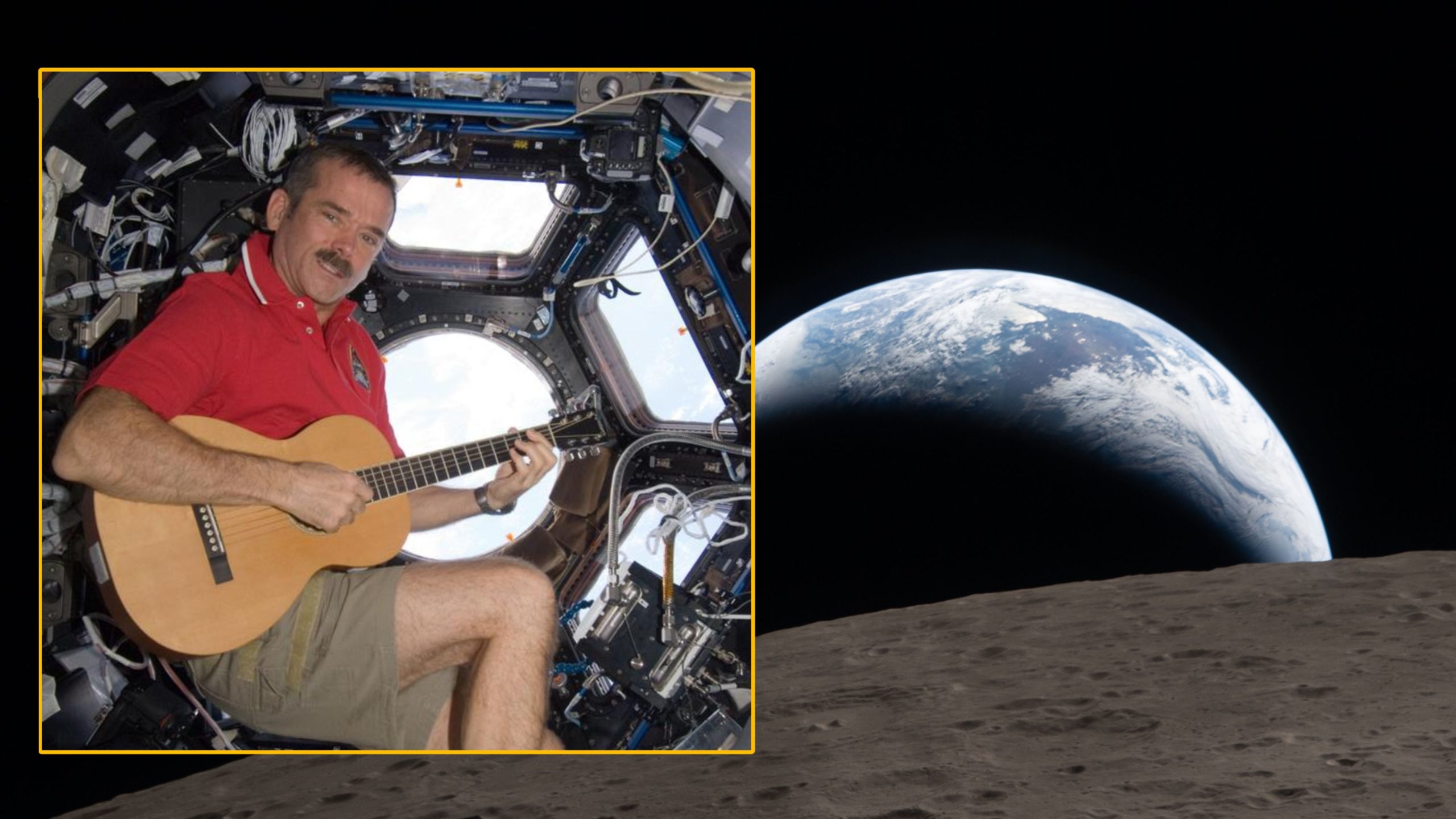
Following the successful conclusion of the Artemis II mission, NASA is accelerating its efforts to establish a long-term human presence on the Moon. Among those advocating for a key piece of equipment for future lunar residents is retired Canadian Space Agency astronaut Chris Hadfield, who believes a guitar should be among the essentials for the pioneering settlers.
As humanity sets its sights on establishing a lunar presence within the next decade, the need for cultural touchstones, like musical instruments, will become paramount. This sentiment was shared by astronaut Chris Hadfield, who noted the presence of a guitar aboard the International Space Station. “Music is intrinsically important,” Hadfield stated in a recent interview with Live Science. He further emphasized that even NASA, an organization renowned for its rigorous scientific and engineering pursuits, acknowledges the significant role music plays in maintaining mental well-being.
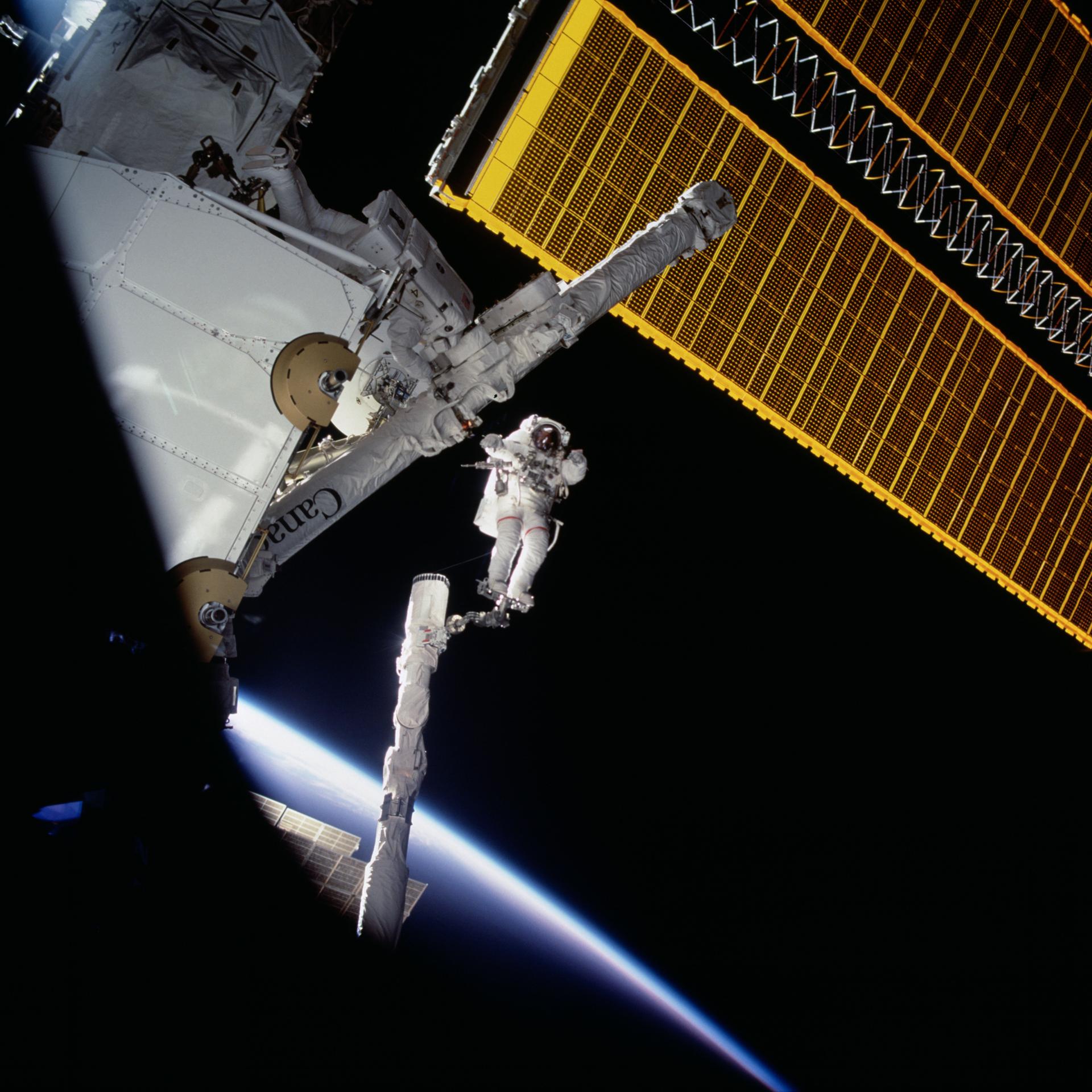
During his three space expeditions from 1995 to 2013, Canadian astronaut Chris Hadfield achieved several notable firsts. He pioneered Canadian spacewalks, became the first Canadian to lead the International Space Station, and uniquely, was the first astronaut to create music while in orbit. His historic performance, a rendition of David Bowie’s “Space Oddity” played on a compact acoustic guitar provided to the station in 2001, was captured in microgravity and has since garnered tens of millions of views online.
Astronaut Chris Hadfield views engaging with people on Earth as a central purpose of his role, not merely an added benefit. Demonstrating this commitment, Hadfield performed on guitar and sang at a star-studded fundraising concert held in his home province of Ontario, Canada, on Thursday, April 23rd. The event was organized to benefit the SickKids children’s hospital in Toronto.
Before his performance, Live Science had the opportunity to speak with Chris Hadfield. The conversation covered his thoughts on the recent Artemis II mission, the crucial role of astronauts as beacons of inspiration during challenging periods, and his iconic orbiting guitar, which he humorously claims has undertaken more global journeys than rock legend Keith Richards.
Chris Hadfield: Well, Brandon, it’s been a truly remarkable period for space exploration. For me, witnessing the Artemis II crew launch and begin their journey around the Moon was incredibly profound. Seeing those astronauts, carrying the hopes of humanity, embark on such a historic voyage brought back so many vivid memories and emotions from my own time in orbit. It’s a powerful reminder of what we can achieve when we push the boundaries of human endeavor.
During a recent mission, Canadian astronaut Jeremy Hansen delivered a profoundly moving announcement to mission commander Reid Wiseman and a global audience. Hansen revealed that a newly discovered crater on the Moon would be named in honor of Wiseman’s late wife. This poignant gesture, shared live amidst the complex technical operations of space exploration, showcased a rare and beautiful moment of personal sentiment and heartfelt remembrance on a grand stage.
For those curious about the profound experience of space travel, look no further than the Artemis II crew’s firsthand accounts of their mission. While numerous aspects of the endeavor hold significant personal and scientific interest, their sharing of this unique journey offers the most authentic glimpse into what it truly means to be an astronaut.
For the first time, humanity has achieved an unprecedented level of high-speed data transmission to the Moon. Unlike previous lunar missions where footage was primarily for NASA and selectively distributed through traditional media, this groundbreaking event broadcast directly to a global audience in real-time. This meant anyone, anywhere, with an internet connection could experience the mission live, continuously, without delay.
The Artemis II mission achieved a significant milestone by illuminating the immense bravery and dedication required for space exploration. The crew’s exceptional efforts allowed the public to witness firsthand the profound commitment involved in undertaking extraordinary risks. This included piloting an entirely novel rocket and spacecraft, and placing their lives in the hands of an untested heat shield. Despite these immense challenges, the astronauts maintained an inspiring demeanor, demonstrating joy, respect, and competence throughout their journey, a testament to their professionalism and ability to connect with the public. This powerful combination of transparency and exemplary human spirit truly defined the impact of Artemis II.
Here are a few options for paraphrasing your request, each with a slightly different emphasis:
**Option 1 (Focus on the challenge and solution):**
> You’ve been lauded as the “most social media savvy astronaut to ever leave Earth.” As we set our sights on increasingly distant voyages, what strategies should future space explorers employ to maintain that vital level of connection with people back home?
**Option 2 (More direct and action-oriented):**
> Given your reputation as the “most social media savvy astronaut to ever leave Earth,” what advice do you have for maintaining astronaut connectivity as human missions extend further into space?
**Option 3 (Emphasizing the “savvy” aspect):**
> Being called the “most social media savvy astronaut to ever leave Earth” is a remarkable distinction. How can we ensure astronauts on deep-space missions can replicate that same level of online engagement and connection?
**Option 4 (Slightly more formal journalistic tone):**
> Your designation as the “most social media savvy astronaut to ever leave Earth” raises an important question: As humanity prepares for missions that will take us farther from our home planet than ever before, what methods should astronauts utilize to sustain a robust connection through social media?
Choose the option that best fits the overall tone and context of your interview or article.
For CH, the decision to play music tonight stems from a liberating absence of singular duty. He underscored the collaborative spirit, noting the stage was populated by a multitude of fellow musicians, sharing the spotlight and the performance.
In a world frequently mired in unrest, uncertainty, and the stark reality of conflict—the ultimate human failure—the pursuit of space exploration offers a critical antidote. While not universally captivating, its value as a powerful, undeniable public exemplar of human achievement becomes profoundly clear.
These ventures demonstrate the peak of positive, beneficial, and inspiring collective effort, showcasing humanity’s capacity to cooperate and excel at the very edge of what is possible. Such beacons of shared progress are not merely welcome; they are essential. Society, in its broadest sense, requires aspirational pursuits—something tangible, and indeed celestial, to collectively look up to.
Popular memory, it is argued, often overlooks the tumultuous context that defined the Apollo program. The period surrounding the landmark Apollo 8 mission, for instance, bore a striking and often forgotten resemblance to times of significant national discord.
During that era, the United States was deeply mired in the Vietnam War, grappling with widespread civil unrest and significant race riots across its cities. Public dissatisfaction was rampant, fueled by perceived governmental corruption and a pervasive sense of helplessness among the populace. This complex backdrop of national crisis, rather than an untroubled time, characterized the environment in which Apollo 8 made its historic journey.
In a daring and high-stakes decision, NASA greenlit the Apollo 8 mission, making it humanity’s first crewed journey to orbit the Moon despite the inherent risks and early stage of space exploration. Unlike the instant global broadcasts of future missions, technological limitations meant live imagery was impossible, and the public had to await the crew’s return to fully grasp the visual scope of their achievement.
Yet, a moment of profound significance unfolded on Christmas Eve, just days before the holiday. From lunar orbit, the three-member crew delivered a poignant, live broadcast, reading passages from the Book of Genesis. This unprecedented message, delivered against the backdrop of the desolate lunar landscape, resonated deeply across the globe. Though the full visual narrative was shared retrospectively, the spiritual and human impact of their words was immediate and enduring, profoundly touching millions.
A common misconception suggests that the entire Apollo era was characterized by widespread, breathless anticipation for every space mission. However, this was not the reality for every launch. One particular mission, Apollo 9, now largely forgotten, notably failed to ignite public enthusiasm during its time. Contrary to the image of an era transfixed by every space endeavor, the critical flight of Apollo 9 was met with striking public indifference.
For a momentous few days, Apollo 11 captivated the entire planet, achieving an unprecedented feat: humanity’s first lunar landing. This historic event became the most watched spectacle in human history, profoundly inspiring an entire generation.
In the years following the mission, the world witnessed an unparalleled per capita surge in the number of individuals pursuing Ph.D.s, a testament to Apollo 11’s ability to ignite scientific curiosity and ambition. The mission fundamentally shifted humanity’s self-perception, dramatically expanding our collective horizons and understanding of what was possible.
Crucial to this global inspiration were NASA’s pioneering efforts to harness the era’s best technology. They broadcast the iconic, though grainy and slow-updating, video footage of Neil Armstrong’s historic descent down the lunar module ladder, accompanied by his crackling audio. For countless individuals, including the speaker, this extraordinary shared human endeavor served as a powerful, lifelong catalyst.
The ambition to reach the moon, though seemingly a niche dream for aspiring astronauts, cast a far wider net of inspiration. This monumental achievement spurred innovation across numerous fields, influencing the engineers who designed our vehicles, the scientists pushing technological boundaries, and the medical professionals developing life-saving advancements. The “if we can put a man on the moon, what’s impossible for me?” mindset fostered a fearless pursuit of difficult goals. The ripple effect of this endeavor was profound and global, its legacy so potent that “moonshot” has entered our common language, signifying audacious, game-changing objectives. It’s this enduring significance, and the powerful legacy it represents, that compels today’s crews to approach their missions with such unwavering seriousness.
As the Artemis IV mission prepares for its journey to the Moon, the focus is twofold: perfecting the advanced technology required for the landing, and understanding the profound human element of this endeavor. Sharing this experience is paramount, not just to document the achievement, but to ignite inspiration in others. The hope is that by witnessing humanity’s reach for the stars, individuals will be empowered to embrace bolder life choices, pursue more ambitious goals, and ultimately, achieve greater things. This drive to inspire and elevate human potential is what fuels the mission.
NASA harbors a significant aspiration: establishing a sustainable human presence on the Moon. Before this ambitious goal can become a reality, what are the most formidable hurdles that still require innovative solutions?
Beyond the fundamental engineering hurdle of a successful landing, a feat accomplished in the past but not with current technology or on this scale, several distinct challenges present themselves.
One of the most insidious obstacles to lunar exploration is the omnipresent moon dust. Far from being benign dirt, lunar particulate matter resembles microscopic shards of shattered glass, posing a significant hazard.
The problem is exacerbated by the moon’s environment. With gravity just one-sixth that of Earth and no atmosphere to slow particles, a landing spacecraft’s thrusters become powerful dust blasters. The exhaust plume propels these abrasive ‘glass’ fragments across unexpectedly vast distances, creating a widespread and damaging abrasive field.
While formidable, this challenge is not insurmountable. Engineers have devised solutions such as protective berms and hardened landing pads, designed to contain the dust plumes. The critical next step involves building and deploying these essential infrastructures on the lunar surface.
Another critical focus for lunar missions is the elusive question of water availability. Specifically, scientists are eager to confirm the presence of water ice within the perpetually shadowed craters at the moon’s poles. While current data strongly suggests its existence, definitive confirmation necessitates direct, on-site investigation.
These dark, frigid recesses represent some of the coldest known environments in the universe, perpetually shielded from the sun’s warmth. This extreme cold presents a formidable challenge to any future attempts at harvesting or extracting these vital resources. The water is likely locked within the lunar regolith – the layer of dust and loose rock – or even directly embedded within solid rock formations, making its retrieval a significant technical hurdle.
The pivotal question revolves around the ease of access to these vital resources. Should they prove readily obtainable, it would signify an immense advantage for lunar exploration and habitation. This is particularly true for the Moon’s southern polar region, which benefits from near-perpetual sunlight, offering a consistent and abundant source of solar power. Fundamentally, the convergence of reliable energy and water, coupled with a well-designed habitat, unlocks the potential for sustained human presence.
The drive to explore distant frontiers remains paramount. Currently, this endeavor is spearheaded by advanced robotic probes and landers, meticulously gathering vital data and paving the way. However, the ultimate vision involves direct human involvement, with people eventually following where machines have led. This ambitious progression, from automated reconnaissance to crewed expeditions, encapsulates the formidable engineering challenges that lie ahead.
A significant physiological challenge for future long-duration space missions involves understanding the human body’s performance in environments like one-sixth gravity. However, extensive research and real-world experience aboard the International Space Station (ISS) provide considerable optimism. Astronauts have accumulated thousands of days in microgravity, with some individuals spending nearly 1,000 days—multiple years—on the station, demonstrating remarkable resilience. While some physiological adjustments are expected, consistent in-space exercise regimens, combined with post-mission rehabilitation upon returning to Earth, have proven highly effective in mitigating these effects and maintaining astronaut health.
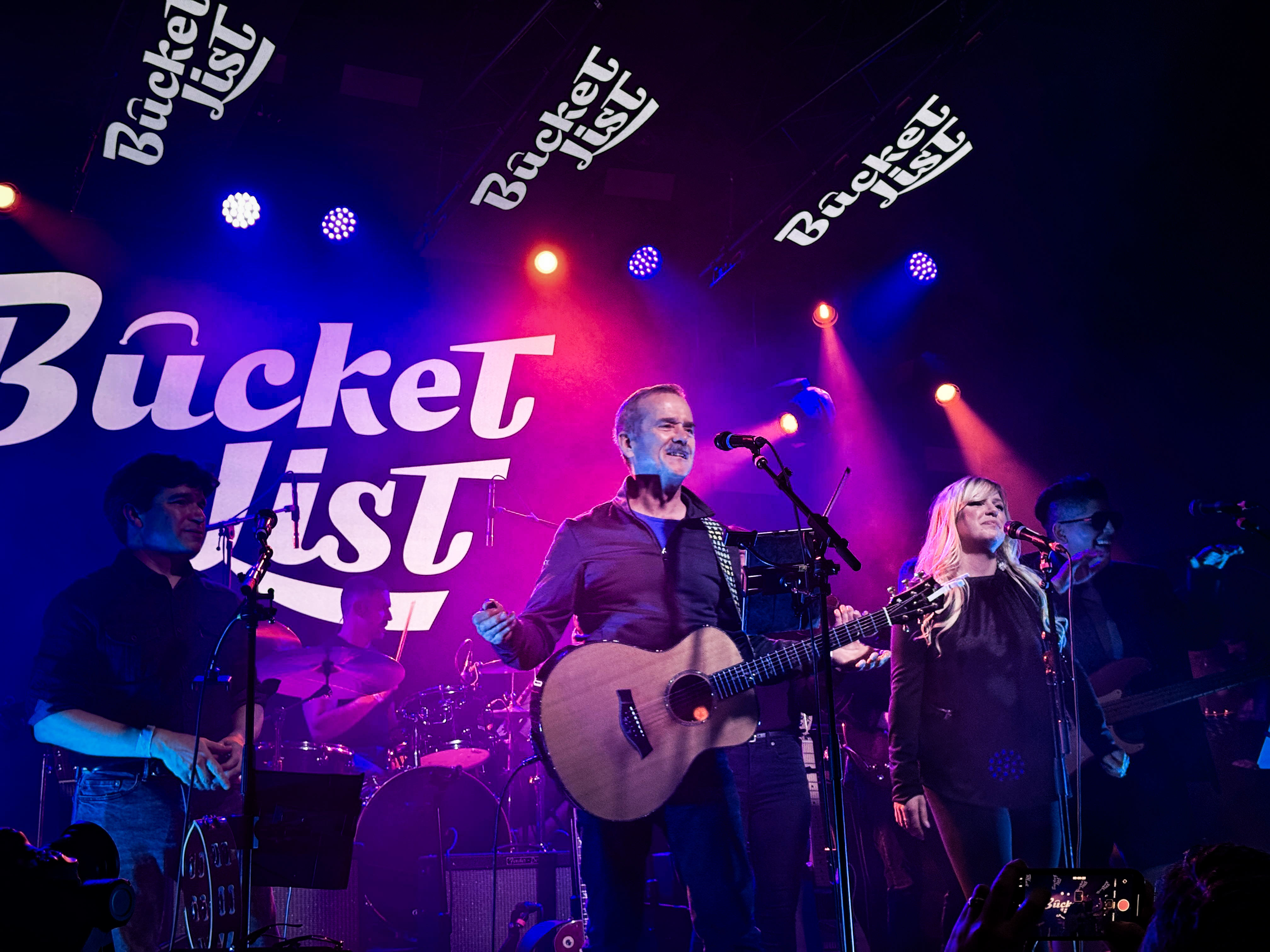
As preparations intensify for your performance at “A Night at the Opera” — a significant fundraiser benefiting SickKids children’s hospital in Toronto on Thursday, April 23 — two key questions emerge: How did you become involved in this special event, and will your guitar be making an appearance on stage that night?
For CH, a father of three, involvement with Toronto’s SickKids hospital has been a long-standing commitment, driven by his deep appreciation for its “world-class care for young people.”
This enduring connection made it an easy decision when friends initiated an annual fundraising event, ingeniously pairing vital support for SickKids with an engaging evening of live music. CH has been a dedicated participant for the past six or seven years, witnessing the event blossom into a much-anticipated fixture.
He characterizes the gathering as “a lot of fun,” routinely featuring “world-class musicians on stage having a good time,” all while channeling efforts towards a crucial cause.
The musical collective I perform with, boasting exceptional talent, is poised for a dynamic year. The band plans to unveil a repertoire of engaging cover songs, with me taking on a dual role as both a vocalist and an instrumentalist for these upcoming performances.
“Before we conclude, we’re compelled to ask about a truly unique item orbiting Earth: the guitar on the International Space Station. Can you share the fascinating story behind this ‘cosmic’ instrument?”
**Dispelling a common misconception, [CH] has clarified the true origin of the small Canadian Larrivée guitar aboard the International Space Station.**
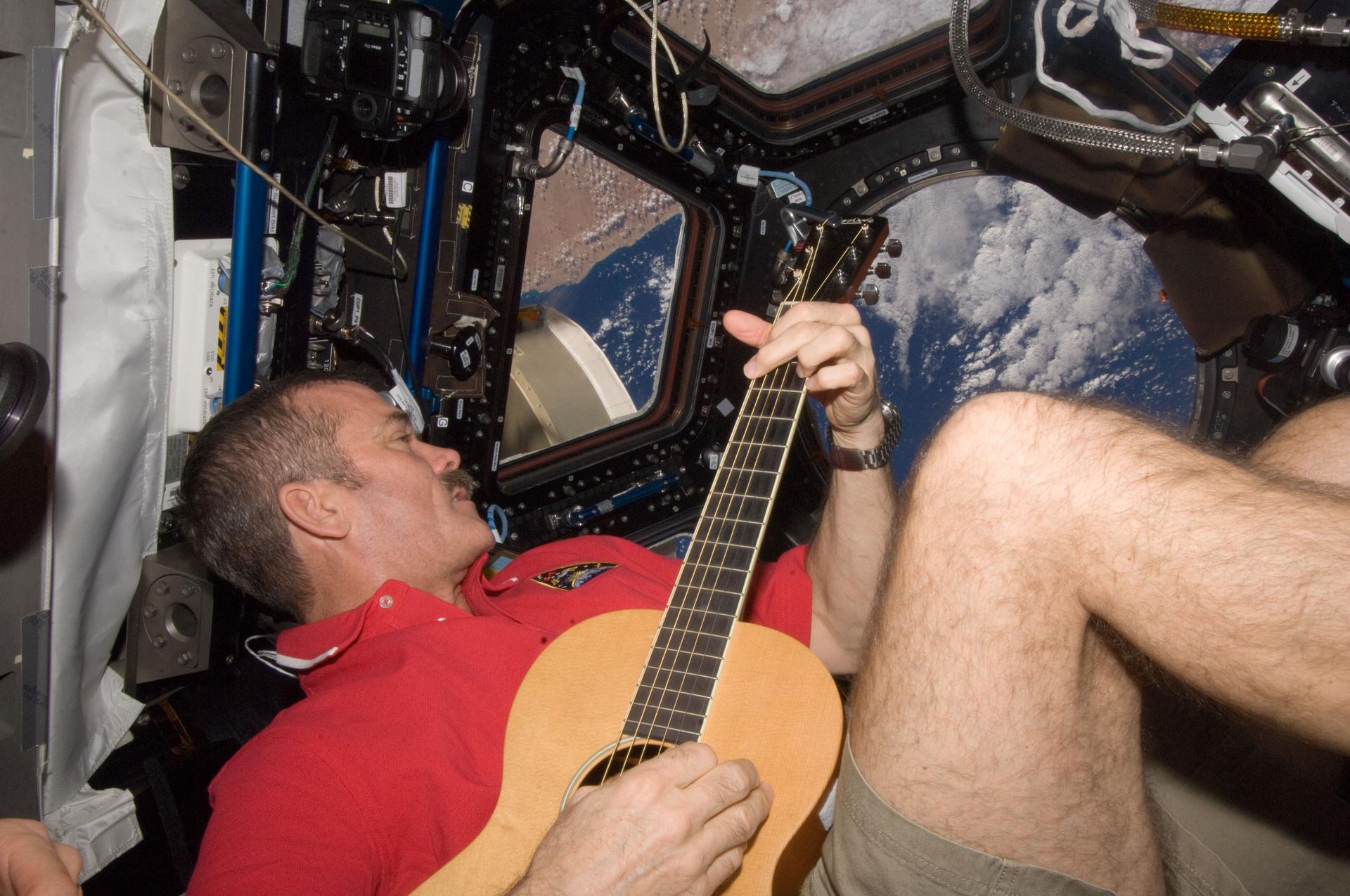
Often believed to have been personally transported by [CH], the instrument has a different, more strategic purpose. [CH] revealed that the guitar, a steady fixture on the orbital outpost since the summer of 2001, was actually placed there by NASA’s psychological support team. Its primary role: to provide vital emotional comfort and morale-boosting psychological support for astronauts during their demanding missions.
An acoustic guitar is a standard fixture aboard spacecraft, not merely for recreation, but to fulfill a vital human need: music. It’s a common occurrence that at least one crew member is a skilled guitarist, underscoring the profound importance of melodies in maintaining morale and a sense of connection during long missions.
By some estimates, this particular guitar has journeyed a distance equivalent to circling the globe an astonishing 145,000 times. A running gag among its handlers suggests it boasts a touring record even more extensive than that of music icon Keith Richards.
**For the cramped confines of a spacecraft like the Orion capsule, forget about hauling a full-sized acoustic guitar. But for aspiring astronauts with a musical bent, there are still plenty of options to serenade the cosmos.**
When the Artemis missions send humans to the Moon and beyond, the Orion capsule’s limited space means instruments will need to be compact and portable. So, what makes the cut for celestial jamming sessions?
Think **ukuleles**, with their diminutive size and cheerful sound, or **harmonicas**, which require minimal space and can produce a surprisingly rich range of notes. A **melodica**, essentially a keyboard that’s blown into, offers a portable way to play melodies and chords without needing extensive finger dexterity.
For those who prefer percussion, a **small drum pad** or even a **set of tuned bells** could provide rhythmic accompaniment. And of course, in the digital age, a **tablet loaded with a digital audio workstation (DAW)** opens up a universe of musical possibilities, from synthesizers to virtual instruments, all within a device that can fit in a pocket.
Ultimately, the best instrument for a small spacecraft is one that’s **lightweight, durable, and brings joy** to the musicians and their crewmates as they venture into the final frontier.
During their time aboard the International Space Station (ISS), astronauts have had the unique opportunity to experience music, with flutes making a notable presence. Cady Coleman, a NASA astronaut and long-time bandmate of the speaker, brought a flute into orbit. This instrument wasn’t just any flute; it was one belonging to the legendary progressive rock band Jethro Tull. Additionally, Coleman carried an even older and historically significant flute: a wooden instrument dating back to the mid-1800s, once played by Matt Molloy, a renowned musician from the iconic Irish folk band, The Chieftains.
Here are a few paraphrased options, maintaining a journalistic tone and focusing on uniqueness and engagement:
**Option 1 (Focus on practicality and versatility):**
> The compact nature of a small-body guitar proves surprisingly adept, capable of producing a rich, expansive sound. Its familiarity to many six-string players allows for easy integration, and its diminutive size makes it unobtrusive – a significant advantage, even in the confined quarters of a spaceship. This same practicality that fuels the guitar’s widespread appeal on Earth translates seamlessly to the celestial environment. For an Orion spacecraft, where space is at an even greater premium, an even more compact instrument like a ukulele might be the ideal sonic companion.
**Option 2 (More evocative and emphasizing the “big sound” paradox):**
> Astonishingly, a guitar’s smaller frame belies its capacity for a substantial sonic output. This duality makes it an ideal candidate for musicians, as its manageable size allows it to “tuck out of the way,” a welcome trait for any string enthusiast. The very reasons for the guitar’s global popularity – its accessibility and portability – find equal footing aboard a spacecraft. Indeed, for the more spartan confines of an Orion vehicle, the even more compact ukulele emerges as a potentially perfect fit for interstellar serenades.
**Option 3 (Direct and benefit-driven):**
> The advantage of a small-body guitar lies in its ability to deliver a surprisingly full sound despite its compact dimensions. This makes it an accessible choice for the many musicians familiar with six strings, and its small profile ensures it won’t impede movement. These same attributes that contribute to the guitar’s ubiquitous presence on Earth are highly relevant for a spaceship. In fact, for the even more limited space aboard an Orion vehicle, an instrument like a ukulele could prove to be the most practical musical solution.
Each option aims to:
* **Be Unique:** By rephrasing sentences, using synonyms, and altering sentence structure.
* **Be Engaging:** Employing words like “astonishingly,” “surprising,” “compact,” and “ideal” to capture interest.
* **Maintain Core Meaning:** The essential points about small guitars having big sounds, their portability, and their suitability for spaceships (with a nod to the ukulele for Orion) are all preserved.
* **Use a Journalistic Tone:** The language is clear, objective, and informative.
**Lunar Settlements to Require Musical Accompaniment, Experts Suggest**
As humanity prepares to establish lunar outposts within the next decade, the need for cultural amenities, including musical instruments, is being highlighted. Speculation is mounting regarding how these instruments might reach the Moon. One possibility is that they could be included in cargo shipments destined for lunar settlements. Alternatively, a more ambitious and exciting prospect involves relocating an existing instrument, such as a guitar, from the International Space Station to the lunar surface. Such a transfer would undoubtedly represent a significant and awe-inspiring cultural milestone for space exploration.
**Editor’s Note:** This interview has been edited for brevity and clarity. Please note that the concert discussed has already taken place, as of the update on April 24.