
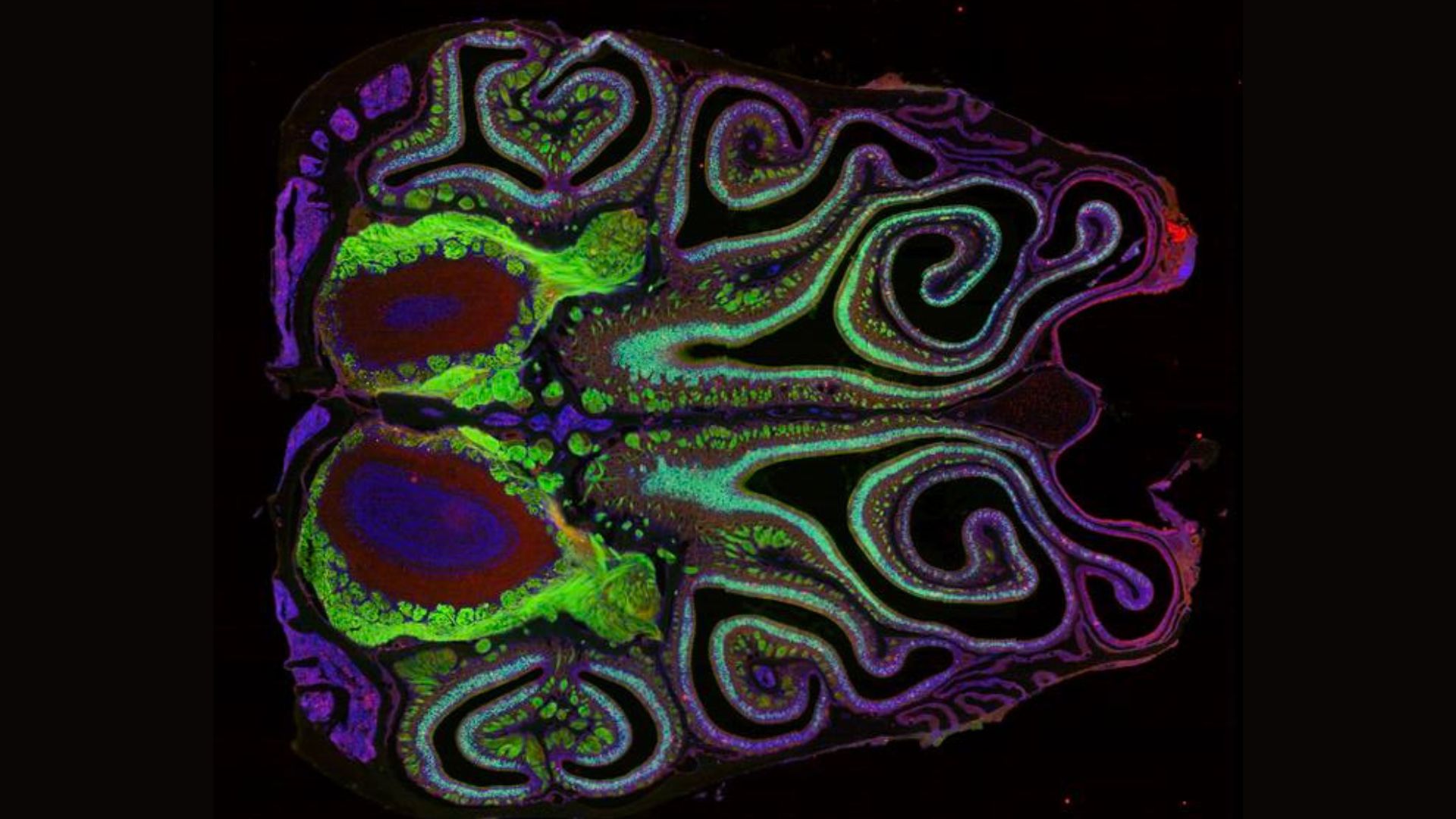
Researchers have developed an unprecedentedly detailed map of the smell receptors within a mouse’s nasal cavity, uncovering some unexpected insights into this crucial sensory system.
**Previously, scientists believed smell receptors were scattered haphazardly throughout the nasal lining. However, groundbreaking new research has revealed a surprising level of organization: these olfactory receptors are arranged in distinct, tightly packed bands, with different types segregated from one another.**
New research unveiled on Tuesday, April 28, in the esteemed journal *Cell*, offers fresh insights into the intricate mechanisms behind our sense of smell.
**How Our Noses Decode the World: A Glimpse into the Science of Scent**
Our ability to experience the myriad of smells around us is a remarkable feat orchestrated by specialized cells within our nasal cavities. These olfactory sensory neurons are the unsung heroes of scent detection, and each one is equipped with a unique key to unlock a specific aroma. In mice, for instance, these neurons are programmed by their DNA to express one of 1,172 distinct receptors. Think of each receptor as a highly specific lock, designed to bind with only one particular type of odor molecule, allowing us to differentiate between a blooming rose and a freshly baked cookie.
While senses like touch, sight, and sound are recognized for their use of sensory maps – for instance, the ear processes different sound frequencies at distinct locations within the cochlea before transmitting this data to the brain – the sense of smell was long believed to operate without such a system. However, recent advancements in scientific techniques over the last six to seven years have allowed researchers to explore approximately 5.5 million neurons across more than 300 mice. This in-depth analysis has shed new light on how specific genes are activated within different olfactory cells, suggesting a more organized structure within the sense of smell than previously understood.
**Harvard researchers have employed advanced single-cell sequencing to dissect the intricate workings of the olfactory system, allowing them to examine individual olfactory sensory neurons. This groundbreaking approach, as detailed by senior study author Dr. Sandeep Datta, a neurobiologist at Harvard Medical School, enables scientists to pinpoint the specific receptor expressed by each neuron. Complementing this, spatial transcriptomics has been instrumental in mapping the precise locations of these identified receptors within the olfactory tissue.**
Here are a few options for paraphrasing the text, maintaining a journalistic tone and original phrasing:
**Option 1 (Focus on Discovery):**
> Researchers have charted an intricate “beautiful map” of the more than 1,100 distinct smell receptors within the mouse olfactory system. This detailed visualization reveals a highly organized structure, featuring a thousand individual stripes of odor receptor expression that intricately overlap.
**Option 2 (Focus on Organization):**
> A groundbreaking mapping effort has illuminated the complex architecture of the mouse nose, identifying over 1,100 unique smell receptors. The resulting “beautiful map” showcases a remarkable organization, presenting a thousand distinct, yet interwoven, stripes of odor receptor expression.
**Option 3 (More Concise):**
> Scientists have successfully mapped over 1,100 smell receptors in the mouse nose, creating a “beautiful map” that demonstrates their organized nature. The visualization highlights a thousand separate, overlapping stripes of odor receptor expression, revealing a structured pattern within the olfactory system.
**Option 4 (Emphasizing the Quote):**
> According to Datta, the team has produced a “beautiful map” detailing the more than 1,100 smell receptors in the mouse nose. This map depicts what he described as “a thousand separate stripes of odor receptor expression that overlap with each other but are very organized.”
Each option offers a slightly different emphasis while conveying the same essential information in fresh language.
Researchers have discovered a remarkable spatial organization within the sense of smell: neurons in the nose that share a common receptor converge on a singular destination within the olfactory bulb, the brain’s initial hub for processing scent information. This finding reveals a highly precise correlation between the “map” of receptors in the nose and the corresponding organization within the brain.
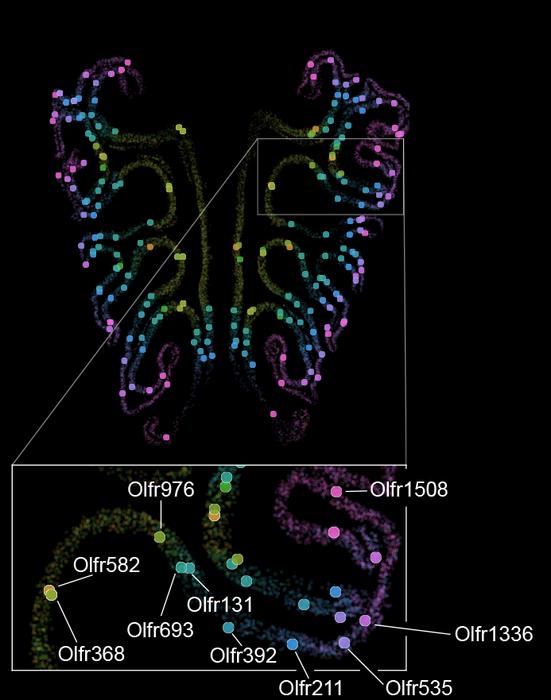
The intricate structure of the nasal lining is truly astonishing, according to the expert. He pointed out that mice, for instance, possess approximately 20 million olfactory neurons, capable of detecting over a thousand distinct types of smell receptors. This stands in stark contrast to human color vision, which relies on just three primary types of visual receptors.
**Key Molecular Signal Dictates Neuron Positioning in the Brain**
In a significant discovery, researchers have found that the precise locations of approximately 1,100 types of neuronal receptors are remarkably consistent across all laboratory mice studied. This consistency points to a fundamental biological blueprint governing brain wiring.
Further investigation has pinpointed a molecule, retinoic acid (RA), as a probable orchestrator of this intricate arrangement. Scientists believe RA acts as a guide, instructing each neuron to display the appropriate receptor based on its specific location within the brain.
Experiments demonstrating that adding or removing RA caused shifts in the receptor map strongly suggest this molecule plays a crucial role in regulating both the placement and the functional influence of neurons. This finding opens new avenues for understanding how complex neural circuits are established and how their precise organization might be manipulated.
Researchers are currently delving into the specific patterning of these stripes, seeking to understand the underlying reasons for their formation. A compelling subsequent inquiry, Datta noted, is whether human noses share a comparable organizational blueprint.
According to one expert, the human olfactory system mirrors that of a mouse in many fundamental ways, despite humans possessing a reduced number of odor receptors. A critical unanswered question, however, is whether the core principles observed in mouse olfaction are directly applicable to human scent perception. Bridging this knowledge gap is vital, as a deeper understanding could pave the way for innovative treatments for anosmia—the loss of smell—and its significant health consequences, including an elevated risk of depression.
How well do you truly understand the human brain, widely regarded as the body’s most complex organ? Put your knowledge to the test with our insightful quiz.





