
Far beyond its image as a bucket-list travel destination and a pristine habitat for penguins, Antarctica holds a profound scientific secret. The continent serves as an extraordinary natural archive, its vast ice sheets meticulously preserving millions of years of Earth’s climatic history. This frozen chronicle offers scientists invaluable insights into our planet’s past.
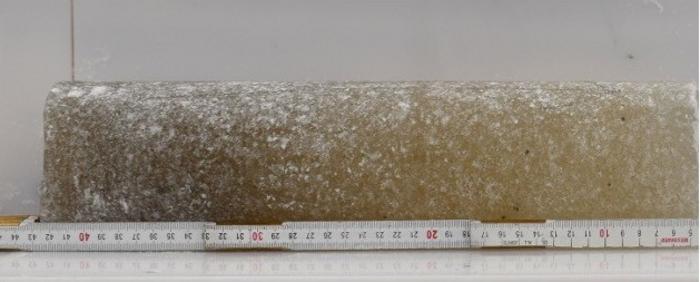
Scientists from the Center for Oldest Ice Exploration (COLDEX) have made a groundbreaking discovery, retrieving and directly dating the most ancient ice cores ever drilled. Clocking in at an extraordinary 6 million years old, these samples offer an unparalleled window into Earth’s distant past.
By meticulously analyzing the trapped air and water within the cores, researchers have reconstructed a primordial climate significantly warmer than today, characterized by substantially higher sea levels. This seminal research also provides compelling new evidence of a long-term global cooling period that shaped our planet’s history.
An expedition to East Antarctica’s Allan Hills, spearheaded by Sarah Shackleton of Woods Hole Oceanographic Institution and John Higgins of Princeton University, has yielded an ice sample that dramatically exceeded scientific expectations.
The team specifically targeted this region due to its unique topography, which naturally exposes ancient ice layers closer to the surface. Researchers had anticipated discovering ice dating back as far as three million years, but the retrieved sample proved to be significantly older, marking a remarkable find.

COLDEX scientists have compiled a groundbreaking collection of “climate snapshots” that extends the Earth’s climate record by an unprecedented margin, reaching an age approximately six times older than any previously reported ice core data. According to Director Ed Brook, an Oregon State University paleoclimatologist, this exceptionally ancient information will significantly enhance and provide vital context for the more detailed, younger climate data recovered from cores deep within Antarctica.
Scientists have unlocked a dramatic chapter in Earth’s climate history by studying ancient ice. First, researchers meticulously dated ice samples by analyzing argon isotopes found within air bubbles trapped deep inside the frozen layers. This crucial step then paved the way for a deeper investigation: by examining oxygen isotopes within the same ice, the team uncovered compelling evidence of a prolonged and significant cooling period during the Pliocene era. Their findings indicate that over this geological epoch, Earth’s global average temperature plummeted by an estimated 22 degrees Fahrenheit (12 degrees Celsius).
The scientific team is poised to deepen its investigation into the collected samples, critically examining them for insights into climate change. This ongoing work will involve meticulously analyzing and reconstructing ancient levels of atmospheric greenhouse gases and oceanic heat content.
Looking ahead, the researchers have outlined plans to revisit Allan Hill. Their objective is to extract additional ice cores, with the ambitious goal of uncovering even more ancient ice, potentially offering an unprecedented glimpse into Earth’s distant past.
Prompted by the discovery of remarkably ancient ice at Allan Hills, researchers have formulated plans for a comprehensive, multi-year study of the region. This ambitious initiative, scheduled to run from 2026 to 2031, aims to unearth even older ice records, significantly extending humanity’s timeline of past climatic conditions, according to Brooks.
The team’s research was formally unveiled in the prestigious Proceedings of the National Academy of Sciences on October 28, 2025.





