
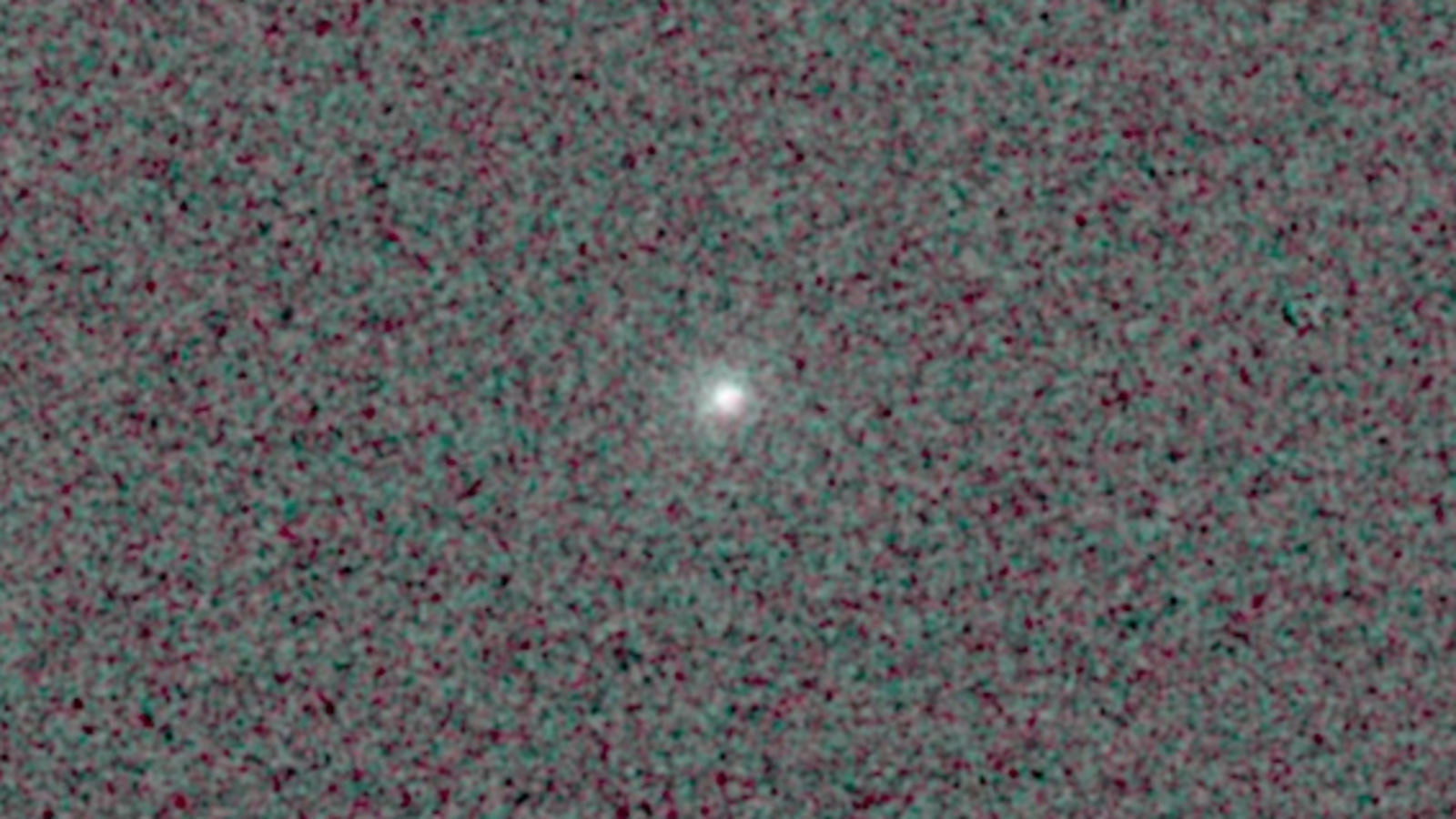
Good news for backyard astronomers: Comet 3I/ATLAS has finally re-emerged. After briefly slipping from Earth’s view during its scorching close encounter with the sun on October 30, this enigmatic interstellar visitor is once again detectable through amateur telescopes. However, its tenure in our night sky remains unpredictable.
Discovered on July 1st this year, the celestial object designated 3I/ATLAS was swiftly confirmed as a remarkable find: only the third interstellar visitor known to have ever traversed our solar system. Scientists widely believe this intriguing cosmic body originated around a distant star, far beyond our own stellar neighborhood.
Scientists swiftly deployed a full arsenal of both terrestrial and orbital instruments to meticulously analyze the comet’s distinctive light signature. Their primary objective was to probe its dynamic coma and trailing structures, striving to unlock the celestial wanderer’s profound secrets and reveal the conditions of its distant cosmic birthplace.
**Observing Opportunity: 3I/ATLAS Emerges from Solar Glare**
The celestial body 3I/ATLAS is now visible, presenting a prime opportunity for observers as it emerges from the obscuring glare of our parent star, the Sun.
In a notable astronomical achievement, Qicheng Zhang, a postdoctoral fellow at Arizona’s Lowell Observatory, successfully captured an image of the interstellar interloper on November 1. Armed with a 6-inch (152-mm) Ritchey–Chrétien reflector, Zhang managed to pierce through the morning twilight and a veil of thin clouds to record the elusive cosmic visitor.
The comet is now readily accessible for morning viewing, confirmed astronomer Dr. Zhang in communication with Space.com. He notes that skygazers equipped with even modest telescopes and cameras, provided they have clear skies and an unobstructed eastern horizon, should find it an achievable target.
While its current appearance is somewhat understated, described by Zhang as merely a “fuzzy blob” just distinguishable from surrounding stars, a significant change is on the horizon. Experts anticipate a rapid enhancement in the comet’s brightness and definition over the coming days and weeks, projecting it will soon be visible directly through a telescope to the unaided eye.
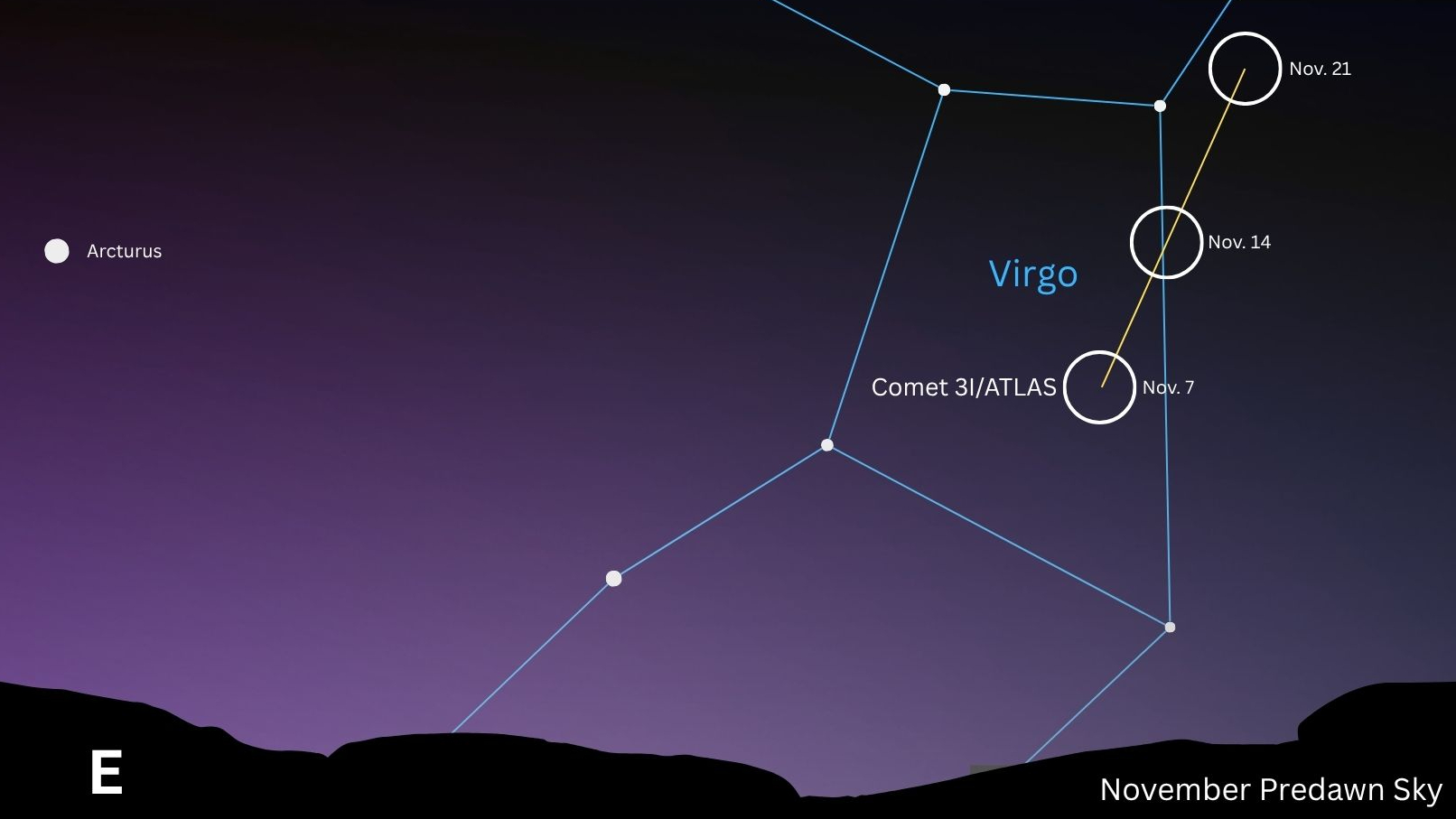
In the pre-dawn hours of early November, skygazers have a fleeting opportunity to observe Comet 3I/ATLAS gracing the eastern horizon within the constellation Virgo. Below this celestial wanderer, the brilliant planet Venus adds to the early morning spectacle.
Currently on an outbound trajectory, Comet 3I/ATLAS is rapidly receding from the sun and is set to escape our solar system entirely. As it ventures further from our star, the diminished solar radiation is expected to cause the comet to progressively dim, making it less visible. However, the inherently unpredictable nature of these cosmic nomads means that precisely when 3I/ATLAS will vanish from Earth’s view forever remains a subject of uncertainty.
Astronomer Zhang predicts the comet is expected to reach its visual zenith within the next week or two, particularly if its rapid brightening is matched by an equally swift fade. He further clarified that, barring an unforeseen outburst, a telescope or long-exposure photography equipment will almost certainly be indispensable for observation.
Elevate your celestial explorations with our definitive roundup of the top telescopes for observing the night sky. For aspiring astrophotographers, delve into our specialized guide on capturing elusive comets, complemented by our expert recommendations for the ideal cameras and lenses to master the art of cosmic imaging.
Space.com is actively seeking reader submissions of images featuring the celestial object 3I/ATLAS. Readers who have captured photographs of 3I/ATLAS are encouraged to share their work for potential inclusion in a dedicated gallery. To contribute, please send your photo(s), along with any accompanying comments, your full name, and your location to spacephotos@space.com.





